Bottega Veneta doesn't announce itself
Bottega Veneta doesn't announce itself. No logos, no hardware that screams, no monogram you'd clock from across the street. The house built its reputation on intrecciato—that woven leather technique—and on the idea that people who know will know. Which sounds elitist until you hold one of the bags. Then it's just true.
The question isn't whether Bottega is worth the investment. It's where to start, and at what price point, and whether your first piece should be a bag or something else entirely. Because the entry points have multiplied under Matthieu Blazy's direction. There are small leather goods that cost less than a dinner for two in Manhattan. There are statement bags that require a different kind of commitment. And there's ready-to-wear that wears in rather than out, which is rarer than it should be.
Good looks like this: construction you can feel in the hand, leather that doesn't feel coated or stiff, stitching that sits flush, and a shape that doesn't trend out in eighteen months. Bottega delivers on all four, but you still have to choose carefully. Not every piece in the collection is an equal starting point. Some want context—a wardrobe that can support them. Others work alone.
Under $500: Small Leather Goods That Earn Their Keep
The card case in intrecciato nappa starts around $350. It's smaller than you think it'll be, which is the point. Six card slots, one bill compartment, dimensions that fit a front pocket or a micro bag. The weave is tight enough that it'll hold its shape for years, loose enough that you can see the craft in it.
This isn't a purchase you make because you need a card case. It's a purchase you make because you want to carry something from Bottega every day, and this is the most accessible way in. The leather softens with handling. The corners don't fray. After a year of use, it looks better, not beaten.
The zip-around coin purse runs about $450 and gives you more room—technically for coins, realistically for whatever small chaos you're managing that day. Same intrecciato, same hand-feel, slightly more utility. Both pieces come in seasonal colours, but if this is your first, stay with black, fondente (a dark chocolate brown), or parakeet (a green that reads neutral in practice).
$800–$1,500: The Mini Jodie and the Cassette
The Mini Jodie—around $1,400—is where most people start if they're starting with a bag. It's a dumpling-shaped pouch with a knotted single strap and just enough room for a phone, a card case, keys, and not much else. The shape is unmistakably Bottega, but it doesn't require you to build an outfit around it. It works as well with denim and a t-shirt as it does with tailoring.
What you're paying for here is the drape. The leather is soft enough that the bag moves when you do, stiff enough that it doesn't collapse into itself when you set it down. The knot on the strap isn't decorative—it's structural, and it's how you adjust the drop length. This is a bag you wear high on the shoulder or crossbody, not one you carry by hand.
The Cassette sits at roughly the same price point and offers a different silhouette—more rectangular, more structured, with a flap closure and a chain strap you can tuck inside if you want to carry it as a clutch. It's slightly more formal than the Mini Jodie, which means it's slightly less versatile, but it holds its value better on the resale market if that math matters to you.
Both bags come in a wide range of colours each season. The house does colour well—not just the expected neutrals but also shades like plaster (an off-white with grey undertones) and a rotating cast of greens, reds, and blues that don't read as seasonal. If you're risk-averse, go with nero (black) or fondente. If you know your wardrobe can support it, the seasonal colours are where Bottega gets interesting.
$2,500–$4,000: The Medium Arco and the Large Jodie
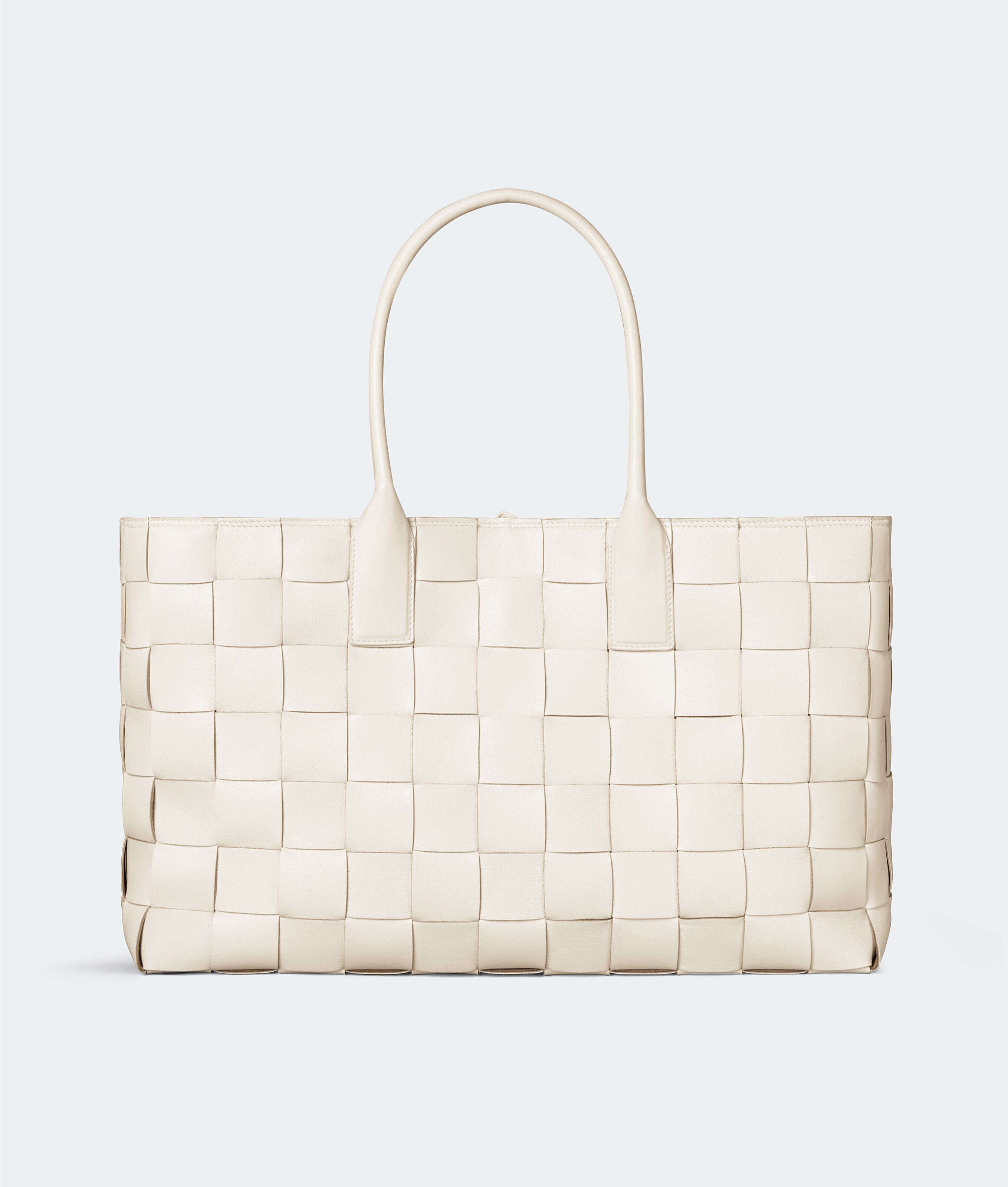
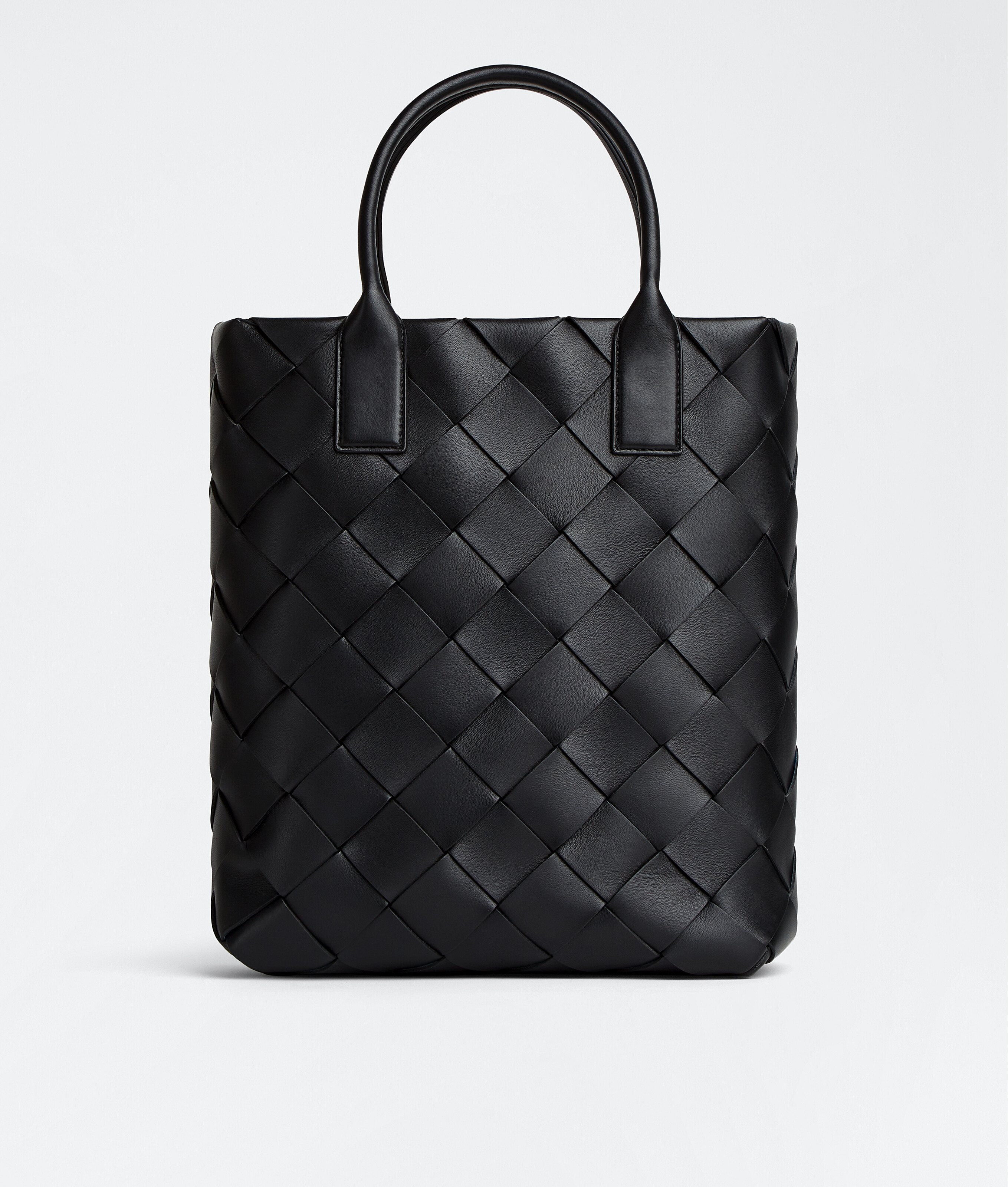
The Arco—Bottega's structured tote—starts around $3,200 for the medium size. It's a top-handle bag with a curved base, a magnetic closure, and a detachable shoulder strap. This is the bag that works for an office, a dinner, a day that requires you to carry more than a phone and a lipstick.
The structure comes from the intrecciato frame, not from internal boning or cardboard, which means it holds its shape without feeling stiff. The medium fits a laptop up to thirteen inches, a water bottle, a book, and the smaller items that tend to migrate to the bottom of any bag. The handles are soft enough to sit comfortably in the crook of your arm but substantial enough that they don't stretch out over time.
The Large Jodie—around $3,800—is the grown-up version of the Mini. Same knotted strap, same dumpling shape, but with enough volume to function as an everyday bag. It's still soft, still unstructured, but it carries weight differently than the Mini does. This is a bag that gets more compliments than the Arco but requires more intention in how you dress around it. It's a statement piece that doesn't announce itself as one.
Beyond $4,000: The Intrecciato Cabat and Ready-to-Wear
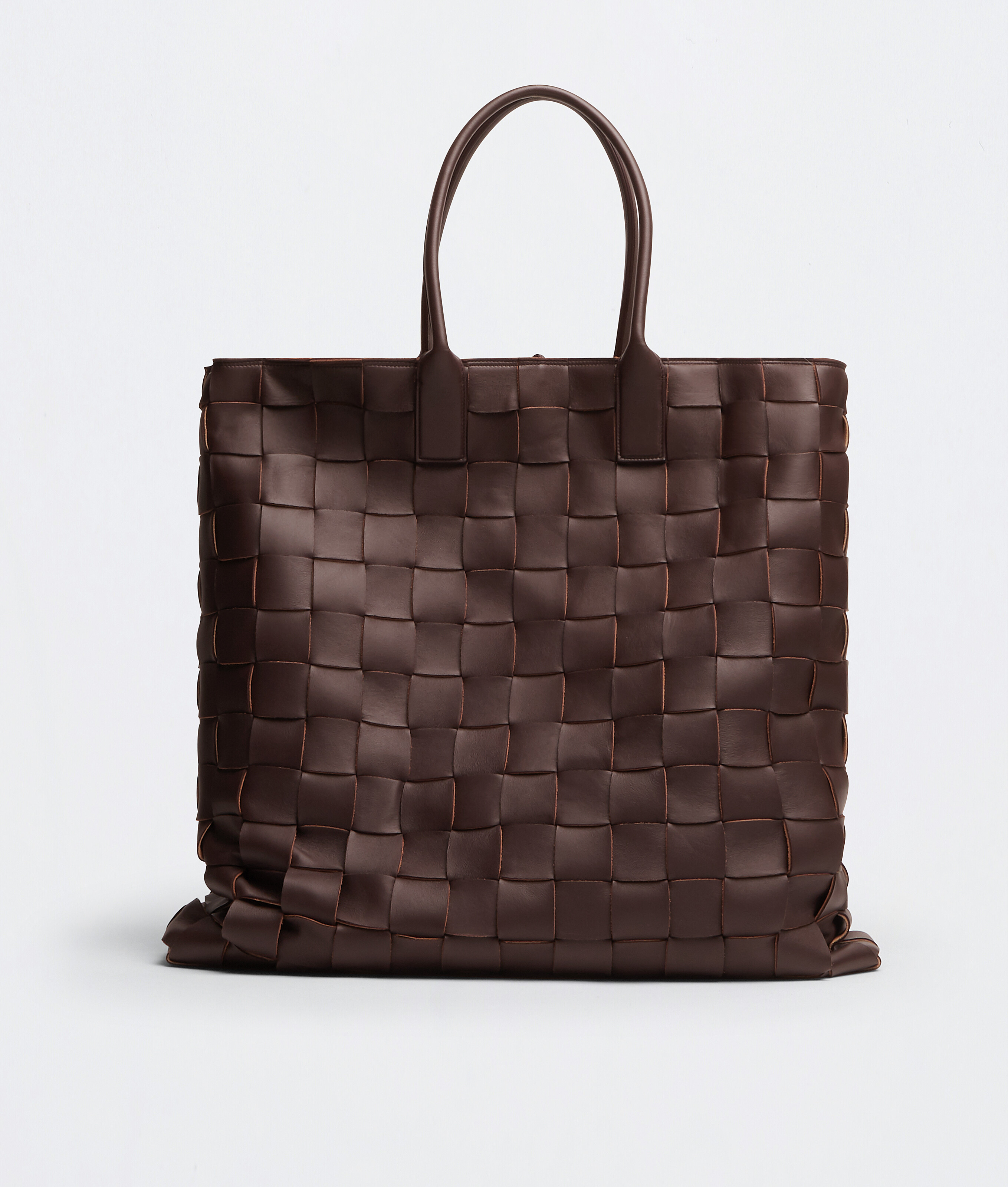
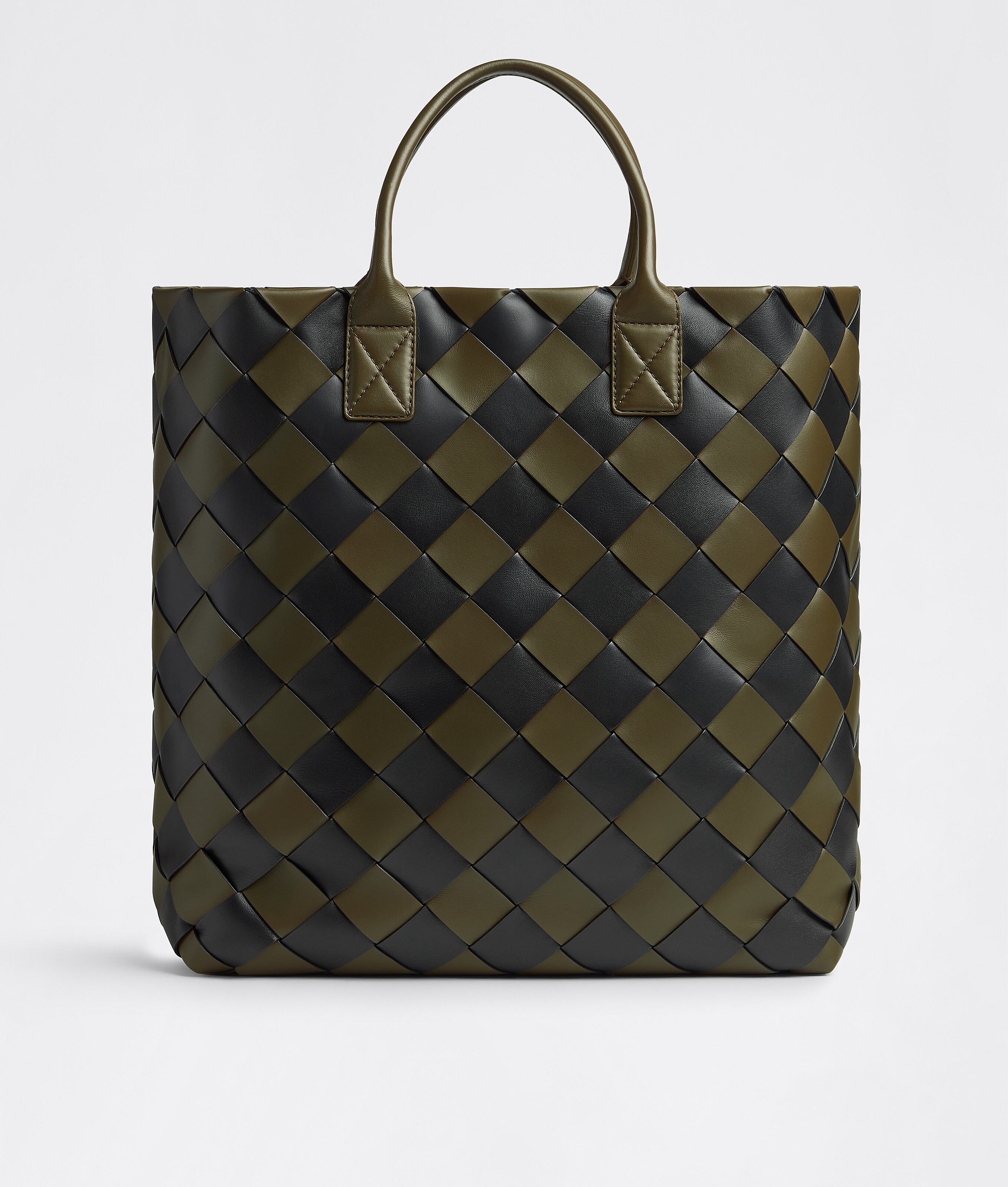
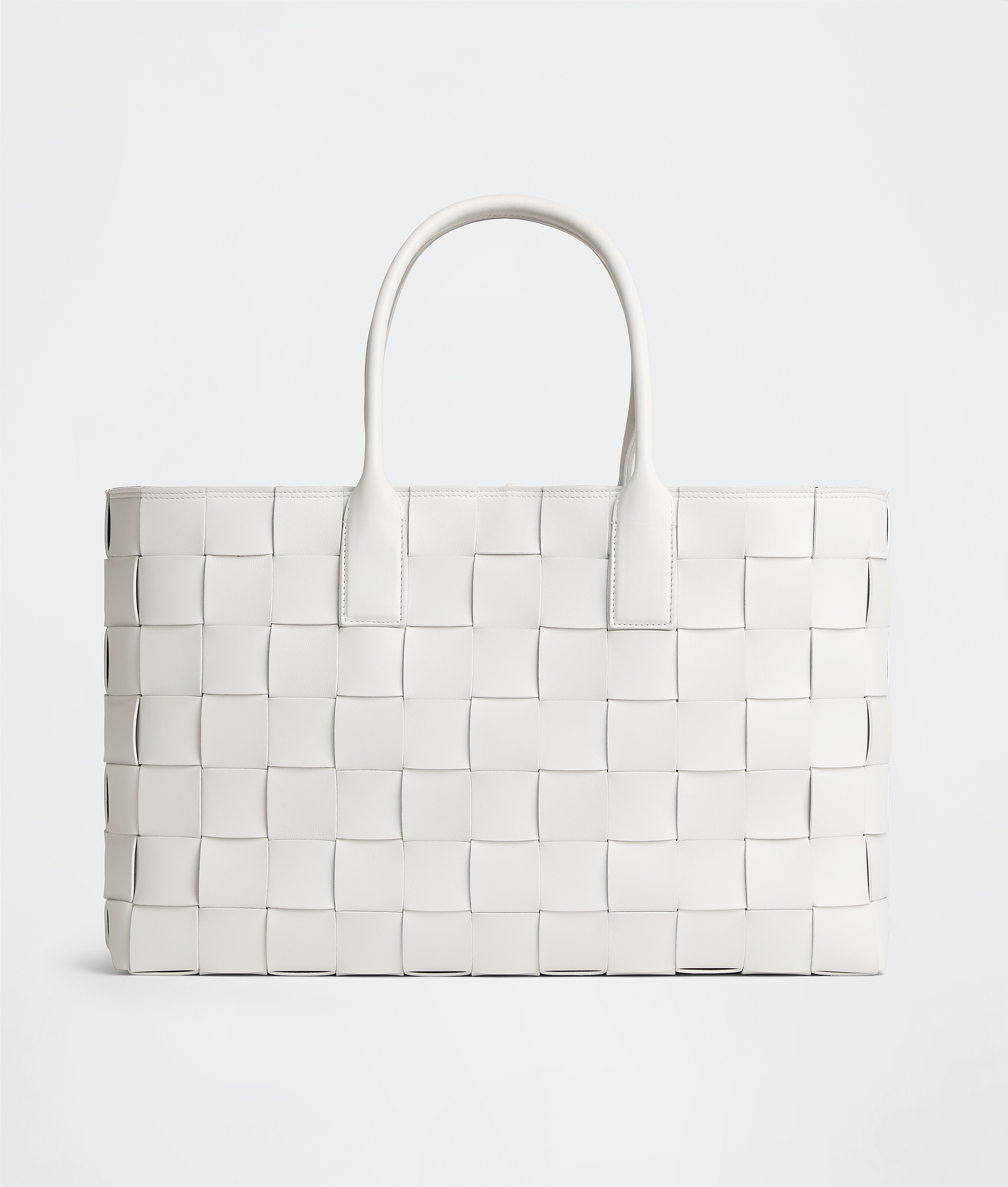
The Cabat is Bottega's tote in its purest form—no lining, no closure, no hardware, just intrecciato woven into a large, open carryall. Prices start around $5,000 and climb depending on size and leather. This is not a first purchase unless you already know the house and know your life has room for a bag with no zip.
What the Cabat offers is presence. It's large enough to be a work bag, soft enough to fold flat when you're not using it, and constructed in a way that makes every other tote feel underconsidered. The weave is wider than on the smaller bags, which means you can see the individual strips of leather more clearly. It's a piece that rewards looking at.
Ready-to-wear is harder to recommend as a starting point, not because the quality isn't there—it is—but because it requires trying on. Bottega's tailoring runs slim through the shoulder and generous through the waist. The knitwear is heavy, which is good in winter and impossible in summer. The leather pieces—jackets, skirts, trousers—are worth the investment if you know your size and know the specific piece works on your body, but they're not something to buy online and hope for the best.
Longevity and Care
Intrecciato leather doesn't need much. A soft cloth after each wear to remove dust and oils. A leather conditioner once or twice a year if you're in a dry climate. Keep the bags stuffed with tissue when you're not using them so the shape holds. Avoid rain when you can—the leather will survive it, but it'll darken, and not always evenly.
Bottega offers repair services, and they're worth using. A bag that's been resoled or restitched by the house holds its value better than one that's been patched by a local cobbler, no matter how skilled. The hardware—minimal as it is—doesn't tarnish the way gold-plated pieces do, which means less maintenance over time.
These pieces are built to last longer than the time it takes to pay them off. That's not marketing. That's construction.