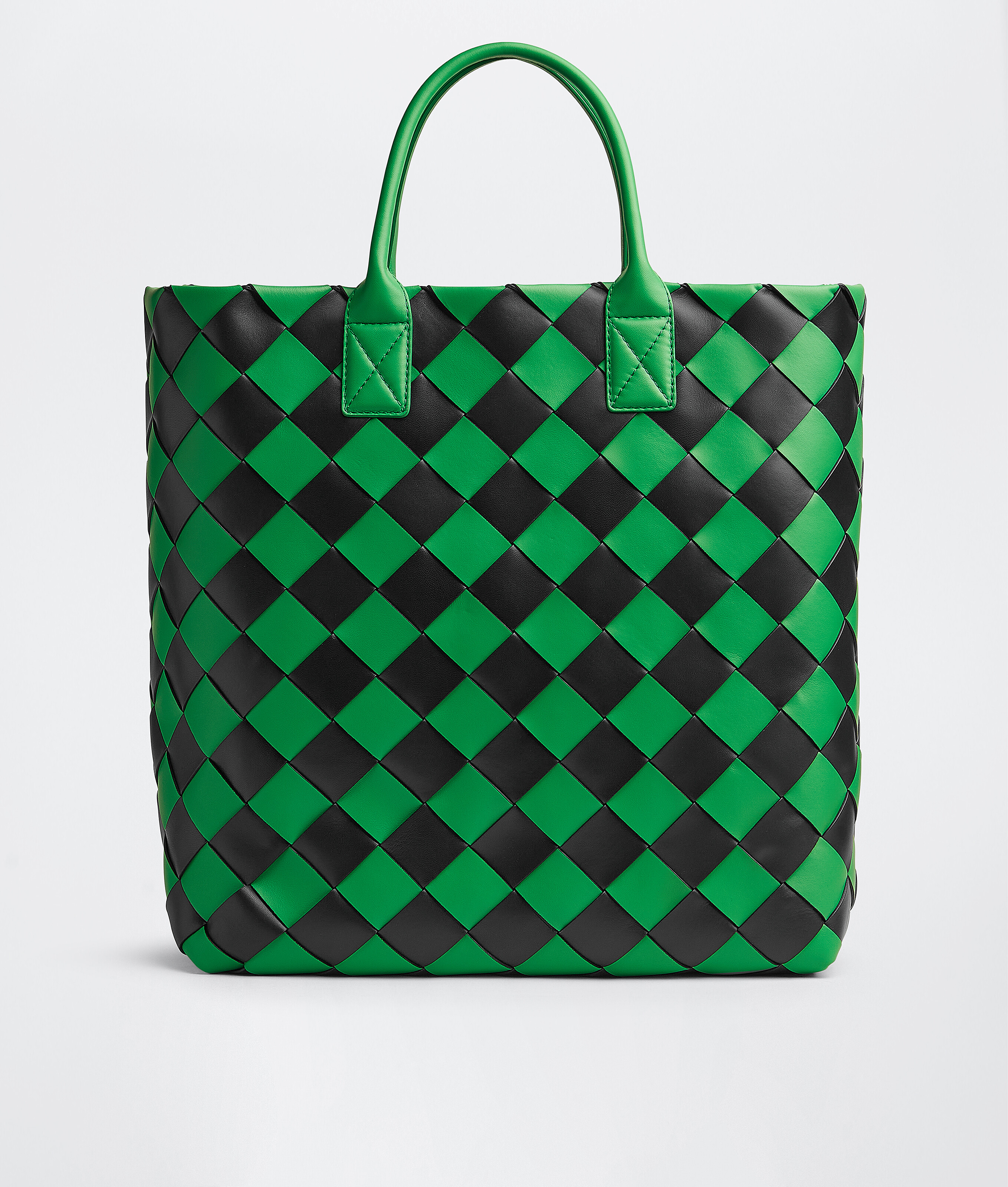
Bottega Veneta makes shoes you can wear
Bottega Veneta makes shoes you can wear. Not in the sense that they are physically possible to walk in—most designer footwear clears that bar—but in the sense that they remain coherent after six months of actual use. The intrecciato weave doesn't fray at the toe after three wears. The leather doesn't crease into a delta of white lines by October. The sole doesn't separate from the upper because someone in Vicenza decided contact cement was close enough to proper construction.
This matters more than it should need to. A £650 loafer ought to last longer than a season, but the contemporary luxury market has spent two decades training us to expect otherwise. Shoes arrive beautifully boxed, photographed once for the grid, then relegated to the back of the wardrobe because they hurt or pill or simply fall apart. Bottega, to its credit, still builds for the second and third year of ownership. The house uses vegetable-tanned calf that darkens and softens rather than cracking. Goodyear welts appear where you'd expect Blake stitch. Intrecciato panels are backed and reinforced, not left to float free.
What follows are three models I've worn long enough to speak plainly about. Not the entire range—Bottega runs to dozens of silhouettes each season—but three shapes that work past the first month and into the part of ownership where you stop thinking about them.
The Intrecciato Lace-Up Derby
This is the house's clearest argument for its own relevance. A five-eyelet derby, fully woven in intrecciato calf, with a rubber lug sole and no visible branding beyond the weave itself. It launched under Daniel Lee and has persisted through Matthieu Blazy's tenure because it does several things at once without apologising for any of them.
The weave is the obvious focal point, but it's the construction underneath that makes the shoe work. Each strip of leather is backed with canvas before it's woven, which means the upper holds its shape under tension. You can lace these tight—tighter than you'd risk with an unbacked weave—and the intrecciato doesn't distort or pull. The tongue is padded calf, not woven, because a woven tongue would dig into the top of your foot by midday. Small decisions, but they're the difference between a shoe you wear twice for the texture and a shoe you wear forty times because it works.
The lug sole is Vibram, not some house-branded compound that wears smooth in three months. Bottega spec'd a lug depth that actually grips wet pavement, which makes the shoe viable from October through March without looking like a hiking boot. The sole is also stitched, not just glued, which means you can resole them when the time comes. That time is around eighteen months if you rotate them properly, longer if you don't wear them in the rain.
I've had a pair in fondente brown for two years. The calf has darkened a full shade and developed a low gloss at the toe and heel counter where the weave compresses with wear. The rest of the upper remains matte. They've been resoled once, which cost £110 at a Northampton factory that sees enough Bottega to know how the welt is attached. They still look like themselves.
The Puddle Boot
Bottega calls this the Puddle ankle boot, which is accurate if not especially elegant. It's a Chelsea-adjacent pull-on in intrecciato calf with a exaggerated square toe and the same lug sole as the derby. The shaft hits just above the ankle bone. The elastic gussets are wide enough that you don't need a shoehorn, but not so wide that the boot slides around once it's on.
The square toe is the divisive part. It's genuinely squared, not softly rounded in the way most contemporary boots hedge. If you have narrow feet, it will look cartoonish. If you have wide feet or simply want a boot that doesn't taper like a 1960s Beatle boot, it works. I'm a UK 9, medium width, and the toe box gives me enough room that I don't think about my feet after the first ten minutes.
The boot sits higher on the ankle than a standard Chelsea, which changes how it interacts with trousers. With a straight-leg jean or a tapered wool trouser, the shaft creates a clean break point. With a wide leg, the boot disappears entirely, which is the intended effect. This is not a boot you wear to show off the boot. It's a boot you wear because it's raining and you'd rather not soak through a pair of loafers.
I've worn mine hard for fourteen months. The intrecciato has compressed slightly at the flex points but hasn't cracked or separated. The elastic gussets are still taut. The lug sole shows wear at the heel but hasn't needed replacing yet. They've been caught in heavy rain a dozen times and dried without incident, though I do tree them and let them rest for a day after a soaking.
The Cassette Slide Sandal
The Cassette slide is the least serious shoe here and also the one I reach for most often between May and September. It's a padded slide with a wide intrecciato strap across the vamp, a contoured footbed, and a flat rubber sole. No buckles, no back strap, no pretence that this is anything other than a house shoe you can wear outside.
The footbed is the key component. It's moulded EVA covered in smooth calf, shaped to support the arch without the aggressive contour of a Birkenstock. You can wear these for four hours without your feet flattening out, which is not true of most designer slides. The intrecciato strap is padded underneath, so it doesn't dig into the top of your foot even when the leather is new and stiff.
The sole is thicker than it looks in photographs—about 15mm at the heel, tapering to 10mm at the toe. Enough to keep your foot off hot pavement, not enough to look like a platform. The tread is minimal, which makes them useless in wet conditions but fine for everything else. I've walked several miles in them without blisters or soreness, though I wouldn't recommend it as a regular practice.
I bought a black pair two summers ago. The calf has softened considerably but hasn't stretched to the point where the slides are loose. The footbed has compressed slightly where my arch sits, which has made them more comfortable, not less. The intrecciato strap still holds its shape. I expect another two years from them, possibly three if I stop wearing them to the corner shop in the rain.
Care and Longevity
Bottega Veneta builds shoes that last if you let them. That means shoe trees—proper cedar, not plastic—after every wear. It means rotating pairs so the leather can rest and dry. It means brushing off dirt before it sets and conditioning the calf every few months with a neutral cream. The intrecciato weave holds up well to regular wear but doesn't tolerate neglect. If you let salt stains sit through winter, the leather will dry out and crack at the weave points.
The house offers a repair service for intrecciato goods, though it's not widely advertised and the turnaround is slow. A competent cobbler can handle sole replacements and minor stitching repairs without issue. For anything involving the weave itself—a torn strip, a separated panel—you'll need to go back to Bottega or find a leather specialist who's worked with woven uppers before.
Buy the shoes half a size up if you're between sizes. Bottega runs narrow through the midfoot, and the intrecciato doesn't stretch the way smooth calf does. Expect a break-in period of two weeks for boots, less for loafers and slides. After that, they're yours.