Fendi doesn't sell a single entry point
Fendi doesn't sell a single entry point. The house sells several, and knowing which one suits you—not just financially, but in terms of how you actually dress—is the difference between a piece that works and one that sits in tissue for two years. Fendi's range is wide: from logo-heavy nylon that telegraphs youth-market energy to quiet leather goods that require you to already know. The maison has always occupied a strange position in the Roman lineup—more playful than Valentino, less austere than the northern houses, but still expensive enough that a misstep stings.
The smart move isn't to aim for the most recognizable piece. It's to start with something that aligns with how you already build a wardrobe, then let the next purchase follow naturally. That might mean a small leather good first, or it might mean skipping accessories entirely and going straight for a coat. Fendi's strength lies in craft—fur, obviously, but also the leatherwork and the tailoring that doesn't announce itself. What follows are five entry points, arranged by budget, that represent the house honestly. None of them require you to carry a logo. Some of them do anyway.
Baguette Charm — €390
If you're testing the water, this is the least consequential way in. The charm is a miniature Baguette, roughly eight centimetres across, rendered in grained calfskin with the FF clasp. It's designed to clip onto a bag strap or a belt loop, though most people I know treat it as a card case. Three cards, folded bills, a car key. It won't hold your life, but it will hold a dinner.
The charm works because it's legible without being loud. The double-F hardware is visible, but small enough that it reads as detail rather than billboard. Fendi produces these in seasonal colours—last I checked, the standing offer included black, caramel, and a chalky lilac that works better than it should. The leather is entry-level by Fendi standards, which means it's still better than most mid-tier houses. It will scuff. That's the point. A pristine charm looks like you're afraid of it.
The risk here is that you buy it, use it twice, and forget it exists. If you don't already carry small leather goods with intention, this won't teach you to start. But if you do, it's a functional introduction that doesn't demand a wardrobe around it.
Peekaboo ISeeU Petite — €3,200
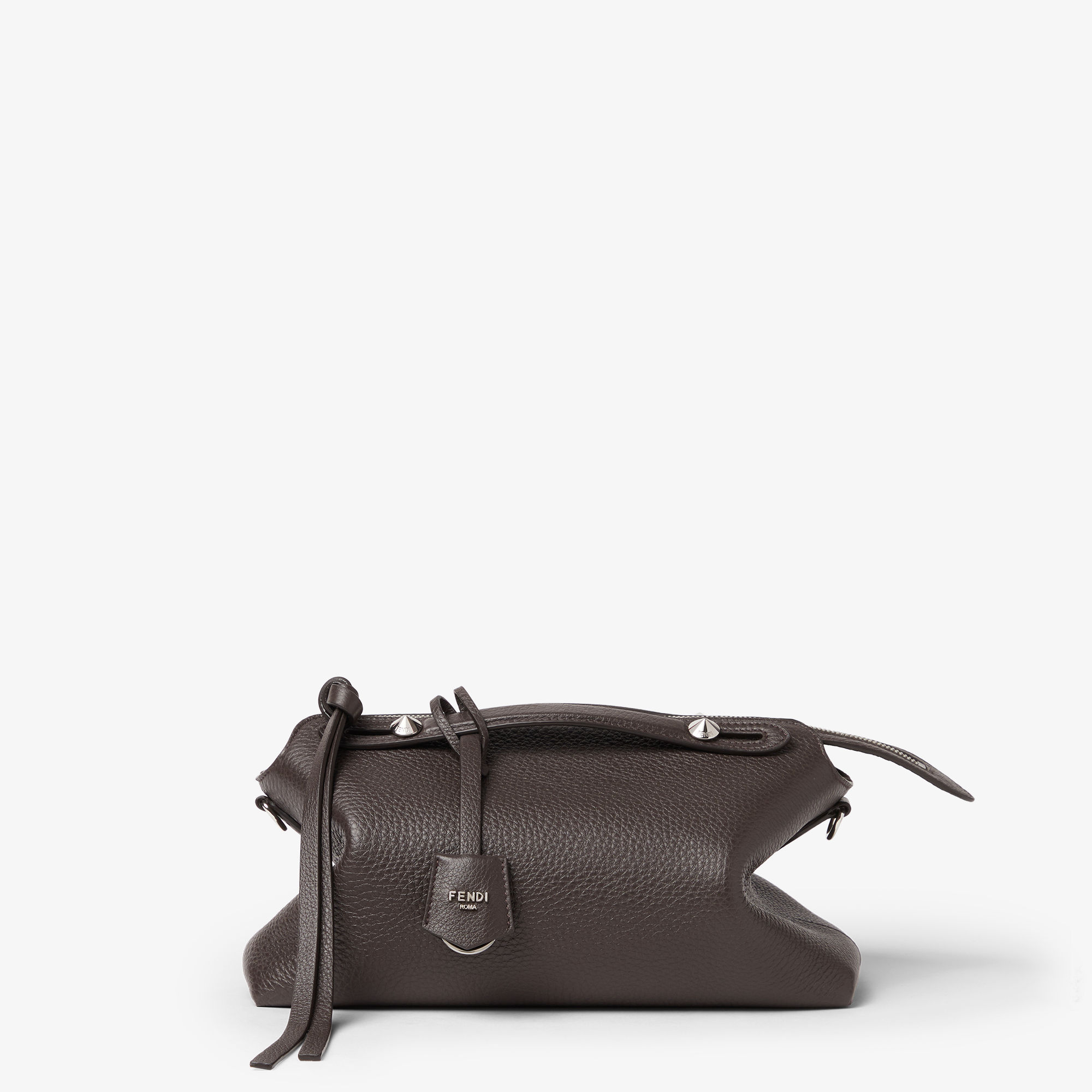
This is where most people actually start, and for good reason. The Peekaboo ISeeU Petite is Fendi's most considered bag—structured enough to hold shape, soft enough not to look like you're carrying a briefcase. The bag opens from the centre, two compartments divided by a stiff leather panel, and the interior lining is visible when the flaps fall open. Fendi rotates that lining by season: contrast leather, shearling, jacquard. The version to buy is black exterior with a tonal or cream interior. Anything louder dates you to the season you bought it.
The Petite measures 27 centimetres across, which makes it a day bag if you pack light and a dinner bag if you don't. It comes with a shoulder strap and a top handle, both of which you'll use depending on the coat you're wearing. The clasp is a twist-lock, metal but not heavily branded. The bag wears in around the base and the handle—scuffs appear within six months if you use it properly, and that's when it stops looking like everyone else's.
The ISeeU Petite works because it's not trying to be anything other than a bag. No logo canvas, no quilting, no chain strap that clatters when you move. It's Fendi's quietest piece, which also makes it the hardest to get wrong. If you're starting here, you're starting correctly.
First Medium Tote — €2,650
Fendi's tote offering has changed three times in as many years, but the First remains the most useful. It's a soft, unstructured rectangle in smooth calfskin, 33 centimetres wide, with rolled handles and a magnetic closure tucked under a flap. The tote folds flat when empty, which means it travels well and doesn't hold its shape against you when it's slung over a shoulder. The interior is suede—usually tonal, occasionally contrast.
The First works as a work bag if your work doesn't involve a laptop, or as a weekend bag if your weekends are short. It holds files, a sweater, a second pair of shoes, and a paperback without looking overstuffed. The leather is thicker than the Peekaboo's, closer to Fendi's belt and outerwear stock, and it takes scratches without broadcasting them. You'll notice them. No one else will.
The tote comes in black, tobacco, and a mid-grey that Fendi has kept in rotation longer than expected. The grey works if you wear a lot of navy or charcoal; otherwise it's a second bag, not a first. The tobacco is the move if you already own black bags and don't want another. It reads as neutral in practice, even though it isn't on paper.
Shearling-Lined Leather Jacket — €5,800
If you don't need another bag, or if bags aren't how you signal taste, Fendi's outerwear is where the house does its best work. The shearling-lined leather jacket is a standing style, not a seasonal capsule, and it's cut closer to a blouson than a biker. The leather is lambskin, matte, with a slight pull at the shoulders that softens after a season. The shearling is tonal—cream lining with black leather, camel lining with brown. The zippers are internal, no external hardware except for the zip itself, which is metal but unmarked.
This jacket works because it's not trying to be Roman. It's not trying to be anything. It's a piece of outerwear that happens to be made by Fendi, and the quality is legible in the weight and the hand, not in a logo you have to squint to find. You'll wear it for ten years if you treat it correctly, which means: don't dry-clean it unless you have to, don't store it in plastic, and don't zip it all the way up unless the wind requires it.
The jacket is a first step if you already know you prefer clothes to accessories, or if you've bought enough bags and want to move into something with more longevity. It's expensive, but it's less expensive than buying three mid-tier jackets that don't fit as well.
FF Embossed Belt — €490
Fendi's leather goods include belts, though they're not what the house is known for. The FF embossed belt is a 3.5-centimetre strap in smooth or grained calfskin, with the FF pattern debossed into the leather rather than printed or stamped. The buckle is a simple rectangle, brushed metal, no logo. The belt comes in black, dark brown, and a lighter tan that works if you wear a lot of cream or stone.
The embossing is subtle enough that it reads as texture from a distance, pattern up close. It's not loud, but it's not anonymous either—it's Fendi's way of marking the leather without resorting to hardware. The belt wears well if you rotate it with others; it wears poorly if you use it every day for two years. The leather will crease at the buckle holes, which is normal, and the embossing will soften, which is also normal. If that bothers you, buy two and alternate.
The belt is a first step if you don't carry bags, or if you do but don't want to start there. It's also the piece that makes the most sense if you're buying Fendi as a gift—it's personal enough to feel considered, practical enough not to sit unused.
Longevity, Or What Happens Next
Fendi's leather goods last if you don't expect them to look new forever. The house uses soft, supple skins that mark easily and age visibly. That's intentional. A five-year-old Peekaboo with scuffs along the base and a patina on the handles looks like it belongs to someone; a pristine one looks like it belongs to a closet.
Store bags upright, stuffed with tissue, away from direct light. Condition the leather once a year with a neutral cream—nothing coloured, nothing waxy. If the bag gets wet, blot it and let it dry at room temperature. Don't use a hairdryer. Don't take it to a chain cleaner. If it needs repair, Fendi's atelier service will re-stitch seams and replace hardware, though the turnaround is three months and the cost is not trivial.
The pieces that last longest are the ones you use most. Fendi isn't a brand you preserve. It's a brand you wear in.