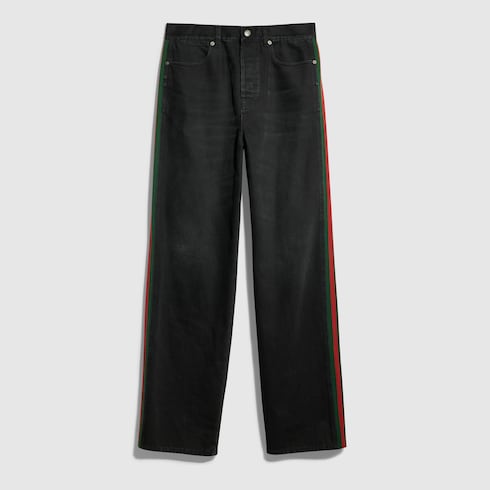
Gucci asks a question before you buy anything: which Gucci are you walking into
Gucci asks a question before you buy anything: which Gucci are you walking into? The house has been many things — Florentine saddler, jet-set shorthand, Tom Ford's louche 90s, Alessandro Michele's maximalist seven-year residency, Sabato De Sarno's current return to restraint. That fluidity is part of the appeal and part of the problem. A first Gucci purchase works when it leans into what the house has always done well — leather goods built on equestrian hardware, loafers that justify their weight, silk that behaves — and skips the seasonal flourishes that date fast.
The logic here isn't about buying the loudest piece or the safest one. It's about finding the place where Gucci's craft and your actual life overlap. A belt that works five days a week. A shoulder bag that doesn't ask you to dress around it. A loafer that improves as the sole thins out. The house's archive is long, and not all of it has aged equally, but certain pieces have stayed legible across decades because they were never about the moment. They were about material and making, and those don't go out.
What follows are entry points at three budgets, each one chosen because it'll still make sense in five years.
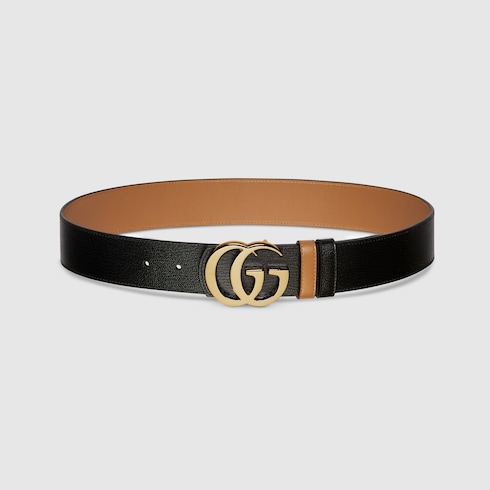
Under $500: The Marmont Belt
The GG Marmont belt — the one with the double-G hardware in matte or polished finish — is the most accessible way into Gucci's leather programme, and it's better than it has any right to be at this price. The strap is full-grain calfskin, not the corrected stuff you find on lower-tier goods, and the buckle is solid brass, not plated zinc that'll flake in a year. Width matters here: the 4cm version works on tailored trousers and doesn't look like costume. The 2cm iteration is harder to place unless you're already dressing in a very specific register.
You'll see this belt everywhere, which is either a deterrent or a non-issue depending on how you feel about ubiquity. The case for it is durability. The leather takes a beating and softens without cracking. The hardware stays put. It doesn't ask you to build an outfit around it, which is what you want from a first piece. You thread it through denim, through wool trousers, through linen in summer, and it just works. The house has made versions of this belt for decades — the double-G isn't new, it's from the 60s — so you're not buying into a trend. You're buying into a logo that's had time to settle.
Avoid the wider, statement versions unless you're already very sure of how you dress. They tip into costume faster than you think.
$800–$1,200: The Horsebit Loafer
The Gucci loafer is the reason the house still matters in footwear, and if you're going to spend four figures on shoes, this is the shape that'll justify it. The 1953 horsebit — the one with the snaffle hardware across the vamp — is the original, and it's been in production, mostly unchanged, for seventy years. That's not heritage marketing. That's a shoe that works.
What you're paying for is the last and the leather. Gucci's loafer last is narrow through the heel and generous through the toe box, which means it actually holds your foot instead of letting it slide around. The leather is either calfskin or suede, both vegetable-tanned, and both of which will crease and patina in ways that make the shoe look better, not worse. The sole is leather, which some people find slippery at first — it is, until you scuff it up on pavement for a week. After that, it grips.
Sizing runs true, sometimes a half-size large depending on your foot width. If you're between sizes, go down. These stretch.
The loafer works because it's not trying to be anything other than itself. You wear it with a suit, with cropped trousers, with denim that stacks at the ankle. It doesn't need a whole look. It is the look. The horsebit will read as Gucci to anyone who knows, and to everyone else it just reads as a well-made shoe, which is the better outcome anyway.
Skip the platform versions and the ones with extra hardware. The original shape is the one that lasts.
$1,800–$2,500: The Jackie 1961
If you're spending real money on a Gucci bag, the Jackie 1961 is the one that'll still feel right in a decade. It's a shoulder bag, technically a hobo, with a single curved handle, a piston closure, and a crescent shape that sits under the arm without announcing itself. The name references Jacqueline Kennedy Onassis, who carried an earlier version in the 70s, but the appeal isn't nostalgia. It's proportion. The bag is small enough to feel considered, large enough to be useful, and shaped in a way that doesn't look dated because it was never trying to be contemporary.
The 1961 reissue — relaunched under Alessandro Michele, refined under De Sarno — comes in several sizes. The medium hits the sweet spot. It holds a wallet, a phone, keys, a small notebook, sunglasses. It doesn't hold a laptop, which is correct. This isn't a work bag. It's a bag that works.
Material matters more here than in any other category. The leather versions in black or brown calfskin are the most versatile and the ones that'll patina well. Suede is beautiful and higher-maintenance. The canvas GG Supreme iterations are lighter and more casual, but they won't age the same way — canvas wears down, leather wears in. If you're spending this much, spend it on something that improves.
The piston closure is fiddly at first. You'll get used to it. The single handle means you carry it on one shoulder, which some people find less practical than a double-strap option. That's the trade-off for the silhouette.
What makes the Jackie work as a first serious bag is that it doesn't require you to dress up to it. It looks right with a T-shirt and trousers. It looks right with tailoring. It's not trying to be an evening bag or a statement piece. It's just doing its job, which is to hold your things and not get in the way of how you move.
$3,000 and Up: The Bamboo 1947
If you've got the budget and the wardrobe to support it, the Bamboo 1947 is Gucci's most interesting archival pull. It's a top-handle bag with a curved bamboo handle — actual bamboo, heat-treated and bent into shape — and a structured body that holds its form. The original was designed in 1947, when leather was still rationed after the war and the house had to improvise with materials. The bamboo wasn't a flourish. It was a solution.
The current version, reissued in 2021, is more refined than the vintage iterations but keeps the same construction. The handle is still made by hand in Florence, still bent using the same heat process, still attached with leather loops and metal hardware. The body is calfskin, lined in suede, with a flap closure and an optional shoulder strap. It's a small bag — closer to the Jackie in capacity — but it reads more formal because of the structure.
This is not an everyday bag unless your everyday involves a level of dressing that most people don't maintain. It's for occasions. It's for when you need a bag that holds the outfit together without competing with it. The bamboo handle will always read as Gucci, which is either the point or a dealbreaker depending on how you feel about being legible.
The craftsmanship is visible here in a way it isn't on other pieces. You can see where the bamboo is joined, where the leather is stitched, how the hardware is anchored. That transparency is part of the appeal. You're not buying a logo. You're buying a thing that someone made, and made well.
Keeping It Right
Gucci's leather goods are built to last, but they won't do it on their own. Calfskin needs occasional conditioning — a neutral cream every few months, more often if you're in a dry climate. Suede needs brushing and protection, and it will mark, which is part of the deal. The hardware will tarnish if you don't wipe it down after wearing it, especially in summer when skin oils build up.
Loafers need shoe trees. Not the spring-loaded kind that push the leather out of shape, but proper cedar ones that hold the form and pull moisture out after you wear them. Rotate your shoes. Don't wear the same pair two days in a row. The leather needs time to dry and reshape between wears.
Store bags stuffed with tissue, not hanging, and keep them out of direct sunlight. The dye will fade. If something stains or tears, take it to a leather specialist, not a cobbler. Gucci's in-house repair service exists, but it's slow and expensive. A good independent can usually do the same work faster and for less.
The point of buying well is that the thing improves as you use it. But improvement requires maintenance. You can't just wear it into the ground and expect it to look good. Leather is skin. Treat it accordingly.