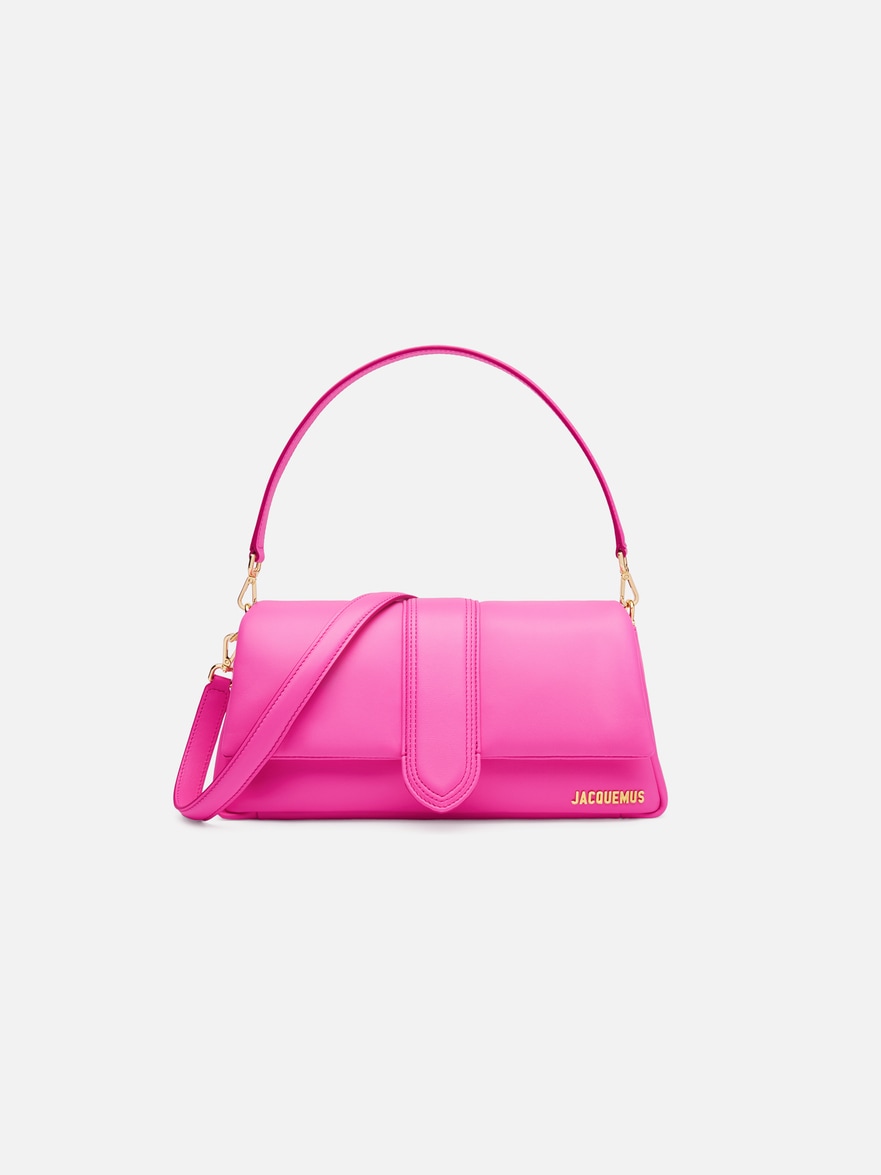
Jacquemus doesn't need you to understand it
Jacquemus doesn't need you to understand it. The house operates on a frequency that either lands immediately or leaves you cold, and there is no middle ground. Simon Porte Jacquemus built a brand that feels both deeply personal and oddly universal—sun-soaked, structurally playful, occasionally absurd. The silhouettes are recognisable from thirty paces. The bags telegraph their provenance without a monogram in sight. This is not quiet luxury. It is not stealth wealth. It is, instead, a kind of joyful formalism: clothes and accessories that know exactly what they are and refuse to apologise for it.
If you're considering your first piece, the question isn't whether Jacquemus is 'worth it'—taste doesn't submit to spreadsheets. The question is where to begin. The house moves quickly. Collections shift tone season to season, but certain shapes recur, refined slightly each time. A good entry point is one that survives the churn, that works within your existing wardrobe rather than demanding you rebuild around it. Below, a few routes in, sorted by what you're prepared to spend and what you actually need.
Le Chiquito and its siblings (€350–€650)
The Chiquito is the house's calling card, and also its liability. It is comically small, borderline nonfunctional, and instantly recognisable. If you want to announce that you own a Jacquemus bag, this is the most efficient way to do it. If you want to carry more than a card holder and a lip balm, look elsewhere.
The Chiquito works as a novelty, a conversation piece, a bag you clip to a larger tote when you need your hands free. It does not work as your daily bag unless your daily life involves carrying almost nothing. The leather is decent—smooth calfskin, clean edge painting—but you're paying for the shape, not the material. At €350 for the smallest iteration, it's expensive for what it is. It's also the piece most people buy first, which tells you something about how branding works.
The smarter play, if you want a Jacquemus bag that actually functions, is the Bambino or the Grand Bambino. Same visual language—curved top handle, clean lines, that unmistakable Jacquemus proportion—but scaled to hold a phone, a wallet, keys, the things you actually leave the house with. The Bambino sits around €490, the Grand closer to €650. Both come in seasonal colours that rotate faster than you can track them, but the neutral leathers—cream, tan, black—reappear often enough that you can wait for the right one.
Le Bob Gadjo (€90–€120)
If you want to test the waters without committing to leather goods, start here. The bucket hat is a recurring piece in Jacquemus collections, rendered in cotton twill or linen depending on the season. It's unstructured, softly brimmed, embroidered with the house name in a size that reads from across a room.
This is not a subtle hat. It is also not trying to be. What it is, instead, is an efficient way to add a specific kind of French-vacation energy to an otherwise plain outfit. White tee, denim, the Gadjo—you're done. It works because the hat does all the talking, and because Jacquemus understands that sometimes you want the branding visible. The construction is straightforward. The cotton holds up to sun and salt and the occasional wash. At €90, it's the least expensive way into the house, and the piece you'll reach for more often than you expect.
Shirts and knitwear (€250–€450)
Jacquemus tailoring is a moving target—cuts shift, proportions exaggerate, then retract. But the shirts hold steady. Look for the striped cotton styles that appear most seasons, often in Breton-adjacent patterns with slightly off proportions. Sleeves run long, bodies run short, collars sit wide. The effect is studied but not precious.
The house's knitwear follows similar logic. Cardigans come cropped, often with contrast piping or oversized buttons. Knit polos land somewhere between Riviera cliché and genuine usefulness. The materials are mid-tier—cotton blends, merino that pills if you're not careful—but the cuts are specific enough that you're buying the design, not the fibre content.
These pieces work best as accents, not foundations. A Jacquemus knit polo under a navy blazer adds tension. A striped shirt worn alone reads like you're trying too hard. Layer them, undercut them, let them sit against something plain. The house's ready-to-wear is at its best when it's not doing all the work.
Le Papier bag (€850–€1,100)
If the Chiquito is the house's novelty act, the Papier is its grown-up answer. This is a structured leather tote with a curved silhouette and a top handle that mimics the bend of a paper bag. It's more practical than most of what Jacquemus produces, and more versatile than anything involving a micro-bag and a shoulder strap.
The Papier comes in two sizes—small enough for daily errands, large enough for a laptop and a change of shoes. The leather is firmer than the Bambino, with a grain that hides scratches better than smooth calfskin. It stands upright when you set it down. It holds its shape under weight. These are not exciting qualities, but they matter if you plan to use the thing.
At €850 for the smaller version, the Papier sits in the same range as entry-level Loewe or mid-tier Celine. The difference is that the Jacquemus silhouette is more specific, which means it's either exactly what you want or completely wrong. There is no safe middle option here.
Outerwear (€600–€1,200)
Jacquemus coats tend toward the sculptural. Oversized wool toppers with exaggerated lapels, cropped trench styles that hit at the waist, double-breasted blazers cut long and worn as dresses. These are statement pieces in the truest sense—they demand the rest of the outfit recede.
The quality is acceptable but not exceptional. Wool blends rather than pure fibres, linings that could be cleaner, construction that favours shape over durability. You're buying the cut, the proportion, the way the shoulder sits forward or the sleeve bells at the cuff. If you want a coat that will last fifteen years, buy British or Italian. If you want a coat that looks like nothing else in your wardrobe, Jacquemus delivers.
The trench styles are the most wearable, particularly the belted versions that echo the house's affection for cinched waists and fluid drape. Expect to pay €900 and up, more if the fabric involves linen or a seasonal print. These pieces work best if you already have the basics covered and you're looking for something that shifts the tone of everything else you own.
Care, longevity, reality
Jacquemus is not a heritage house. The bags will not develop a patina that improves with age. The knitwear will not last longer than comparable pieces from older maisons. What you're buying is a specific aesthetic at a specific moment, and the value is in how much that matters to you.
Store leather goods in dust bags, away from direct sun. The house's signature colours—bright yellow, pale pink, sky blue—will fade faster than black or tan. Rotate your bags if you buy more than one. Spot-clean canvas and cotton rather than washing, unless the care label says otherwise. The hardware is generally solid, but the thin straps on smaller bags will stretch over time if you overload them.
Treat these pieces as design objects that happen to be functional, not as investments that appreciate. They won't. But if you buy the right one, you'll wear it enough that the cost per use drops below what you'd spend on something safer and duller. That's the trade.