Acne Studios : les artisans qui font le travail
The atelier sits above a cobbled courtyard in Stockholm's Södermalm district, and on a Tuesday in late September the pattern-cutters are bent over a table strewn with muslin. One of them, a woman named Elin Norberg, is adjusting the shoulder line of what will become the next iteration of Acne Studios' double-breasted coat — a silhouette the house has refined, season after season, since the early aughts. She pins, steps back, pins again. The gesture is ordinary. The coat, arguably, is not.
Acne Studios has spent two decades building a reputation on restraint — clean lines, muted palettes, an aversion to logo worship — but the mechanics of that restraint remain largely invisible. We see the runway. We do not see Norberg's hands, or those of the dozen other artisans who translate Jonny Johansson's sketches into cloth. This is not an oversight. It is house policy, or at least house habit. Swedish modesty runs deep.
The ones who cut
Norberg trained at Beckmans College of Design in the mid-nineties, a period when Swedish fashion was still finding its footing outside of H&M's industrial sprawl. She joined Acne in 2004, two years after the house moved beyond denim and into ready-to-wear. Her role, then as now, is to interpret Johansson's gestures — a sketch, a fabric swatch, sometimes just a verbal cue — and render them in three dimensions. "He works intuitively," she told Scandinavian Style in 2019. "We work technically. The two have to meet."
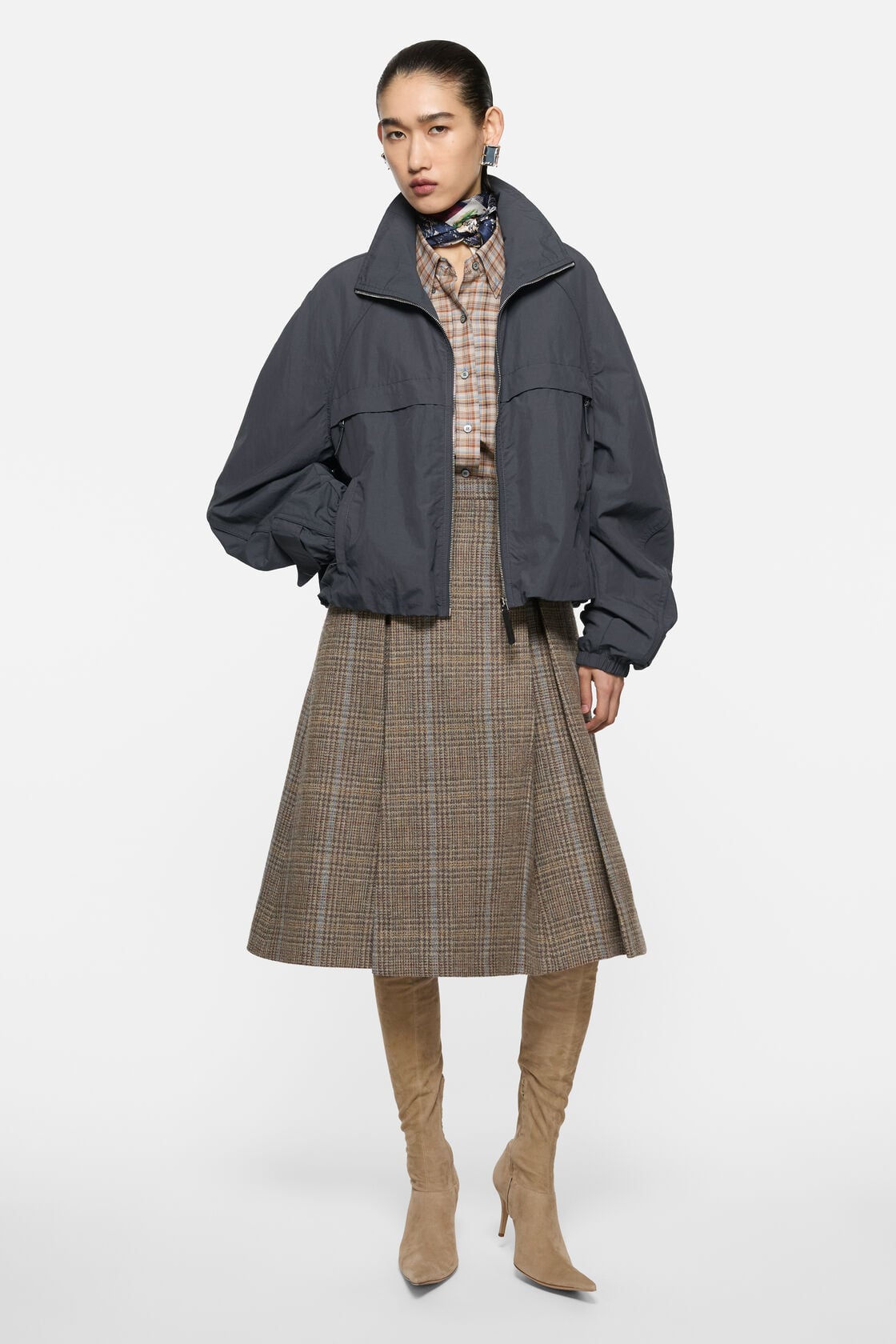
The double-breasted coat is a case study. Johansson wanted something between a trench and a blazer, with a shoulder that sat forward but did not collapse. Norberg spent three weeks on the first toile, adjusting the pitch of the sleeve head by fractions of a centimetre. The result — sharp, slightly mannish, worn open or belted — has appeared in some form in nearly every collection since. It is not signature in the way a Birkin is signature. It is signature in the way a well-cut suit is signature: you know it when you see it, even if you cannot name the maker.
Beside her at the table is Anders Lindqvist, who handles knitwear development. He came up through Filippa K's technical team and joined Acne in 2011, the year the house opened its first Paris boutique. His domain is gauge and tension — the mechanics that determine whether a sweater will hold its shape or sag after three wears. Acne's oversized wool crewnecks, the ones that appear every autumn in shades of camel and charcoal, pass through his hands before they reach the factory floor. He adjusts stitch density, selects yarn weights, tests samples in a washing machine set to forty degrees. The work is repetitive. It is also consequential.
The ones who sew
Downstairs, in a room that smells faintly of steam and sizing, the sample machinists work through fittings. On this particular afternoon, they are assembling a leather bomber — part of the pre-fall lineup — and the challenge is the zipper. Acne favours a heavy-gauge metal pull, the kind that adds weight to the garment and requires a steady hand to set. The machinist, a man named Per Johansson (no relation to the creative director), has been with the house since 2006. He worked previously at a uniform manufacturer, stitching police jackets and hospital scrubs. The precision required there translates here, though the stakes have shifted. A misaligned zipper on a bomber retailing at two thousand euros is not a small matter.
Per does not speak to press. None of the machinists do, as a rule. But his colleagues describe him as exacting, the sort of craftsman who will unpick a seam three times if the topstitching does not sit flush. The bomber takes six hours to assemble, start to finish. Most of that time is spent on details invisible to the eventual wearer: the way the lining is anchored at the shoulder, the reinforcement stitching inside the pocket bags, the hand-finishing along the collar stand. This is not couture. It is industrial craft, executed with a degree of care that blurs the line between the two.
The ones who dye
Colour at Acne Studios is developed in consultation with a dye house outside Borås, two hours south of Stockholm. The technical lead there, a chemist named Karin Ek, has worked with the brand since 2008. Her job is to match Johansson's colour references — a Polaroid, a swatch of vintage fabric, sometimes a paint chip — to something reproducible in cotton, wool, or leather. The process is iterative. A single shade of grey might require a dozen lab dips before it meets approval.
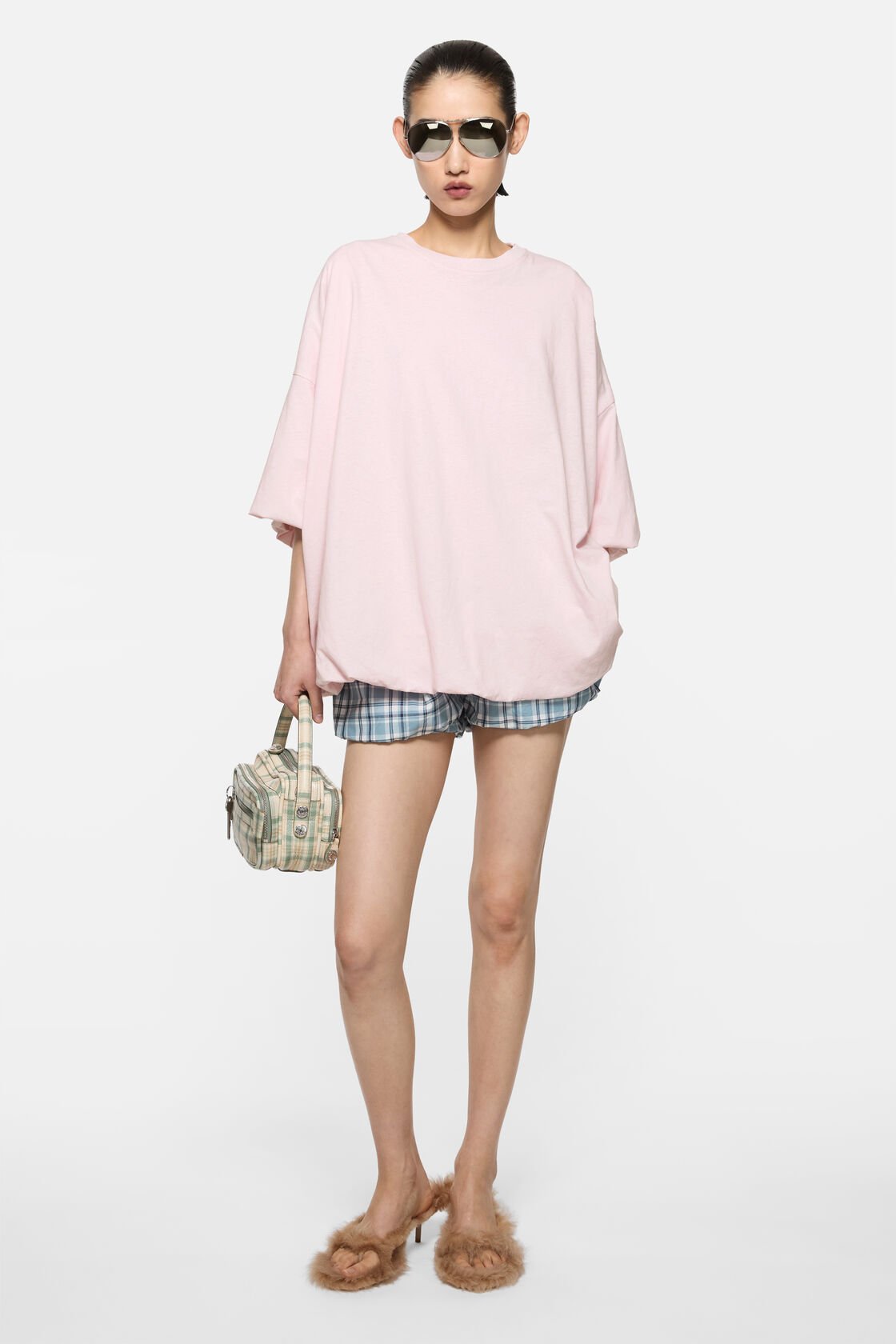
Acne's palette skews neutral, but neutral is deceptive. The house's signature "dusty pink" — a muted rose that appears season after season in coats, trousers, and knitwear — is neither warm nor cool. It sits in between, which means the dye formula shifts depending on the base fabric. Cotton pulls cooler. Wool pulls warmer. Ek adjusts the ratios accordingly, testing each batch under daylight and tungsten to ensure consistency. The work is technical, not romantic. But it is also the reason an Acne coat from 2015 reads as unmistakably Acne, even beside a piece from last autumn.
The ones who fit
Fittings at Acne happen twice weekly, and the house model — a woman named Saga Malmberg, who has worked with the brand since 2012 — stands for hours while adjustments are made. She is not a designer. She is not a pattern-cutter. But her proportions have, over time, become a reference point. Johansson designs with her frame in mind: tall, narrow-shouldered, long-limbed. This is not unusual in fashion. What is unusual is the degree to which her feedback shapes the final garment.
"She'll say if something pulls across the back, or if a waistband sits wrong," Norberg explained in the same Scandinavian Style interview. "We listen." The result is a fit that feels specific rather than generic, tailored to a body rather than an algorithm. Whether that body resembles the eventual customer's is another question, but the intentionality is evident.
What remains
Acne Studios is now owned by a private equity firm, and production has shifted largely to Portugal and Italy. The Stockholm atelier still exists, but its function has narrowed. Norberg and her team develop prototypes; the factories execute them at scale. This is standard practice for a brand approaching two hundred million euros in annual revenue. It is also a departure from the early years, when every piece was cut and sewn within a few blocks of the Södermalm studio.
Johansson remains the public face, the one whose name appears in interviews and on mood boards. But the coat that walks a runway in Paris, the one that will hang in a boutique in Tokyo three months later, carries the trace of a dozen other hands. Norberg's pins. Lindqvist's gauge calculations. Per's topstitching. Ek's dye ratios. Malmberg's posture.
One can argue that this is true of any garment produced at scale. That said, there is a difference between acknowledging the labour and naming it. Acne Studios has, until recently, preferred the former. Whether that changes — whether the house begins to foreground the artisans rather than the aesthetic — remains to be seen. For now, the work continues, mostly out of sight. The coat, on balance, speaks for itself.