Bottega Veneta : les artisans qui font le travail
The leather arrives in Vicenza already tanned, but it doesn't become a bag until Giuliana Benetton runs it through the first cut. She's been at Bottega Veneta's atelier for nineteen years. Her station is third from the left in the main workshop, beneath a north-facing window that hasn't been replaced since the Seventies. The intrecciato weave — the house's signature since 1966 — requires strips of equal width, equal tension, equal hand. Benetton cuts them by eye.
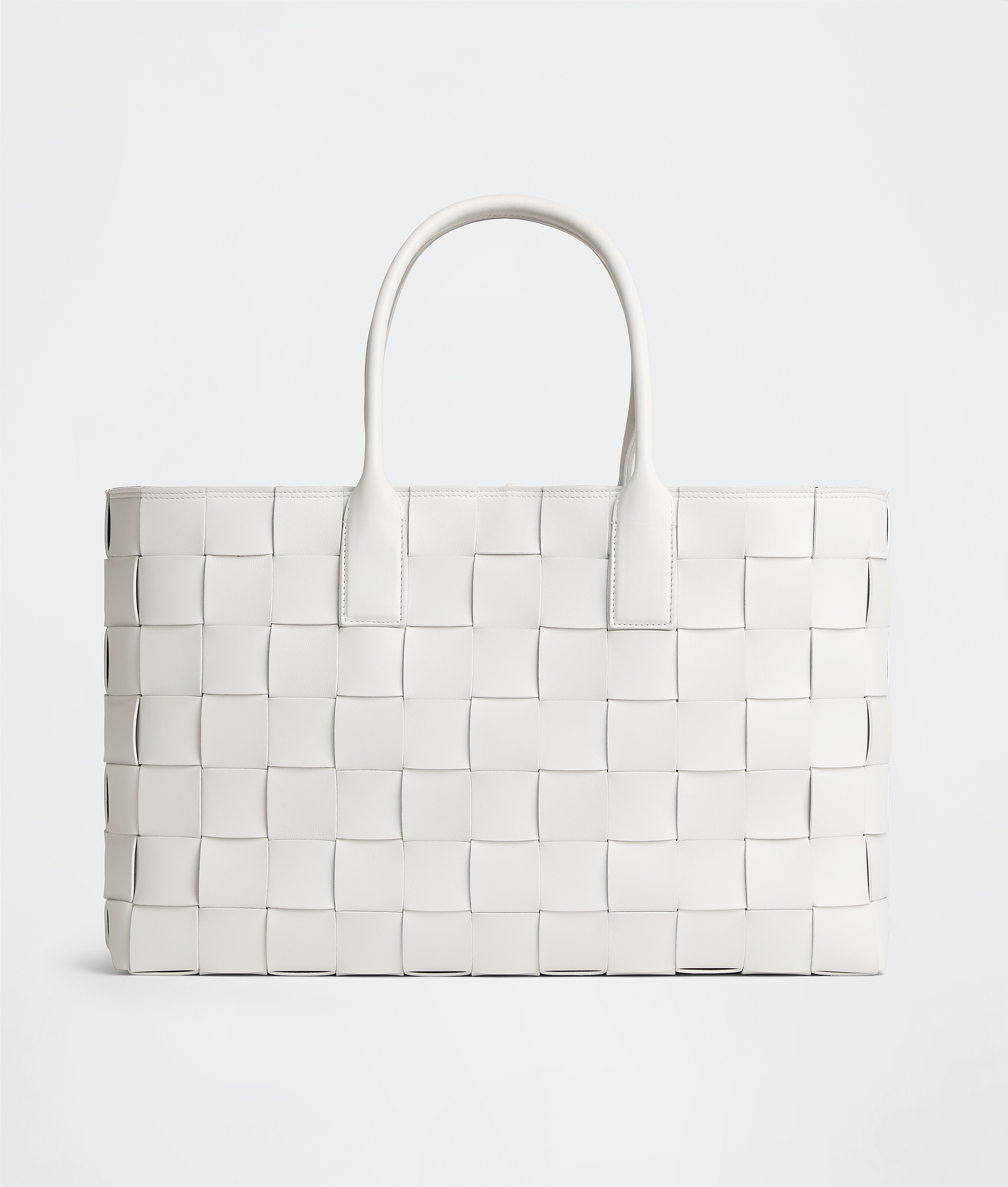
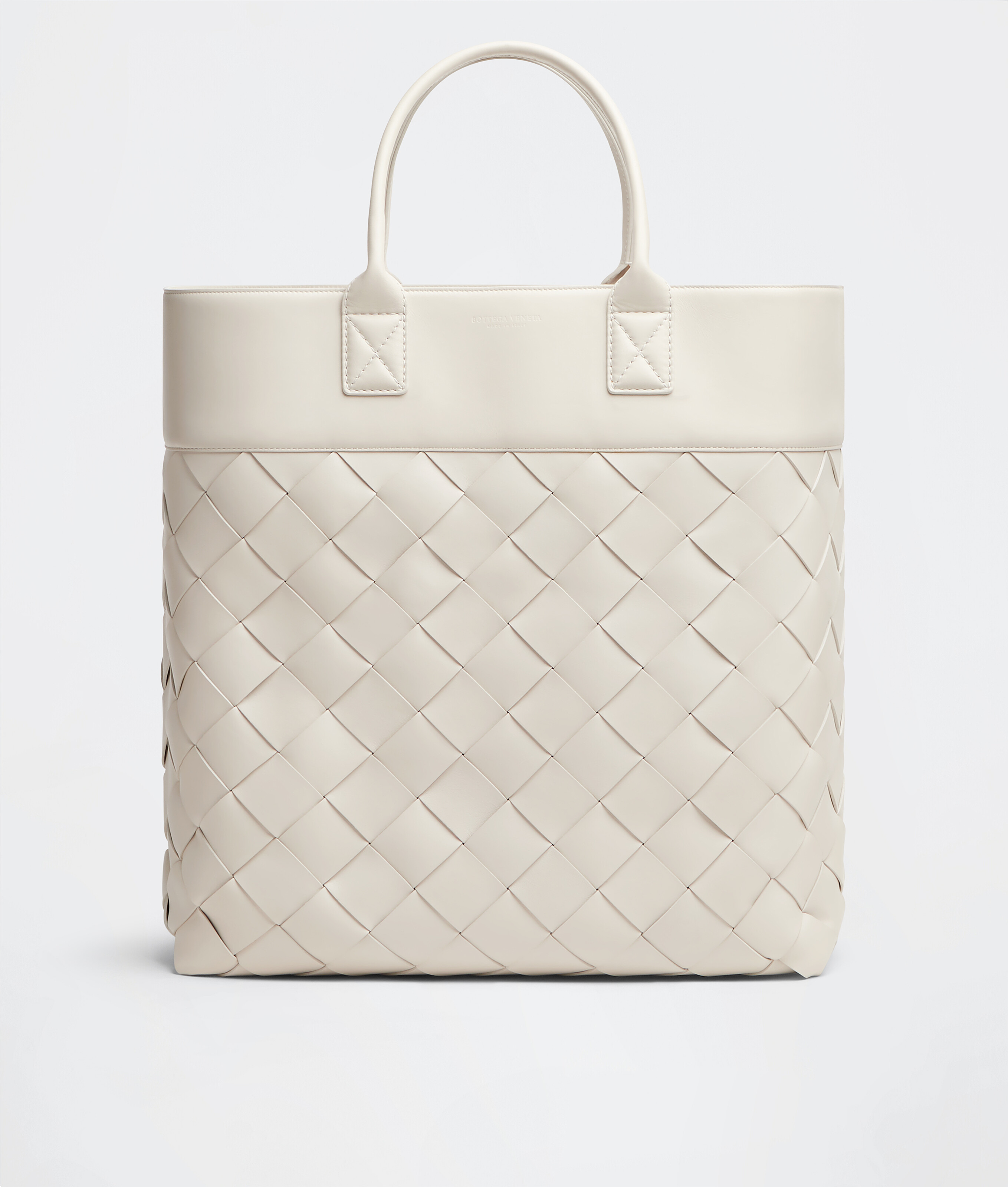
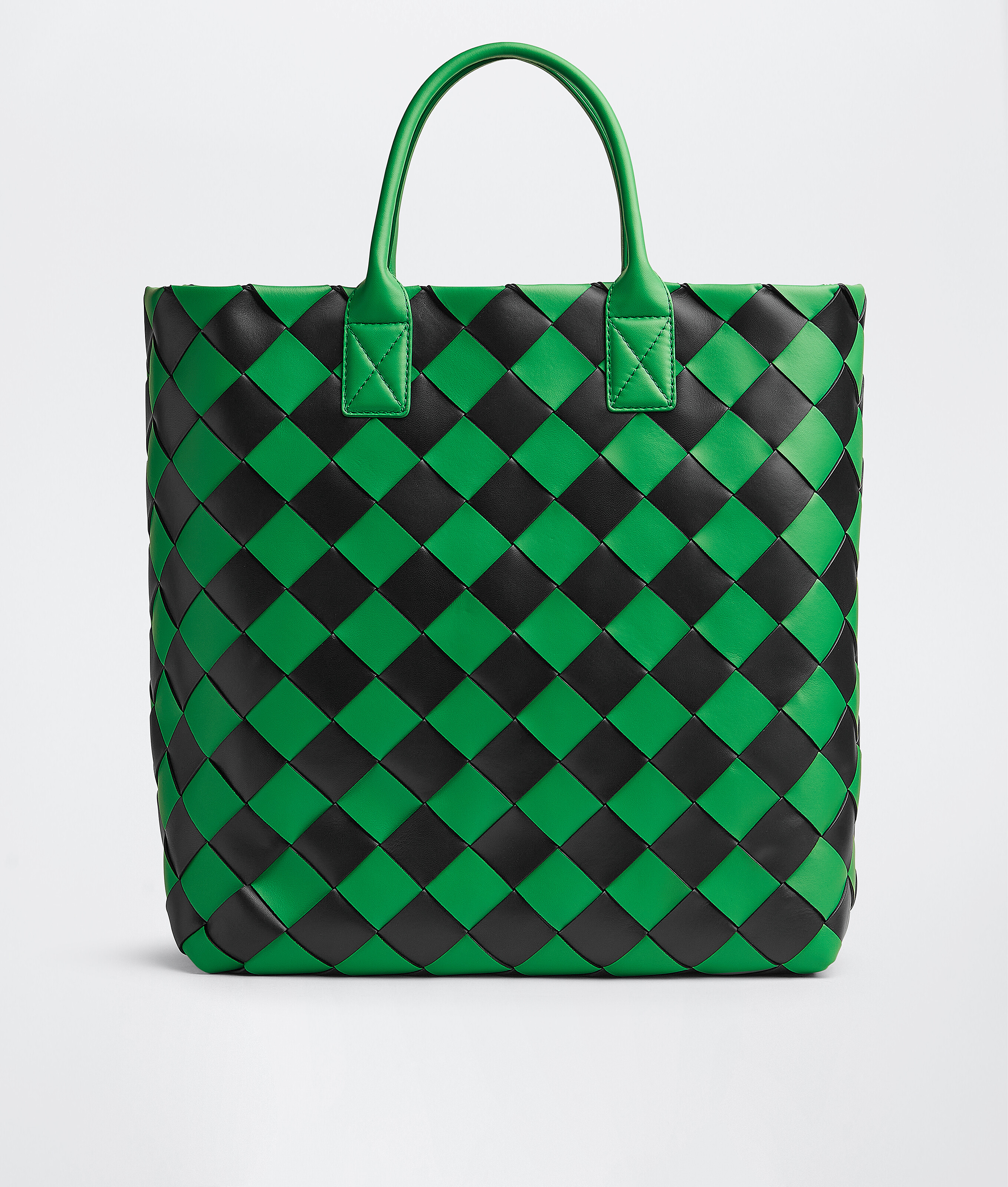
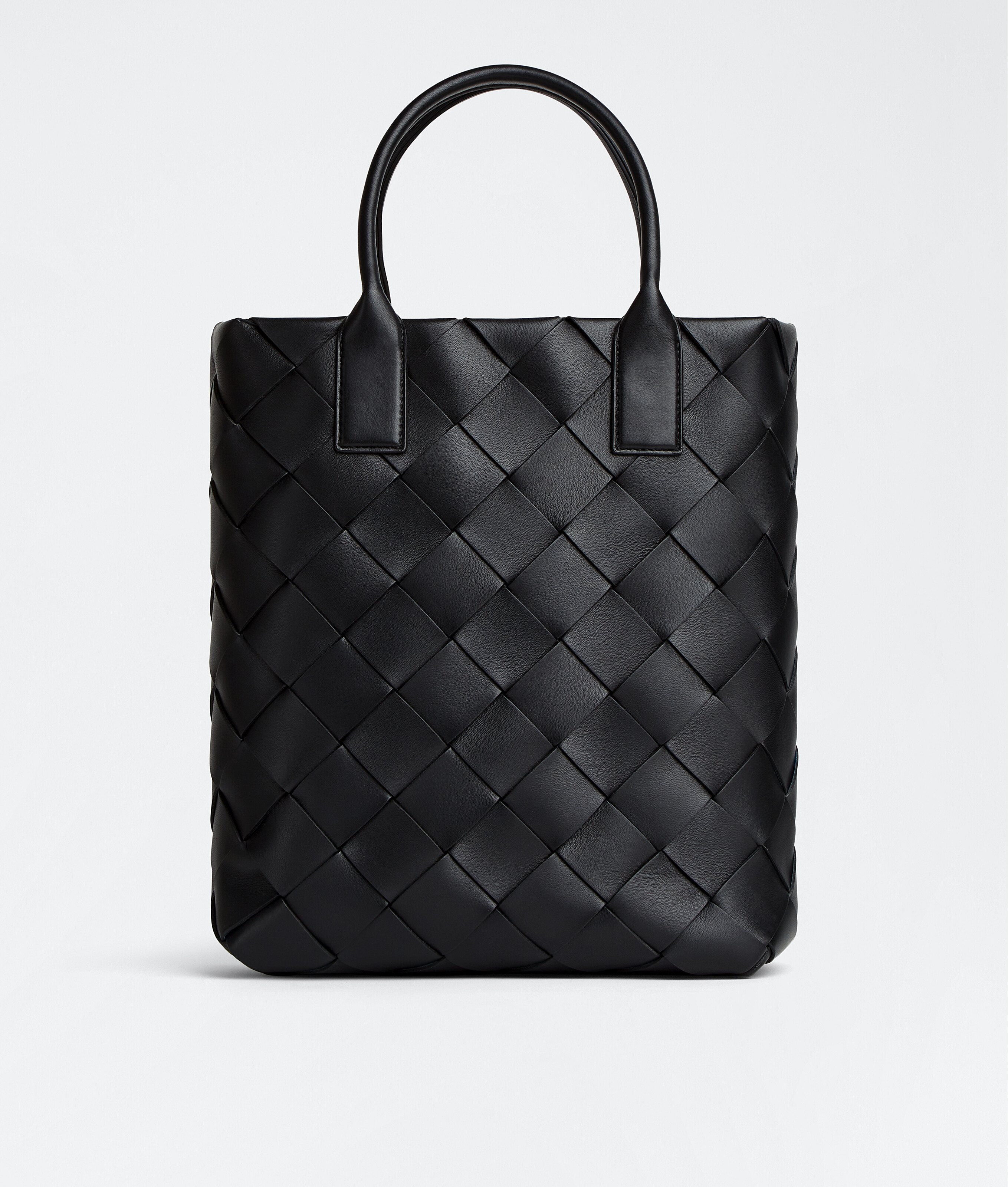
You don't see her name on the product. You don't see anyone's name, really, except Matthieu Blazy's on the runway credits and the occasional nod to 'Italian artisans' in press materials. But Bottega Veneta, more than most houses, depends on the people who can actually make the thing. The intrecciato isn't a logo you embroider. It's a structural choice that requires someone who knows how leather behaves when you fold it, weave it, then fold it again.
Benetton learned the weave from her predecessor, who learned it from hers. The house has always operated this way. When Tomas Maier took over as creative director in 2001, he didn't overhaul the atelier. He spent six months watching them work. The weavers, the cutters, the finishers who burnish edges by hand — they were already doing what he wanted. His job was to frame it differently.
The ones who stay
Bottega's atelier isn't large by Kering standards. Roughly two hundred artisans work across leather goods, with another fifty or so dedicated to ready-to-wear. Turnover is low. The average tenure runs somewhere past twelve years, which in fashion terms might as well be a lifetime. Most started young. Chiara Moretto joined at seventeen, straight out of technical school in Montebelluna. She's thirty-one now and runs the quality-control station for small leather goods. Every card case, every coin purse, every zip pouch passes through her hands before it leaves the building.
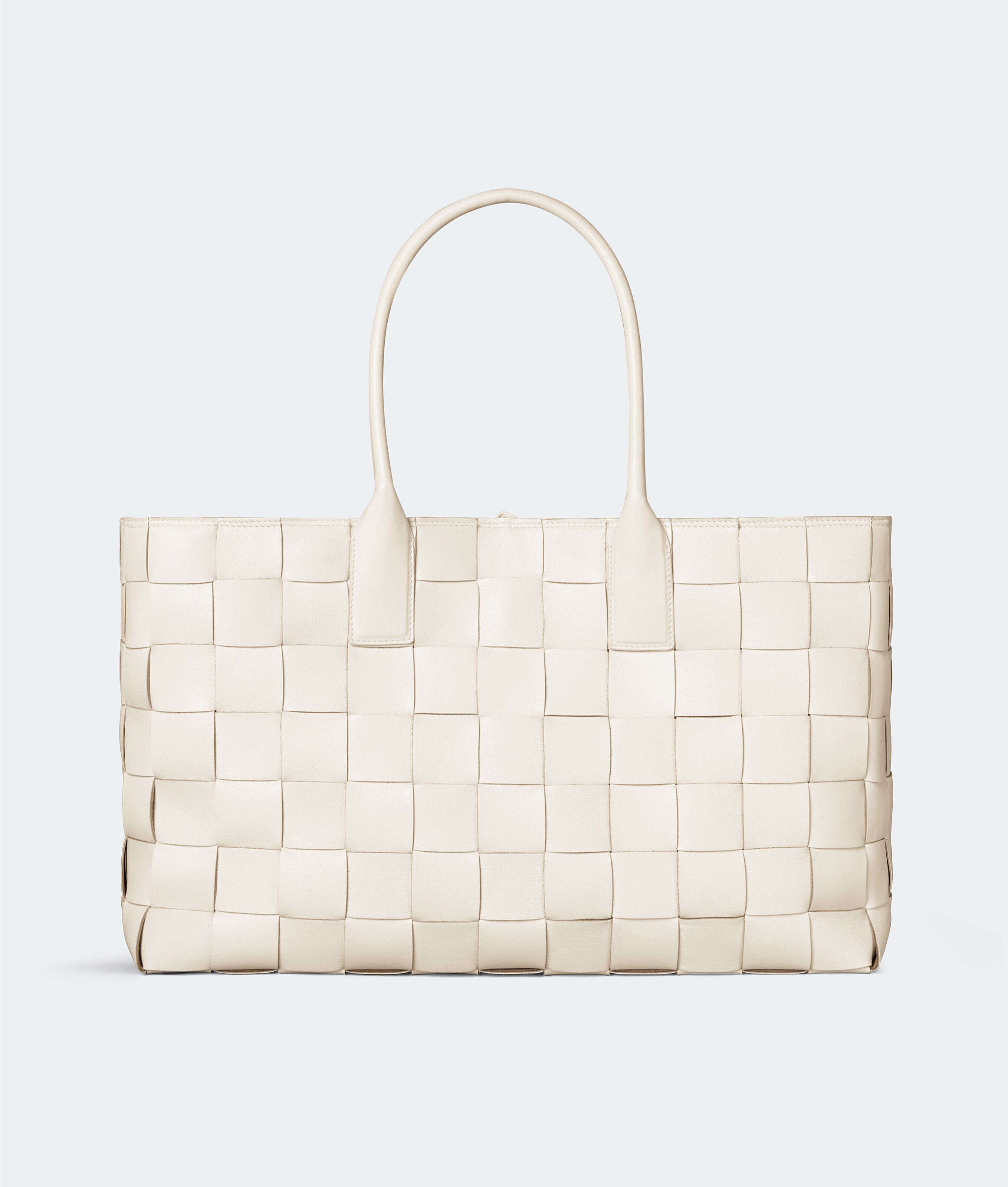
Moretto doesn't weave anymore — she did that for her first four years — but she can still spot a loose strip from across the room. Tension is everything. Too tight and the leather puckers. Too loose and the whole structure sags. The intrecciato should feel taut without looking stiff, which is a narrow band to work within. It takes about two years before someone can weave a Cabat tote without supervision. The Cabat has no internal frame, no hardware, no lining. It's just woven leather, and if the tension isn't consistent throughout, the bag won't hold its shape.
The house introduced the Cabat in 2001. It became the signature piece almost immediately, not because Maier marketed it aggressively — he didn't — but because it was legible. You could see the labour. The intrecciato was already synonymous with Bottega, but the Cabat made it sculptural. It also made it expensive. A medium Cabat runs north of €4,000, which is justified entirely by the hours required to make it. Machines can't weave leather like this. People can, if they've done it long enough.
What Blazy inherited
When Matthieu Blazy became creative director in November 2021, the question wasn't whether he'd respect the atelier. Everyone respects the atelier. The question was whether he'd give them anything new to do. Daniel Lee, his predecessor, had leaned into hardware and structure — the Pouch, the Padded Cassette, the chunky chain straps. Blazy's first collection, shown in February 2022, went the other direction. Softer shapes. More intrecciato, less metal. A return to the weave as the central gesture.
The artisans noticed. Blazy had worked at Bottega before, from 2013 to 2016, in ready-to-wear. He knew the people. He knew what they could do. His first season included a woven leather trench coat — not panels of intrecciato sewn together, but an entire coat constructed from woven strips. It took four people three weeks to make the prototype. The production version, which appeared in stores that autumn, still requires two full days of weaving before assembly even begins.
That trench is now one of the house's signature pieces, which means the atelier makes it in multiples. Not many — Bottega doesn't run at Hermès-level scarcity, but it's not fast fashion either. The weavers who make the trench are the same ones who make the Cabat, the Jodie, the Arco. They rotate. Moretto says it keeps the work from going stale. You don't want to weave the same bag for eight hours a day, five days a week. Your hands remember the pattern too well. You stop checking your tension.
The finishing problem
Bottega's edge-finishing is done by hand, which is both a selling point and a logistical headache. Edges are burnished with beeswax and a wooden tool that looks like a small rolling pin. The process smooths the cut leather and seals it, but it also takes time. A single Cabat has roughly twelve metres of exposed edge. Each metre requires three passes. The finisher — usually someone who's been at the house for at least a decade — works in sections, checking for evenness as they go.
Stefano Rossi has been finishing edges since 2004. He started in quality control, moved to assembly, then shifted to finishing when the previous lead retired. Rossi's station is near the back of the atelier, away from the windows. He prefers it. The light is consistent, and he doesn't get distracted by people walking past. Finishing is repetitive, but it's not mindless. The pressure matters. Too much and you flatten the leather. Too little and the edge stays rough.
Rossi works through about eight bags a day, depending on the style. A Jodie takes less time than a Cabat. A card case takes almost no time at all, but the tolerances are tighter. You notice a rough edge on a small piece. On a large bag, it might blend in. Bottega's quality standards don't allow for blending in. If Rossi isn't satisfied, the piece goes back to the weaver for adjustment. It doesn't happen often — the weavers know what he's looking for — but it happens.
What comes next
Blazy's Spring 2025 collection, shown in September, included a bag made from a single piece of leather, folded and woven without seams. The atelier is still figuring out how to produce it at scale. The prototype worked, but prototypes always work. The question is whether you can make fifty of them, or five hundred, without the quality dropping off.
This is the tension Bottega lives in. The house sells craft, which means the craft has to be visible, which means it has to be real. You can't fake an intrecciato weave. You can't automate it, either, at least not in a way that produces the same result. So the atelier stays small, the artisans stay experienced, and the bags stay expensive.
Benetton, the cutter, is training two new hires this season. Both are in their early twenties. Both will spend the next year learning to cut strips by hand before they touch a weave. The house has a waiting list for atelier positions. Not a long one — this isn't Hermès — but long enough that most applicants don't make it through. The ones who do tend to stay.
The intrecciato is sixty years old. The people who make it now weren't alive when it was invented. But they know it the way Benetton knows it, the way Rossi knows it — not as an idea, but as a thing their hands can do. That's the work. That's what you're paying for.