Grace Coddington once said that the best models don't wear clothes — they inhabit them
Grace Coddington once said that the best models don't wear clothes — they inhabit them. At Gucci, over eight decades, three women have done precisely that, not on the runway but in the collective imagination of the house. Each arrived at a different inflection point. Each left the brand irrevocably altered.
The Contessa and the Bamboo Handle
Rodolfo Gucci met her in 1952, at a luncheon in Rome. She was not yet a client. The story, as it circulated through the atelier on Via Condotti, involved a broken clasp and an improvised repair — Gucci's craftsmen fashioning a curved bamboo handle to replace the metal hardware that had failed on her existing bag. Whether the anecdote is apocryphal hardly matters. What is documented is this: by the mid-fifties, bamboo-handled top-handles had become the house's signature accessory, and the women carrying them were almost exclusively titled, almost exclusively Italian, and almost exclusively photographed.
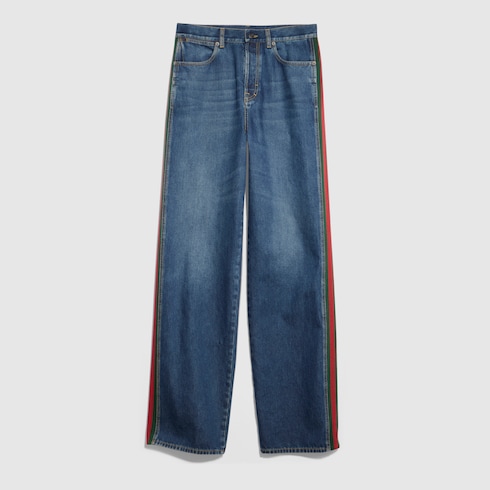
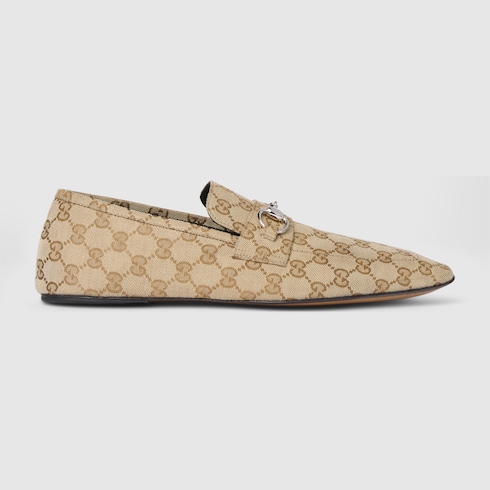
The archetype — call her la contessa — was less a single person than a composite. Slim. Sunglasses even indoors. Silk scarf knotted at the throat, not the chin. She did not work, in the salaried sense, but she had what Italians call facture: the appearance of effort without evidence of labour. Her Gucci was small-scale and discreet. A loafer with a gilt snaffle bit. A canvas tote striped in the house's green-red-green web, derived from the saddle girth. She moved between Milan, Portofino, and occasionally New York. She did not explain herself.
Gucci, at that stage, was not yet global. It was Florentine leather goods with a showroom presence in a handful of cities. The contessa — fictional or otherwise — gave the house a social coordinate. She was aspiration made legible, and crucially, she was European. When American department stores began stocking Gucci in the sixties, they were not selling Italian craft. They were selling proximity to her world.
The Jet Set and the Jackie Bag
In 1961, Jacqueline Kennedy carried a Gucci hobo on a state visit to India. Photographers caught her mid-stride in New Delhi, the bag slung over one shoulder, its unstructured shape collapsing slightly under its own weight. She had not announced the choice. She simply carried it.
The house, by then under the direction of Aldo Gucci, moved quickly. The style was rechristened. Marketing materials began to feature it prominently. But the bag's actual form — soft pebbled leather, single shoulder strap, piston-lock closure — had existed in the catalogue for several seasons prior. What Kennedy did was less about design than about context. She wore Gucci as if it required no explanation, in a decade when American women were still learning the grammar of European accessories.
Kennedy was not a muse in the traditional sense. She did not sit for fittings. She did not consult on colour or hardware. But she performed a kind of alchemy that no advertising budget could replicate: she made the house feel inevitable. After the photographs circulated, demand for the hobo surged, particularly in the United States. Gucci opened additional points of sale. The waiting list, a concept still novel in luxury retail, became part of the brand's operational reality.
The bag itself has been reissued four times since — most recently in 2020, under Alessandro Michele, who added a more structured silhouette and optional chain strap. Each iteration sells briskly. But the original soft hobo, the one Kennedy carried, remains out of production. Vintage examples surface at auction and command premiums that have little to do with condition. You are not buying leather. You are buying a photograph, and the world it implies.
The Rebel and the Horsebit Loafer
By the mid-nineties, Gucci was in disarray. Family infighting had fractured the business. The product line had bloated into incoherence — too many licensees, too little control, and a brand identity diluted to near-illegibility. Tom Ford arrived in 1994 and staged what amounted to a controlled demolition. He stripped the archive down to five or six elements — the horsebit, the web stripe, the bamboo handle, the loafer — and rebuilt from there.
His muse was not a client. She was a character, drawn from cinema and music and a kind of knowing vulgarity that European fashion had spent decades trying to suppress. Ford called her, in one interview, "the woman who doesn't apologise." She wore the Gucci loafer with nothing else, or with a men's suit, or with a slip dress cut on the bias. She mixed high and low without signalling the mix. She understood that a horsebit, removed from its equestrian context, was simply a gold buckle — and gold buckles could go anywhere.
The 1995 campaign, shot by Mario Testino, featured models in unbuttoned shirts and low-slung trousers, hair wet, makeup smudged. It was a departure so total that the Italian press initially dismissed it as too American, too obvious. But the clothes sold. More to the point, they sold to a younger customer, one who had no memory of the contessa or the jet set, and who understood Gucci not as heritage but as provocation.
Ford's tenure lasted a decade. When he left in 2004, the house's revenue had increased nearly tenfold. But his real legacy was tonal. He had taken a brand associated with restraint and recast it as a vehicle for desire — not aspiration, which is polite, but desire, which is not. The woman he invented did not want to be like anyone. She wanted to be seen.
The Through Line
These three figures — composite, historical, imagined — share almost nothing in terms of biography or aesthetic. But they share a structural role. Each gave Gucci a centre of gravity at a moment when the house risked diffusion. The contessa anchored it in European social codes. Kennedy gave it American legitimacy. Ford's rebel gave it sex.
Gucci today, under Sabato De Sarno, has moved toward quieter registers — clean tailoring, muted palettes, an emphasis on leather goods that privilege material over logo. The muse, if there is one, has not yet emerged. Perhaps she will. Perhaps the house no longer needs her. But history suggests otherwise. A brand can survive on product. To endure, it needs a story. And stories, at Gucci, have always required a woman at the centre — carrying, wearing, or simply walking past, indifferent to the attention she commands.