Jacquemus : les artisans qui font le travail
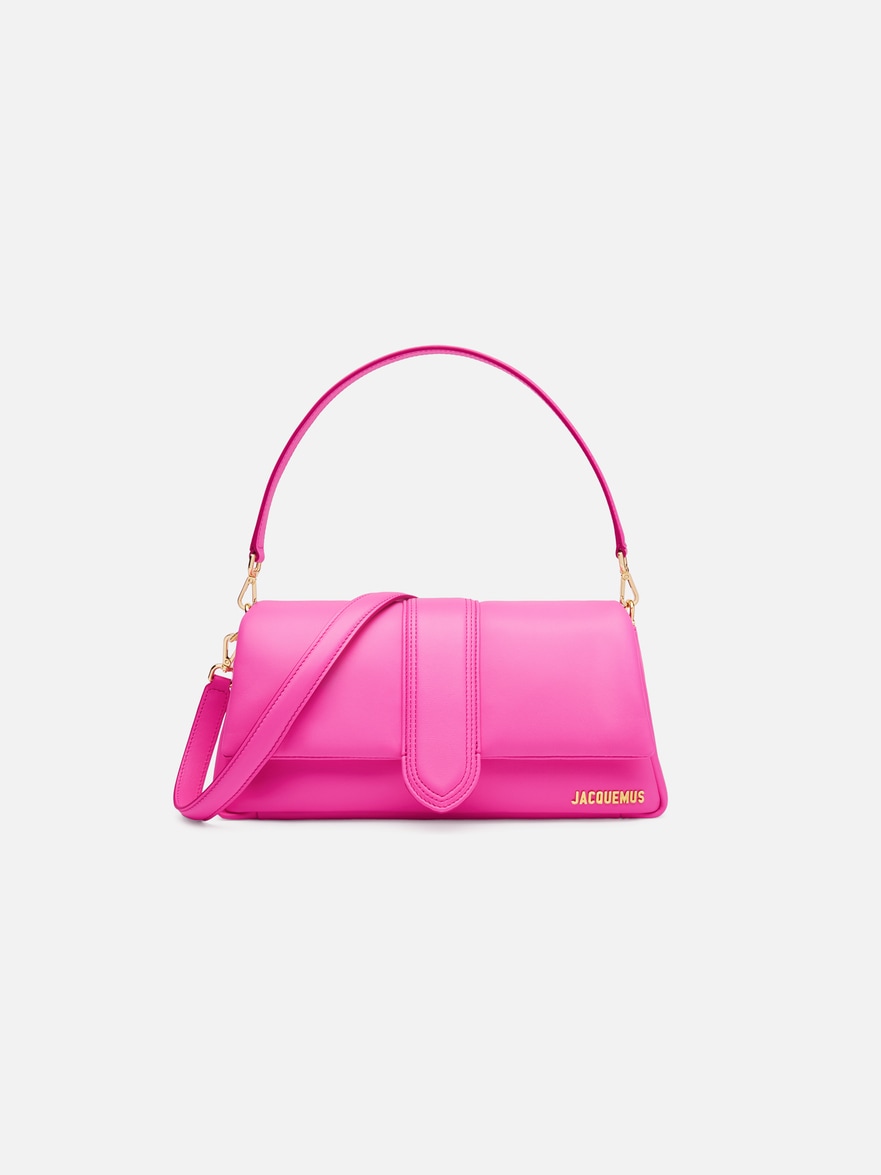
The atelier sits above a cobbled courtyard in the 10th arrondissement, not in the Marais where one might expect a house of Jacquemus's current scale to plant its flag. Inside, three pattern-cutters are bent over a prototype of what will become the Bambino—the tiny top-handle bag that will, within eighteen months, appear on approximately every third arm in Paris, Milan, and the parts of Los Angeles that matter to Instagram. Simon Porte Jacquemus is not in the room. He is downstairs, on his phone, orchestrating the next campaign shoot in a lavender field two hours south.
This is the gap.
The one between the designer whose face sells the dream and the hands that construct it. Jacquemus, the man, is uncommonly good at the former—tan, charming, fluent in the grammar of aspiration. Jacquemus, the house, depends entirely on the latter. And the latter has names.
The ones who make the line straight
Pattern-cutter Élise Moreau has been with the house since 2014, back when the studio was a single room in Belleville and the runway shows happened in borrowed spaces with borrowed chairs. She is the one who translated Jacquemus's sketch of a shirt—cropped to the base of the ribcage, sleeves ballooning at the shoulder, then pulled tight at the cuff—into something a factory in Portugal could actually sew.
"He draws like a child," she told Les Inrockuptibles in 2019, and it was not an insult. "No technical language. Just a feeling. My job is to find the geometry inside the feeling."
The shirt in question, part of the SS16 collection, became the template for much of what followed: radically simple in silhouette, perverse in proportion. The crop sits two inches higher than modesty would suggest. The sleeves do not behave like sleeves. And yet the thing holds its shape, moves with the body, does not gap or pull. That is Moreau's work, not Jacquemus's.
She is still there. So is head of atelier Claire Vasseur, who joined in 2016 and manages the small team responsible for prototyping every piece before it goes into production. Vasseur does not give interviews. She is not on the mood boards. But if you have ever wondered why a Jacquemus dress photographs like a Matisse cutout and still functions as clothing, the answer is a woman in her mid-fifties who trained at the Chambre Syndicale and has no interest in being anyone's muse.
The bag problem
The Chiquito—the even tinier precursor to the Bambino—was not supposed to work. When Jacquemus presented it in 2018, the thing was so small it could barely hold a lipstick. The fashion press treated it as a joke, then as a meme, then as a phenomenon. Within six months, it was sold out globally.
The technical challenge was not the size. It was making an object that small read as a bag rather than a toy. That required a leather atelier with the skills to construct a miniature frame, bind edges at a scale where a millimetre's variance would collapse the whole proposition, and finish the interior to a standard most houses reserve for full-size pieces.
Jacquemus does not own its leather workshop. It contracts with a family-run atelier in the Marche region of Italy, a firm that has supplied Prada and Fendi for decades and whose name does not appear in any press material. The principal artisan who developed the Chiquito's frame structure is a man named Luca Stefanelli, now in his late sixties, who apprenticed in the 1970s under a generation trained in saddlery.
Stefanelli's contribution was solving the hinge. A bag this small cannot use a standard clasp—it would overwhelm the proportion. He designed a magnetic closure set into the frame itself, invisible from the outside, strong enough to hold but soft enough to open with one hand. It took eleven prototypes. Jacquemus approved the twelfth.
The house paid Stefanelli's atelier for the development work, then moved production to a larger contractor in Tuscany to meet demand. Stefanelli's name does not appear on the bag, in the campaign, or in any interview Jacquemus has given about the Chiquito's origins. This is standard practice. It is also a choice.
The runway is a factory
Jacquemus shows are famous for their locations: a lavender field in Valensole, a salt flat in Camargue, a wheat field outside Arles. The images are extraordinary. The logistics are punishing.
Production coordinator Mathilde Roche has been responsible for moving the entire operation—models, clothes, crew, seating for 400—out of Paris and into the French countryside for the past six collections. She is 34. She started as an intern at Balenciaga, moved to set design for film, then joined Jacquemus in 2017 when the shows were still happening in warehouses.
"People think the field is the hard part," she said in a rare interview with System magazine last year. "The field is easy. The hard part is the truck that gets stuck two kilometres away because Simon decided the night before that the runway should face the other direction."
Roche coordinates with local governments, farmers, weather services, and the small army of freelancers required to build a runway in a place that has never had one. She also manages the strikers—France being France, there is almost always a strike coinciding with fashion week—and reroutes the entire production when roads close or trains stop.
The SS23 show, staged in a pink salt flat, required 18 months of negotiation with environmental agencies to ensure the installation would not disrupt the local ecosystem. Roche led those talks. Jacquemus attended two of the meetings. The photographs, of course, show only him.
What he actually does
This is not to suggest Jacquemus is a figurehead. He is not. He approves every fabric, every fit, every frame of every campaign. He works compulsively, calls his team at odd hours, changes his mind, then changes it back. The vision is his.
But the execution belongs to people whose names you will not find in the press kit. Moreau cuts the patterns. Vasseur runs the atelier. Stefanelli solved the hinge. Roche moves the circus south.
The question is not whether Jacquemus deserves credit. He does. The question is whether credit is a finite resource, and whether naming the people who make the work possible would somehow dilute the brand's mythology.
Other houses have begun to shift this calculus. Hermès famously credits its artisans by first name in certain campaigns. Loewe, under Jonathan Anderson, has featured craftspeople in its advertising. These are small gestures, but they acknowledge a basic fact: fashion is a collaborative medium, and the solo-genius narrative is at best incomplete, at worst a lie.
The next chapter, and who will make it
Jacquemus is expanding. A new atelier opened in the 11th arrondissement last year, three times the size of the original. The house now produces shoes, eyewear, fragrance. Revenue reportedly passed €150 million in 2023. There is talk of a New York flagship.
This will require more hands. More pattern-cutters, more coordinators, more artisans willing to solve problems that have no precedent. Whether those people will be named, credited, or even acknowledged outside the trade press remains an open question.
In the meantime, Moreau is still cutting patterns in the 10th. Vasseur is still running fittings. Roche is scouting fields for the next show. Stefanelli has retired, though the atelier he worked for still supplies Jacquemus's leather goods.
The work continues. The work is always continuing. And the work, it should be said, has names.