Les fondateurs de Acne Studios
The showroom in Stockholm's Södermalm district still smells faintly of photocopier toner and coffee, though neither machine has been in use for years. This is where Jonny Johansson and three friends — Mikael Schiller, Tomas Skoging, and Jesper Kouthoofd — started Acne Studios in 1996, back when the name stood for Ambition to Create Novel Expressions and the business model was closer to a creative consultancy than a fashion house. They made denim first. One hundred pairs of raw selvage jeans with bright red stitching, distributed to friends. The friends wore them. Other people noticed. By the time the jeans sold out, the four had stumbled into something they hadn't quite planned for.
Johansson, who remains creative director nearly three decades later, came to fashion sideways. He studied at Beckmans College of Design, but his training leaned toward advertising and graphic work. The original Acne collective reflected that breadth — film, music videos, furniture, whatever paid. The jeans were meant as a side project, perhaps a calling card. Instead they became the foundation. By 1998 Acne had pivoted entirely to apparel, and Johansson found himself teaching himself pattern-cutting at night, draping fabric over a dress form borrowed from a friend's mother.
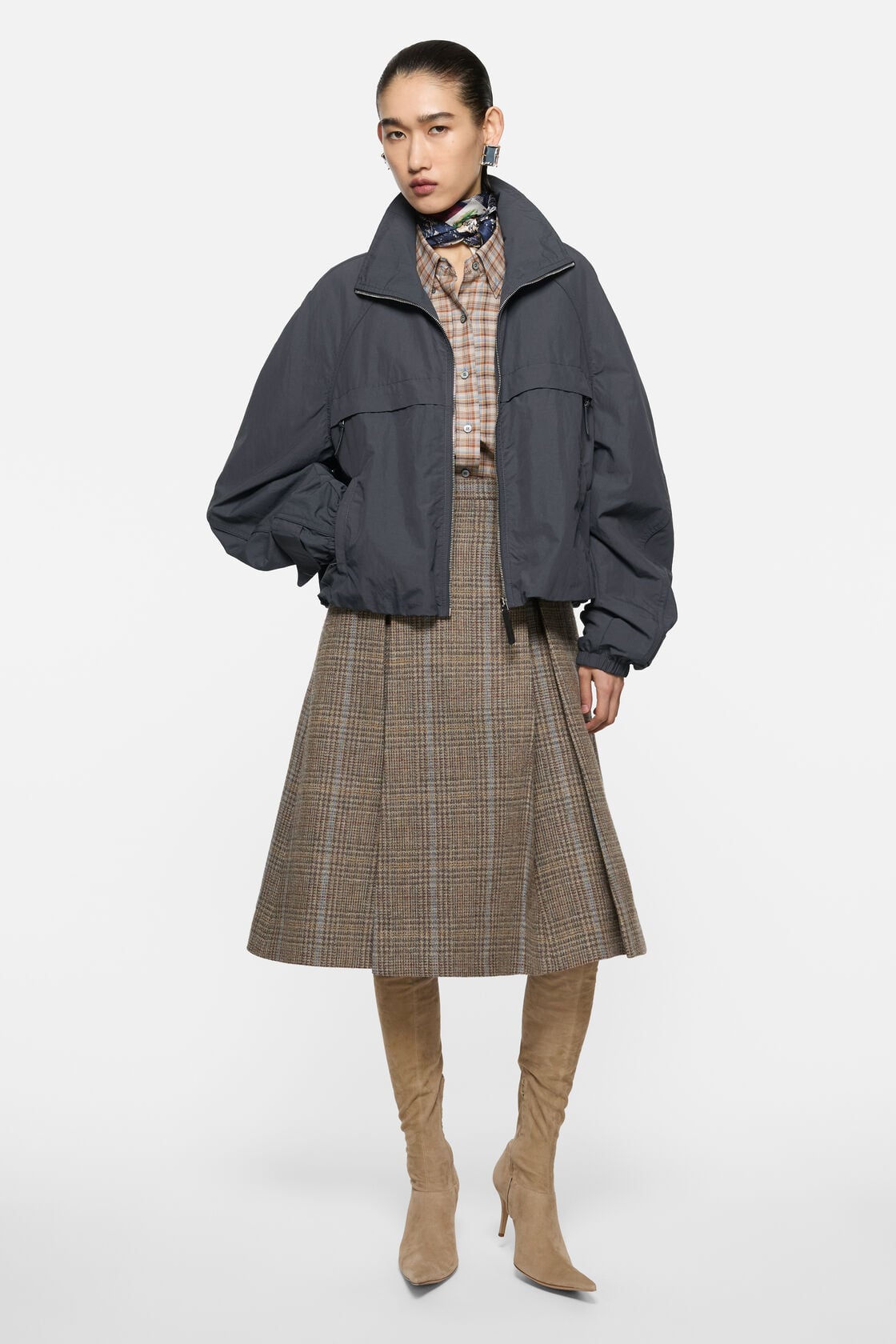
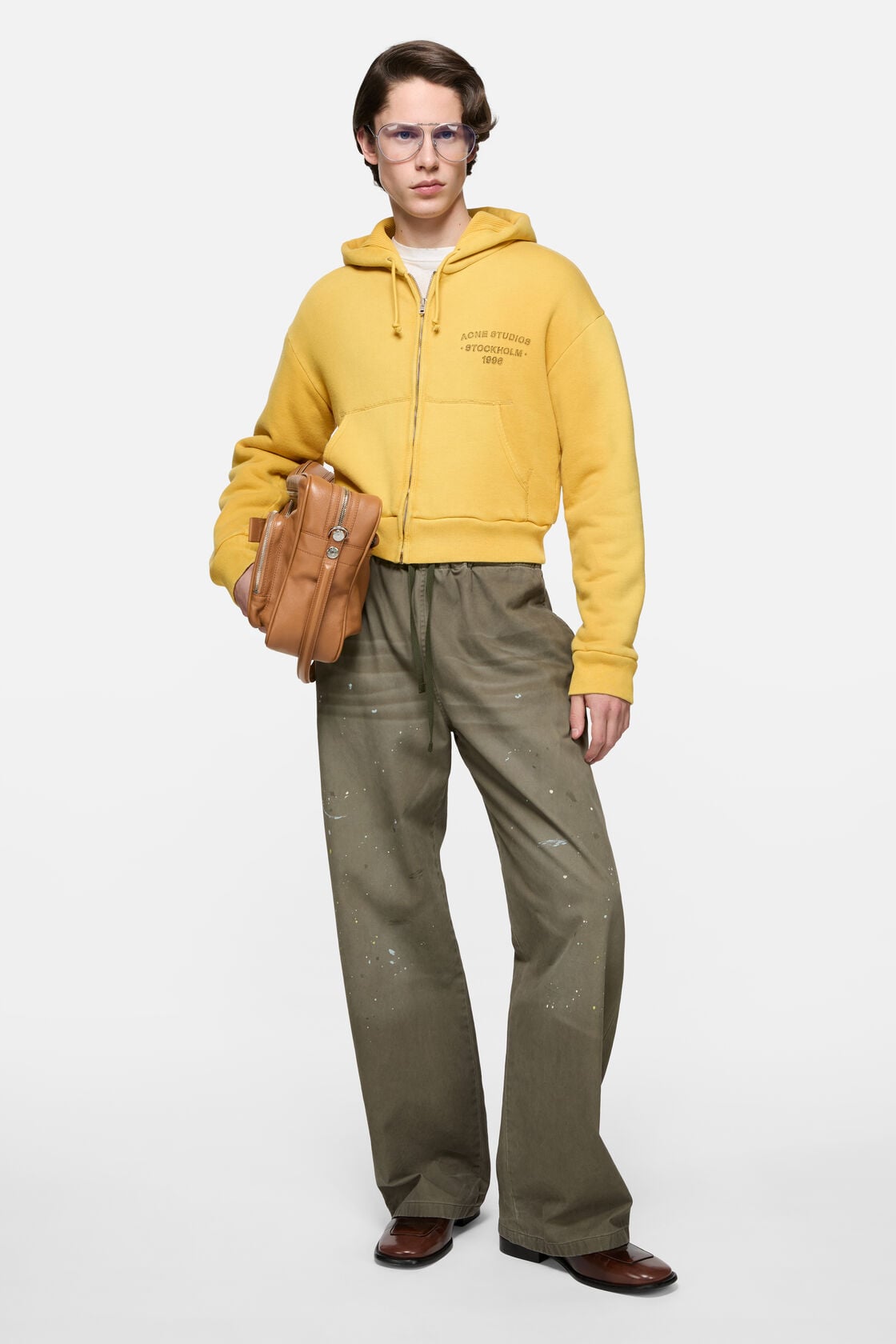
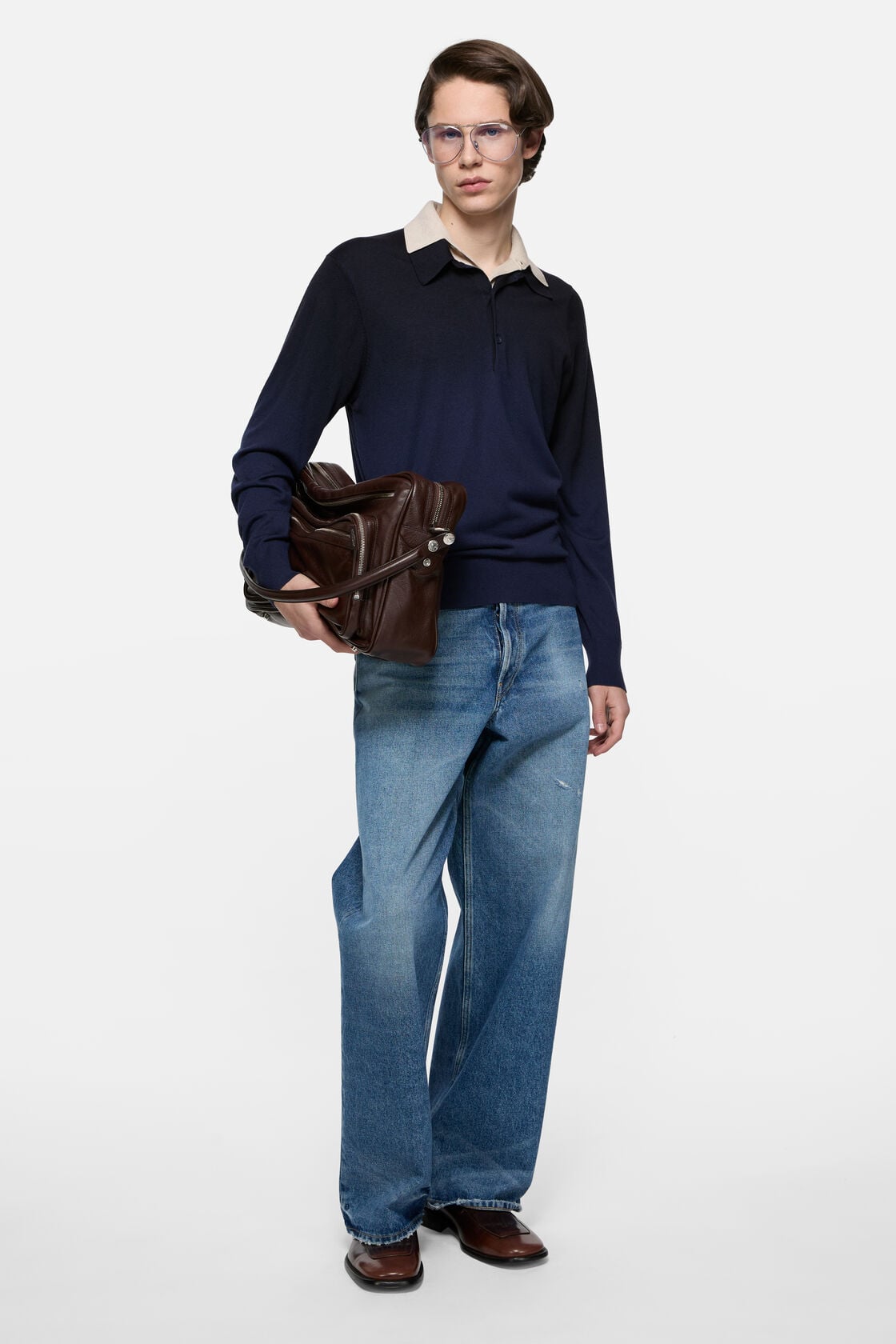
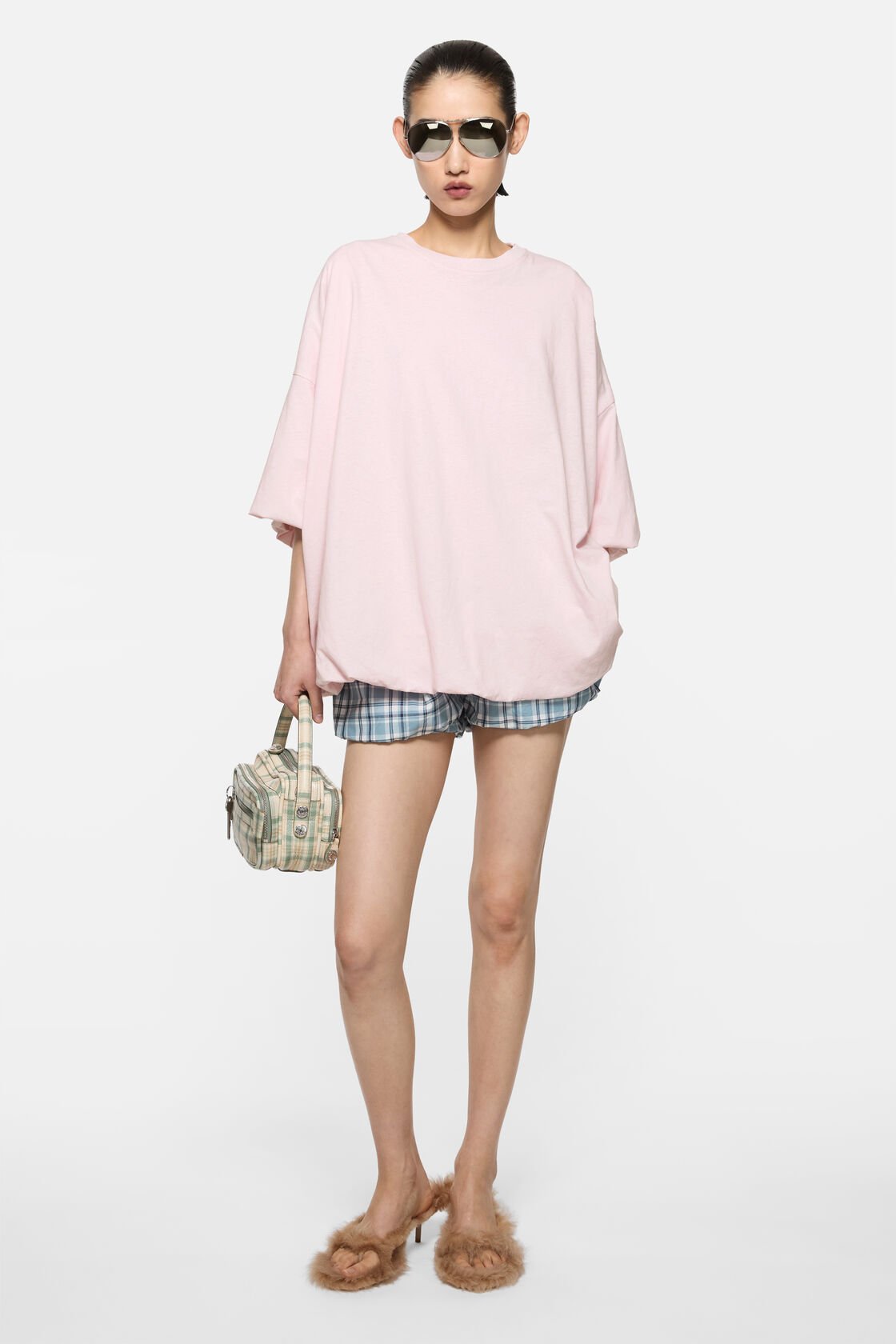
What emerged in those early collections was not Swedish minimalism in the Jil Sander sense, though the palette often ran to grey and black. Johansson's eye was stranger, more restless. He layered oversized tailoring with sportswear references, cut sleeves at unexpected lengths, played with proportion in ways that felt accidental even when they weren't. The work had a certain awkwardness, which in retrospect reads as prescient. By the mid-2000s, when fashion began to tire of polish, Acne's slightly off-kilter silhouettes felt exactly right.
The brand's breakthrough moment is harder to pin down than most origin stories allow. There was no single runway show, no celebrity endorsement that changed everything overnight. Instead, Acne built slowly, store by store, stockist by stockist. The Paris flagship opened in 2008 on Rue du Faubourg Saint-Honoré, a deliberate bet that the brand could hold its own in a city with little patience for Scandinavian interlopers. It worked, in part because Johansson never tried to soften the brand's Nordic edges. The stores were stark, almost clinical. The clothes remained difficult in small, interesting ways — a trouser with one leg wider than the other, a coat that refused to button in the expected places.
Acne's signature, if one exists, is harder to summarise than a Margiela tabi or a Prada nylon backpack. Johansson has spoken in interviews about his discomfort with the idea of a house code, preferring instead to work collection by collection, season by season. What recurs, though, is a certain approach to proportion and an insistence on fabric that feels substantial in the hand. The denim remains central — Acne's raw and washed jeans still anchor many wardrobes, recognisable by their fit rather than by overt branding. The outerwear, particularly the shearling-lined aviators and oversized wool topcoats, has developed a quiet following among those who prefer their luxury unmarked.
In 2015 the house sold a majority stake to Deveaux, a private equity firm with holdings across European luxury. The deal valued Acne at roughly €100 million and brought the predictable concerns about creative compromise and expansion for its own sake. Johansson stayed on as creative director and retained a minority share, but the structure shifted. Stores opened in Seoul, Tokyo, New York. The product range expanded to include more accessories, more footwear, more of the high-margin categories that private equity favours. Whether this constituted mission drift or natural evolution depends largely on whom you ask.
The collections since the Deveaux acquisition have been uneven, though perhaps no more so than before. Johansson's work has always oscillated between moments of sharp clarity and seasons that feel like he's working through an idea he hasn't quite solved. Spring/Summer 2019 leaned heavily into saturated colour and exaggerated volume, a departure that divided critics. Autumn/Winter 2021, by contrast, returned to a more restrained palette and tighter silhouettes, though the tailoring remained loose enough to avoid severity. The question is not whether Johansson has lost his touch — the work remains technically accomplished — but whether the brand's identity can survive the pressures of scale.
What complicates the narrative is that Acne never positioned itself as a challenger to the old European houses. It operated in a different register, more aligned with the wave of conceptual labels that emerged in the late 1990s and early 2000s — Raf Simons, Helmut Lang, Martin Margiela — than with the heritage-driven maisons of Paris and Milan. But as those designers either retired or were absorbed into conglomerates, Acne found itself in an awkward position: too established to be considered emerging, too independent to benefit from the infrastructure of a larger group. The Deveaux deal was, in that sense, a pragmatic move. It provided capital and distribution networks. It also introduced expectations.
The next chapter remains uncertain. Johansson is now in his early fifties, an age at which many designers either consolidate their vision or begin to repeat themselves. Acne's most recent collections suggest he is still searching, still willing to risk awkwardness in pursuit of something he can't quite name. The Autumn/Winter 2023 show in Paris featured models in oversized knits and deconstructed suiting, walking to a soundtrack of ambient noise and distorted vocals. It felt, in moments, like a return to the brand's early instinct for the slightly wrong thing done with conviction.
Whether that instinct can coexist with the demands of a PE-backed business model is the question that hangs over Acne now. The stores are multiplying. The product categories are expanding. The brand is more visible, more accessible, more profitable than it has ever been. What remains to be seen is whether it can stay strange.