Les fondateurs de Fendi
The atelier sits on Via del Plebiscito, just south of the Trevi Fountain, in a building that has housed the same family business since 1925. If you arrive early enough — say, half past seven on a weekday morning — you might catch the furriers at their benches, already twenty minutes into the day's work. The air smells faintly of tannin and coffee. This is where Fendi began, and where a certain idea of Roman craft still persists, even as the maison now answers to LVMH and stages its shows in Paris as often as in Rome.
The founding story is straightforward. Adele Casagrande married Edoardo Fendi in 1925. She had been running a small leather and fur workshop on Via del Plebiscito; he brought business acumen and a willingness to expand. Together they built a house specialising in fur and leather goods, selling to the Roman bourgeoisie and, eventually, to clients farther afield. Adele handled production. Edoardo managed the books and the shopfront. It was a modest operation — no atelier in the grand Parisian sense, but a bottega with ambitions.
What distinguished early Fendi was not innovation but consistency. The furs were well-selected, the finishes clean, the prices fair. Adele had an eye for pelt quality and a reputation for honest dealing, which mattered in a trade where inferior skins could be dressed to deceive. By the time Edoardo died in 1954, the business employed a small team of furriers and leather workers, most of whom had trained under Adele herself.
The maison's transformation began in earnest when the five Fendi daughters — Paola, Anna, Franca, Carla, Alda — took over in the late 1950s and early 1960s. Each assumed a role: Paola oversaw furs, Anna handled leather goods, Franca managed customer relations, Carla directed business strategy, Alda took charge of sales. It was an unusual arrangement, even in a family firm, and it worked because the sisters had grown up in the workshop. They understood the material.
Their decisive move came in 1965, when they hired Karl Lagerfeld. He was twenty-nine, relatively unknown outside Paris, and had been recommended by a mutual acquaintance. The brief was simple: make fur modern. Lagerfeld approached the commission with a technician's rigour. He began experimenting with treatments that lightened pelts without compromising warmth — dyeing mink in unexpected colours, shearing chinchilla to resemble velvet, intarsia-weaving strips of fox and sable into geometric patterns. The results were divisive. Traditional furriers considered some of the work vulgar. Clients, particularly younger ones, found it liberating.
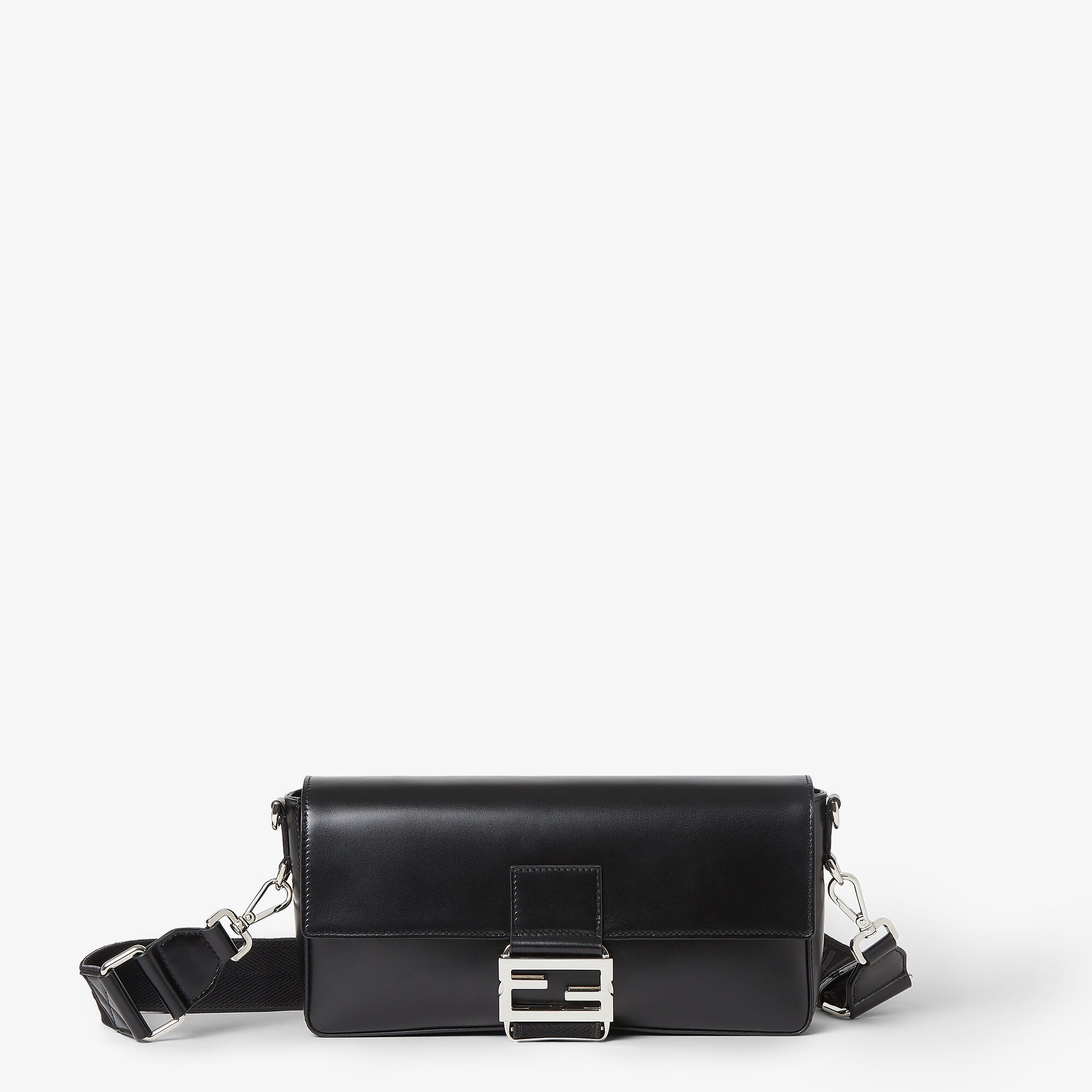
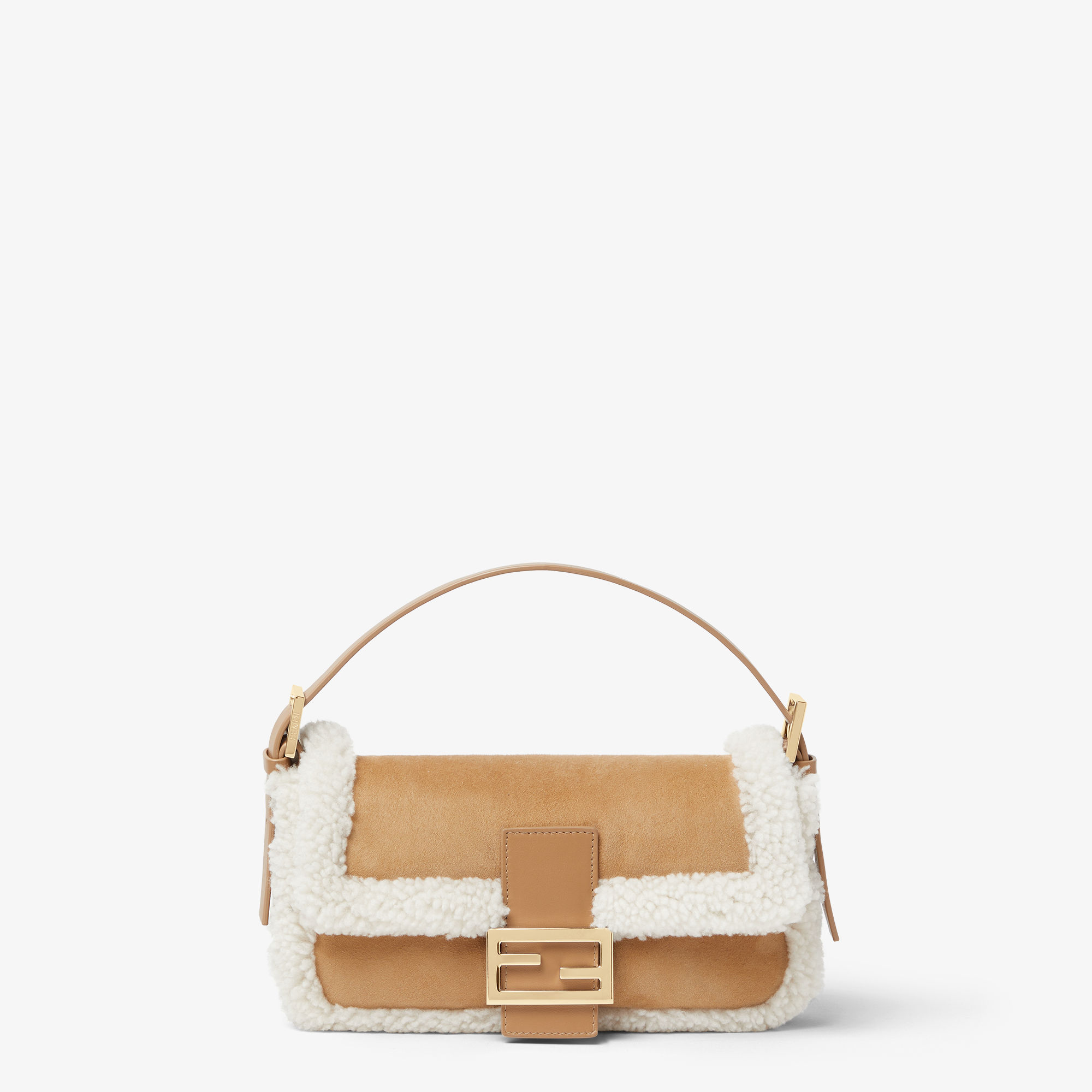
Lagerfeld stayed for fifty-four years. That tenure, longer than most marriages, reshaped Fendi's identity. The double-F logo — Fun Furs, though the maison has never confirmed that reading — appeared in 1965, designed by Lagerfeld himself. The Baguette bag, introduced in 1997 by Silvia Venturini Fendi (Anna's daughter, who joined the house in 1994), became a handbag archetype: small, structured, carried under the arm like a loaf of bread. Lagerfeld's runway shows grew increasingly theatrical, culminating in the 2007 presentation on the Great Wall of China, a piece of brand theatre that now reads as both audacious and faintly ridiculous.
What Remains
Lagerfeld died in February 2019. The question of succession had been deferred for years, in part because his involvement was so total — he designed the furs, the ready-to-wear, the accessories, and set the visual tone for campaigns. When he passed, Fendi did not appoint a single successor. Instead, Silvia Venturini Fendi took on accessories and menswear, while Kim Jones, formerly of Louis Vuitton and Dior Homme, assumed responsibility for womenswear and couture.
Jones's arrival marked a shift in emphasis. Where Lagerfeld had been a classicist with a taste for provocation, Jones is a collaborator, more interested in dialogue than in monologue. His Fendi collections reference the archive — the 1960s intarsia furs, the Baguette's proportions — but also invite outside voices. He has worked with artists, architects, and, in a much-publicised 2021 collaboration, with Donatella Versace, staging a joint show that swapped codes between the two houses. The gesture was generous, and commercially shrewd. It also raised a question: what, exactly, is Fendi's voice when it is not Lagerfeld's?
Silvia Venturini Fendi offers one answer. She has been with the maison since she was a teenager, learning the trade in the same Via del Plebiscito atelier where her grandmother once worked. Her Baguette, now in its twenty-seventh year, has been reissued in hundreds of iterations — embroidered, beaded, printed, fringed — without losing its fundamental shape. That kind of restraint is rare. It suggests a designer who understands that a successful bag is not a statement but a structure, and that structure, once established, should be respected.
The question of what Fendi is for — what it offers beyond competent leather goods and occasional runway spectacle — remains open. The maison's fur business, once its raison d'être, has contracted sharply. Fendi announced in 2021 that it would no longer use fur in future collections, a decision driven by both ethics and market pressure. The move was overdue, and it left a gap. Fur was not incidental to Fendi's identity; it was the foundation. Lagerfeld's entire project, from 1965 onward, had been to make fur relevant. Without it, the house must articulate a new centre.
Jones's couture collections, presented in Rome and Paris since 2021, offer a possible direction. They are tactile, labour-intensive, and rooted in the atelier's technical capabilities — hand-pleated organza, lacquered raffia, micro-beaded embroidery applied to silk faille. The clothes are beautiful in a formal sense, and they demonstrate that Fendi's workshops can execute at the highest level. Whether they constitute a vision, as opposed to a display of skill, is harder to say.
The Atelier Today
The Via del Plebiscito workshop is smaller now. Fur production has moved elsewhere, and much of the leather work is handled at facilities outside Rome. What remains is a team of about thirty artisans, most of whom specialise in prototyping and small-batch production for runway samples. The benches are the same. The tools — skiving knives, edge bevelers, burnishing wheels — are maintained with the kind of care that suggests they will outlast their users.
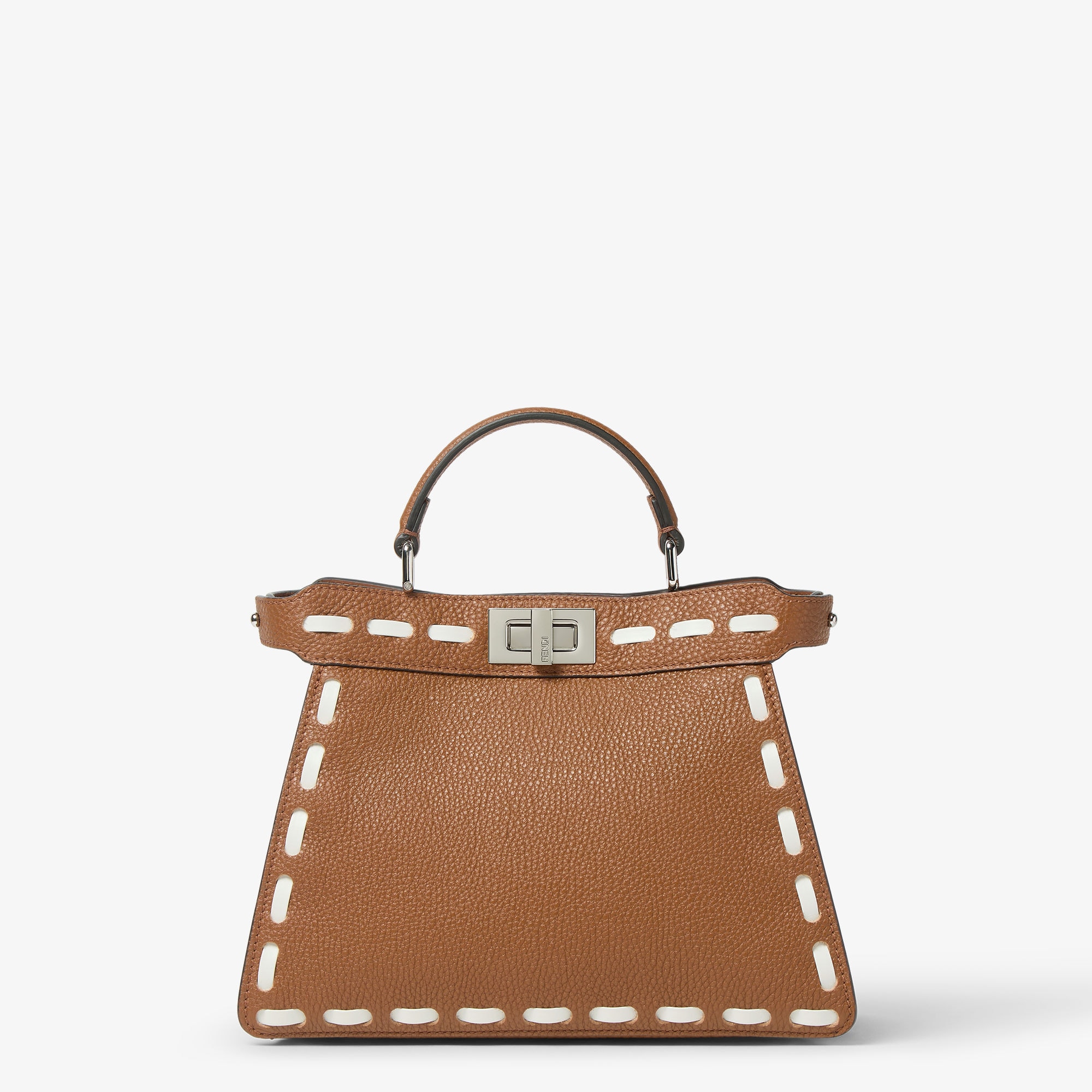
On a practical level, Fendi functions as a division within LVMH's leather goods portfolio, competing for resources and attention with Louis Vuitton, Loewe, and Celine. The Peekaboo bag, introduced in 2008, sells steadily. The Baguette has been revived twice, most recently in 2019, and continues to perform. Ready-to-wear is less consequential — Fendi is not a destination for clothing in the way that, say, Loewe has become under Jonathan Anderson.
What Fendi retains, and what may prove more durable than any single designer's tenure, is a tradition of making. Adele Casagrande's insistence on material quality, her refusal to cut corners even when it would have been profitable to do so, established a standard that the maison has largely honoured. The furs were always well-dressed. The leathers are still properly tanned, edge-painted, and stitched at six stitches per inch. That may sound modest, but in an industry increasingly driven by marketing rather than manufacture, it is worth noting.
Whether Fendi can build a compelling future on that foundation is another question. The maison has the atelier, the archive, and the financial backing. What it lacks, at present, is a clear argument for why it should matter to anyone under forty who is not already invested in the mythology of Italian luxury. Jones is talented, and Silvia Venturini Fendi is steady. But talent and steadiness are not the same as vision, and vision — the ability to articulate what a house stands for, and why that might matter — is what separates a functioning brand from a consequential one.
For now, Fendi endures. The atelier opens at seven-thirty. The work continues.