Les fondateurs de Gucci
The leather workshop on Via della Vigna Nuova in Florence opened in 1921, a year in which most of Europe was still tallying the cost of the previous decade. Guccio Gucci, forty years old and recently returned from a stint as a lift attendant at the Savoy in London, had spent his evenings watching the luggage arrive — embossed calfskin trunks, monogrammed hatboxes, the sort of travel accessories that announced their owners before the owners themselves appeared. He returned to Florence with a question: could a Tuscan saddler produce something comparable?
The answer, as it turned out, was yes. But it took time.
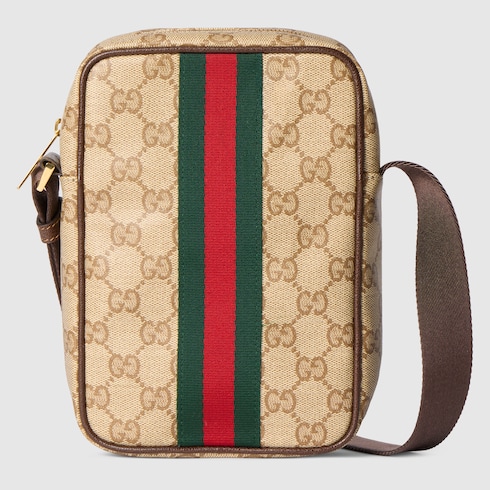
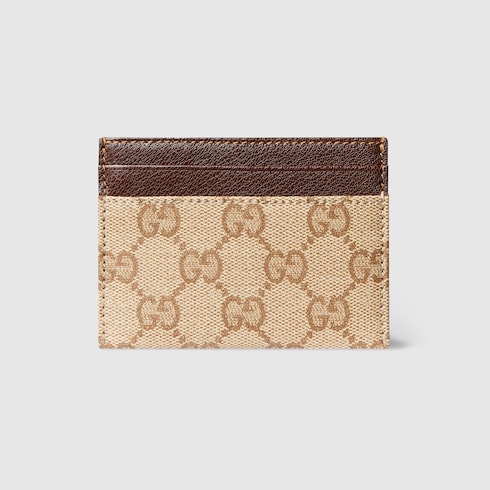
Gucci's first pieces were equestrian: bridles, saddles, the occasional riding boot. The craftsmanship was there — Florence had centuries of leather work behind it — but the clientele remained local. It was Gucci's sons, Aldo, Vasco, Ugo, and Rodolfo, who pushed the house beyond its origins. Aldo in particular understood that a certain class of traveller, post-war and newly mobile, wanted luggage that looked expensive without announcing where the money came from. The double-G logo, introduced in the late 1930s, did exactly that. Discreet, symmetrical, vaguely heraldic. It could have been a family crest. It wasn't, but it looked like one, and that was enough.
By the 1950s, Gucci had opened in Milan, Rome, and New York. The bamboo-handled bag — originally a wartime improvisation, when metal hardware was scarce — became a signature. So did the horsebit loafer, a slip-on that borrowed its hardware from the bridle department and landed somewhere between country estate and city pavement. These were not revolutionary designs. They were, however, legible. A horsebit loafer said something about its wearer, and what it said was both specific and maddeningly vague: taste, but not too much of it. Money, but old enough to have relaxed.
The mythology around Gucci tends to skip over the middle decades, the years when the family turned on itself with a viciousness that would have impressed the Medicis. Aldo and his brothers fought over control. Rodolfo's son, Maurizio, inherited a stake and then spent the 1980s trying to consolidate it, borrowing heavily, alienating the craftsmen, and ultimately losing the company to Investcorp in 1993. Two years later, Maurizio was shot outside his Milan office. The killer was hired by his ex-wife, Patrizia Reggiani, who later told a court that she couldn't bear to see him "destroy" what his grandfather had built. One suspects the verb she really meant was "sell."
What Maurizio left behind was a house with extraordinary name recognition and almost no creative direction. The logo had been slapped onto everything — keychains, golf bags, terry-cloth slippers. The atelier system that Guccio had established, the one where a single artisan cut and stitched a bag from start to finish, had been replaced by assembly-line production. By the mid-1990s, Gucci was less a maison than a licensing operation with a Florentine postmark.
Tom Ford, hired as creative director in 1994, understood that the fastest way to rehabilitate a brand is to make people want it again. Not respect it — want it. His first collection for Gucci, shown in 1995, featured velvet hipsters, satin shirts unbuttoned to the navel, and a colour palette that leaned heavily on jewel tones and black. It was not subtle. It was also not what anyone expected from a house whose previous collections had looked like the sportswear section of a provincial department store. Ford's Gucci was louche, knowing, and aggressively sexual in a way that felt more Studio 54 than Florentine atelier. The press called it a reinvention. The accountants called it a turnaround. By 1999, Gucci's revenue had increased more than tenfold.
What Ford didn't do — and this is worth noting — was return to the archive. He borrowed the double-G, the horsebit, the green-red-green stripe, but he treated them as graphic elements, not as sacred texts. A logo is only as interesting as the thing it's attached to, and Ford made sure the thing was interesting. When he left in 2004, the question was whether Gucci could survive without him.
The answer, again, was yes. But it required a different approach.
Frida Giannini, who succeeded Ford, leaned into heritage. Her Gucci referenced the 1960s and 1970s, the years when the house dressed Grace Kelly and Peter Sellers and became shorthand for a particular kind of European glamour. The work was competent. It was also, on balance, a little too reverent. Nostalgia is a tricky register for a house that built its reputation on being just slightly vulgar.
Alessandro Michele, appointed in 2015, understood this. His first collection for Gucci — shown with less than a week's notice after the previous creative director was dismissed — looked like a Victorian curiosity shop had collided with a 1970s discotheque. Pussy-bow blouses, embroidered loafers, fur-lined slippers worn with slim suits. It was eccentric in a way that felt both calculated and oddly sincere, as if Michele had decided that the best way to revive Gucci was to ignore everything the house had been for the previous decade and instead ask what it could become.
The gamble worked. Michele's Gucci became the house that millennials and Gen Z wanted to be seen carrying, not because it signalled old money, but because it signalled something stranger: taste that refused to behave. His collections were dense, referential, and deeply idiosyncratic. They also sold. By 2019, Gucci accounted for nearly two-thirds of Kering's operating income.
Michele left in 2022. Sabato De Sarno, his successor, has taken the house in yet another direction — quieter, more controlled, less inclined to pile on the references. His first collection, shown in September 2023, featured clean lines, muted tones, and a focus on materials: washed leather, cashmere, suede treated to feel almost like velvet. It was, in many ways, a return to the question Guccio Gucci asked a century ago: can we make something that looks this good?
Whether that's enough to sustain a house built on reinvention every decade remains to be seen. Gucci has survived family warfare, financial collapse, and several creative directors who treated the archive as either a treasure chest or a burden. What it hasn't yet done is figure out what it wants to be when it grows up. Then again, perhaps that's the point. A house that never quite settles is a house that people keep watching.
The leather is still cut in Florence. The saddle stitch still advances at six millimetres a beat. Everything else is negotiable.