Les fondateurs de Jacquemus
Simon Porte Jacquemus was twenty years old when he arrived in Paris with no formal training, no atelier connections, and a collection sewn in his mother's house in the Var. The year was 2009. The city was not waiting for him.
What he did have: a name—his mother's maiden name, taken after her death from cancer when he was nineteen—and a conviction that fashion could be made outside the system that had excluded him. He showed his first collection in a friend's apartment. Buyers did not attend. The press mentioned it in passing, if at all. He kept going.
By 2013, Jacquemus was showing at Paris Fashion Week, albeit off-calendar. The clothes were simple, sometimes naïve in their construction, but the vision was legible. Straw hats the width of a dinner table. Shirts cut to expose a shoulder blade. Colours lifted from the Provençal landscape—lavender, ochre, that particular blue you find on shutters in seaside towns. The fashion system, which had ignored him, began to pay attention.
The Provence Proposition
Jacquemus built his house on a single, repeatable idea: that the south of France could function as a complete aesthetic universe. Not the Riviera of yachts and casinos, but the everyday Provence of his childhood—markets, linen drying in the sun, the shape of a woman's body in a cotton dress. It was personal, which made it specific, which made it sellable.
The Le Chiquito bag, introduced in 2017, measured ten centimetres across. It could hold a lipstick, perhaps a folded bill. It was, by any practical measure, absurd. It sold out immediately. The house had learned something: that in the age of the image, a bag need not function as a bag. It need only photograph well and signal membership in a particular kind of taste community. Jacquemus priced it at €200, a fraction of what Hermès or Chanel would charge for a novelty, and the waitlists stretched into months.
This was the maison's insight, and its gamble. If you could make aspiration accessible—not cheap, but within reach of a certain class of young consumer—you could build a brand at scale without the infrastructure of the legacy houses. No atelier full of petites mains. No leather workshop in the Dordogne. Jacquemus worked with Italian and Portuguese manufacturers, the same ones supplying mid-tier contemporary labels, and turned speed into a feature. Four collections a year. Collaborations with Nike, with Barbie. A fashion show staged on a salt flat, another on a lavender field, each one designed to circulate as content before it circulated as commerce.
What the System Made of Him
The establishment, which had once ignored him, now claims him. In 2023, Jacquemus was invited to show haute couture, a designation historically reserved for maisons with ateliers and a client list of private buyers. He declined. Not because he couldn't produce the work—though one suspects the technical demands would have stretched his operation—but because the model didn't interest him. Haute couture is made for dozens of women. Jacquemus is made for tens of thousands.
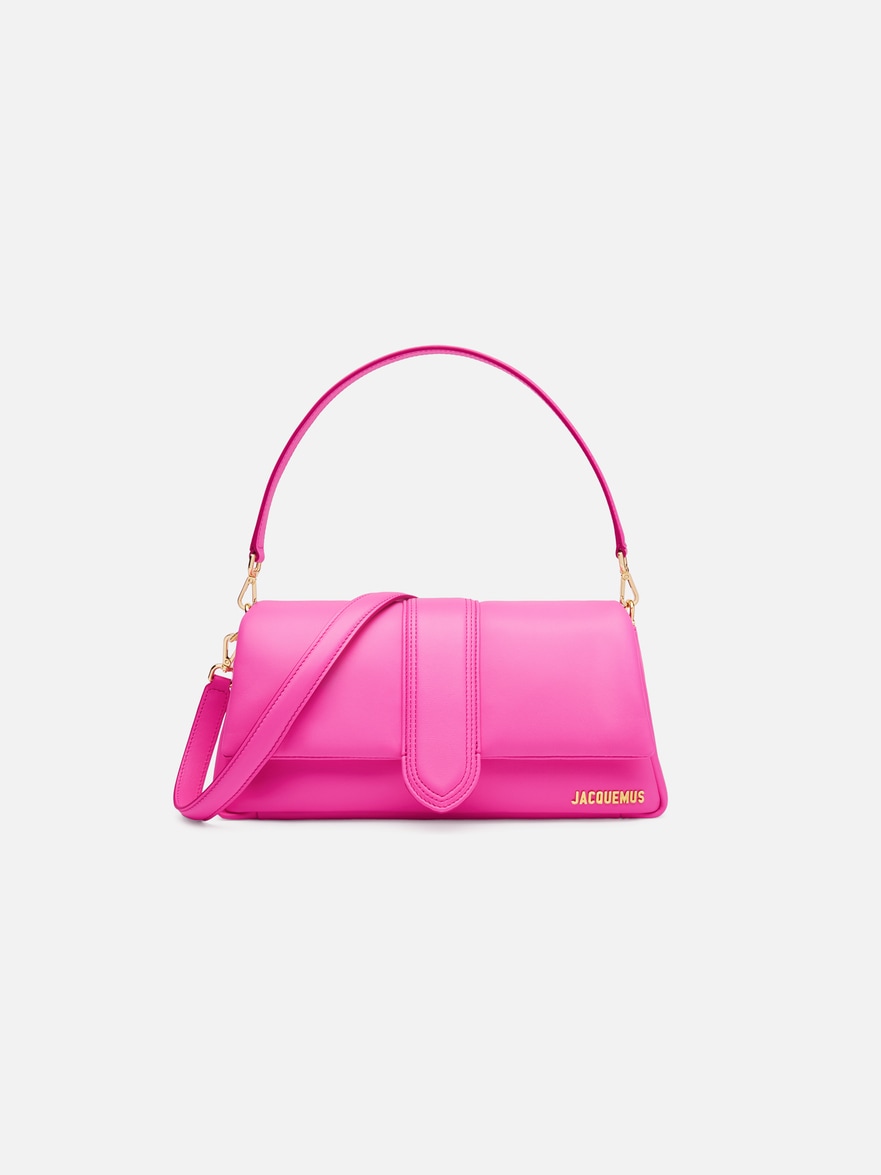
The decision clarified something. Simon Porte Jacquemus is not building a house in the traditional sense. He is building a brand, in the contemporary sense, which is to say: a system for generating desire that can scale across categories, geographies, and price points. The Le Bambino bag, slightly larger than the Chiquito, now comes in twenty colourways per season. There are Jacquemus espadrilles, Jacquemus sunglasses, Jacquemus candles. The clothes, increasingly, feel like the supporting act.
This is not a criticism. Or rather, it is a description of a choice. The maison has been transparent about its ambitions. In a 2022 interview with Business of Fashion, Porte Jacquemus said the house was targeting €500 million in revenue within five years. (It had reached approximately €200 million by 2023, according to industry estimates.) To get there, he would need to do what the legacy houses do: expand into beauty, into homewares, into whatever adjacent category could bear the name. The difference is speed. What took Hermès a century, Jacquemus wants to accomplish in two decades.
The Provençal Problem
But here is the tension. Provence, as a concept, is not infinitely elastic. It can support a dress, a hat, a small leather good. It becomes harder to justify a sneaker collaboration, a pop-up in Seoul, a diffusion line of logo T-shirts. The maison has begun to feel this. Recent collections have drifted from the original language—more sportswear, more overt branding, more concessions to what the market will bear. The straw hat remains, but now it shares the runway with puffer jackets and monogrammed nylon.
One can argue this is maturity. A house cannot survive on poetry alone. It needs product, distribution, margins. Jacquemus has been disciplined about this, perhaps more so than any designer of his generation. He has not taken on major outside investment. (LVMH and Kering have both circled; he has not sold.) He has kept the operation lean, the team small, the decision-making centralised. In this sense, he has protected the vision by controlling the business.
But control has its limits. As the maison grows, it requires infrastructure—showrooms, wholesale partnerships, a presence in duty-free. These are not romantic. They do not photograph well. They are, however, necessary if Jacquemus wants to become what it says it wants to become: a global luxury brand with staying power.
What Remains
Fifteen years in, the question is not whether Jacquemus will survive. It will. The question is what kind of house it will be. The early collections had a handmade quality, a sense that each piece had been considered in isolation. Now the output is industrial. Four collections, countless collaborations, product drops timed to the algorithm. This is not a lament. It is a fact.
What has not changed: the maison's ability to generate attention. A Jacquemus show is still an event, still a spectacle, still the thing people talk about the morning after. Whether that translates into lasting cultural capital—the kind that lets a house command premium prices and customer loyalty across decades—remains to be seen. Jacquemus is betting it will. The market, so far, agrees.
Simon Porte Jacquemus is now thirty-three. He has spent more than half his twenties and all of his thirties building this house. In photographs, he looks tired. Not unhappy, but aware of what the next phase requires. Provence, the place, is still there. Provence, the idea, is harder to locate. One suspects he knows this. Whether he can build something beyond it—or whether he needs to—is the work of the next decade.