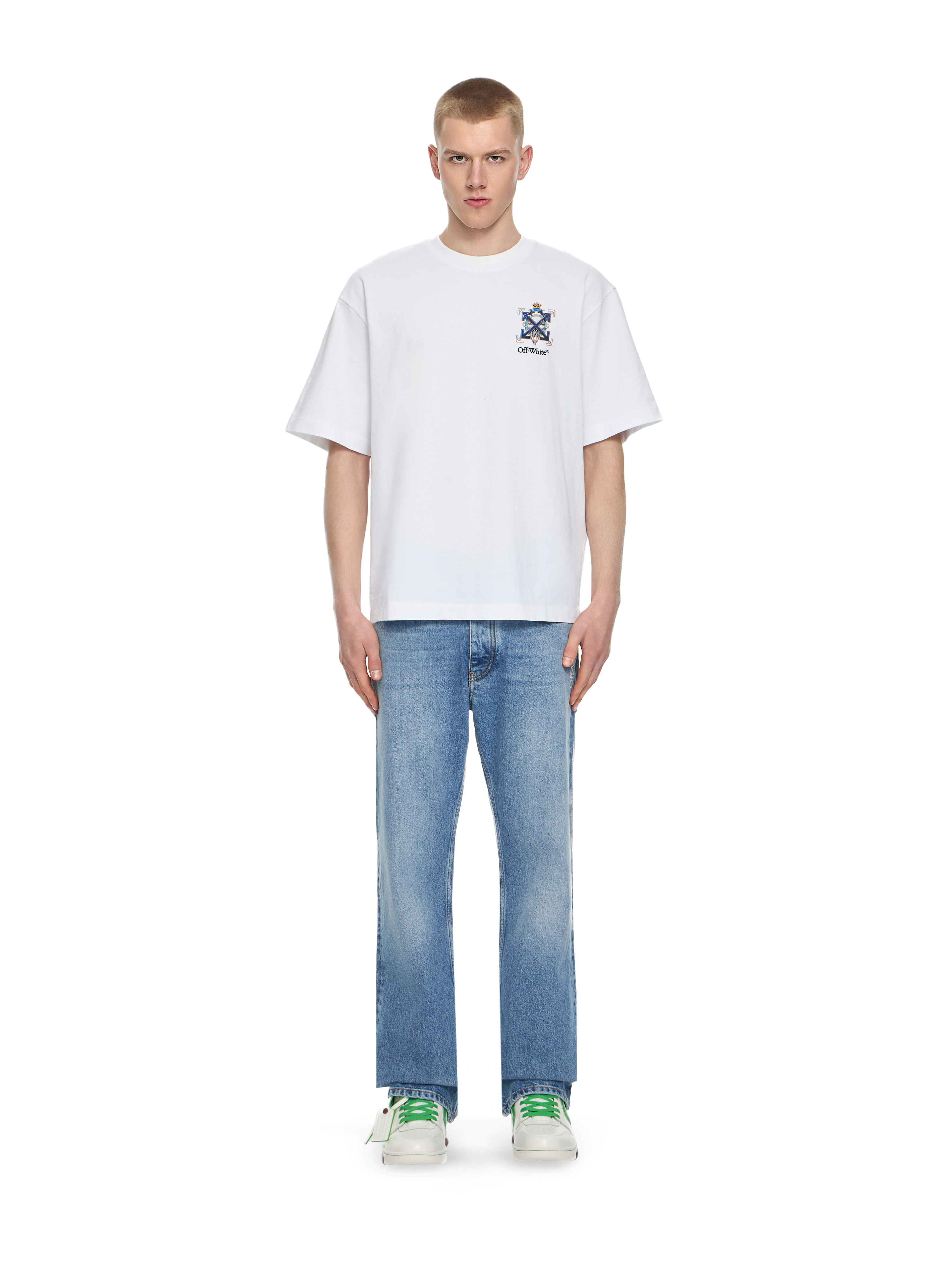
Les fondateurs de Off-White
Virgil Abloh stood in a car park in Milan, September 2013, watching models walk between concrete pillars in clothes that looked half-finished. The seams were visible. The quotation marks around the word "SCULPTURE" on a sweatshirt were not ironic—they were instructions. He had shown his first collection for Off-White earlier that year in Paris, but this presentation felt like the thesis statement. Fashion as footnote. Garments as citations.
He died in November 2021, at forty-one, and the question since has been whether Off-White can exist without him.
The Fendi Internship That Wasn't
Abloh trained as an architect and civil engineer. He met Kanye West in 2002, began art-directing album covers and stage sets, and by 2009 was creative director for West's output across music, fashion, and spectacle. In that role, he secured an internship at Fendi in Rome for both of them—two Americans with no formal fashion training, sitting in on fittings and absorbing the mechanics of a heritage house. It was performance as much as education. Abloh later described it as learning to "see the matrix," understanding that luxury was a constructed language, not an inherited one.
He launched Pyrex Vision in 2012, a short-lived project that involved screen-printing onto deadstock Ralph Lauren flannels and Champion hoodies, then reselling them at a 700 per cent markup. It lasted a year. The criticism was immediate: this was appropriation without transformation, branding without design. Abloh absorbed the feedback and moved on. Off-White, founded in 2013, was the answer.
Quotation Marks and Zip Ties
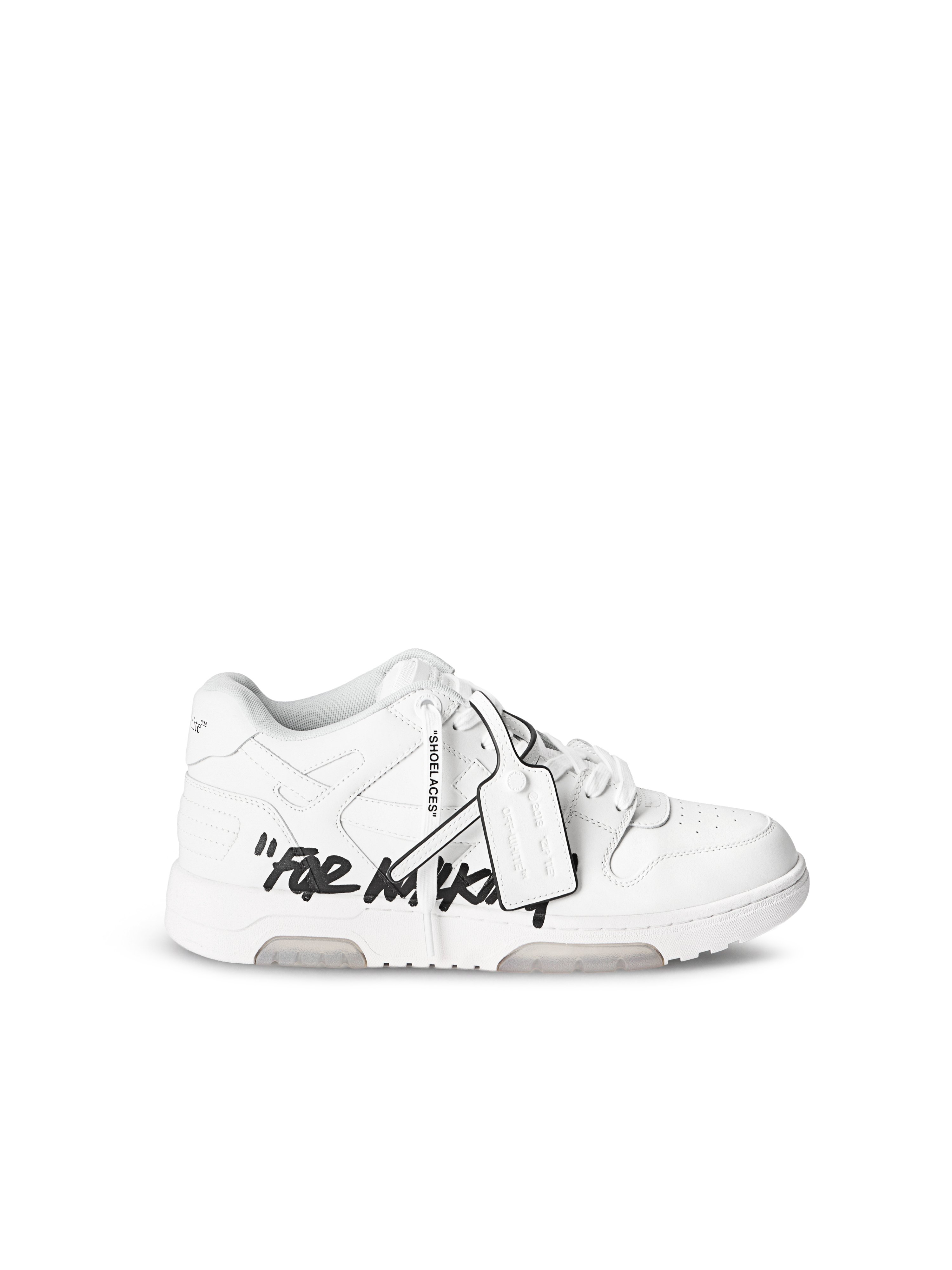
The early collections were streetwear passed through a semiotics seminar. Abloh used quotation marks as a recurring motif, labelling garments with their own function—"JACKET," "BELT," "SCULPTURE"—as if to remind the wearer that fashion was a system of signs. The diagonal stripe pattern, borrowed from caution tape, became the house signature. The plastic zip tie, attached to handbags and sneakers, was lifted from industrial packaging. It served no structural purpose. That was the point.
Off-White's aesthetic was immediately legible and endlessly reproducible. It photographed well. It worked in Instagram squares. The brand grew quickly, fuelled by collaborations with Nike that turned limited-edition sneakers into secondary-market currency. The Air Jordan 1 in Carolina blue and sail, released in 2015, now trades above $6,000. Abloh understood hype as a distribution model.
But the work was more than marketing. The Spring/Summer 2018 collection, titled "BUSINESS CASUAL," featured pinstripe suiting with the stripes pulled apart and reassembled at odd angles, as if the garment had been deconstructed mid-wear. A white poplin shirt came with the collar detached, held in place by safety pins. It was tailoring as diagram, the seams left visible not out of laziness but as pedagogy. Abloh wanted you to see how the thing was made.
Louis Vuitton and the Ceiling
In March 2018, LVMH appointed Abloh as artistic director of Louis Vuitton menswear, the first Black American to hold the role. His debut collection, shown that June in the Palais-Royal gardens, opened with models in primary-colour suiting walking to a live orchestral score. The front row included Kanye West, Kim Kardashian, Rihanna, and Naomi Campbell. Abloh cried during the finale.
The appointment was symbolic, but the work had to function within the infrastructure of a 160-year-old maison. Abloh's Vuitton was louder than his predecessor's, more referential, more willing to blur the line between streetwear and tailoring. He introduced soft-structured blazers in technical nylon, monogrammed denim workwear, and chain-link jewellery that nodded to both hip-hop and harness detailing. The collections sold. The average basket size increased. The brand became legible to a younger customer without alienating the existing one.
At Off-White, meanwhile, the output continued at pace. Ready-to-wear, accessories, furniture, rugs, books. Abloh described his method as "the three per cent approach"—take an existing form, change three per cent, and it becomes yours. Critics called it derivative. He called it honest.
What Remains
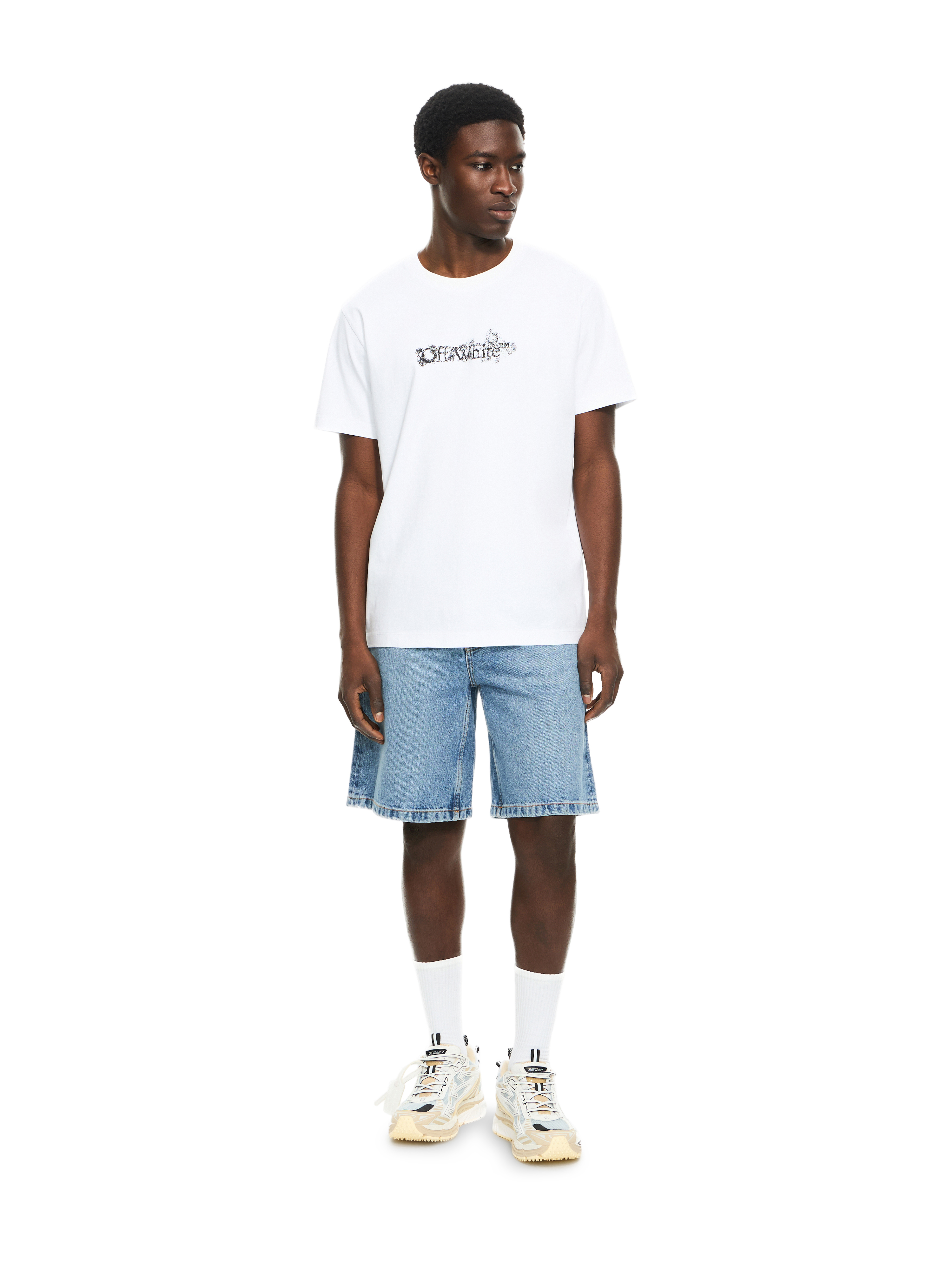
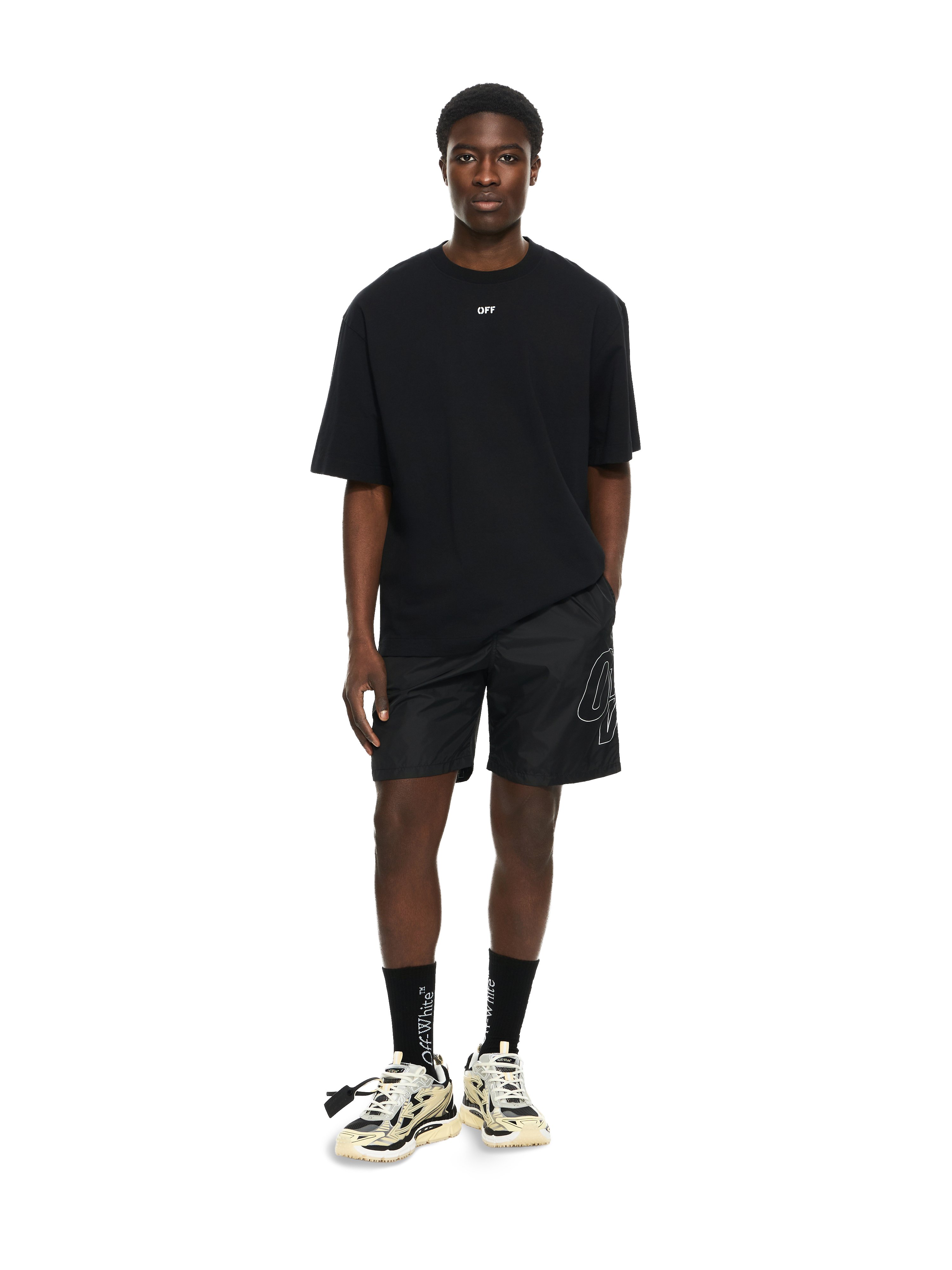
Since Abloh's death, Off-White has been run by a rotating team of collaborators, with Ib Kamara appointed as image and art director in 2022. The collections have continued, but the voice has shifted. The Spring/Summer 2023 show, held in Paris, featured draped jersey dresses and oversized tailoring in muted tones—fewer quotation marks, less caution tape. The aesthetic was softer, less declarative. Whether that represents evolution or dilution depends on what you think Off-White was for.
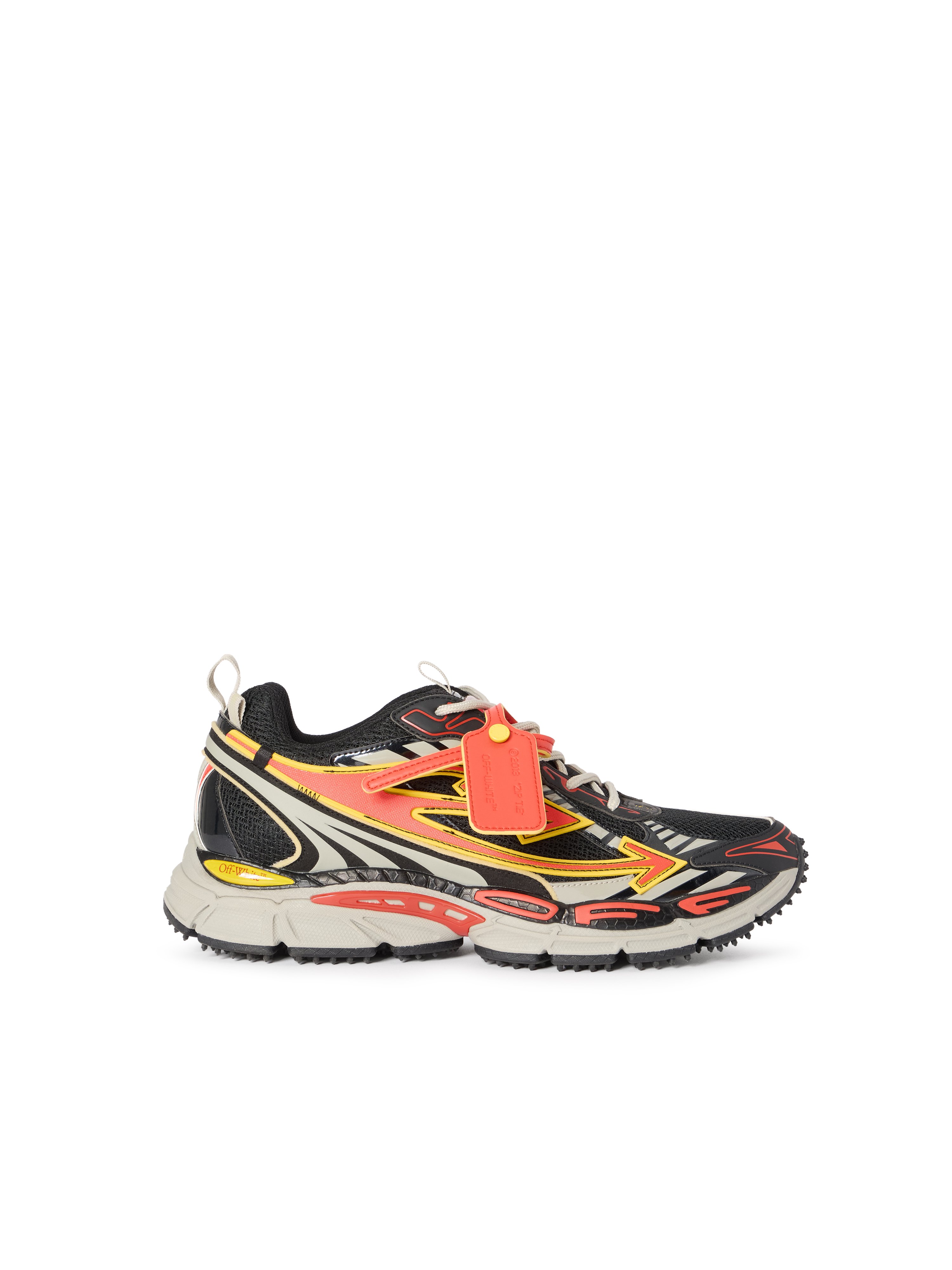
The brand's commercial infrastructure remains intact. The Nike collaborations continue under the "Ghosting" sub-label, a reference to Abloh's lingering influence. The diagonal stripes still appear on bags and sneakers, though less prominently. The zip ties are rarer now, used sparingly rather than as default punctuation.
But the conceptual engine is harder to replace. Abloh's strength was not just design but discourse—he could explain the work in ways that made it feel urgent, even when the garments themselves were simple. He wrote essays, gave lectures, appeared on panels. He was as much critic as creator, and that dual role gave Off-White a theoretical weight that most streetwear brands lacked.
Without him, the brand risks becoming what it once critiqued: a set of visual signifiers without the framework that made them cohere. The quotation marks were never just decoration. They were a way of asking what fashion could mean when it acknowledged its own constructedness, when it admitted that luxury was performance and branding was labour.
The Archive Problem
Off-White now faces the question every young brand confronts when its founder is no longer present: does it preserve or does it evolve? Abloh left behind a vast archive—sketches, prototypes, unfinished collections—but an archive is not a roadmap. The house can mine that material for years, releasing "unseen" pieces and "archival" collaborations, but at some point the work has to move forward.
Kamara's vision seems to lean toward refinement. The recent collections are quieter, more concerned with drape and proportion than with slogans and symbols. That may be the right move. Abloh's aesthetic was tied to a specific moment—Instagram's ascendancy, the rise of streetwear as high fashion, the collapse of the boundary between luxury and hype. That moment has passed, or at least shifted. The question is whether Off-White can adapt without losing the thing that made it matter.
The brand still generates revenue. It still commands attention. But attention and relevance are not the same. Abloh built Off-White as a platform for asking questions about authorship, originality, and access. The answers were never fixed. The work was the asking. Without him, the house has to decide whether it wants to keep interrogating those questions or simply repeat the gestures he left behind.
For now, it is doing both.