Les muses de Alexander McQueen
Lee Alexander McQueen stood backstage at the Conciergerie in October 1998, watching Isabella Blow adjust the antlers on a model's head. The show was Joan, his thirteenth collection, and Blow — his earliest champion, his friend, his occasional tormentor — had insisted on being there despite not being on the production team. She moved through the lineup as if she'd dressed every girl herself. In a sense, she had. McQueen's women were never abstractions. They were specific, drawn from life, and three of them shaped the house more than any critic or buyer ever could.
The patron who bought the graduate collection
Isabella Blow met McQueen in 1992, when he was still Lee from Stratford and she was working at Vogue. His graduate collection, Jack the Ripper Stalks His Victims, had been staged in a basement at Central Saint Martins. Blow bought the entire lineup for £5,000, paid in instalments. She wore the pieces everywhere: to lunch, to funerals, to Royal Ascot. McQueen later said she gave him permission to be ugly. That wasn't quite it. She gave him permission to be specific.
Blow understood that fashion could be theatre without being frivolous. She wore Philip Treacy's lobster hat to a memorial service and McQueen's bumster trousers to a country wedding. Her wardrobe was not an endorsement of wearability. It was an argument that clothing could be as serious as sculpture, as confrontational as performance art. McQueen absorbed this. His early shows — Highland Rape in 1995, Dante in 1996 — were not designed to sell. They were designed to provoke, and Blow was in the front row for each one, a living advertisement that provocation had its place.
She also taught him how to move through rooms he had no business entering. McQueen was a working-class kid from the East End who'd apprenticed on Savile Row. Blow was an Honourable, the daughter of a baronet, with a voice that could fill a drawing room. She introduced him to everyone: Anna Wintour, Philip Treacy, the Shaun Leanes and the Katy Englands who would become his core team. When McQueen was appointed head designer at Givenchy in 1996, it was partly because Blow had made him impossible to ignore.
The relationship soured in the early 2000s. McQueen stopped returning her calls. He was, by then, overextended — running his own label, fulfilling his Givenchy contract, managing a staff of dozens. Blow felt abandoned. She took her own life in 2007, a year after McQueen had finally severed professional ties. He was devastated. The Spring 2008 collection, La Dame Bleue, was a tribute: models in corseted gowns and Treacy's sculptural headpieces, walking to the sound of rain. It was the closest McQueen ever came to an apology.
The muse who became the face
Kate Moss walked for McQueen twice in 1995, once in Highland Rape and again in The Hunger. She was twenty-one, already overexposed, and McQueen put her in a hologram. The finale of Pepper's Ghost in 2006 featured Moss suspended in a glass pyramid, spinning in a floor-length chiffon gown as wind machines whipped the fabric into a frenzy. She wasn't there. The image was a projection, a Pepper's ghost illusion borrowed from Victorian theatre. It remains one of the most reproduced moments in fashion history.
Moss and McQueen were friends, not collaborators. She didn't sit in fittings or approve sketches. She showed up, wore what he made, and trusted him completely. That trust was mutual. McQueen cast her when he needed a woman the audience already knew, someone who could anchor a collection without overwhelming it. The hologram worked because Moss had the face for it — symmetrical, blank enough to project onto, famous enough to be worth the technical effort.
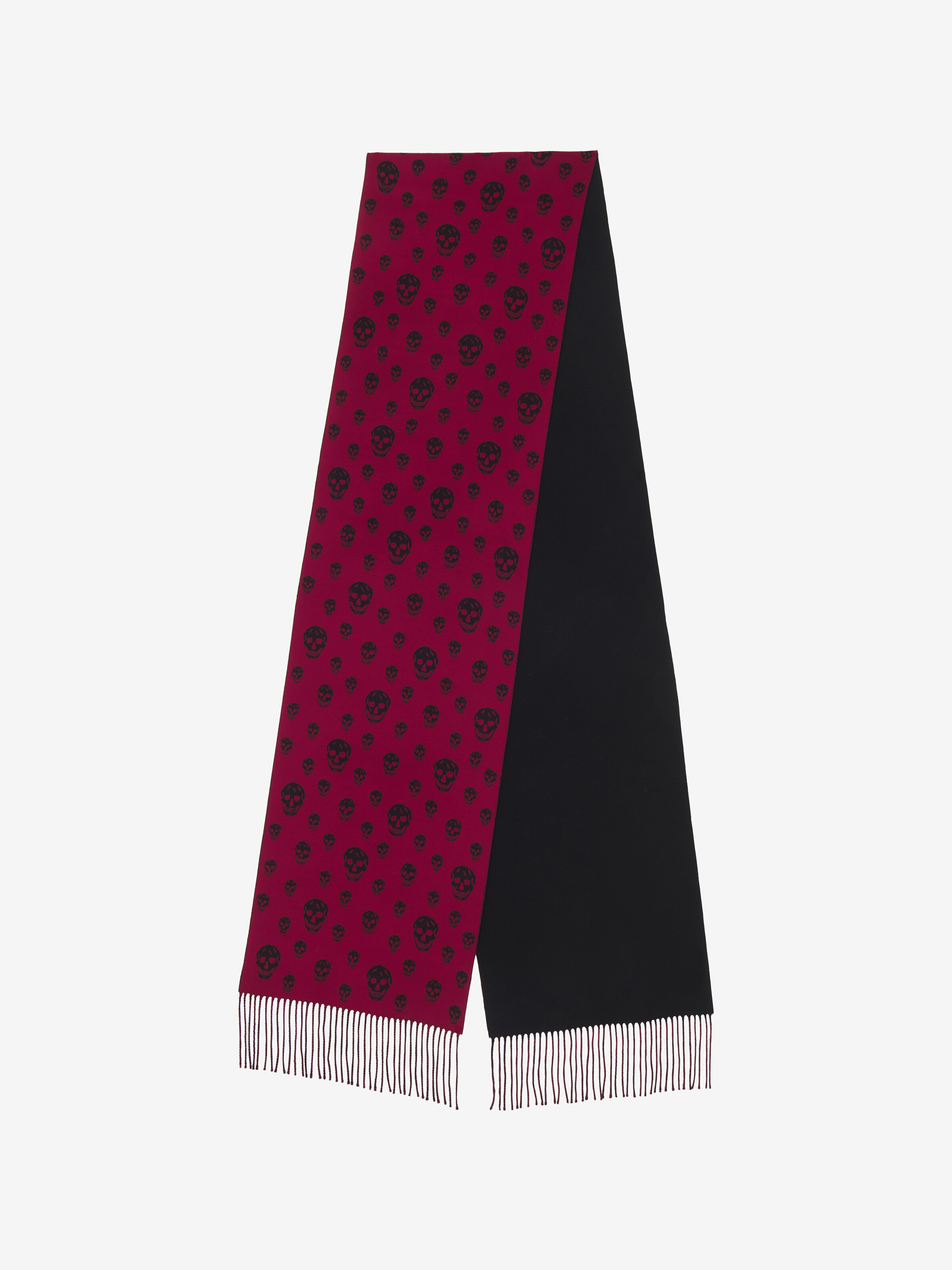
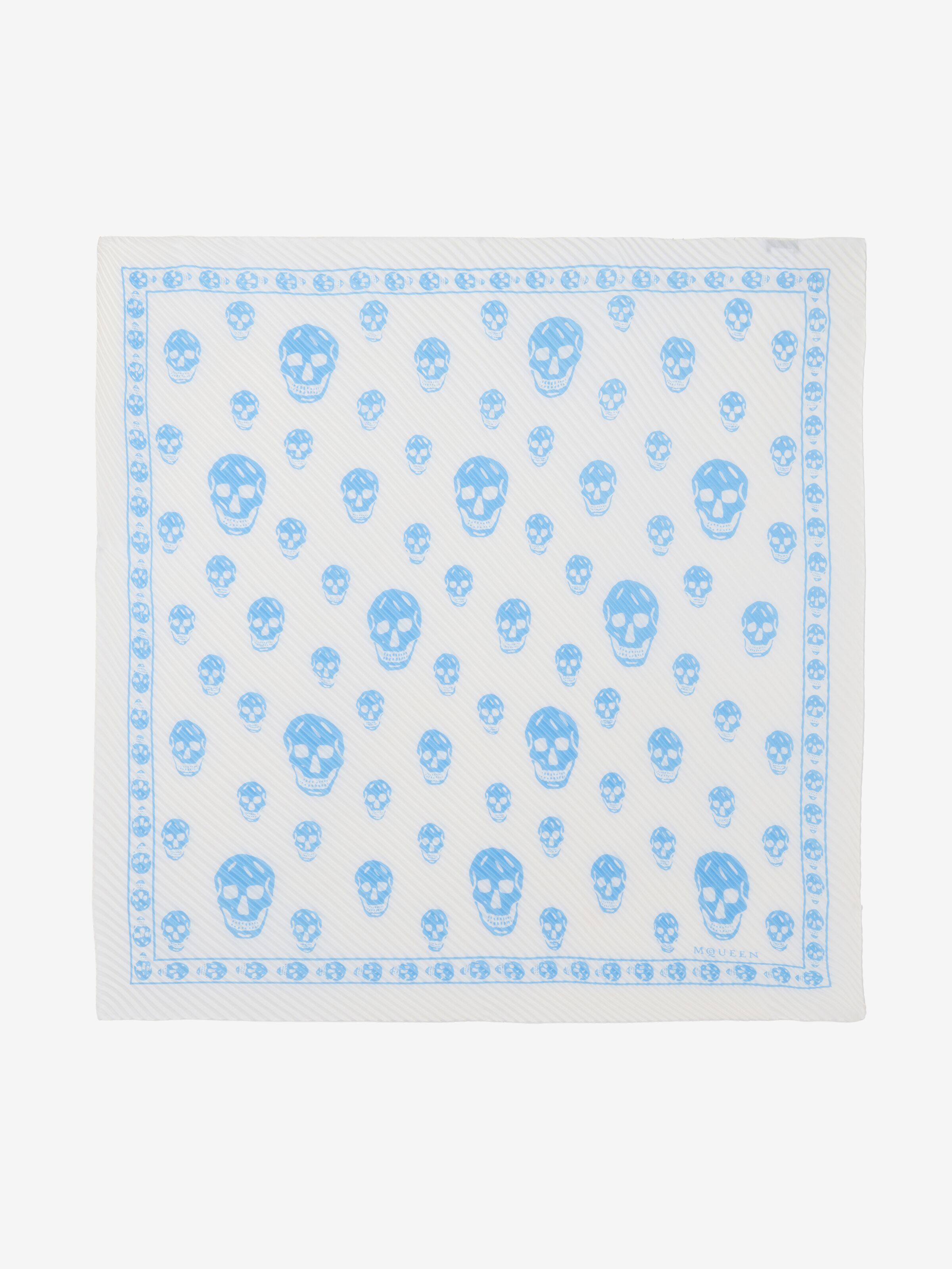
She also wore his clothes off the runway. The McQueen skull scarf became a tabloid fixture in the mid-2000s, draped around Moss's neck at Glastonbury, at Heathrow, at whichever party she'd been photographed leaving at 3 a.m. It was one of the house's first accessible pieces, priced at £145 and stocked in department stores. McQueen hated diffusion lines, but he understood that a scarf wasn't a compromise. It was a calling card.
Moss didn't attend McQueen's funeral in 2010. She released a statement instead, brief and careful, and wore a McQueen gown to the Met Gala a year later. The dress was from the final collection, Plato's Atlantis, all digital prints and reptilian scales. She looked, as she always did in his work, like herself.
The model who closed the shows
Annabelle Neilson met McQueen in 1993, before he was famous and before she'd modelled for anyone. They were introduced by Blow, who had a habit of pairing people she thought would either adore or destroy each other. Neilson and McQueen did both. She walked in nearly every show from 1994 to 2000, often as the finale look. She was not a professional model. She was five foot seven, too short by industry standards, and her walk was more stomp than glide. McQueen didn't care. He wanted women who looked like they'd fight you, and Neilson looked ready.
She was also his closest confidante. McQueen called her most nights, sometimes to talk through a collection, more often to complain about deadlines or money or the press. Neilson had no filter. She told him when a collection was overworked, when a show was too long, when he was being precious. McQueen listened to almost no one, but he listened to her.
Neilson stopped modelling in the early 2000s and moved into television, appearing on Ladies of London in 2014. She spoke about McQueen rarely and carefully, refusing to monetise the friendship. When she died in 2018, her family requested donations to the Samaritans instead of flowers. McQueen would have approved. He was suspicious of sentiment, especially the public kind.
What they left behind
Alexander McQueen died in February 2010, a week after his mother's funeral. The house continued under Sarah Burton, his longtime deputy, who had worked beside him since 1996. Burton's McQueen is quieter, more wearable, less interested in provocation. The tailoring is still sharp. The embroidery is still extraordinary. But the shows don't feel like manifestos anymore.
The three women who shaped McQueen's work are gone now, too. Blow in 2007, McQueen in 2010, Neilson in 2018. Moss remains, still wearing the skull scarf, still appearing in campaigns for houses that want to borrow her credibility. The McQueen archive is vast — more than thirty collections, hundreds of pieces held by museums, thousands more in private hands. But the work that matters most is the work made for those three. The bumster trousers Blow wore to shock her friends. The hologram dress that turned Moss into a ghost. The finale gowns Neilson stomped down the runway in, looking like she'd rather be anywhere else.
McQueen once said he didn't design for women, he designed for his idea of women. That idea came from somewhere. It came from Blow's refusal to be ignored, from Moss's ability to disappear inside an image, from Neilson's willingness to tell him the truth. The house still bears his name, but those three women made it possible.