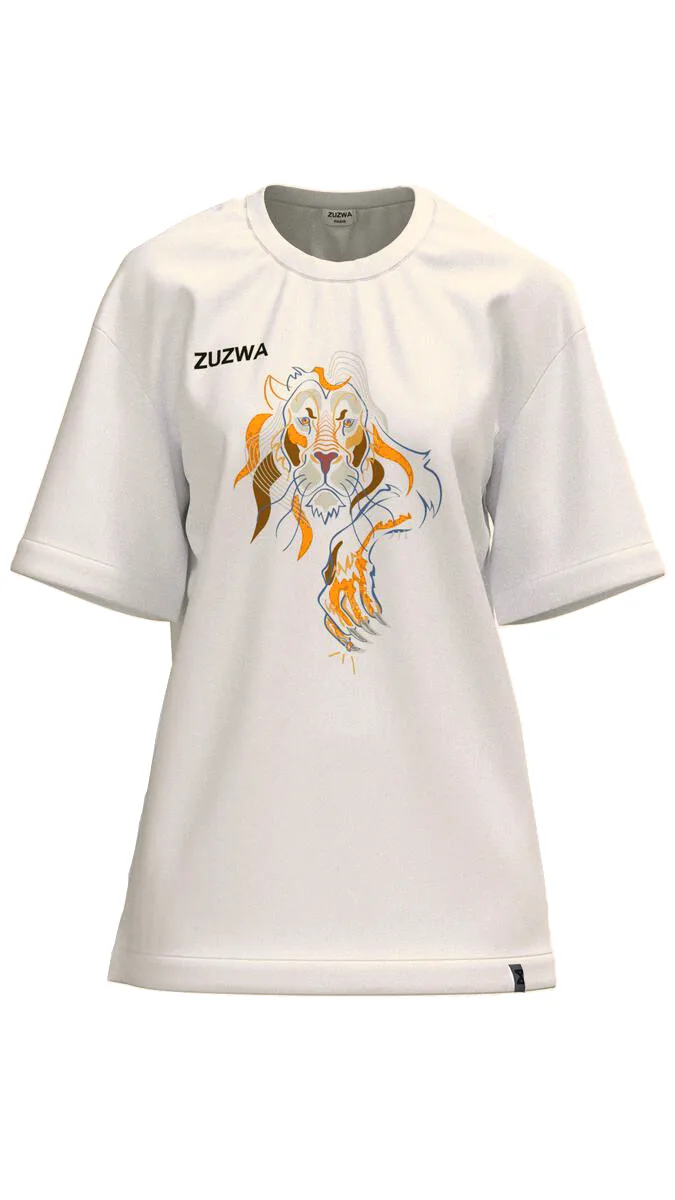
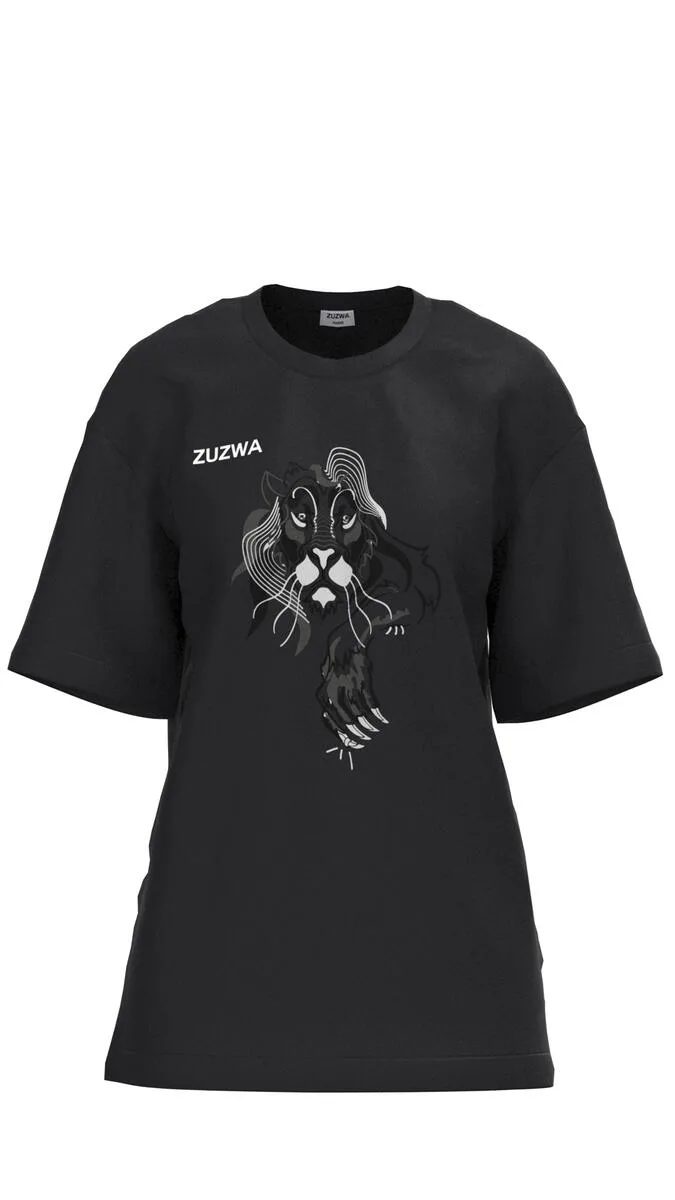
Les muses de ZUZWA
The fitting room at ZUZWA's Paris atelier smells of steam and wool. A model stands on a low platform in a half-finished coat, sleeves pinned at the elbow, while Zuzanna Wawrzyniak circles with chalk in hand. She marks the fall of the lapel, adjusts the shoulder seam by a centimetre, steps back. This is where theory meets body. And for ZUZWA, the body in question has always belonged to a specific kind of woman—not imagined, not abstracted, but real.
Three women, in particular, have shaped the house since its founding in 2018. Not in the conventional sense of brand ambassadors or campaign faces, but as collaborators whose lives, professions, and wardrobes informed the cut, the palette, the entire architecture of what ZUZWA makes. They are a curator, an architect, and a cellist. None of them are household names. That is precisely the point.
The curator
Marta Dziedzic runs a small contemporary art space in Warsaw's Praga district. She wears the same thing most days: trousers in heavy linen or cotton drill, a shirt with a mandarin collar, flat leather shoes that can take cobblestones. When Wawrzyniak met her in 2017, Dziedzic had just returned from a residency in Kyoto and was complaining about the absence of pockets in women's tailoring.
"She showed me her jacket," Wawrzyniak said in a 2020 interview with Vestoj. "It was men's vintage Yohji. The sleeves were rolled three times. She'd had a tailor take in the waist but leave the chest alone. I asked why she didn't just commission something. She said she'd tried. No one understood what she needed."
What Dziedzic needed was a coat that could carry a notebook, a tape measure, a phone, and keys without pulling at the hip. She needed sleeves that stayed put when she reached for a ladder. She needed a silhouette that read as formal in a gallery but didn't restrict her when she was on her knees installing a plinth.
ZUZWA's first collection, shown in a rented studio in Mokotów, was built around that brief. The signature piece was a double-breasted coat in charcoal wool gabardine, cut long through the body with a straight back and deep interior pockets. The shoulder was soft but structured enough to hold its line under weight. The buttons were horn, functional rather than decorative. Dziedzic wore hers to the opening of her next exhibition. Wawrzyniak sold six more by the end of the week.
The relationship has continued. Dziedzic still tests prototypes, offers notes on pocket placement and lining weight. She appears in lookbooks occasionally, always in motion—hanging a frame, carrying a stack of catalogues, mid-conversation. ZUZWA does not do static portraiture.
The architect
Ania Kowalczyk works in timber. She designs residential projects in southern Poland, small-scale interventions that prioritise natural materials and minimal waste. She met Wawrzyniak through a mutual friend in 2019, at a dinner where the conversation turned to the difficulty of finding workwear that didn't assume you were either in an office or on a construction site.
Kowalczyk's complaint was specific: she needed clothes that looked considered enough for client meetings but could survive a site visit without disaster. She worked with her hands. She needed freedom through the shoulder and chest. She disliked anything that required dry cleaning.
The result was ZUZWA's work shirt, introduced in the Spring 2020 collection. It is cut from Japanese cotton twill in off-white, charcoal, or rust. The collar is a hybrid—higher than a standard shirt collar, lower than a Nehru, with enough structure to sit well under a jacket but soft enough to wear open. The cuffs are wide and can be rolled without bulk. There are two chest pockets, both large enough for a pencil and a folding rule. The shirt is machine washable and improves with wear.
Kowalczyk ordered three immediately. She has since commissioned a version in heavyweight linen for summer and another in brushed cotton for winter. ZUZWA now offers the shirt as part of its permanent line, with custom sizing available on request. It has become the house's most copied piece, though few of the imitators understand why the shoulder is cut the way it is.
"Ania taught me to think about movement before shape," Wawrzyniak told System in 2022. "She would send me photos of herself working—reaching, bending, climbing—and I would see where the cloth was pulling or collapsing. That feedback loop changed how I draft patterns."
The architect's influence extends beyond a single garment. ZUZWA's entire approach to tailoring—the emphasis on ease through the upper body, the rejection of darts in favour of structural seaming, the use of natural fibres that breathe and age well—can be traced back to Kowalczyk's insistence that clothing should support work, not hinder it.
The cellist
Zofia Lewandowska plays in a chamber ensemble based in Kraków. She travels frequently, often with a cello and a single carry-on. Her requirements were the most challenging: clothes that packed without creasing, transitioned from rehearsal to performance, and allowed full range of motion while seated.
Wawrzyniak met her in 2021, backstage at a concert in Warsaw. Lewandowska was changing between pieces, pulling a black dress over her head while still wearing her rehearsal trousers underneath. "I asked why she didn't just wear the dress for both," Wawrzyniak recalled in a podcast interview with Monocle. "She said the dress was too restrictive for playing but too formal to wear beforehand. So she was layering and changing in thirty seconds between movements."
The solution became ZUZWA's jumpsuit, first shown in Autumn 2021. It is cut from a wool-silk blend in midnight blue or black, with a wide leg and a fitted bodice that closes with concealed hooks at the side. The back is cut in one piece, with no centre seam to press into the spine. The armhole is set low and forward, allowing the arms to move freely without pulling at the shoulder. The waist is defined by a self-fabric belt that can be adjusted or removed entirely.
Lewandowska wears hers on tour. She has been photographed in it at the Concertgebouw, at the Elbphilharmonie, at a rehearsal space in Tbilisi. The jumpsuit has since been adapted in lighter weights for spring—linen-cotton blends, silk twill—and remains one of ZUZWA's most requested pieces.
But Lewandowska's influence runs deeper than a single garment. She introduced Wawrzyniak to the concept of clothing as a tool for focus. "She said that when she's playing, she can't be thinking about whether her dress is riding up or whether her collar is digging into her neck," Wawrzyniak explained. "The clothes have to disappear. They have to become part of the body."
That principle now governs every piece ZUZWA makes. There are no unnecessary details, no decorative seams, no closures that require assistance. The house does not do trends. It does not do seasonal reinvention. It makes clothes that work.
What comes next
ZUZWA is not interested in scaling. Wawrzyniak still drafts every pattern herself, still oversees every fitting. The atelier produces roughly two hundred pieces a year, all made to order. There is a waiting list.
The three muses remain involved. Dziedzic tests new fabrics. Kowalczyk advises on sustainability and material sourcing. Lewandowska provides feedback on how garments perform under stress. They are not paid collaborators. They are clients, friends, and the reason the house exists in the form it does.
In a recent interview with Vestoj, Wawrzyniak was asked whether she had considered expanding beyond this model—hiring fit models, working with stylists, showing on a traditional runway. She said no. "These women taught me that clothing is not about aspiration. It's about utility. It's about making something that serves the life you already have, not the life you're supposed to want."
The next collection is in progress. Wawrzyniak is working on a coat for Dziedzic, a shirt for Kowalczyk, a dress for Lewandowska. The fittings will take months. The pieces will be perfect.