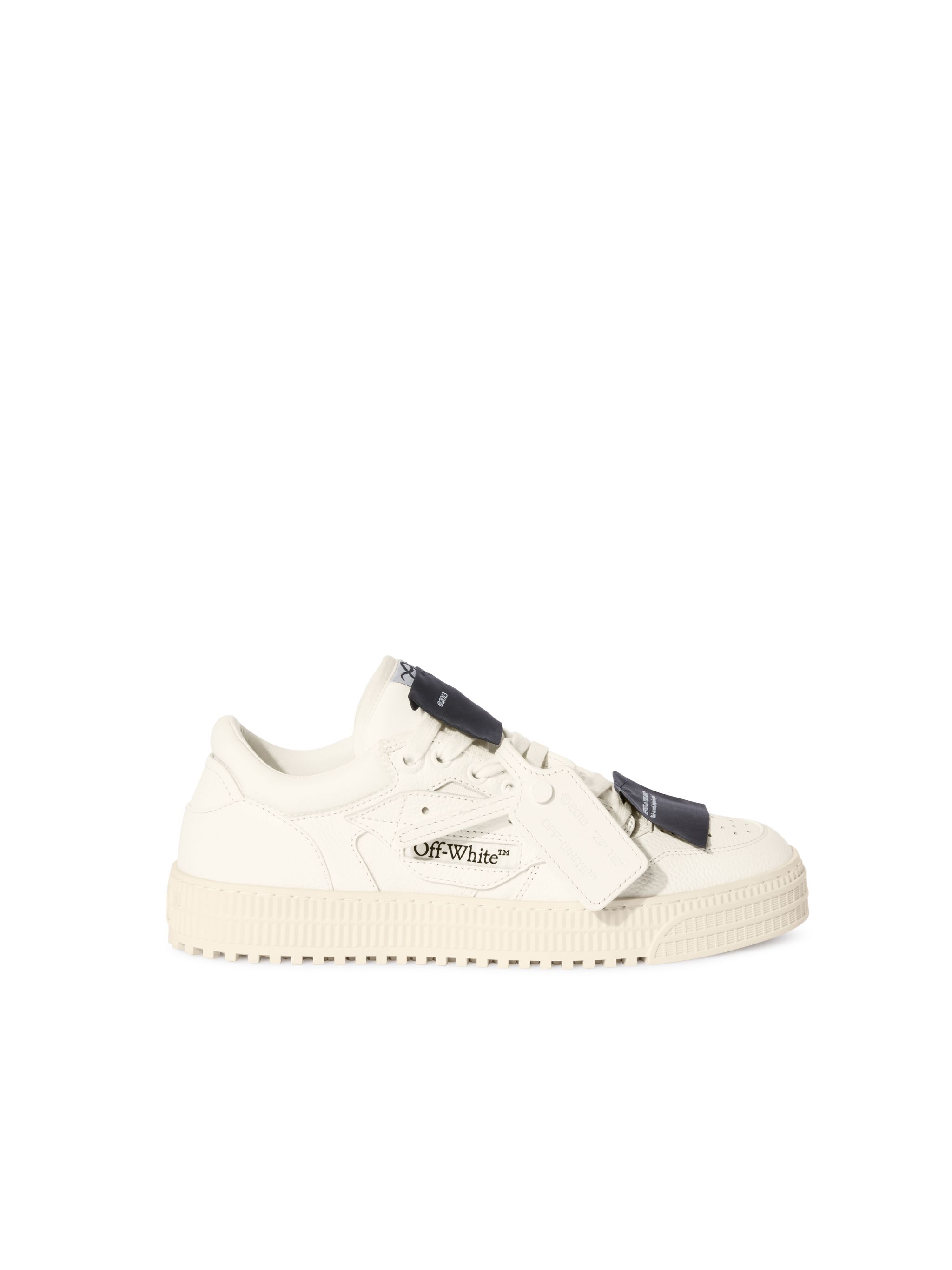
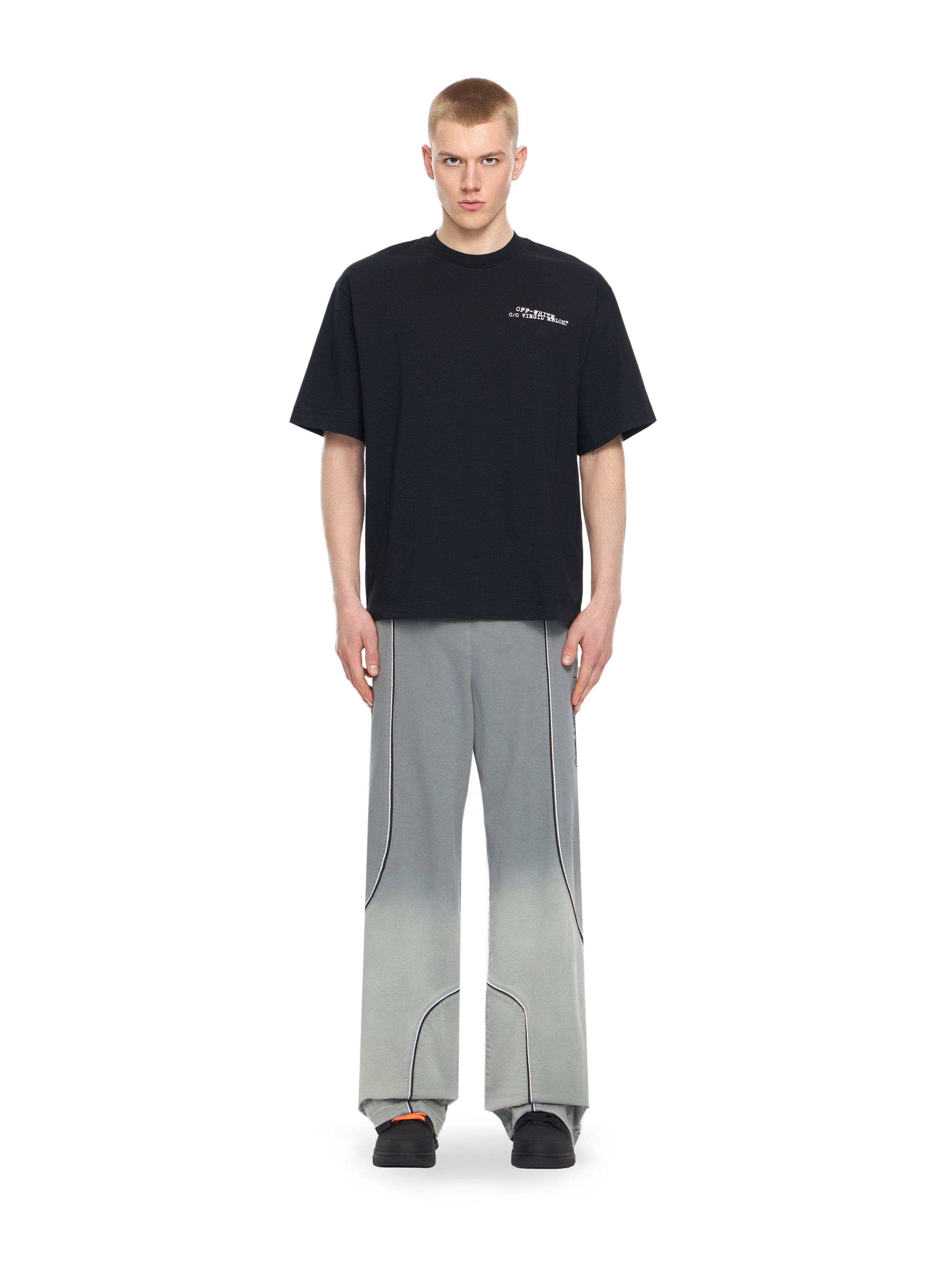
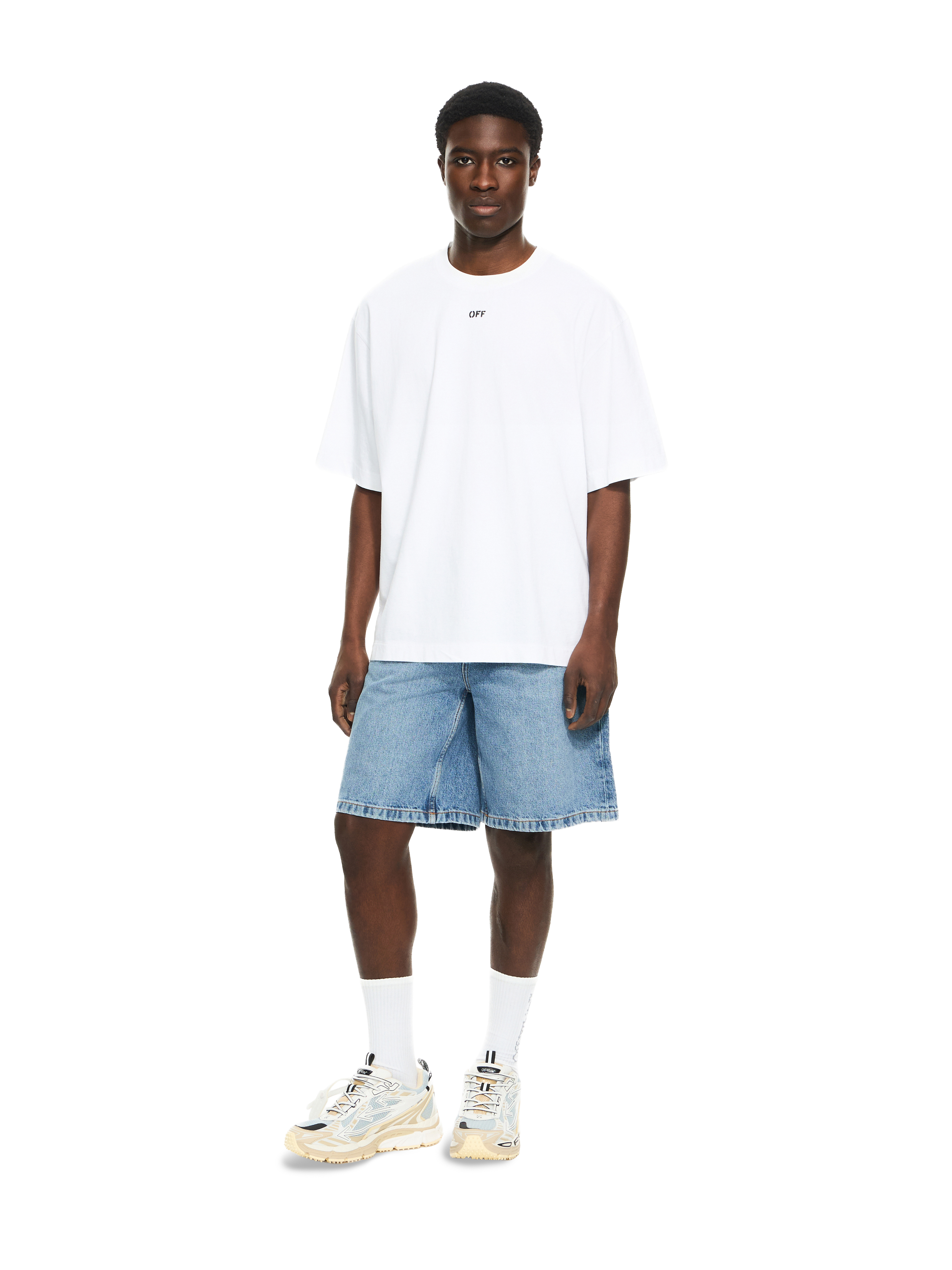
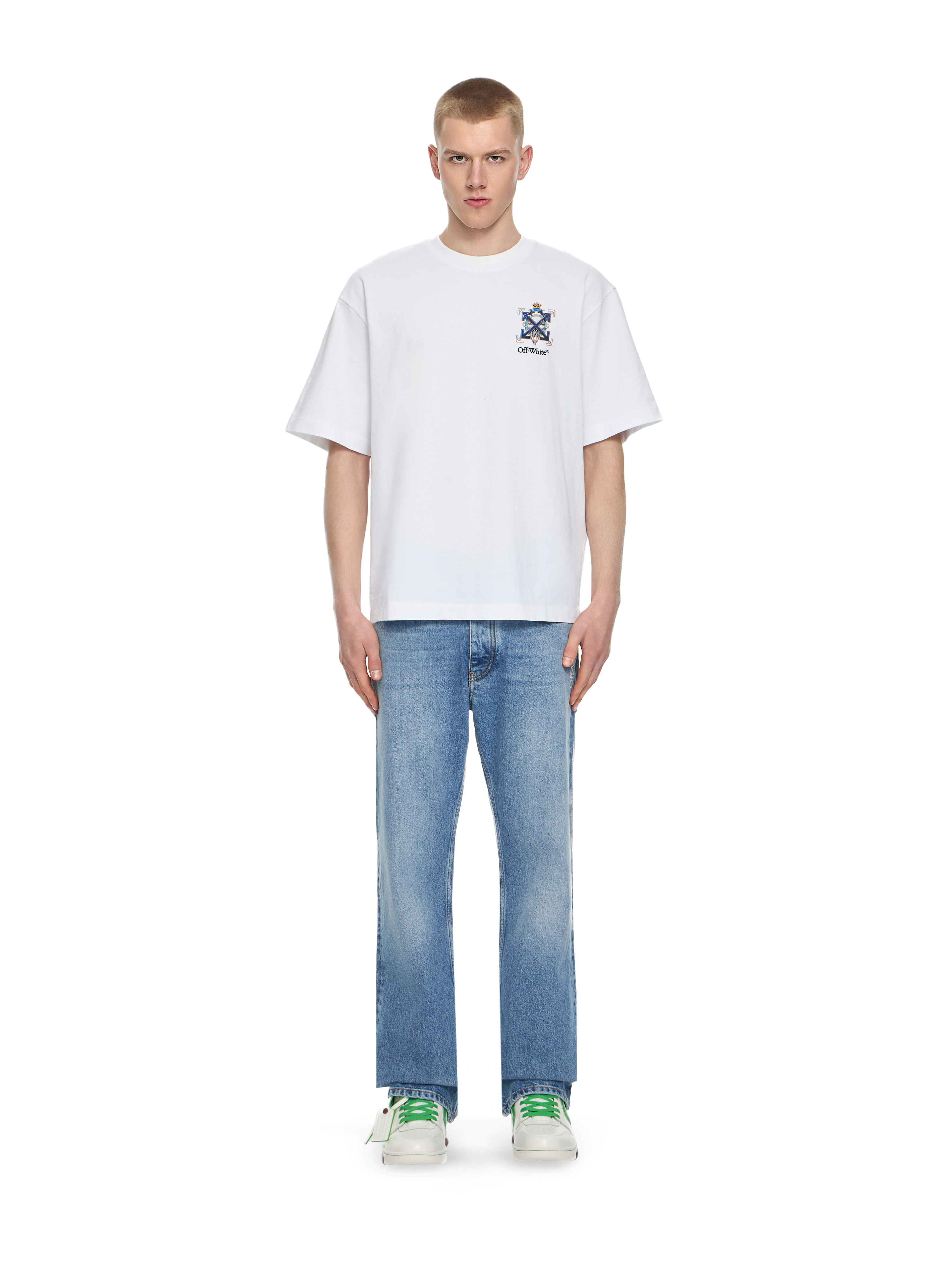
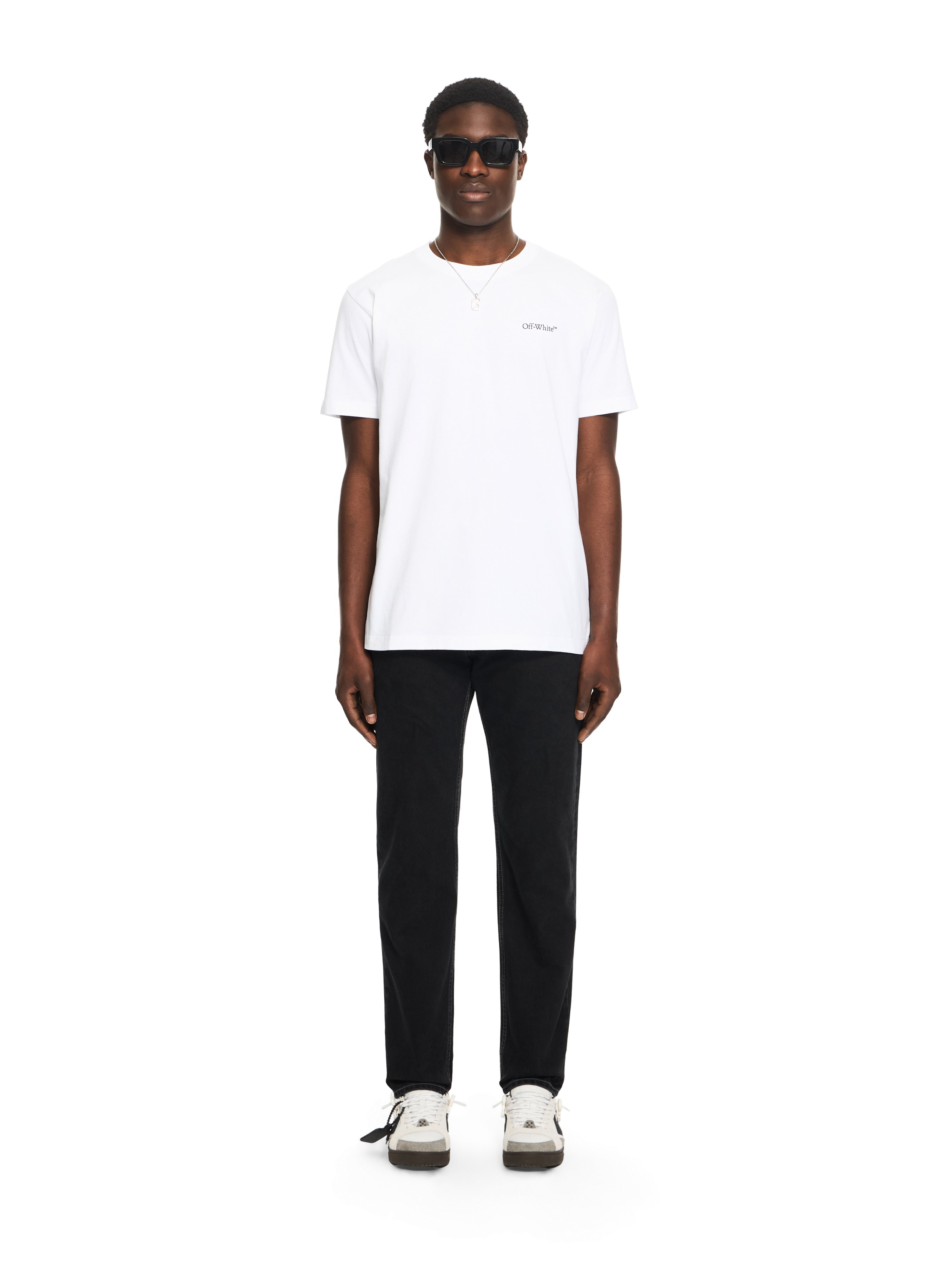
Off-White : les artisans qui font le travail
The atelier sits in a low-rise building in Corsico, twenty minutes south of Milan's centre, where the Naviglio Grande canal bends toward farmland. Inside, Franca Bianchi runs her thumb along the raw edge of a bias-cut silk panel destined for an Off-White gown. She's been cutting for forty-two years — first at Genny, then freelance — and she does not look up when the junior patternmaker asks a question about seam allowance. The answer is in the cloth.
This is where a significant portion of Off-White's tailored pieces and evening wear are made. Not in a flagship atelier with the house name on the door, but in workshops that service half a dozen labels at once, stitching Virgil Abloh's vision into being alongside collections for brands you've never heard of and a few you have. Bianchi's team of eleven handles the cutting, the first fittings, and the final assembly for roughly thirty per cent of Off-White's runway looks each season. She has never met Abloh. She met his successor, Ibrahim Kamara, once, briefly, during a pre-collection review.
This is not unusual. It is how luxury fashion actually works.
The hands in the supply chain
Off-White, since its founding in 2013, built its identity on a kind of postmodern transparency — those quotation marks, the zip-tie tags, the exposed seams that weren't exposed at all but carefully topstitched to look unfinished. The irony is that the people who execute that aesthetic remain largely unnamed. Not because the house is withholding credit, but because the structure of Italian manufacturing resists it. Ateliers operate as contractors. They work across multiple clients. Attribution is commercially sensitive.
Take the signature diagonal-stripe webbing that appears on bags, belts, and ready-to-wear. It's woven by Tessitura Taiana, a family-run mill in Como that has supplied ribbon and technical webbing since 1936. The current creative director, Luca Taiana, confirmed in a 2019 interview with MFF that Off-White was a client, though he declined to specify which products. The house orders the webbing in bulk, pre-dyed, and sends it to various workshops for application. One of those workshops is Pelletteria Dal Sasso in Arzignano, where Giulia Moro oversees a team of eight bag-makers who hand-stitch the webbing onto leather panels before they're assembled into Jitney and Binder Clip bags. Moro trained at a Bottega Veneta subcontractor in the early 2000s. She prefers working with Off-White's designs because they allow for visible stitching — less concealment, more honesty about construction.
The house's knitwear, meanwhile, comes primarily from Maglificio Belvedere, a mid-sized facility in Carpi. The factory produces for Marni, Jil Sander, and several others. Off-White's oversized crewnecks and logo-intarsia sweaters are knitted on Stoll machines, then hand-linked at the shoulders by a team that includes Rosanna Ferri, who has been linking knitwear since 1987. She works six days a week. She earns a piece rate. She does not own any Off-White.
The Abloh era and what it required
Virgil Abloh's appointment as artistic director in 2013 brought a level of demand that most new labels don't generate. The hype was immediate. Production had to scale fast, and the house leaned on existing networks within the LVMH and New Guards Group infrastructure. New Guards, which licensed Off-White from 2016 until its acquisition by Farfetch in 2019, had relationships with dozens of Italian ateliers through its work with Marcelo Burlon and Palm Angels. Off-White plugged into those relationships.
The result was a distributed production model. A single runway look might involve five different workshops: one for the base garment, one for screen-printing, one for embroidery, one for hardware, one for finishing. Coordination fell to production managers, not designers. Abloh would approve samples. Kamara does the same now. But the people translating a sketch into a garment with correct proportions, functional closures, and a price point that won't bankrupt the company are pattern-makers and sample machinists whose names appear on no credits.
One of them is Stefano Galli, a freelance pattern-maker based in Bergamo. He worked on Off-White's men's tailoring from 2017 to 2021, primarily on the deconstructed blazers with exposed shoulder pads and raw hems. The aesthetic required a traditional structure underneath — canvas interlining, pad-stitched lapels — then a deliberate undoing of the finishing. Galli described the process as "reverse-engineering a Caraceni suit, then stopping halfway." He left Off-White's roster in 2021 when the house moved more tailoring in-house, post-Abloh.
What in-house means
Off-White does maintain a small internal atelier in Milan, near the showroom on Via Solferino. It employs about twenty people, mostly for prototyping and high-complexity pieces that require multiple fittings. The head of the atelier is Claudia Rossi, formerly of Prada. She joined in 2020. Her team develops the first samples for each collection, then sends tech packs to external ateliers for bulk production. Rossi's background is in traditional tailoring, which means she approaches Off-White's streetwear-inflected cuts with a rigour the aesthetic doesn't always telegraph. A hoodie with a kangaroo pocket still requires a balanced shoulder and a clean armhole. Rossi insists on both.
The atelier also handles custom pieces for celebrity dressing and one-offs for editorial. When Zendaya wore that chainmail-and-leather gown to the 2021 Venice Film Festival, it was Rossi's team that built it, working from a sketch by Abloh and a drape mocked up by assistant designer Marta Bianchi (no relation to Franca). The construction took eleven days. The gown required internal boning, a hidden zip, and a hem weight to keep the chainmail from pulling the silk lining. None of that was visible in the photos.
The next chapter under Kamara
Ibrahim Kamara took over as image and art director in 2023, following Abloh's death in 2021 and a transitional period under the design team. Kamara's background is editorial — he was editor-in-chief of Dazed — and his approach leans more conceptual, less tied to the streetwear grammar that defined Off-White's first decade. His first full collection, shown in September 2023, featured more tailoring, more draping, more references to historical couture.
This has required new relationships with new ateliers. The house is now working with Sartoria Sì in Florence, known for its couture-level finishing, and has brought in Lucia Ferragamo (yes, that Ferragamo, though she works independently) as a consultant on fabric sourcing. Kamara has also pushed for more visible collaboration. The Spring 2024 collection included a credit in the show notes for the embroidery atelier, Ricamificio Alpino, which hand-stitched floral motifs onto tulle overlays. It was the first time Off-White had credited a contractor in its official show materials.
Whether this becomes standard practice remains to be seen. The fashion industry's relationship with attribution is inconsistent. Some houses name their ateliers. Others treat the supply chain as proprietary. Off-White, under Kamara, seems to be moving toward transparency — not as a marketing gesture, but as an acknowledgement of how the work actually gets done.
The people who don't get named
There are, of course, limits to how much transparency is possible. Many ateliers work under non-disclosure agreements. Others prefer anonymity because it allows them to serve competing brands without conflict. And some workers — particularly those in lower-wage roles like quality control, packing, and logistics — are employed through agencies, not directly by the ateliers. Their names don't appear on any paperwork.
But even within those constraints, it's worth noting who makes the clothes. Franca Bianchi in Corsico. Giulia Moro in Arzignano. Rosanna Ferri in Carpi. Stefano Galli in Bergamo. Claudia Rossi in Milan. These are not anonymous hands. They are skilled professionals with decades of experience, working within a system that rarely names them.
Off-White's aesthetic has always played with the idea of authorship — those quotation marks around every logo, the ironic distance from its own branding. Perhaps the next evolution is to extend that transparency to the people who turn the ideas into objects. Not as a gesture, but as a fact.