Portrait : le directeur artistique de Burberry
Daniel Lee stands in the Burberry atelier at Horseferry Road, adjusting the sleeve of a trench coat that will never make it to production. The sample is correct in every technical sense — storm shield, gun flap, throat latch — but something in the way it hangs displeases him. He pulls the sleeve head forward half an inch. The coat relaxes. He nods, says nothing, moves to the next rail.
This is the working method of a designer who built his reputation not on mood boards but on the millimetre. Lee arrived at Burberry in October 2022 with a track record that was, by industry standards, brief and startlingly effective. Three years at Bottega Veneta had been enough to reposition a house that had spent the previous decade chasing relevance. He did it without logos, without collaborations, without the usual theatre. He did it with a padded cassette bag and a square-toe sandal that photographers recognised as soon as they saw it on the street.
The appointment surprised no one who had watched his Bottega tenure. What did raise eyebrows was the speed. Lee was thirty-six when he took the Burberry role, younger than most creative directors at houses of comparable scale. But youth is not the story here. The story is what he learned in the fifteen years before Bottega, and how he has chosen to apply it.
A Very Long Apprenticeship
Lee did not attend Central Saint Martins with a graduate collection and a backer. He studied at Bradford, then Westminster — solid schools, not mythologised ones. His first job was at Maison Margiela under an anonymous design team, which is another way of saying he learned to prioritise the garment over the signature. He moved to Balenciaga in 2008, just as Nicolas Ghesquière was entering his late, cerebral phase. Then Céline, under Phoebe Philo, where he spent five years as deputy to a designer who believed that a woman's day contained more than one occasion and that clothes should account for all of them.
This is not the CV of someone in a hurry. It is the CV of someone learning how a sleeve is set, how a hem is weighted, how a collection is paced across twelve exits instead of collapsed into six. At Bottega, he inherited a house with an extraordinary leather atelier and a somewhat uncertain identity. He let the atelier lead. The intrecciato weave, which had been Bottega's calling card since the Seventies, became the starting point for bags that were sculptural without being difficult. The Pouch and the Cassette were not intellectual exercises. They were things women carried, and kept carrying.
Lee's Bottega was not minimal in the aesthetic sense — the clothes had volume, texture, surface interest — but it was minimal in its rhetoric. No manifesto. No references to art movements or subcultural moments. Just a very clear point of view about proportion and a confidence that the work would speak for itself. It did. By the time he left in 2021, Bottega's revenue had grown by nearly forty per cent.
The Burberry Proposition
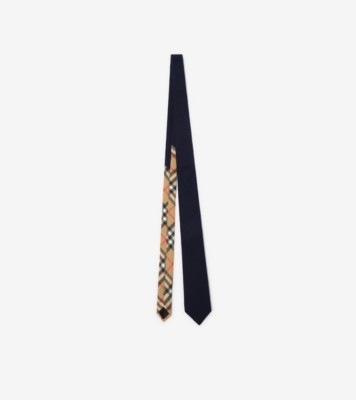
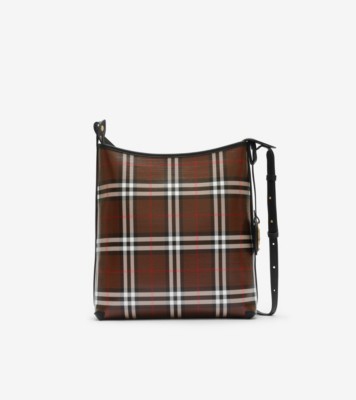
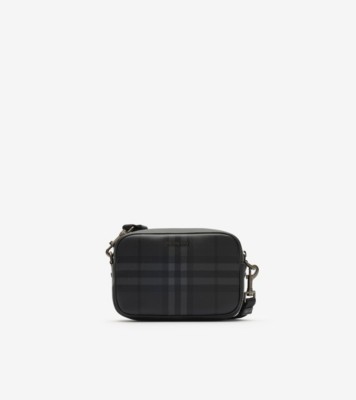
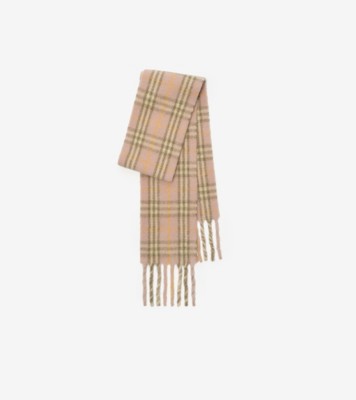
Burberry is a different kind of problem. It is not a house in search of an identity. It has one, and that identity is more specific than almost any other brand at its scale. The trench coat is not a signature in the way a Chanel jacket is a signature. It is a piece of intellectual property that predates the First World War and still sells in meaningful volume. The check — beige, red, black, white — is recognised by people who have never bought a Burberry garment. This is both an advantage and a constraint.
Lee's first collection, shown in February 2023, did not attempt to reinvent the house. It clarified it. The trench remained, but the sleeves were wider and the belt was knotted, not buckled. The check appeared on a puffer coat cut with a nipped waist and an A-line skirt. There were leather trenches, shearling trenches, trenches in parachute nylon. The message was straightforward: Burberry makes outerwear, and outerwear is not a single category.
What was less obvious, and more significant, was the way Lee handled the body underneath the coat. The trousers were wide and pleated. The knits were fine-gauge and fitted close. The skirts had movement. This is the Philo inheritance — the understanding that a coat is only as good as what it is worn with, and that a wardrobe is a system, not a series of isolated statements.
The second collection, shown six months later, pushed further into craft. Lee introduced a rose print that had been hand-painted in the Burberry archive, then digitised and scaled across silk and cotton. The leather work became more complex — not in the Bottega intrecciato sense, but in the English saddlery sense. Bridle leather, vegetable-tanned, with visible topstitching. This is a designer who knows the difference between Italian and English leather traditions, and knows which one belongs at Burberry.
What the Work Actually Looks Like
Lee's Burberry is not about disruption. It is about proportion, surface, and a kind of pragmatic elegance that assumes the wearer has a life outside of fashion week. The silhouette is broad-shouldered and narrow-hipped, which is a silhouette that recurs every fifteen years and will recur again. The colours are earthy — camel, chocolate, olive, rust — with black and navy as punctuation. The fabrics are substantial. A wool coat weighs what a wool coat should weigh.
There is no irony here, no wink at the audience. Lee is not interested in subverting the trench or queering the check. He is interested in making a very good coat, and then making another one that is slightly better. This is not a fashionable position in an industry that valorises the new, but it is a sustainable one in the older sense of the word. Burberry has been making trench coats for a hundred and twelve years. Lee's job is not to stop.
The accessories are where the Bottega influence is most visible. The Knight bag, introduced in his first collection, has the same sculptural simplicity as the Cassette — a soft, gathered shape with a single strap and no visible hardware. It photographs well, which matters. It also works in three dimensions, which matters more. The shoes are heeled and square-toed, or flat and square-toed, or boots. Lee is not trying to invent a new shoe language. He is trying to make shoes that hold their shape and do not require an explanation.
What Comes Next
Lee has now been at Burberry for two years. The house's revenue grew eight per cent in the last fiscal year, which is modest but directionally correct. The critical reception has been warm without being ecstatic, which is probably where it should be. This is not a designer who courts controversy or stages spectacles. He stages fashion shows, and the distinction matters.
What remains to be seen is whether Lee's approach — methodical, craft-focused, allergic to hype — can sustain momentum in a market that increasingly rewards speed and noise. Burberry is not a small house. It operates four hundred stores and generates nearly three billion pounds in annual revenue. It needs to sell clothes, and it needs to sell them in volume. Lee's Bottega worked because Bottega is a leather goods business with a clothing line attached. Burberry is the opposite.
But there is something to be said for a designer who understands that a house is not a personal platform. Lee has not rebranded Burberry in his own image. He has clarified what Burberry already was, and made it more precise. The trench is still a trench. The check is still a check. The difference is in the details — the width of a sleeve, the weight of a fabric, the way a coat moves when a woman walks across a room. These are small things. They are also the only things that last.