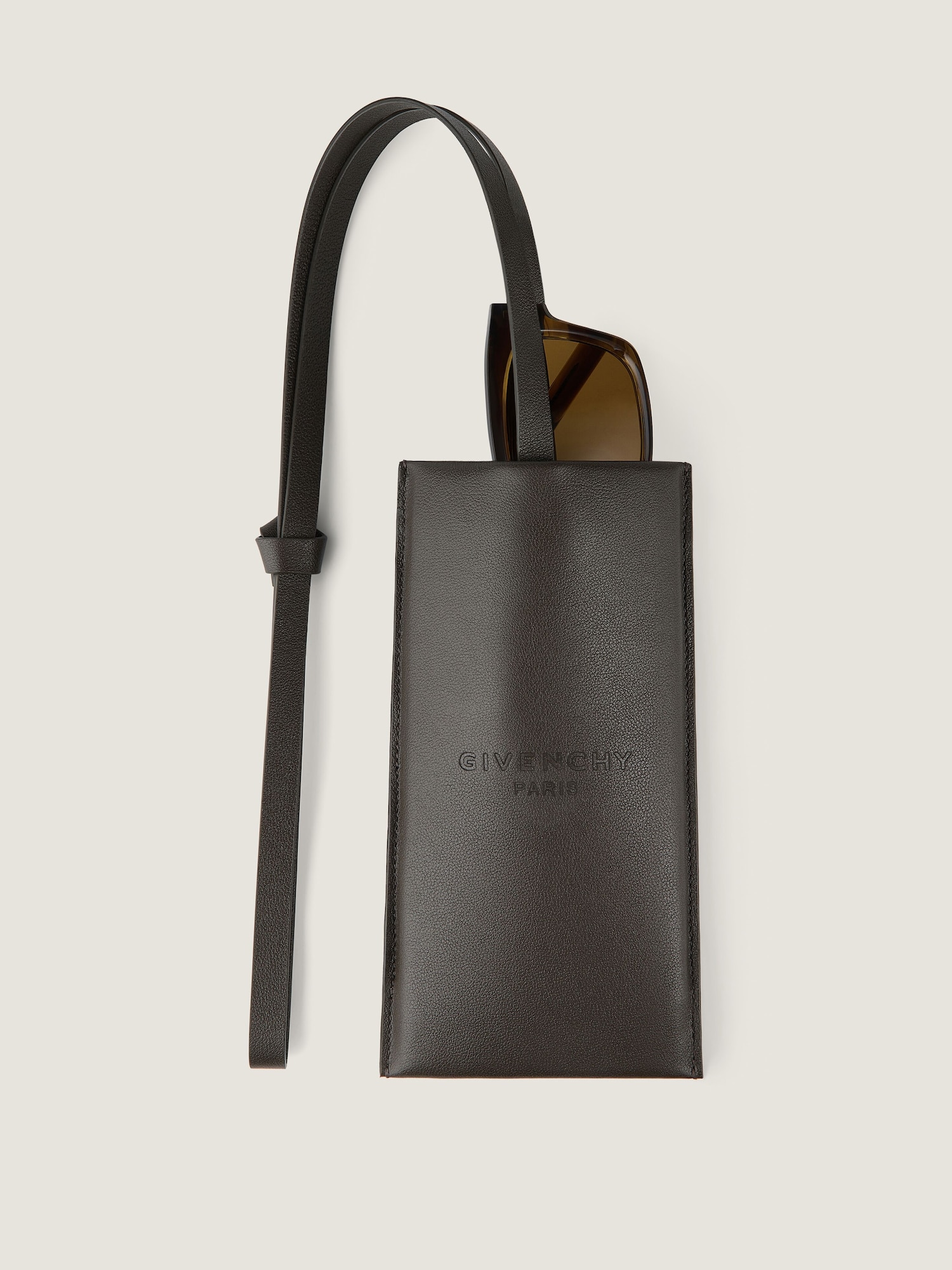
The atelier on Avenue George V runs quiet at seven in the morning
The atelier on Avenue George V runs quiet at seven in the morning. Sylvie Moreau has been here since six-thirty, steaming the sleeve head of a black wool coat that will leave Paris in four days and arrive in Seoul three hours later. She is a première d'atelier tailleur — head of the tailoring workshop — and has worked at Givenchy for twenty-two years. The coat is not hers in any legal sense, but she shaped the canvas by hand, set the sleeve twice, and will inspect the buttonholes again before it ships. Her name will not appear in the campaign.
This is not an oversight. It is how the system works.
Givenchy trades on a single name, and currently that name is Matthew Williams. Before him it was Clare Waight Keller, Riccardo Tisci, John Galliano, Alexander McQueen, Julien Macdonald, and — at the beginning — Hubert de Givenchy himself. The designer changes. The ateliers remain. Somewhere between fifteen and twenty craftspeople work full-time in the flou and tailleur studios. They do not give interviews. They do not walk the runway. When a dress appears in Vogue, it carries the designer's vision and the house's heritage, but the hands that built it stay off the page.
The Structure
French haute couture operates on a guild model that predates the French Revolution. You begin as an apprentice. You learn one technique until it is automatic. You move to the next. After five or six years, you are trusted with a full garment. After ten, you might lead a team. After twenty, your hands have touched enough cloth that you no longer need to think about tension or grain or the way silk charmeuse behaves when you cut it on the bias.
At Givenchy, the flou atelier handles dresses, evening wear, anything draped or unstructured. The tailleur atelier does tailoring: jackets, coats, trousers. Each is run by a première, and beneath her are secondes, arpètes, and petites mains. The petites mains — literally 'little hands' — are not small or unimportant. They are the people who sew. They execute what the première has interpreted from the designer's sketch, the toile, the fitting.
When Matthew Williams arrived in 2020, he brought a background in streetwear and an affection for hardware. The ateliers adjusted. Moreau, who trained under Tisci, spent the first season working out how to marry industrial zippers and D-rings to the internal structure of a tailored coat. The canvas had to sit flat. The hardware had to feel integral, not appliquéd. She solved it by treating the metal components as part of the pattern, not the finish. The coat that resulted — a black double-breasted piece with exposed silver fastenings running down the placket — appeared in the autumn 2021 show. It sold well in Asia. Moreau moved on to the next piece.
The Coat
That particular coat begins as a flat pattern. The pattern is drafted by the modéliste — the pattern maker — who works from Williams's sketch and a set of measurements. The measurements come from a fit model who matches the sample size. The pattern is cut in cotton muslin first, a toile, and draped on a dress form. Williams looks at it. He might ask for the shoulder to move forward, or the waist to drop two centimetres, or the sleeve to narrow through the forearm. The modéliste adjusts. A second toile is made. If it works, the pattern moves to the tailleur atelier.
Moreau assigns the coat to Isabelle Roche, a seconde who has been with the house for nine years. Roche cuts the fashion fabric — in this case a 13oz wool twill from Vitale Barberis Canonico — and begins the internal construction. Tailored garments have an invisible architecture. Between the outer fabric and the lining sits a layer of canvas, usually linen or horsehair, that is stitched to the wool by hand. This is called bâti. It takes four hours for a jacket, six for a coat. The canvas gives the garment its shape and allows it to mould to the wearer's body over time. Machine-made coats skip this step and fuse the canvas with glue. You can feel the difference in the first ten minutes of wear.
Roche pads the lapels, sets the collar, and bastes the sleeves. Sleeves are the hardest part of tailoring. The armhole is smaller than the sleeve head, so the fabric has to be eased in without puckering. This is done with an iron, steam, and time. Roche works in increments of five millimetres. When the sleeve is set, she hands the coat to Moreau for inspection. Moreau checks the balance, the way the coat hangs from the shoulder, the fall of the back. If the hem tilts even slightly, the coat is unstitched and adjusted. This happens more often than you would think.
The buttonholes are the last step. They are sewn by hand, using a technique called boutonnière. Each hole takes twenty minutes. There are six on this coat. The thread is silk, the same colour as the wool, and the stitches are so small they look like a seam. A machine could do this in three minutes, but the house does not use machines for buttonholes. The reason given is tradition. The real reason is that hand-sewn buttonholes do not fray, do not stretch, and last longer than the coat itself.
The Economics
None of this is efficient. A single coat requires between thirty and forty hours of labour. The fabric costs perhaps two hundred euros. The hardware another fifty. The coat will retail for four thousand. That margin looks wide until you account for the atelier wages, the overhead of maintaining a Parisian workshop, the cost of the show, the marketing, the distribution. Givenchy is owned by LVMH, which reported €86 billion in revenue last year, but the haute couture ateliers do not break even. They exist because they anchor the brand. The coat that takes forty hours to make justifies the T-shirt that takes forty minutes and sells for three hundred.
Moreau earns a salary in line with senior craftspeople in Paris, which is comfortable but not extravagant. She owns an apartment in the 11th arrondissement. She takes the Métro to work. When people ask what she does, she says she works in fashion, and they assume she means retail. She does not correct them. The pleasure is in the work, not the credit.
What Remains
Hubert de Givenchy retired in 1995. He died in 2018. The house he founded in 1952 is now a division of a conglomerate, and the clothes that bear his name are designed by someone who was seven years old when Givenchy stepped down. But the ateliers on Avenue George V still use the same techniques, the same tools, the same vocabulary. A première trained under Givenchy trained the première who trained Moreau. The chain is unbroken.
This is not sentiment. It is structure. The knowledge of how to set a sleeve, how to shape a lapel, how to make a coat that will last thirty years — that knowledge does not live in a design studio or a mood board. It lives in hands. And those hands do not retire when the designer does. They stay in the atelier, training the next set of hands, adjusting to the next aesthetic, solving the next problem. The name on the label will change again. The work will not.