The atelier on Via Borgognona holds three portraits, none of which hangs on a wall
The atelier on Via Borgognona holds three portraits, none of which hangs on a wall. They exist in the stitching diagrams pinned above the cutting table, in the way a certain sleeve is set, in the placement of a logo that once seemed radical and now reads as grammar. Fendi is a house built by women — not in the soft sense of muse-as-ornament, but in the structural sense of women who cut patterns, signed off on collections, and steered a family firm through seven decades of European fashion. Three figures, in particular, shaped what the maison became: Anna Fendi, Silvia Venturini Fendi, and Carla Fendi. To understand Fendi is to understand them.
Anna Fendi: The Craft Keeper
Anna entered the business in the 1940s, when the Via del Plebiscito workshop was still a fur and leather atelier serving Roman society women. She and her four sisters — Paola, Franca, Carla, Alda — inherited the house from their parents, Edoardo and Adele, and what might have been a genteel decline became, under their stewardship, an expansion. Anna's domain was production. While her sisters handled design, sales, and administration, she remained in the atelier, learning how a pelt is graded, how a seam in shearling must lie flat without bulk, how to achieve a clean turn on a leather lapel.
It was Anna who brought Karl Lagerfeld into the fold in 1965. The story is well-rehearsed but worth repeating for its practicality: Fendi needed a designer who understood fur as a sculptural material, not merely a luxury signifier. Lagerfeld, then thirty-two and freelancing across half of Europe, proposed treating fur like fabric — dyeing it, shearing it, intarsiating it with leather. Anna saw the technical sense in this and backed him. The collaboration lasted fifty-four years, until Lagerfeld's death in 2019, and it fundamentally altered what fur could be. Mink became as light as jersey. Sable was laser-cut into geometric inlays. The Fendi fur coat, under Anna's production oversight and Lagerfeld's vision, became something one could wear on a bus, not just to the opera.
Anna's influence is less visible than her sisters' because it lives in process rather than image. She rarely gave interviews. When she did, she spoke about tanneries, not trends. But walk through a Fendi atelier today and the standards she set remain: a tolerance for material waste of less than two per cent, a requirement that every fur piece be reversible, an insistence that hardware be tested to withstand ten thousand closures. These are not romantic details. They are the foundations on which a house endures.
Silvia Venturini Fendi: The Pragmatist
Silvia is Anna's daughter, and she entered the business in 1994, after studying at the European Institute of Design in Rome. By then, Fendi had been acquired by Prada and Patrizio Bertelli — a brief, uneasy alliance that ended in 1999 when LVMH took control. Silvia's role, initially, was accessories. She was twenty-nine. The house had no signature bag.
The Baguette arrived in 1997. The name came from the way one carries it — tucked under the arm, like a loaf of bread. The form was compact, the strap short, the hardware minimal. It was not, by the standards of the late nineties, a logical hit. Handbags then were either status totes or evening minaudières. The Baguette was neither. It was, instead, a daily object, scaled to hold a wallet, keys, and a phone, and it came in hundreds of variations: embroidered, beaded, shearling, denim, python. Silvia understood that women wanted multiples, not one grail piece. She designed for accumulation.
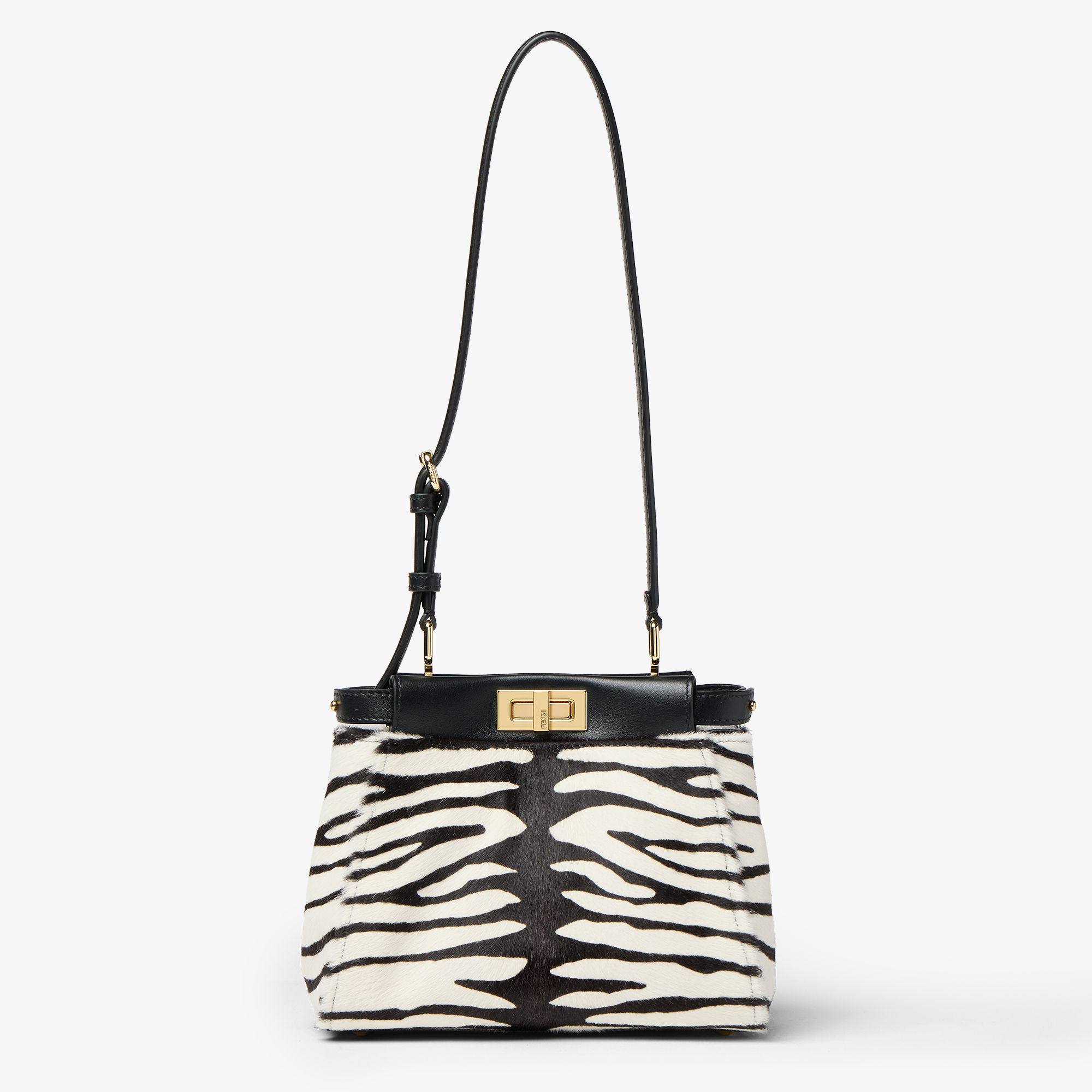
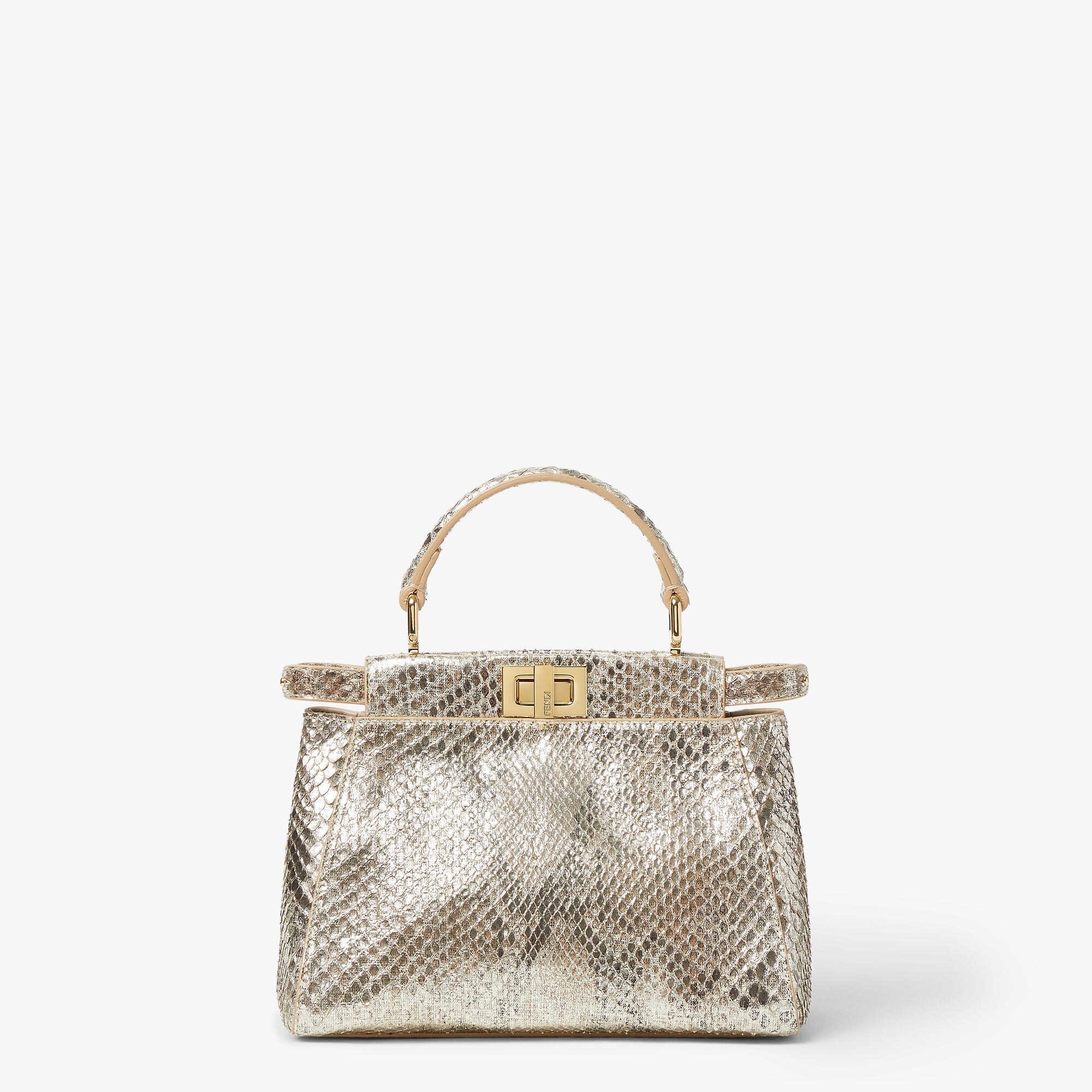
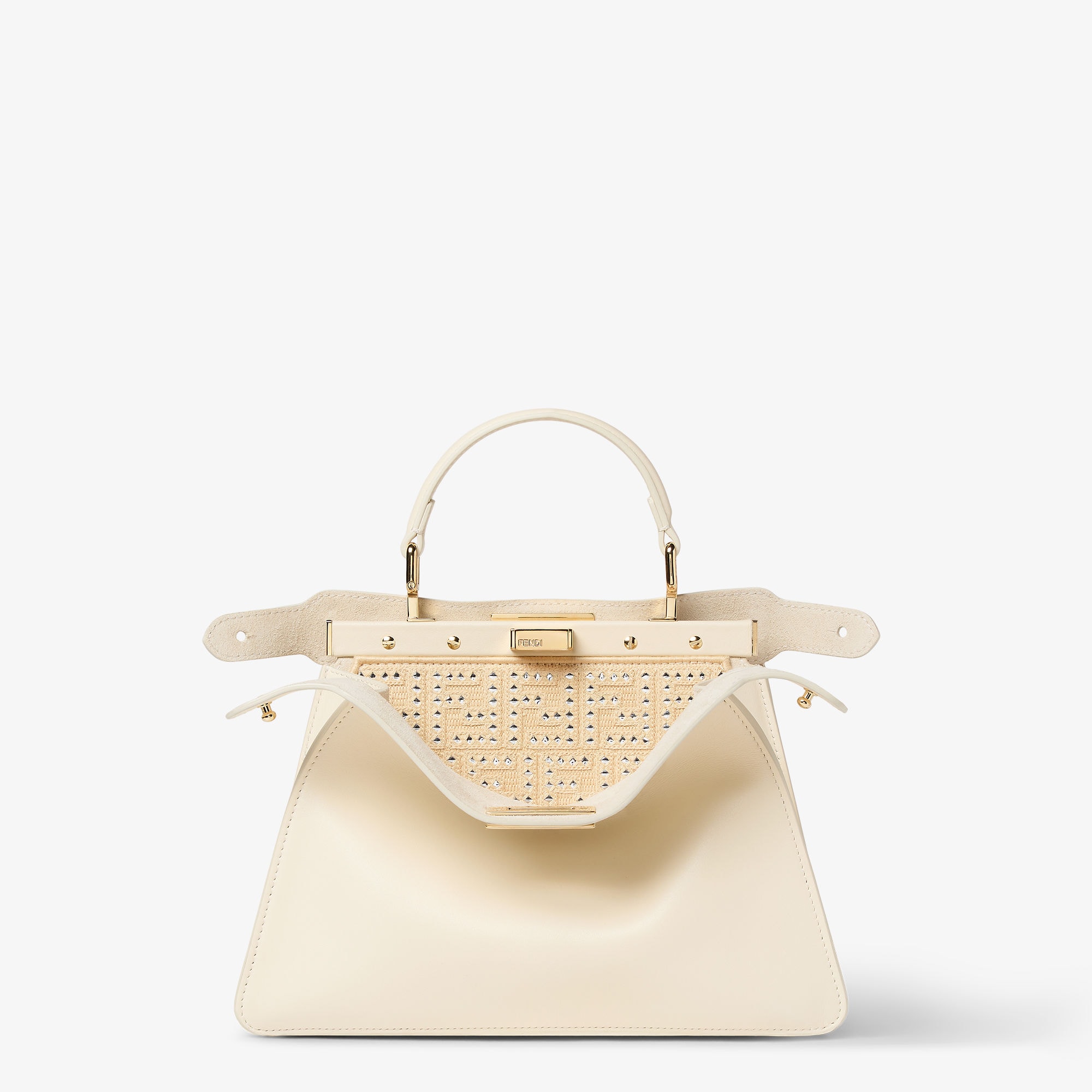
The bag appeared on Sex and the City in 2000, in an episode where Carrie Bradshaw is mugged and protests, "It's a Baguette!" The line became a meme before memes had a name, and sales tripled. Silvia, to her credit, did not attempt to repeat the trick. She moved on to the Peekaboo in 2008 — a structured, top-handle bag with an interior as considered as its exterior, designed to be seen when opened. Then the Kan I in 2017, the First in 2021. Each bag has a logic, a reason for its proportions and hardware. Silvia does not design icons. She designs tools.
Her other domain is menswear, which she has overseen since 1990. Fendi's men's collections under Silvia are less about disruption than about calibration — the cut of a trouser, the weight of a cashmere coat, the way a logo can sit on a chest without announcing itself. She has described her approach, in a rare interview with Vogue Italia in 2018, as "removing what is not necessary." This is not minimalism. It is editing.
Carla Fendi: The Strategist
Carla, the eldest of the five sisters, died in 2017. She had been the public face of Fendi for decades — the one who appeared at openings, who spoke to journalists, who negotiated with Lagerfeld when tensions arose. Her training was not in design but in business, and she approached the maison as a problem of positioning. How does a Roman fur house compete with Parisian couture? How does a family firm survive consolidation?
Her answer was twofold: expand the product range, and control the narrative. In the 1970s, Fendi began producing ready-to-wear, not as a side venture but as a core line. Carla pushed for this over the objections of some family members who felt it diluted the brand. She was correct. By the 1980s, Fendi was no longer a fur specialist but a lifestyle house, and that breadth made it an attractive acquisition target. When LVMH bought Fendi in 1999, it was Carla who negotiated the terms, ensuring that family members retained creative roles.
She also understood spectacle. The 2007 runway show on the Great Wall of China — eighty-eight models, a mile-long catwalk, global press coverage — was Carla's concept. It was excessive, borderline absurd, and it worked. Fendi became, overnight, a house that could stage an event. The Wall show has been criticised, in hindsight, for its cultural insensitivity and logistical hubris. But it achieved what Carla intended: it positioned Fendi as a house unafraid of scale.
Carla's legacy is harder to quantify than Anna's or Silvia's because it exists in decisions made at the level of structure rather than object. She saw the maison as a system, not a series of collections, and she built accordingly.
What Remains
Fendi today is led by Kim Jones, who took over womenswear in 2020 after Marc Jacobs's brief tenure. Silvia remains as accessories and menswear director. The house is, by revenue, one of LVMH's top performers, driven largely by bags and leather goods — the categories Silvia defined. The fur business, once the core, now represents less than five per cent of sales. This shift is partly ethical, partly economic, but it is also structural. Anna, Silvia, and Carla built a house that could survive the obsolescence of its founding material.
One returns, in the end, to the question of influence. What does it mean to shape a house? For Anna, it meant ensuring that every seam could withstand scrutiny. For Silvia, it meant designing objects that women would buy in multiples. For Carla, it meant positioning the house so that it could be sold without being dismantled. These are not romantic contributions. They are practical ones. And they are, arguably, the only contributions that last.