The atelier sits four floors above Floragatan, in a building that once housed a bank
The atelier sits four floors above Floragatan, in a building that once housed a bank. Jonny Johansson is standing at a cutting table, one hand on a sleeve that refuses to drape the way he sketched it three weeks ago. The fabric — a wool-cashmere blend from Biella, 280 grams per square metre — has a mind of its own. He doesn't force it. Instead, he pins it differently, steps back, and waits for the cloth to tell him what it wants to be.
This is not the origin story you expect from a house that began, improbably, with denim and a hundred pairs of raw jeans given away to friends in 1996. But it is the one that matters now, twenty-eight years on, when Acne Studios employs close to six hundred people and maintains ateliers in Stockholm, Paris, and a production hub outside Florence. The work has changed. The instinct — trust the material, resist the obvious — has not.
Formation, or how one learns to cut against the grain
Johansson did not attend Central Saint Martins. He did not apprentice under a storied couturier. He studied graphic design and advertising at Beckmans College of Design in Stockholm, and his early career involved art direction for music videos and album covers. When he and three friends — Mikael Schiller, Tomas Skoging, and Jesper Kouthoofd — founded Ambition to Create Novel Expression in 1996, the plan was never to make clothes. It was to make things: furniture, magazines, films. The jeans happened because Johansson wanted a pair that fit a certain way, and because the group had access to a small production run through a contact in Italy.
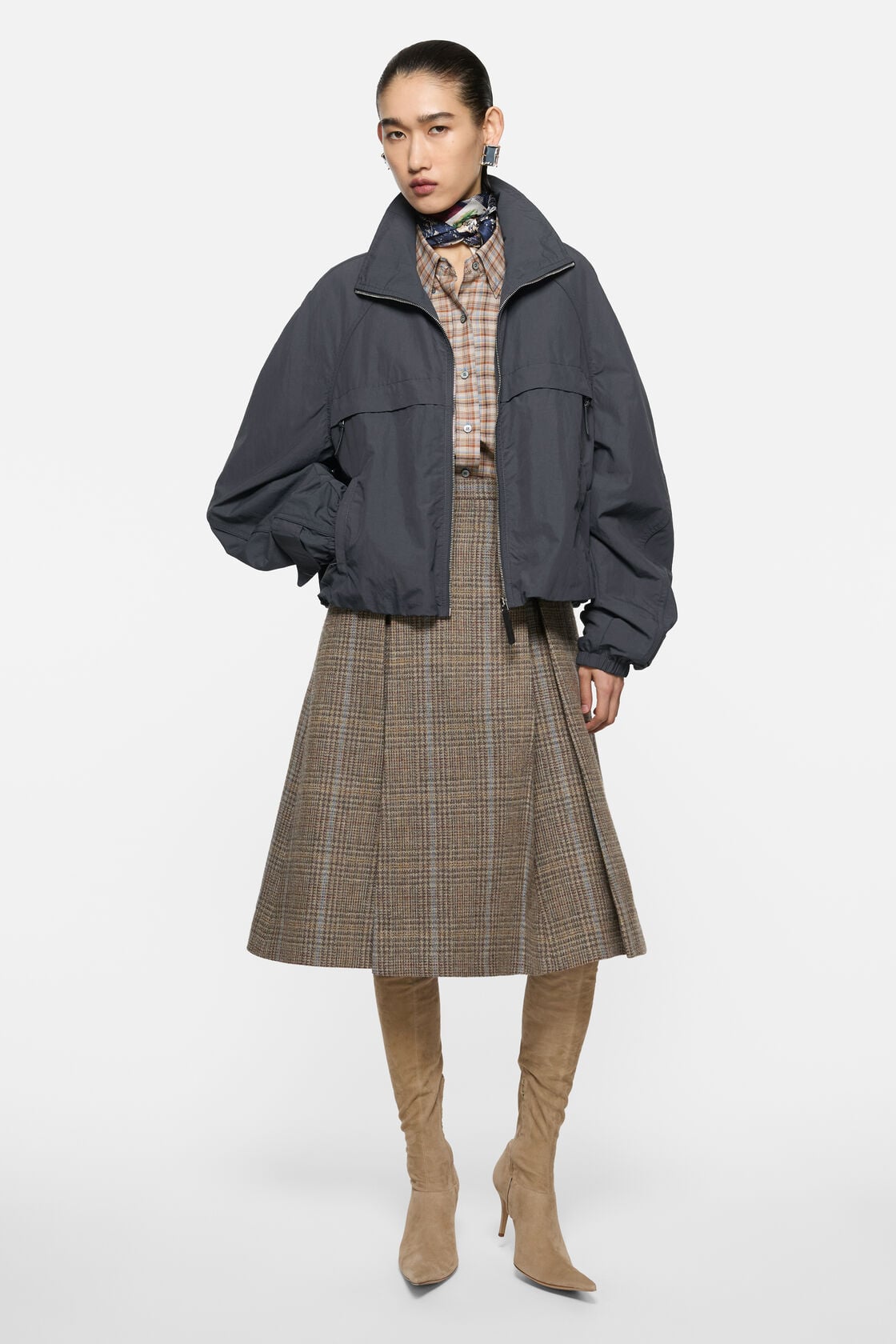
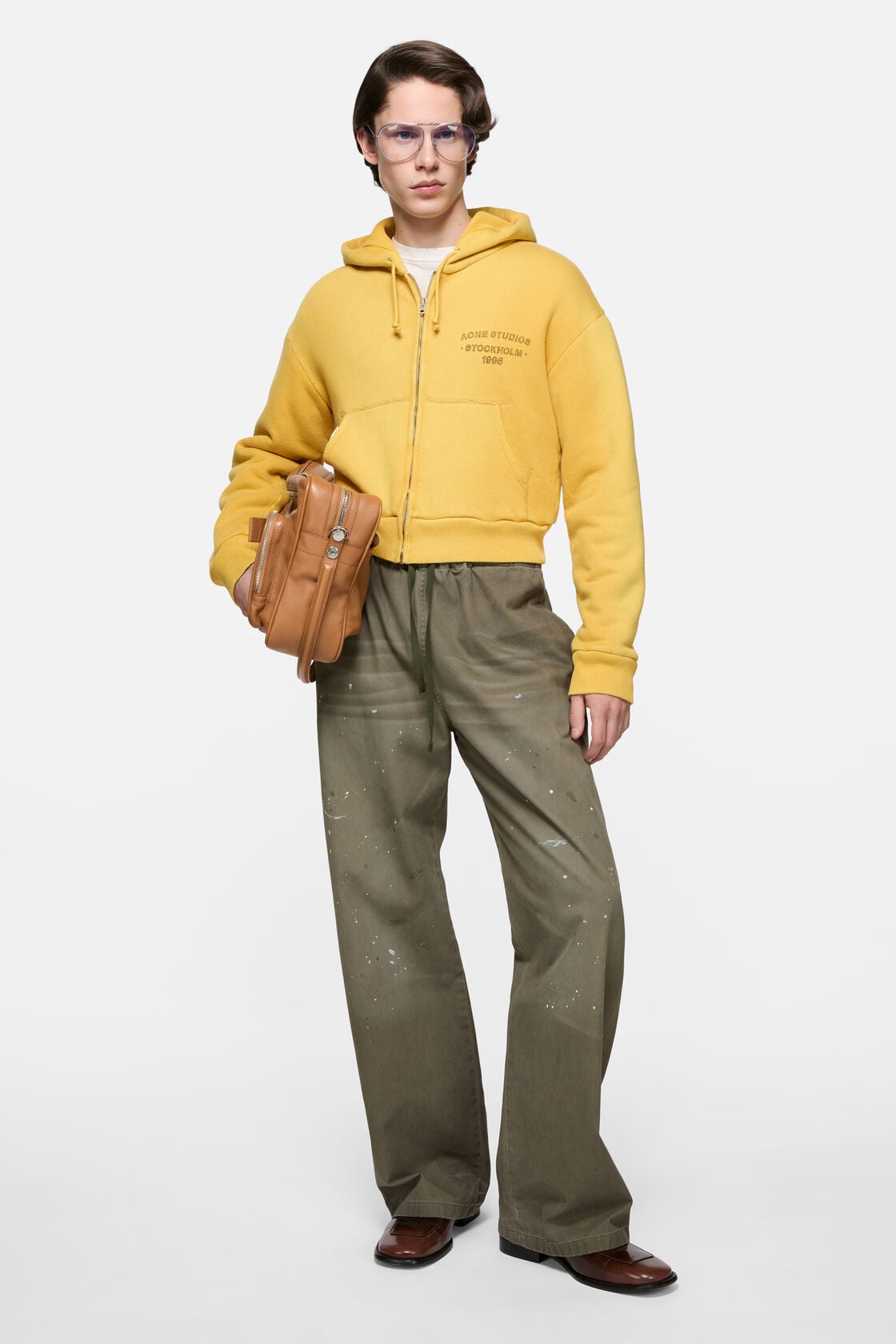
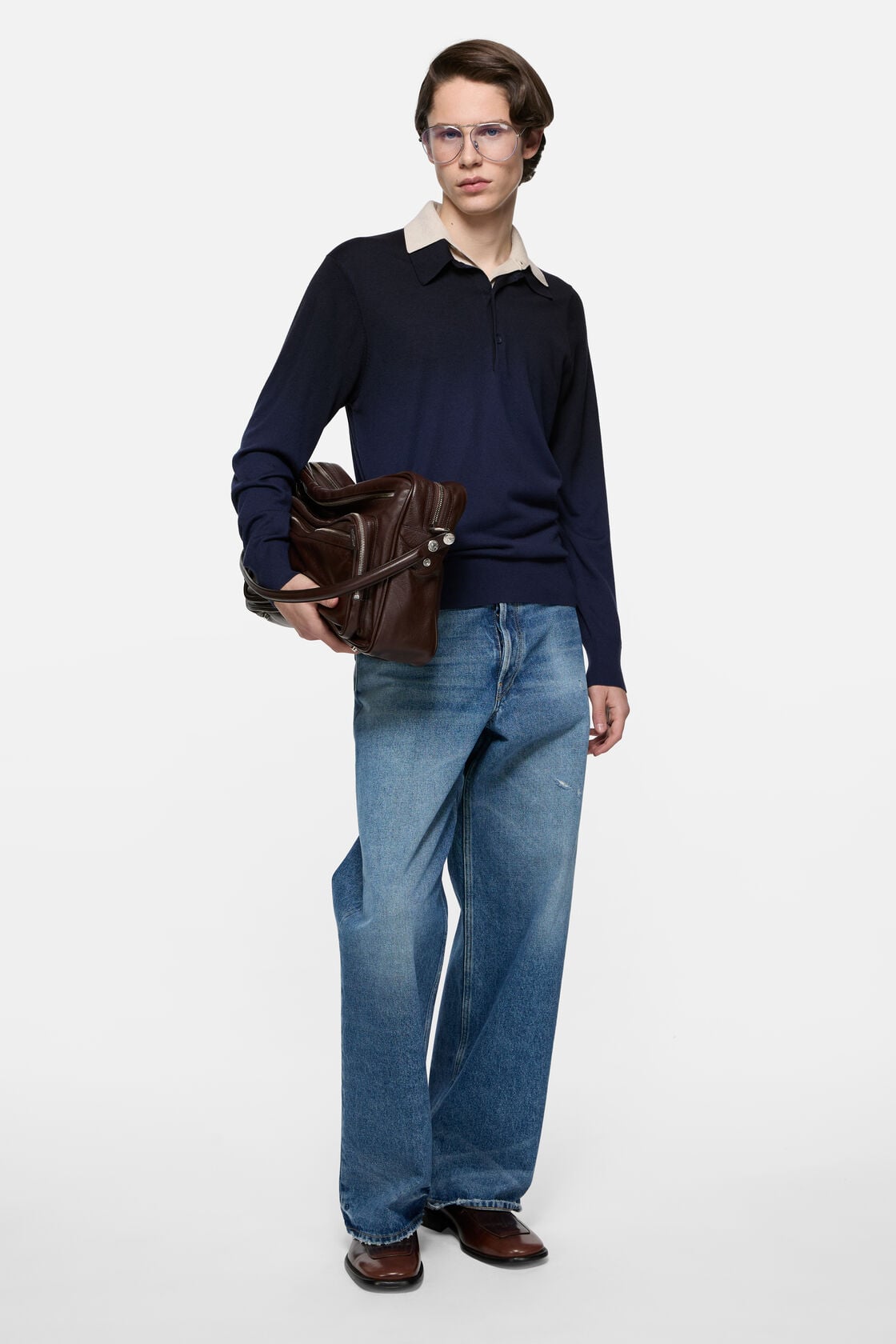
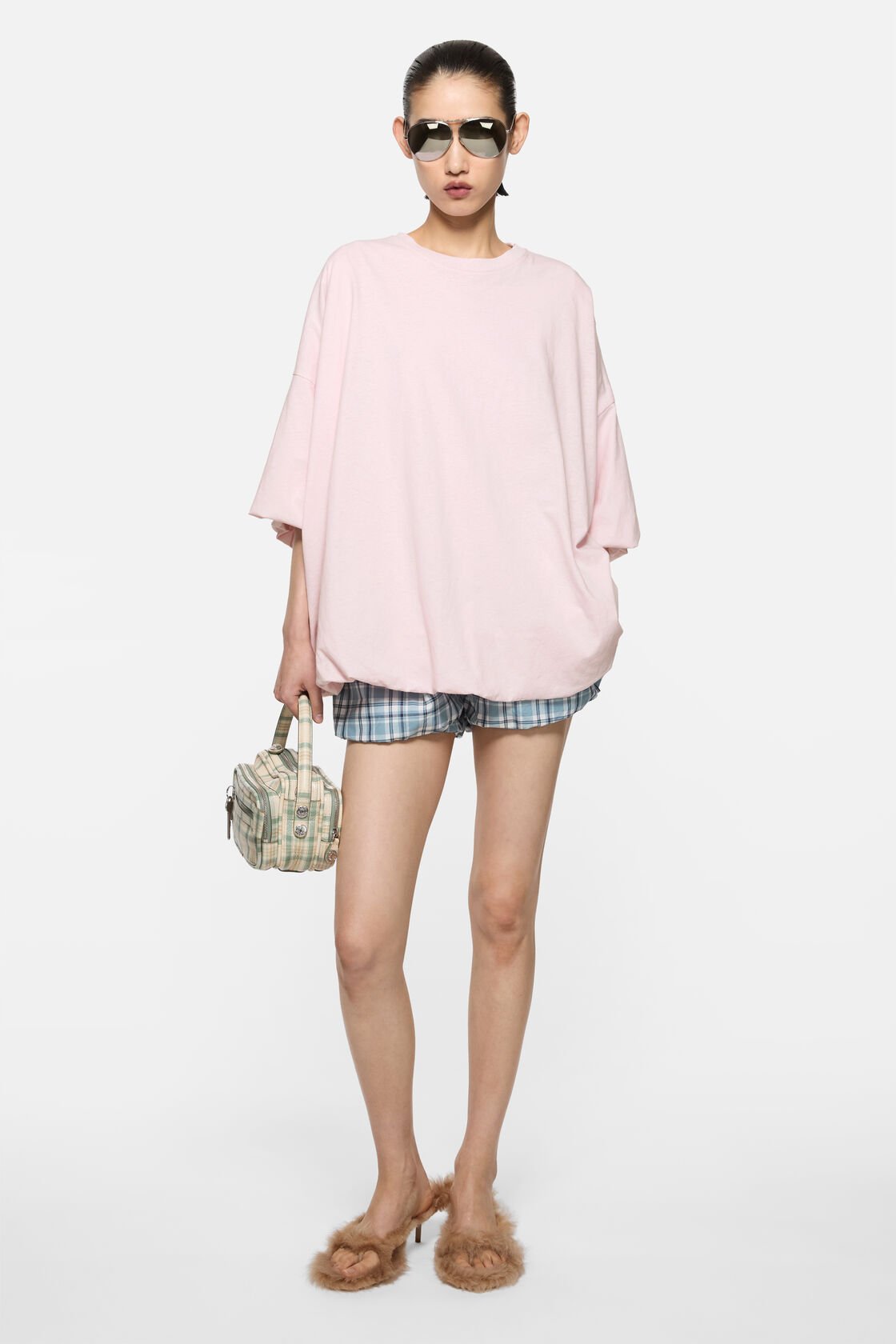
The jeans sold. Then they sold again. By 2000, Acne had pivoted fully into fashion, and Johansson found himself teaching himself pattern-making by reverse-engineering garments he admired. He has spoken, in scattered interviews over the years, about buying vintage Yohji Yamamoto and Helmut Lang pieces and taking them apart at the seams to understand their construction. This is not romantic. It is practical, and slightly obsessive, and it shows in the house's tailoring — particularly in the way a blazer's shoulder sits just slightly forward, or the way a trouser hem breaks at an unexpected point on the ankle.
The people who make the shoulder sit that way
Walk into the Stockholm atelier on a Tuesday morning in February and you will find Elin Nordström at her station, working on a toile for next season's outerwear. Nordström joined Acne Studios in 2008, trained initially as a patternmaker at the Swedish School of Textiles in Borås, and now leads the technical development team. She does not give interviews. Neither does Anders Bergström, who has overseen fabric sourcing since 2011 and maintains relationships with mills in Prato, Biella, and a small weaving house outside Lyon that produces the house's signature melton wool.
These are not names you will find in press releases. But they are the ones who determine whether a coat's collar stands correctly, whether a knit holds its shape after twenty wears, whether the hand-feel of a leather jacket justifies its price. Johansson designs; they execute. The distinction matters.
In 2017, the house brought on Marie Blanchet, formerly of Maison Margiela, to run its Paris atelier. Blanchet's brief was narrow: refine the tailoring, bring a French rigour to the cutting and finishing, and do it without erasing the house's Nordic restraint. She succeeded. The blazers that emerged from that collaboration — particularly the single-breasted wool style with a slightly extended lapel that debuted in the autumn 2018 collection — became a quiet bestseller. Not because they announced themselves, but because they didn't.
Signature, and the risk of being known for one thing
If you ask someone outside the industry to name an Acne Studios piece, they will say the Jensen boot. Possibly the Musubi bag. Both are correct, and both present a problem: they are legible, reproducible, and therefore vulnerable to becoming shorthand for the house itself. Johansson is aware of this. In a 2021 conversation with Business of Fashion — one of the few he grants — he noted that the Jensen boot's success was "both a gift and a trap."
The boot, for context, is a Chelsea with an exaggerated elastic gusset and a chunkier sole than tradition dictates. It launched in 2012, became a fixture on the feet of a certain type of creative professional by 2015, and has since been reissued in twenty-odd colourways and materials. It works because it takes a familiar form and shifts it just enough to feel considered rather than classic. The same logic applies to the Musubi, a soft-body shoulder bag with a knotted-leather closure that debuted in 2018 and now accounts for a meaningful portion of the house's accessories revenue.
The risk, of course, is that these pieces become the only pieces people see. Johansson's response has been to double down on the less obvious work: the outerwear with bonded seams, the knitwear in felted merino that requires a particular finishing process only three mills in Europe can manage, the trousers with a dropped crotch that somehow reads as tailored rather than slouchy. These are harder to photograph, harder to sell in a single image on a screen, and harder to explain in a caption. They are also the work that will matter in ten years.
What comes next, and who decides
In 2021, Acne Studios was acquired by Permira, a private equity firm that also holds stakes in Dr. Martens and Golden Goose. The terms were not disclosed, but the structure was clear: Johansson remains creative director, the Stockholm headquarters stays put, and the plan is to expand retail presence in Asia and North America. This is the part of the story where one is supposed to express concern about dilution, about the inevitable creep of commercial logic into creative decisions.
Perhaps. But consider the alternative: a house that remains small, pure, and progressively irrelevant as production costs rise and wholesale margins shrink. Johansson is fifty-three. The question is not whether Acne Studios will grow, but whether it can do so without losing the instinct that made it worth acquiring in the first place — the willingness to let a sleeve drape wrong until it drapes right, to trust the hands at the cutting table, to name the people who do the work even when the industry prefers to credit the vision alone.
On that February morning, Nordström finishes the toile, pins it to a dress form, and calls Johansson over. He adjusts the shoulder seam by half a centimetre. She nods. They move on to the next piece. This is the work. It does not photograph well.