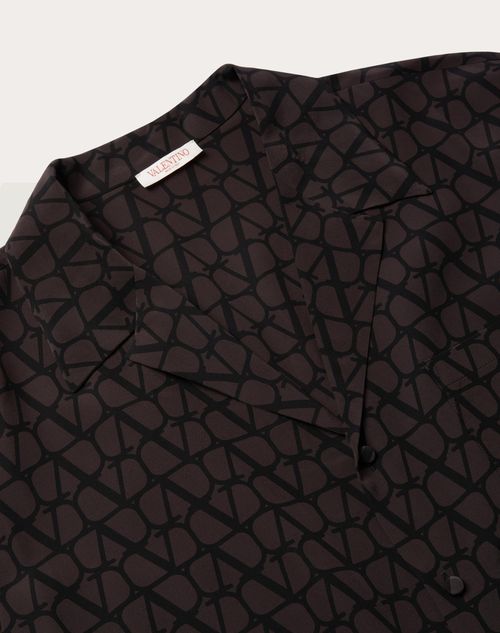
The atelier sits three floors above the Via Condotti flagship
The atelier sits three floors above the Via Condotti flagship. Light comes in from the northwest, which matters when you're matching silk to wool under natural conditions. Twelve seamstresses work at stations marked by decades of pin-pricks in the wooden boards. They are not named on the runway credits. Most prefer it that way.
Valentino Garavani opened his couture house in 1960. He retired in 2008. Since then, the name has moved through three creative directors and one significant repositioning under Pierpaolo Piccioli, who left in March 2024. What remains constant is not a design language — that shifts with each appointment — but a network of specialist ateliers in Rome and a production facility outside Pisa that has been cutting for the house since 1998.
The work happens in stages. A toile is cut in calico, fitted on a mannequin or model, adjusted, recut. The pattern is transferred to the final cloth — often a silk gazar for evening, a compact wool crepe for day — and the pieces are assembled by hand. Buttonholes are worked with a gimp thread that sits slightly proud of the fabric. Hems on evening gowns can take four hours for a single seamstress, depending on the weight and drape required. This is not romantic. It is slow, methodical, and often boring.
The hands you don't see
Lucia Migliore has worked in Valentino's Rome atelier for thirty-one years. She specialises in structured bodices, the kind that require boning, underlayers of coutil, and an understanding of how tension distributes across a torso in motion. Her work appeared in the autumn 2023 collection, though her name did not. A black faille gown with a strapless bodice and a skirt that fell in six panels required two fittings and a third adjustment after the model walked in rehearsal and the left side pulled slightly at the waist. Migliore unpicked the seam, recut the panel with an additional quarter-inch at the side, and reassembled it in four hours.
She is one of twelve première mains in the Rome atelier. The term translates as 'first hand', though it functions more like a senior technician. A première main interprets the design, constructs the toile, supervises fittings, and manages the final make. Most have been with the house for two decades or more. Some came through the old apprenticeship system, learning on the job from women who had worked for Valentino himself. Others trained at the Accademia di Costume e Moda in Rome, then spent years as second or third hands before moving up.
The hierarchy is strict. A première main does not cut until she has proven she can sew. A second hand does not fit until she has proven she can assemble. The system is slow, occasionally brutal, and resistant to shortcuts. It also produces garments that hold their shape through a six-hour event and a transatlantic flight.
What the runway doesn't show
Valentino's autumn 2019 collection included a pink wool coat with a notched collar and a single-button closure. The cloth was an 11oz compact wool from Dormeuil, dyed to match a specific shade the design team had archived from a 1968 dress. The coat required three toiles before the shoulder sat correctly. The final version used a canvas interlining at the chest, a technique borrowed from tailoring, and a silk lining cut on the bias to allow movement without pulling.
The coat was constructed by Francesca Bianchi, a tailleur who joined Valentino in 2004 after fifteen years at Brioni. She does not work on evening gowns. Her training is in structured daywear — coats, jackets, tailored dresses — and she prefers working with wool to silk. The pink coat took forty-two hours to complete, not including fittings or adjustments. It appeared in the runway show for ninety seconds.
Bianchi's work is not exceptional within the atelier. It is standard. Every coat is constructed this way. Every tailored piece goes through the same process: toile, adjustment, final make, finishing. The difference between Valentino and a high-street coat is not design — plenty of high-street brands copy the silhouette — but the hours embedded in the garment. You can see it in the way the collar sits without gaping, the way the hem falls without flaring, the way the shoulder holds its line after a day of wear.
The Pisa facility
Valentino's ready-to-wear is not made in Rome. Since 1998, the majority of mainline production has been handled by a facility outside Pisa, operated by the Valentino Fashion Group. The facility employs roughly three hundred workers, most of them trained locally. They do not work on haute couture. Their output is the collection you see in boutiques — dresses, trousers, knitwear, outerwear.
The distinction matters. Ready-to-wear at Valentino is still constructed by hand, but the process is faster and less iterative. A dress might go through one toile instead of three. Seams are finished with a machine overlock rather than a hand-felled edge. Buttonholes are worked by machine, not by hand. The garments are still well made, but they are made to a production schedule, not to the open-ended timeline of couture.
The Pisa workers are not named in press materials. Neither are the Rome ateliers, most of the time. Valentino, like most luxury houses, markets the designer as the sole author. This is not unusual. It is, in fact, standard practice across the industry. The fiction is that a single vision produces the collection. The reality is that a collection is the output of a system — design, pattern-making, cutting, sewing, finishing — and the people who operate that system are skilled technicians whose work is rendered invisible by the brand's narrative.
What remains after Piccioli
Pierpaolo Piccioli's departure in March 2024 left Valentino without a creative director for the first time in sixteen years. The autumn 2024 collection was designed by the in-house studio, a term that refers to the same senior designers and pattern-makers who worked under Piccioli. The collection was well received. It looked like Valentino, because the people who make Valentino — the premières mains, the tailleurs, the pattern-cutters — are still there.
A new creative director will be appointed. The design language will shift. The atelier will adapt. Lucia Migliore will continue constructing bodices. Francesca Bianchi will continue cutting coats. The work will remain the same, even as the vision changes. This is not romantic, but it is the truth of how luxury fashion functions. The designer is the authorial voice. The atelier is the instrument. Both are necessary. Only one gets named.