## The Collective That Became a House
The Collective That Became a House
In 1996, four friends in Stockholm printed a hundred pairs of jeans with red stitching down the side seam and handed them out to acquaintances. The denim was raw. The fit was straight. The gesture was casual in the way certain Swedish gestures are — no manifesto, no lookbook, just an object and a question about whether anyone wanted one.
Jonny Johansson was among them. So were Mikael Schiller, Mattias Magnusson, and Torsten Valeur. They called the project Acne, an acronym stitched from Ambition to Create Novel Expression, which sounds more earnest than the thing itself turned out to be. The jeans sold. More were made. By 1997, the group had opened a studio on Torsgatan, and by the turn of the decade, what had begun as a creative collective — working across film, advertising, furniture — had narrowed its focus to clothing.
Johansson, who had studied at Beckmans College of Design, took the lead on the fashion side. The others drifted toward other ventures. This is the origin story most accounts agree on, though it leaves out the part where a collective becomes a brand, and a brand becomes a business, and a business begins to ask different questions than the ones its founders set out to answer.
A Signature Built on Refusal
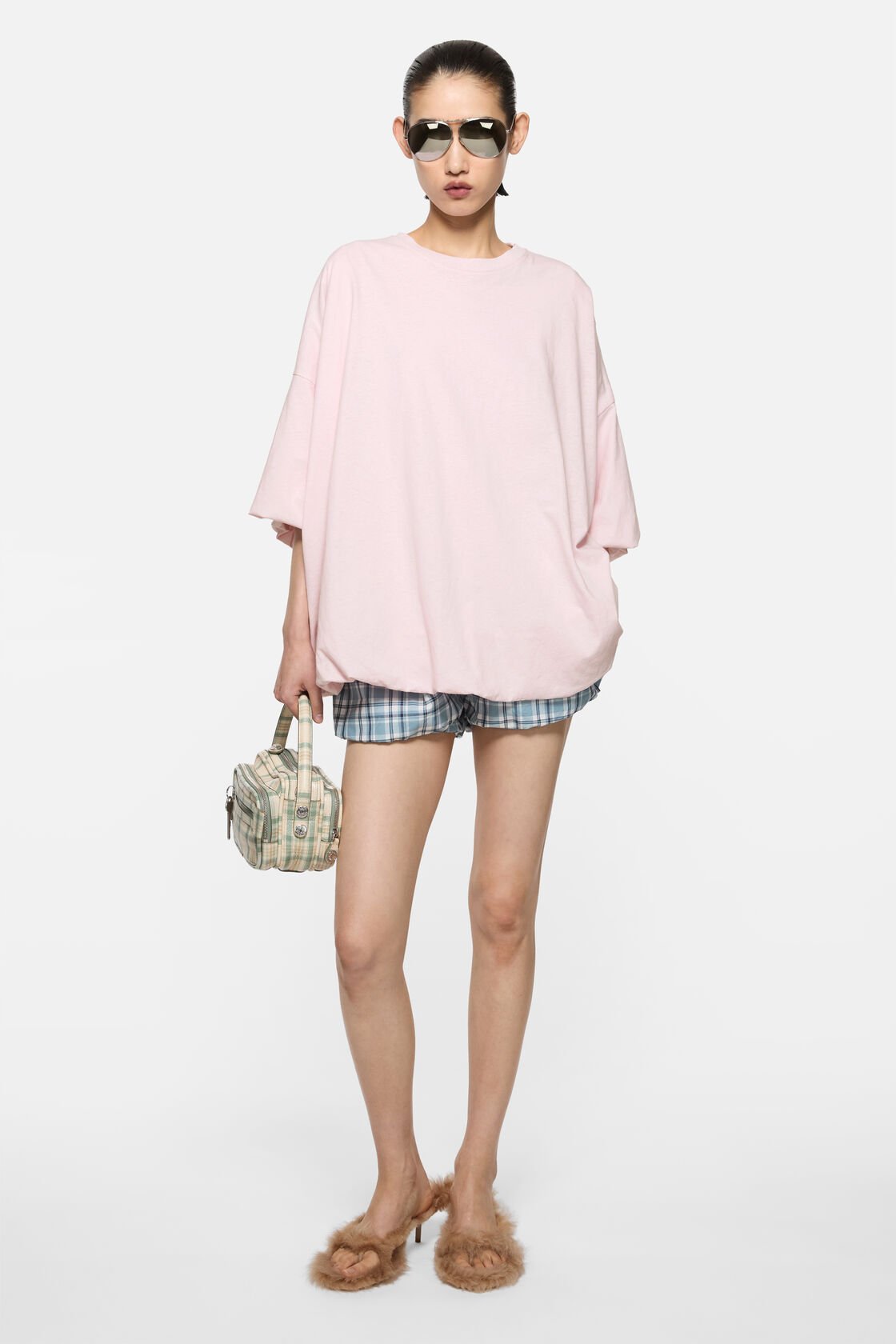
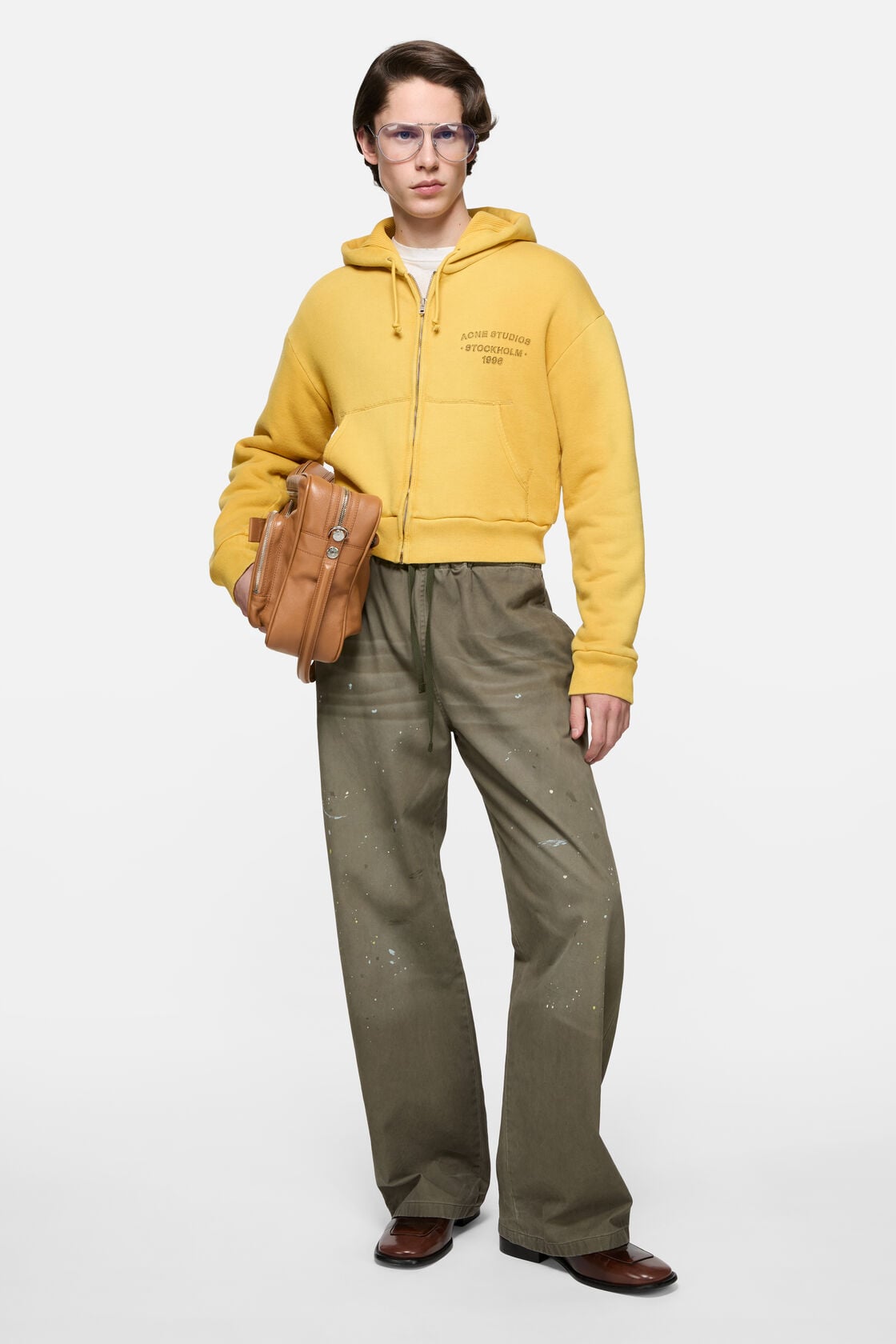
Acne Studios, as it was eventually called, did not arrive with a signature silhouette. It arrived with a posture. The early collections — shown in makeshift spaces, styled with an almost confrontational plainness — resisted the theatrics that Scandinavian minimalism had, by then, calcified into. Where Jil Sander had established a vocabulary of reduction, Acne Studios seemed interested in something closer to awkwardness. Proportions were off. Colours were slightly wrong. A sleeve might be too short, a shoulder too wide, a trouser pooling at the ankle in a way that suggested the wearer had borrowed it from someone taller.
This was not deconstruction in the Antwerp sense. It was something more fidgety. Johansson has said, in various interviews, that he designs for a version of himself that does not quite exist — a fictional person who is both more confident and more uncertain than he is. The result is clothing that feels wearable and slightly estranging at once.
By the mid-2000s, the house had developed a reputation for knitwear and outerwear that landed somewhere between art-school uniform and luxury ready-to-wear. The Velocite jacket, a cropped leather moto with an exaggerated collar, became a calling card. So did the Canada scarf, an oversized wool style in a shade of pink that read, depending on the light, as either aggressive or tender. These were not quiet pieces, but neither were they loud in the way fashion had come to define loudness. They occupied a third space, one that felt oddly specific to the house.
The Expansion, and What It Cost
In 2006, Acne Studios began opening retail stores — first in Stockholm, then Paris, then New York. The interiors, designed in collaboration with various architects, shared a certain bruised elegance: poured concrete, brass fixtures, furniture that looked salvaged or purpose-built depending on your vantage point. The stores did not feel like boutiques. They felt like rooms where something had recently happened, or was about to.
The clothes, meanwhile, grew more refined. The raw-edged awkwardness of the early years gave way to a cleaner line, a more controlled palette. This is what scale does. It smooths. By 2011, the house was producing pre-collections, expanding into accessories, and showing at Paris Fashion Week. The question, which no one asked aloud but which hung over the runway regardless, was whether Acne Studios could grow without becoming the sort of brand it had once defined itself against.
In 2017, the house sold a majority stake to a London-based private equity firm, IDG Capital. Johansson stayed on as creative director. Schiller and Magnusson, who had remained involved in various capacities, stepped back further. The transaction was presented as a partnership, a way to fund international expansion without compromising creative control. Whether that has proven true is a question the house continues to answer, collection by collection.
What Remains
Johansson still designs from Stockholm. The atelier is still on Torsgatan, though the building has been renovated twice since the jeans were first cut there. The team has grown. The supply chain has lengthened. The price points have climbed in the way they do when a house moves from cult status to something more broadly legible.
And yet, certain gestures persist. The house still produces knitwear with an almost perverse attention to gauge and hand-feel. The tailoring still carries a trace of wrongness — a lapel that sits too high, a trouser that breaks in an unfamiliar place. The colour palette, which leans heavily on grey, black, and the occasional jolt of powder blue or rust, has not softened into something easier.
The question is whether these gestures still mean what they once did. A house can retain its vocabulary and lose its syntax. It can make the same shapes and say something entirely different. Acne Studios, at twenty-eight years old, is no longer the project of four friends in a rented studio. It is a vertically integrated fashion house with stores in twenty-odd cities, a denim archive, and a beauty line. The red stitching is still there, on certain styles, but it no longer functions as a private joke. It functions as a logo.
Johansson has said, more than once, that he designs for an audience of one. The trouble with that claim, now, is that the audience has grown too large to sustain the fiction. The house shows to buyers, editors, influencers, and customers who expect not just a point of view but a product that travels. That is not a criticism. It is simply what happens when a collective becomes a business, and a business becomes a brand, and a brand begins to ask how much of its original self it can afford to keep.
The Next Chapter, If There Is One
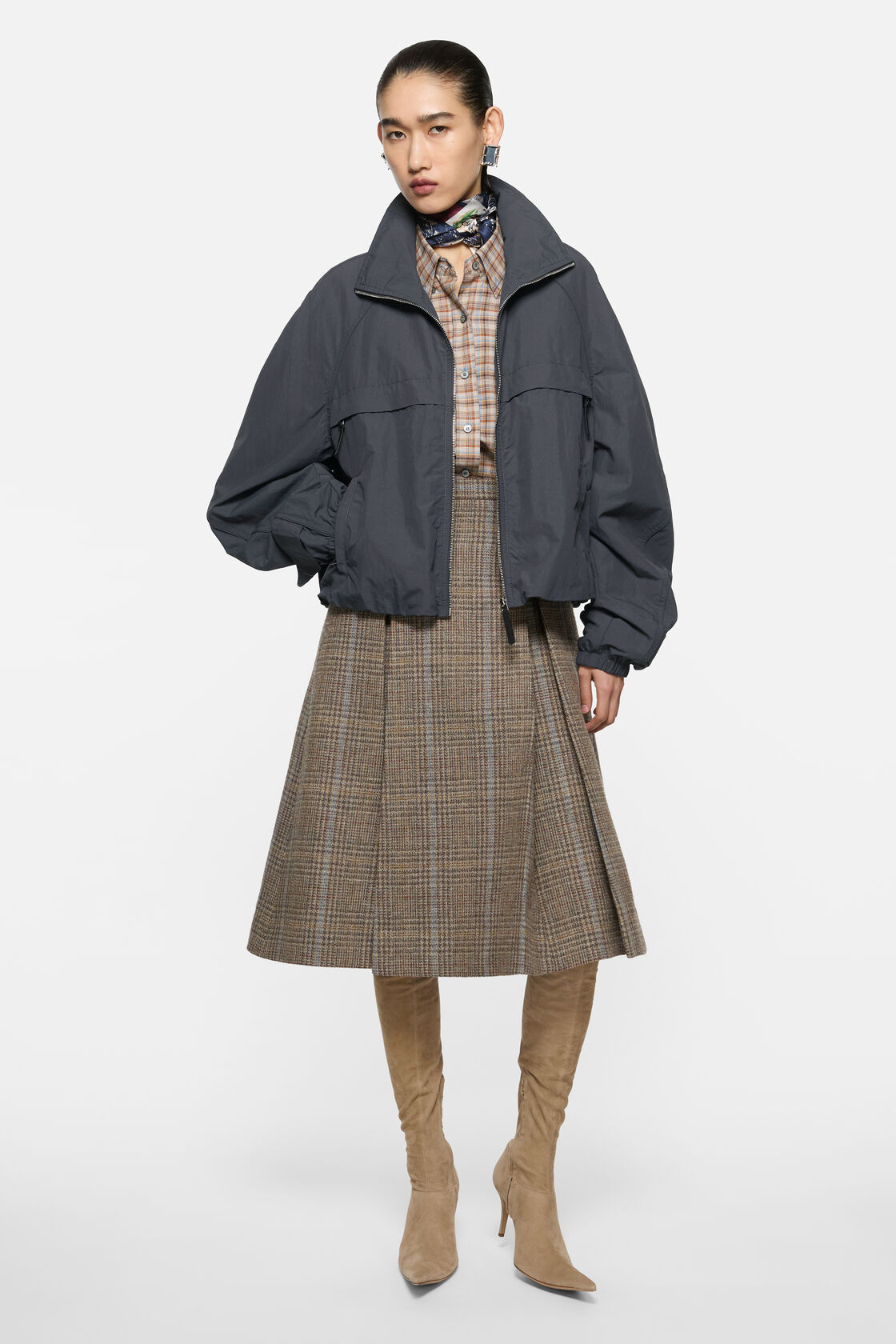
The most recent collections have leaned harder into tailoring — double-breasted blazers with a slightly boxy cut, trousers with a high rise and a wide leg. The knitwear remains central, but it shares the runway with leather trench coats, shearling bombers, and denim treated with a kind of archaeological care. The clothes are handsome. They photograph well. They sell.
Whether they still feel like Acne Studios, in the sense that the house once defined itself, is harder to say. The maison has spent the better part of a decade navigating the gap between independence and scale, between a singular vision and the demands of a global market. That gap has not closed. It has simply become the condition under which the house operates.
Johansson is fifty-three now. He has been designing for Acne Studios longer than he has done anything else. The question is not whether he can sustain the project — he has, and likely will continue to — but whether the project can sustain the contradictions it has accumulated along the way. A house built on refusal, now operating within the structures it once refused. A brand that began as a gesture, now required to repeat that gesture at scale.
On balance, the work remains compelling. The pieces are well-made, the fits considered, the materials chosen with care. But the original provocation — the sense that these clothes existed slightly outside the system, that they were made for a person who did not quite fit — has dulled. What remains is a very good fashion house, doing what very good fashion houses do. Whether that is enough depends, in the end, on what one expected in the first place.