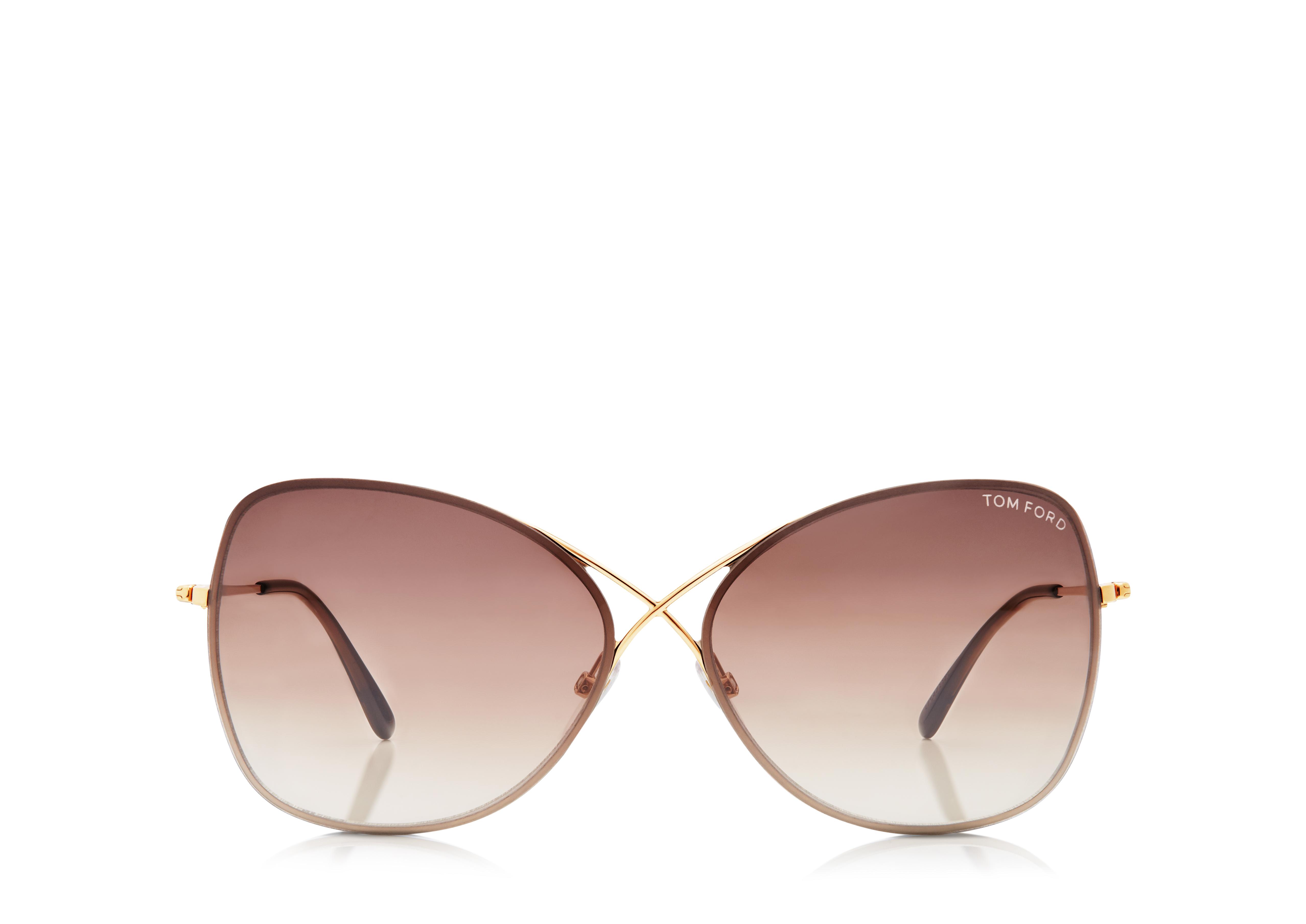
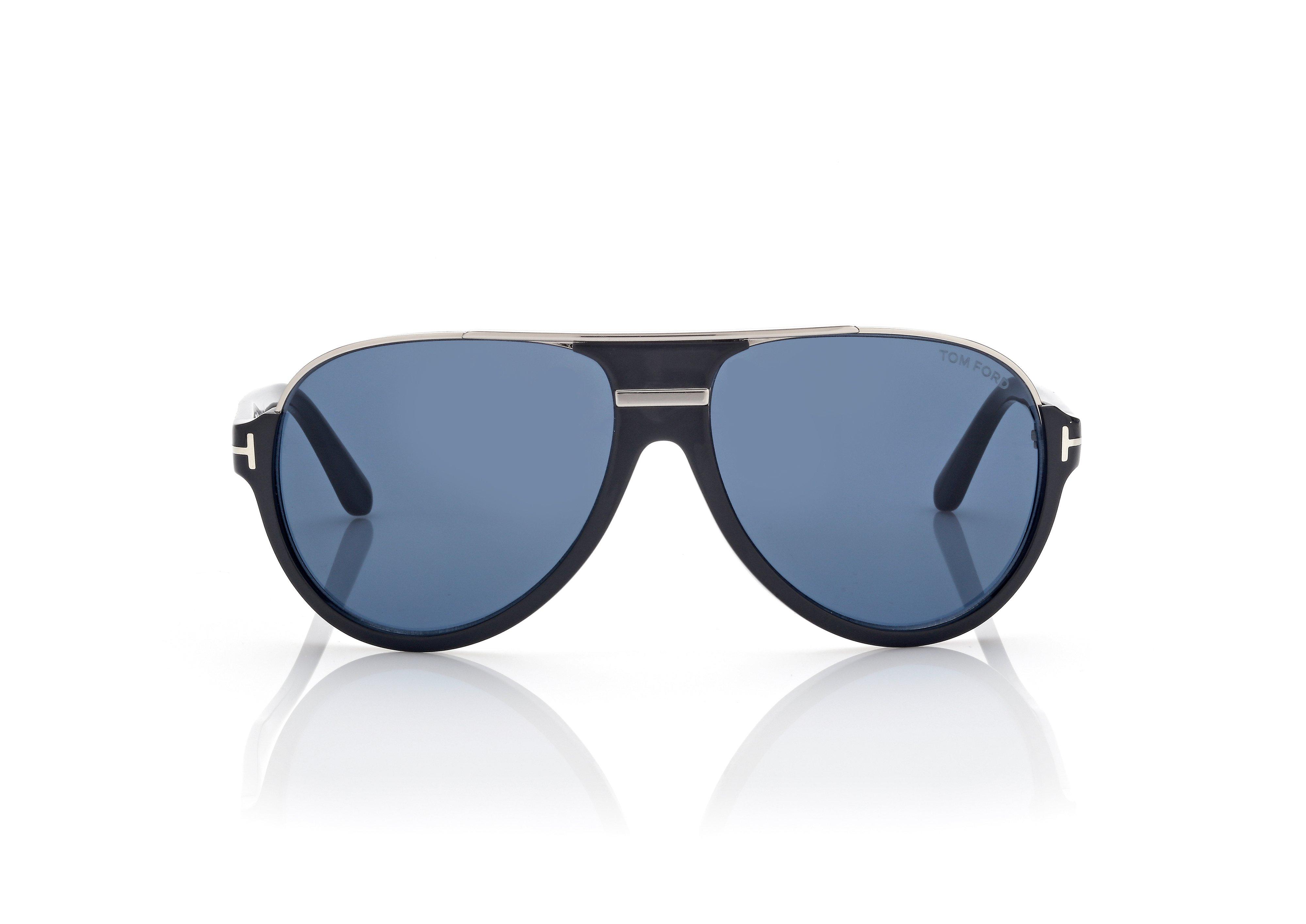
The cutter's name is Giancarlo
The cutter's name is Giancarlo. He has been with the house since 2006, which means he arrived after the Gucci years, after the first Tom Ford runway show, after the mythology had already calcified. He works in a second-floor atelier in Milan, not far from the Quadrilatero, and his job is to cut the black velvet tuxedo jacket that appears in every Tom Ford campaign, every red carpet appearance, every carefully staged photograph of the designer himself. The jacket has a shawl collar that rolls without a break, a one-button stance, and grosgrain facings that Giancarlo hand-stitches over the course of an afternoon. He does not give interviews.
This is the structure beneath the name. Tom Ford — the brand, the man, the signifier — rests on the work of approximately 140 artisans across three continents, most of whom you will never see credited. The house does not publish their names in look-books. The designer does not mention them in his rare public appearances. And yet the jacket exists because Giancarlo exists, because someone in a Milanese workshop knows how to make velvet behave.
Formation
Tom Ford trained as an architect at Parsons, which explains the geometry. He came to fashion through the side door — a job at Cathy Hardwick in New York, then Perry Ellis, then a move to Milan in 1990 to join Gucci as the house's womenswear designer. At the time, Gucci was a licensed-goods operation trading on faded prestige. Ford was 29. He had no atelier training, no apprenticeship in the traditional sense, and this turned out to be an advantage. He looked at a Gucci loafer the way an architect looks at a staircase: as a problem of proportion, material, and desired effect.
By 1994 he was creative director. By 1995 the house had quadrupled its revenue. The breakthrough was not a single garment but a vocabulary — low-slung trousers, liquid jersey, a kind of calculated sensuality that read as modern because it refused the fuss of couture. Ford did not make clothes for women who wanted to disappear into good taste. He made clothes for women who understood that taste is a tool, not a religion.
The work, however, was never his alone. The atelier at Gucci in those years included a pattern-maker named Alessandra, who had worked under Gianfranco Ferré and understood how to translate Ford's sketches — often just a few lines on tracing paper — into garments that moved. There was also a sample machinist, Roberto, who could sew a silk-viscose blend at speed without puckering the seam. Ford would later say, in a 2004 profile in The New Yorker, that his role was "to have the idea and to know when it's wrong." The rest was other people's hands.
Signature
The Tom Ford tuxedo jacket, introduced in the debut collection for his eponymous house in 2006, is not an innovation. It is a refinement. The shawl collar derives from 1930s evening wear. The one-button stance is a nod to Douglas Hayward, the Savile Row tailor who dressed Michael Caine. What Ford contributed was a kind of compression — taking the language of bespoke tailoring and rendering it in a way that photographs cleanly, that reads at ten paces, that allows a man to look like he is wearing a tuxedo without actually thinking about it.
The jacket is made in three stages. First, the pattern is cut in Milan by Giancarlo or one of his two colleagues, both of whom trained at the same technical school in the 1980s. Then the pieces are sent to a small factory outside Lugano, where the canvas is pad-stitched by hand — a process that takes roughly four hours per jacket and involves stitching a layer of horsehair canvas to the wool shell in a way that allows the fabric to curve around the body. Finally, the jacket returns to Milan for finishing: the grosgrain facings, the buttonhole (worked by machine but secured by hand), the sleeve lining.
This is not couture. It is not even close. But it is also not industrial in the way most ready-to-wear is industrial. The house produces roughly 800 of these jackets per season, which means Giancarlo and his colleagues cut, on average, three jackets a day. The work is repetitive, highly skilled, and invisible.
The other hands
In 2022, the house introduced a handbag called the Label. It is a top-handle style in crocodile, structured, minimal, priced at $8,500 in the smaller size. The design is credited to Tom Ford. The execution is credited to no one. But the bag is made in a workshop outside Florence by a team of six artisans, all of whom trained in traditional Tuscan leather work. The crocodile is sourced from a tannery in Pavia. The hardware — a gold-plated turn-lock — is cast in a foundry near Arezzo, then polished by hand.
The lead bag-maker is a woman named Simona. She has been working in leather for 30 years, first at Prada, then at Bottega Veneta, now at the Tom Ford atelier. Her job is to assemble the bag's frame, which involves stitching the crocodile panels to a wooden armature using a saddle stitch — two needles, one thread, each stitch pulled tight and locked in place. The process takes roughly 18 hours per bag. She earns a salary, not a commission. Her name does not appear on the bag's interior label.
This is not an exposé. It is simply the structure of the industry. A designer proposes a shape, a feeling, a reference. The atelier translates that proposal into something you can hold. The designer's name goes on the label. The artisan's name goes nowhere.
What remains
Tom Ford stepped down from his eponymous house in 2023, a year after selling the brand to Estée Lauder for $2.8 billion. He had been, by that point, the face of the house for 17 years — every campaign, every runway finale, every carefully orchestrated appearance in a black tuxedo that looked, always, like the same tuxedo. The house announced it would continue without him, under the direction of a design team that has not been named publicly.
Giancarlo is still cutting jackets in Milan. Simona is still stitching crocodile in Florence. The atelier continues because the atelier is not one person. It is a system, a set of skills, a rhythm of work that precedes the designer and will outlast him.
One can argue, and some in the trade do, that this makes the designer irrelevant. But that misses the point. Ford's contribution was not the jacket or the bag. It was the decision to make that jacket, in that fabric, with that collar, at that moment. The artisan's contribution was to make the decision real. Both are necessary. Only one gets the credit.
The question now is what happens when the name detaches from the work entirely. The house will continue to produce the black velvet tuxedo, the crocodile Label bag, the liquid jersey trousers that made Ford's reputation 30 years ago. Giancarlo will continue to cut. Simona will continue to stitch. And somewhere, in a press release or a campaign image, the name Tom Ford will appear, even though Tom Ford is no longer there.
This is not a tragedy. It is simply the final stage of the process: the moment when the hand disappears entirely, and only the signature remains.