The fitting room at Bottega Veneta's Milan headquarters is not large
The fitting room at Bottega Veneta's Milan headquarters is not large. It is, however, silent in the particular way that comes from thick carpet and thicker walls. Three women have stood in that room, at different points across forty years, and shaped what the house means when it shows a sleeve, a bag, a boot.
Not designers. Muses is the better word, though it carries baggage. These are not passive figures draped across mood boards. They are collaborators who gave Bottega a face when the house had only hands—those of its weavers, its leather cutters, its unseen ateliers. They brought personality to a brand that had spent decades insisting it didn't need one.
Tomas Maier's Decade: Lauren Hutton
Lauren Hutton did not need Bottega Veneta. By the time Tomas Maier cast her as the face of his first campaign in 2001, she had already been the highest-paid model in the world, starred opposite Richard Gere, and walked away from both. She was fifty-seven. She wore her hair short and her jeans tight. She did not smile with her teeth unless she felt like it.
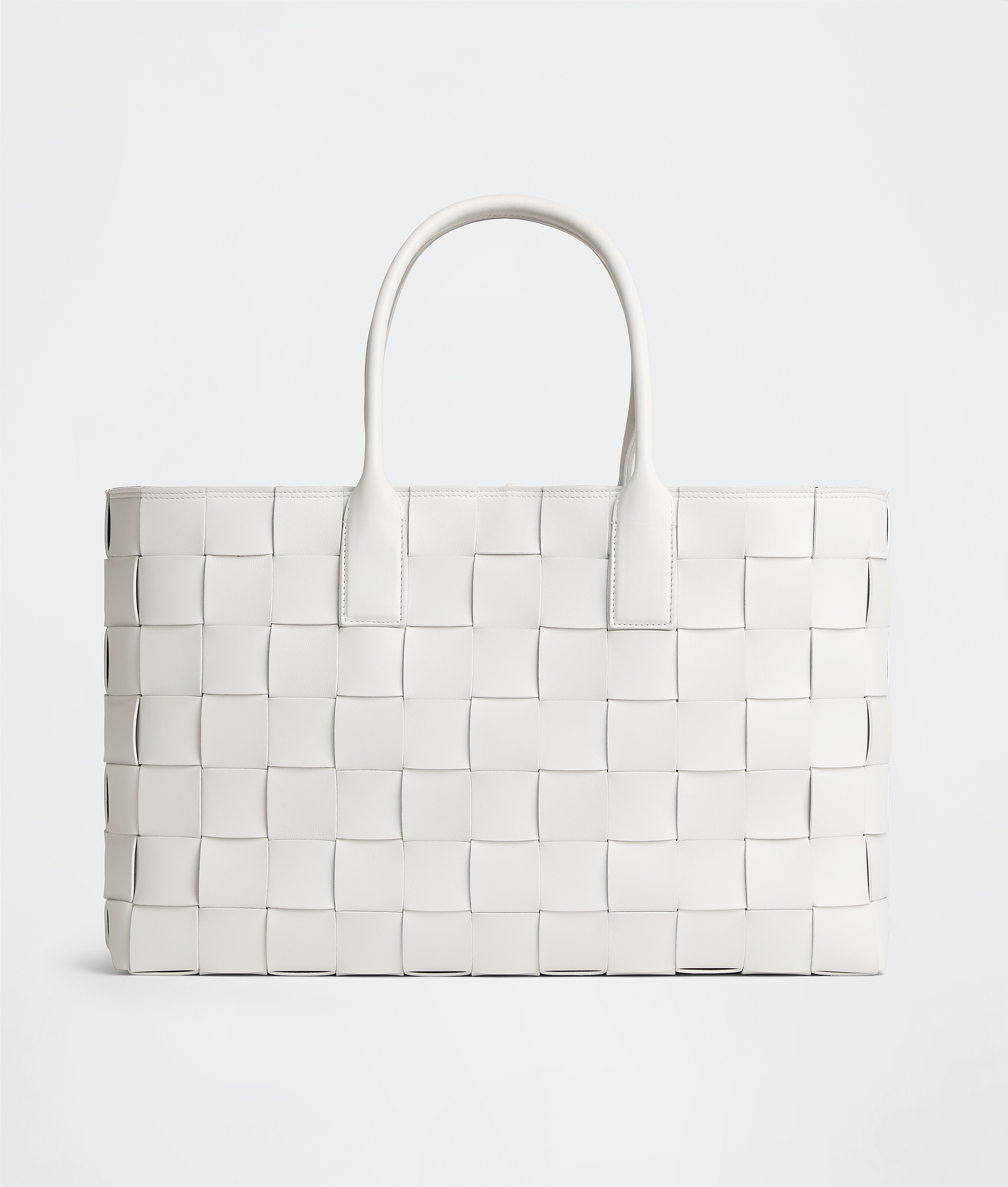
Maier, newly installed as creative director, had inherited a house in quiet crisis. Bottega's intrecciato weave was respected, occasionally copied, rarely discussed. The bags sold. The clothes did not. Maier's first collection leaned into restraint—washed cashmere, flat sandals, trousers cut wide through the leg. Hutton was the only logical choice to wear them.
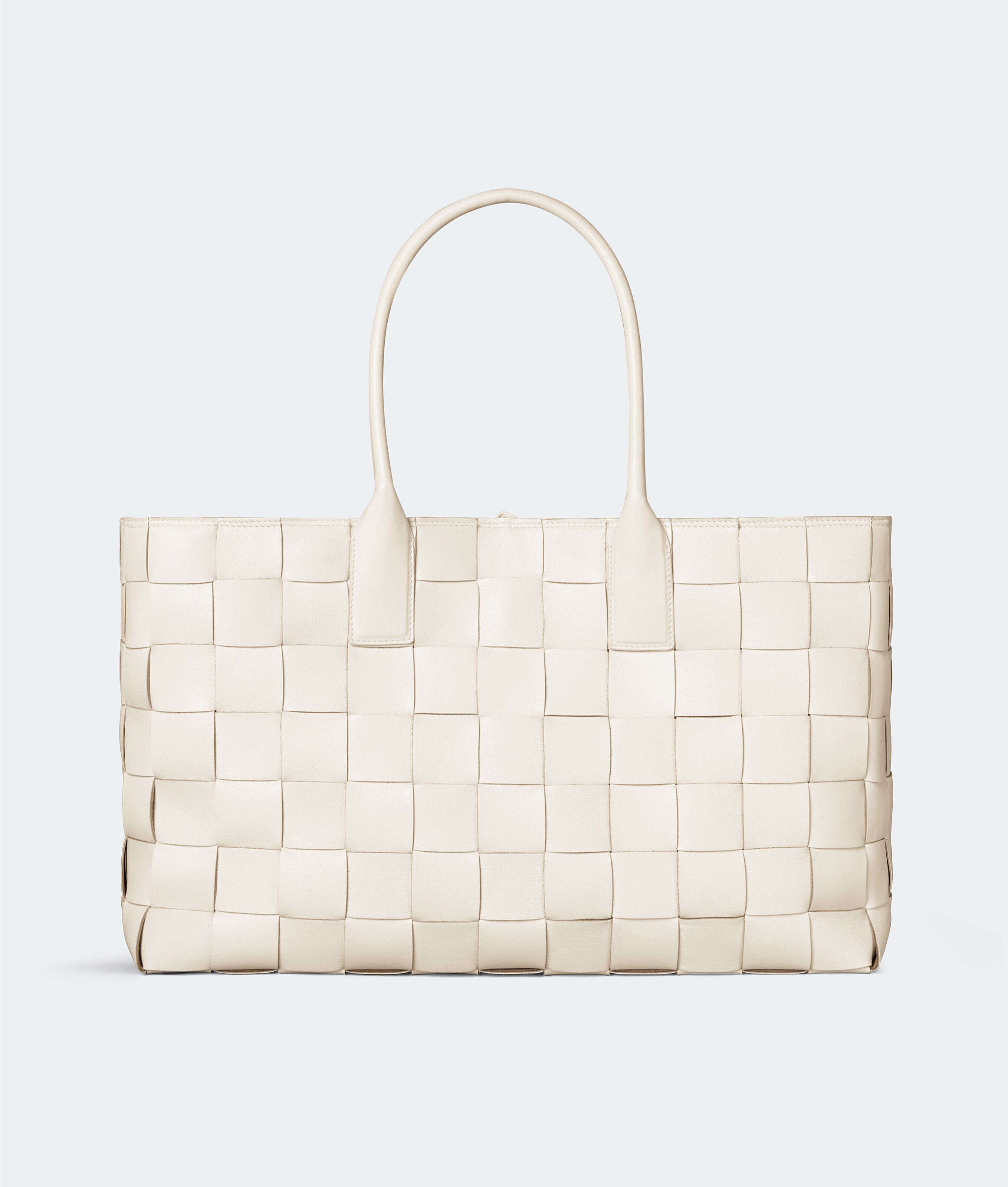
She appeared in his campaigns for a decade. The images, shot by Nan Goldin and later by Robert Longo, showed her in Venice, in Los Angeles, in places that looked like they might be her own apartment. She wore the clothes the way you wear a favourite coat: without ceremony. The intrecciato Veneta bag, which Maier had redesigned with a softer gather and a longer strap, sat in her lap or hung from her shoulder. It was never front and centre. That was the point.
Hutton gave Bottega permission to age. Not in the euphemistic sense—gracefully, elegantly, all those words that mean the same tired thing—but in the practical one. She was a woman who had lived in her face and her body, and Maier's clothes worked with that fact rather than around it. The house had always made things to last. Hutton made it clear who they were meant to last for.
Daniel Lee's Disruption: Vittoria Ceretti
When Daniel Lee took over in 2018, he did not hire a muse. He cast one. Vittoria Ceretti was twenty at the time, a runway fixture who had opened for Versace and closed for Chanel but had not yet become a name outside the industry. Lee made her one.
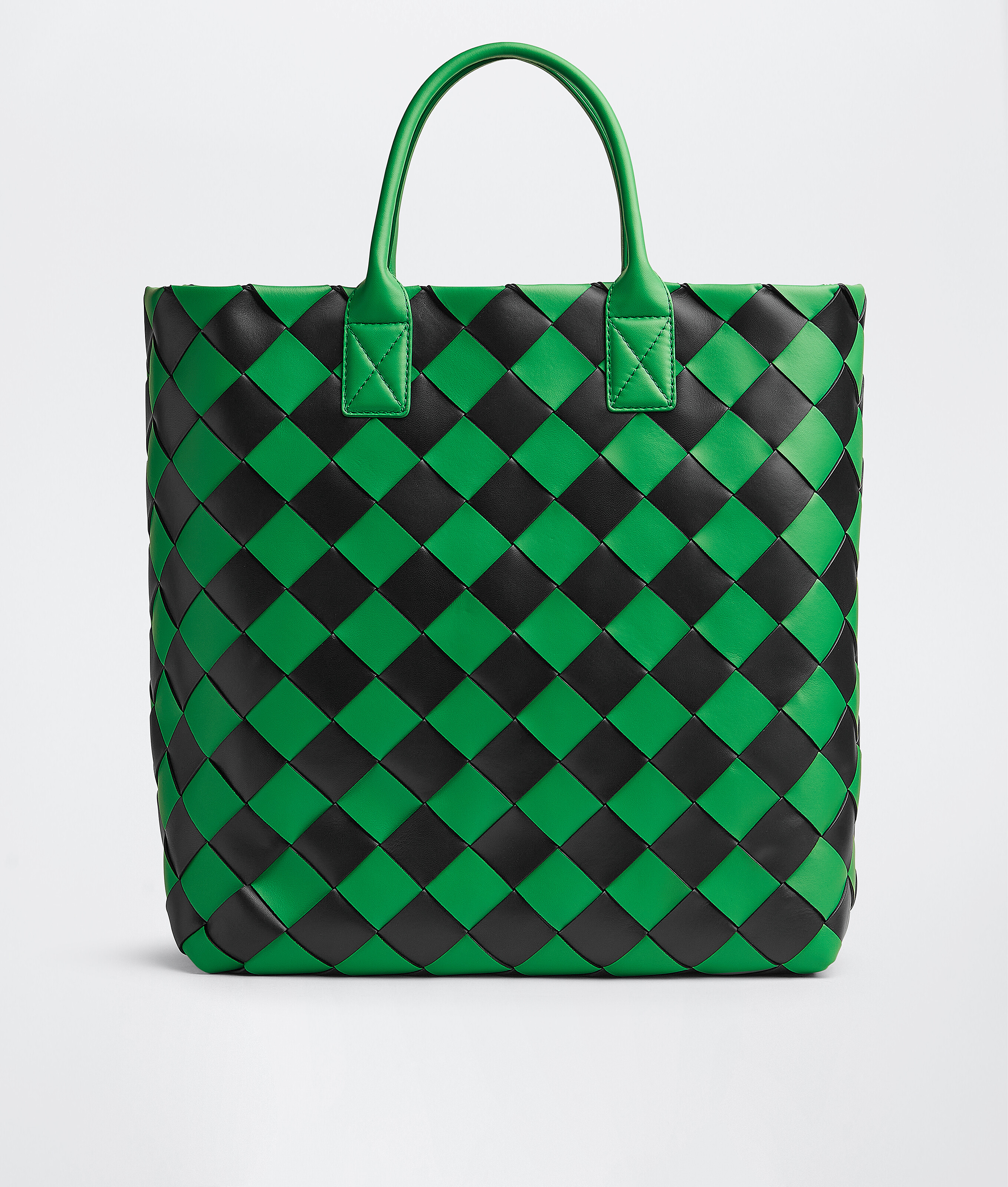
His first campaign, shot by Tyrone Lebon, ran in January 2019. Ceretti appeared alone, in a car park, wearing a green leather coat and holding the Pouch—Lee's pillowy, clutch-sized reinvention of the intrecciato bag. The bag sold out in two days. The coat took longer, but not much.
Ceretti became the face of Lee's Bottega, which was not Maier's Bottega. Where Maier had offered quiet luxury, Lee offered tension. His cuts were sharper, his proportions stranger. The Pouch was followed by the Cassette, a padded shoulder bag that looked like it had been quilted by a saddlemaker. The shoes—square-toed, thick-soled, vaguely unsettling—became the most copied silhouette of 2020.
Ceretti wore all of it with a blankness that read, depending on your perspective, as either cool or bored. She did not smile much. She did not need to. Lee's Bottega was not interested in charm. It was interested in shape, in the way a sleeve could bisect a torso or a waistband could sit two inches lower than expected. Ceretti's job was to hold still and let the clothes do the work.
She appeared in campaign after campaign: in a brutalist stairwell, in a marble hallway, once in what looked like a half-finished swimming pool. The settings were cold. The clothes were not. Lee worked in butter-soft leather, in cashmere so fine it poolged, in knits that clung and released in equal measure. Ceretti made them look easy.
By the time Lee left in 2021, Bottega had become the most discussed house in fashion. Ceretti had become, if not a household name, then at least a face you recognised. She had given Lee's vision a body. That was enough.
Matthieu Blazy's Continuity: A Collective
Matthieu Blazy does not have a muse. He has several, and none of them stay long enough to define the house. Since taking over from Lee in late 2021, Blazy has cast his campaigns like he cuts his clothes: with precision, without sentiment.
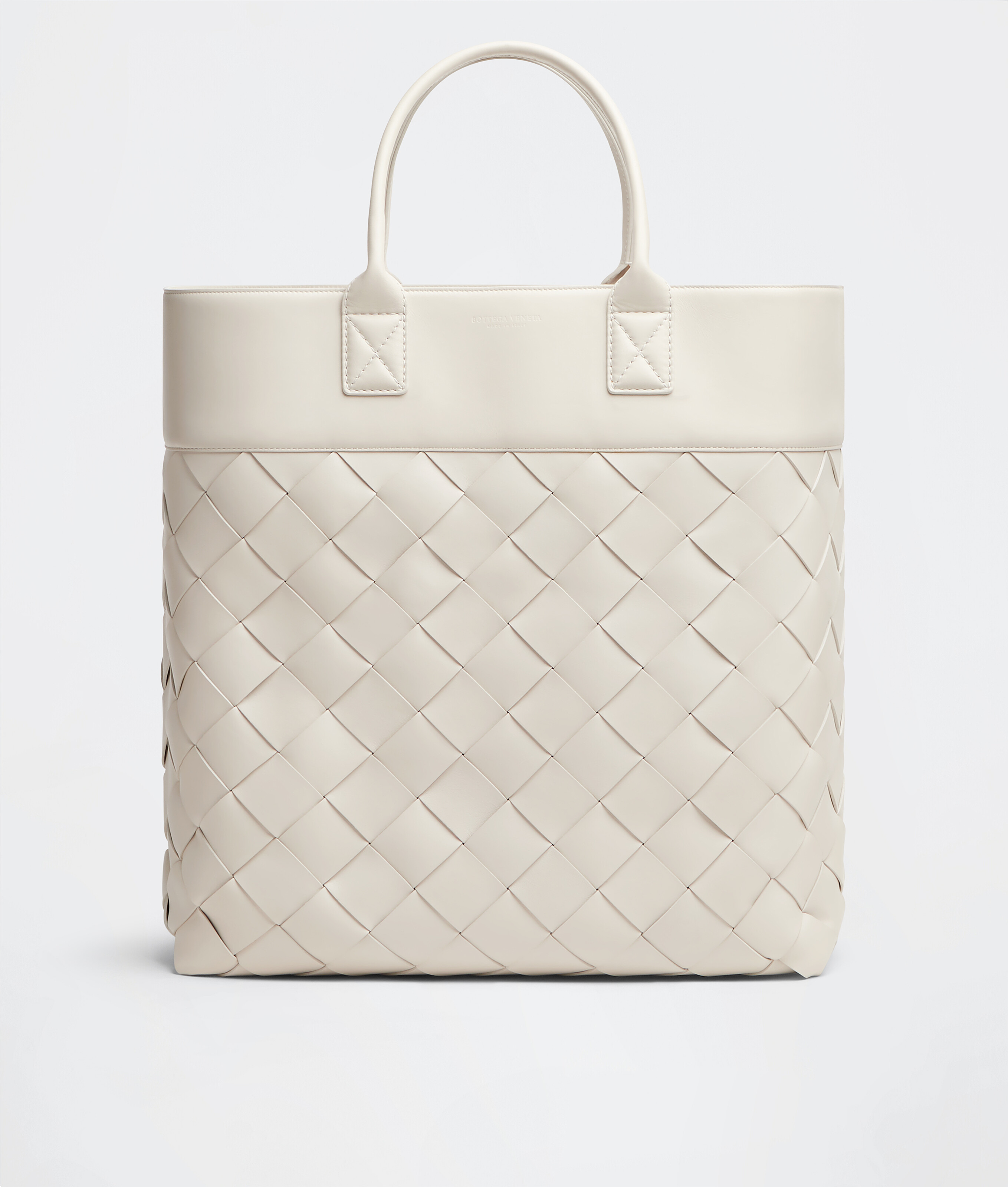
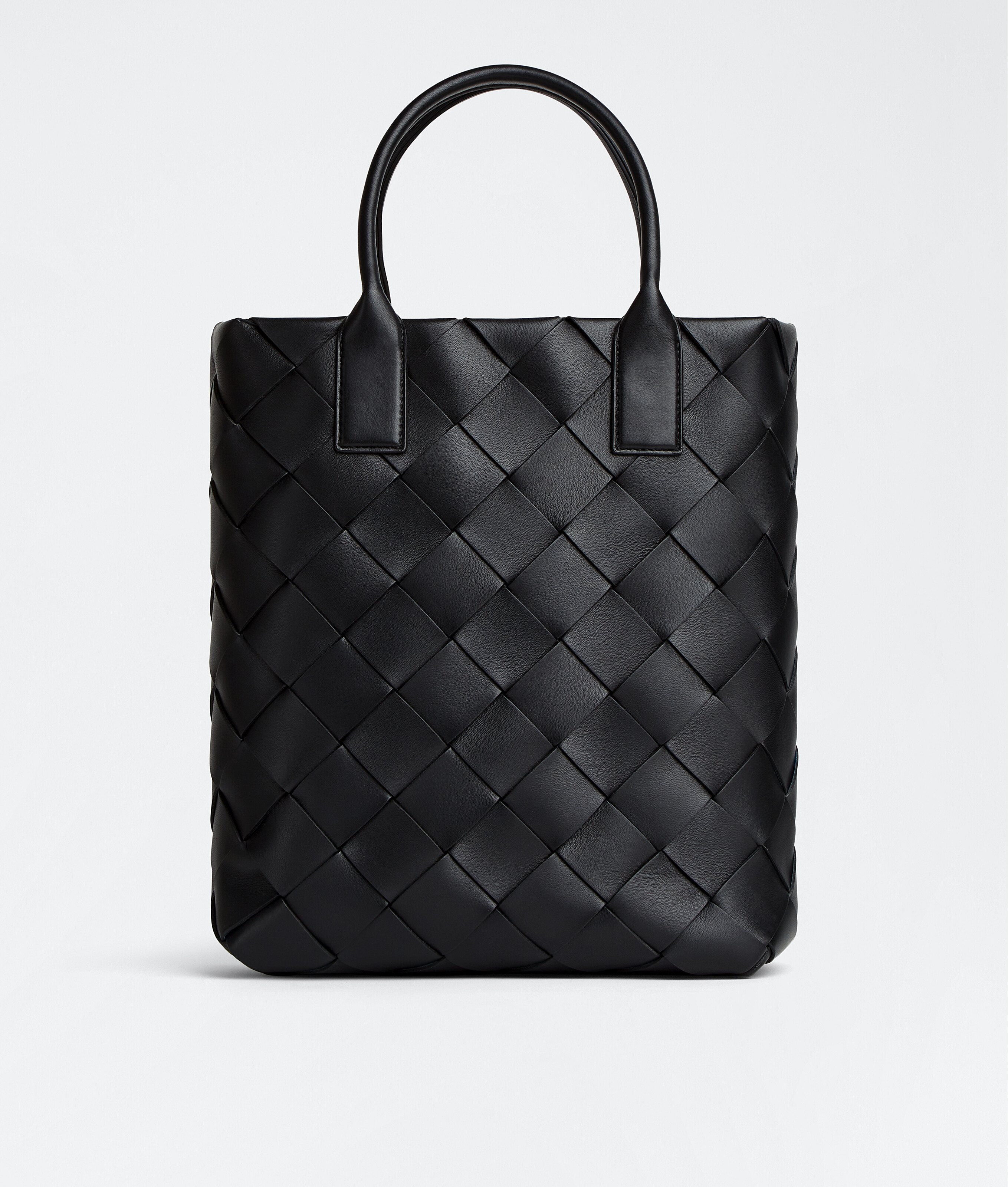
His first campaign featured A$AP Rocky in a shearling coat and a pair of lace-up boots. The second featured Kendall Jenner in a leather trench and the new Andiamo bag, a structured top-handle that felt like a rebuke to the Pouch's softness. The third featured neither. It featured a series of hands—holding bags, fastening clasps, adjusting straps. The models were cropped out.
This is not evasion. It is strategy. Blazy's Bottega is less interested in personality than in craft. His collections lean into the house's archival techniques—intrecciato, yes, but also leather marquetry, hand-painted finishes, fabrics woven on nineteenth-century looms. The clothes are quieter than Lee's, but no less specific. A skirt might be cut from panels of degrade leather, each one shaded by hand. A coat might be lined in shearling so thick it changes the garment's silhouette.
Blazy does not need a single face to sell that. He needs many, and he needs them to step aside when the work is more interesting than the person wearing it. His campaigns shift between celebrities, models, and occasionally no one at all. The Andiamo bag has been carried by Julianne Moore, by Jacob Elordi, by a disembodied arm in a studio photograph. It does not matter. The bag is the subject.
This is a return to the house's original logic, the one that predates Maier and Lee and Blazy himself. Bottega Veneta was founded in 1966 by Michele Taddei and Renzo Zengiaro, two craftsmen who believed that good work did not need a signature. The intrecciato weave was developed because it was stronger than a single piece of leather, not because it looked like anything in particular. The house's early motto—quando la vostra iniziale è sufficiente, when your own initials are enough—was not modesty. It was confidence.
Blazy has brought that back. His muses are temporary, functional, chosen for what they can do in a single image rather than what they represent across a decade. It is a different kind of collaboration, one that asks less of the person and more of the frame.
What Holds
The fitting room is still there, still silent. The house has changed hands, changed directions, changed its understanding of what a muse is meant to do. But the through-line is consistent: Bottega does not ask its collaborators to perform. It asks them to wear the work, to stand in it long enough for the camera to see what the cloth does when it moves.
Hutton did that for Maier. Ceretti did it for Lee. Blazy's rotating cast does it now, one campaign at a time. The house remains the constant. The muses, however essential, are guests.