The fitting room at Burberry's Horseferry Road headquarters smells faintly of cedar and steam
The fitting room at Burberry's Horseferry Road headquarters smells faintly of cedar and steam. A tailor adjusts the sleeve of a trench coat on a mannequin while Daniel Lee, the house's creative director since 2022, watches from a stool by the window. He does not speak. The coat is the same silhouette Burberry has cut since 1914, but the cloth is different — a double-face cashmere that falls like gabardine but weighs half as much. Lee nods. The tailor pins the cuff.
This is how houses evolve. Not through manifestos, but through women who wear the clothes and men who notice how they move. Burberry has had many designers, but only three women have shaped its identity so completely that the house cannot be understood without them. They did not model for campaigns. They did not walk runways. They wore the trench, the check, the scarf in ways that made those objects necessary.
Betty Hemmings and the Invention of the Icon
Betty Hemmings worked the fabric counter at Burberry's Haymarket store from 1949 to 1983. She was not famous. She did not appear in Vogue. What she did, five days a week for thirty-four years, was drape gabardine over her own shoulders to show customers how a trench should hang.
The house had been making weatherproof coats since Thomas Burberry patented gabardine in 1879, but it was Hemmings who codified the silhouette women wanted. She wore her trench belted tight at the waist, collar up, sleeves pushed to the elbow in summer. She never fastened the storm flap. She never wore the epaulettes buttoned. By the time she retired, every saleswoman in London was copying her.
Burberry's design team watched. The house had always made functional garments for men — officers' coats, explorers' kit, aviators' jackets. Hemmings proved the trench worked best as a uniform for women who refused uniforms. She wore hers over pencil skirts, over jeans, over evening dresses when it rained. The coat adapted because she made it.
The house began cutting women's trenches with a higher armhole and a narrower shoulder in the 1960s. The proportions came directly from Hemmings' alterations. She had been taking in the shoulders and shortening the sleeves on her own coat for years, adjusting the military cut to fit a frame that spent eight hours a day standing behind a counter. Burberry formalised what she had improvised.
She never gave interviews. There are three photographs of her in the house archive, all taken at staff events. In each one, she is wearing the trench.
Julie Christie and the Trench as Armour
Julie Christie bought her first Burberry trench in 1966, the year she won the Oscar for Darling. She wore it to the ceremony. Not on the red carpet — she changed into a gold Dior gown for that — but in the car to the Dorothy Chandler Pavilion and in the lobby afterward, smoking with Warren Beatty while photographers shouted her name.
The coat became her signature by accident. She hated being photographed and the trench was the only piece of clothing that looked correct in every situation. She wore it over jeans in Laurel Canyon, over a black turtleneck at premieres, over nothing in the bath scene in Don't Look Now. Photographers loved it because it moved. The gabardine caught light differently than wool or leather, and the belt gave them a waist to anchor the frame.
Burberry did not pay her. She was not a brand ambassador. But by 1970, the house was selling more women's trenches than men's for the first time in its history, and every second coat went to someone who had seen Christie wearing hers in Petulia or The Go-Between.
What made the trench work for Christie was its refusal to seduce. It was not a coat that asked to be noticed. It was a coat that allowed her to move through the world without explaining herself. She wore it the way men wear suits — as a default, not a statement. Burberry had always marketed the trench as practical. Christie made it clear that practicality, for a woman in 1968, was a form of resistance.
The house began advertising the trench as "the coat that works" in 1971. The campaign featured women in cities, walking fast, not smiling. Christie never appeared in one, but her silhouette is in every frame.
Kate Moss and the Check as Provocation
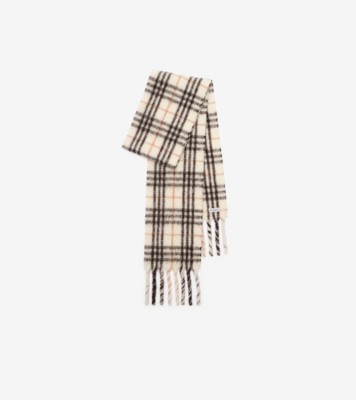
Kate Moss wore Burberry's nova check scarf in a Mario Testino photograph for British Vogue in 1995. The scarf was knotted loosely at her throat, paired with a white tank top and low-slung jeans. She looked seventeen. She was twenty-one.
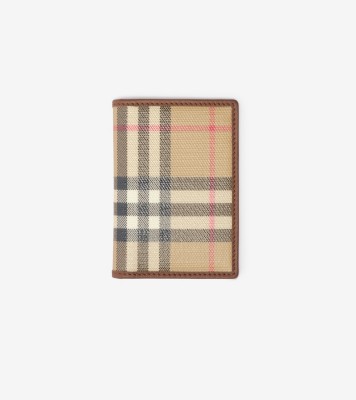
The check had been Burberry's lining pattern since the 1920s, a camel, red, black, and white tartan the house used inside its coats and on the occasional umbrella. It was tasteful. It was discreet. Moss made it visible.
Within two years, the check was everywhere. Not just on scarves, but on bags, bikinis, dog collars, baseball caps. Burberry's licensing deals exploded. The house opened stores in Tokyo, New York, Milan. The check became shorthand for a certain kind of Britishness — louche, moneyed, unbothered. Moss wore it that way. So did Liam Gallagher, so did Stella Tennant, so did every private-school girl in London who wanted to look like she had just come from somewhere more interesting.
The problem was that the check also became shorthand for something else. By 2002, the pattern was associated with football hooligans and soap opera villains, worn by people who had never owned a Burberry trench and never would. The house pulled the check from 90 per cent of its products in 2004. Christopher Bailey, then creative director, said the pattern had been "overexposed."
What Bailey meant was that Moss had made the check too democratic. Burberry had always been a luxury house that sold to the middle class. The check, in Moss's hands, became a luxury symbol that anyone could wear. The house spent the next decade trying to reclaim it — limiting production, raising prices, repositioning the check as heritage rather than trend.
Moss never commented. She still wears the scarf, usually with a black coat and boots, usually in winter. She has never been paid by Burberry. She does not need to be. The check is hers.
What Comes Next
Daniel Lee's first collection for Burberry, shown in September 2023, included no check. The trench appeared in three variations, all cut from new fabrics — rubberised cotton, bonded nylon, a wool-silk blend that the house is calling "equestrian gabardine." The models wore them open, belts trailing, over leather trousers and knit dresses.
Lee is trying to do what Hemmings, Christie, and Moss did without meaning to: make Burberry feel necessary again. He cannot rely on the check. He cannot rely on the trench as it was. What he can do is watch how women move, adjust the sleeve, and see what happens.
The house has always worked this way. A woman wears the coat. The coat becomes hers. Burberry takes notes.