The fitting room at Jacquemus is smaller than you'd expect
The fitting room at Jacquemus is smaller than you'd expect. Simon Porte Jacquemus sits cross-legged on the floor, pinning a sleeve at the shoulder, while a model stands barefoot on a wooden platform. The fabric — a pale linen, almost beige but not quite — catches the light from a single window. He doesn't look up when someone enters. The work continues.
This is how the house operates. One person, one vision, and a rotating cast of women who become, for a season or a decade, the face of that vision. Muses, if you want the old language. Collaborators, if you prefer the modern term. Either way, three women have shaped Jacquemus more than any campaign budget or runway spectacle: Gigi Hadid, Laetitia Casta, and his mother, Marie.
Marie Jacquemus — the original silhouette
She died when he was nineteen. The house didn't exist yet. Simon was still Simon Porte, a kid from Mallemort who'd dropped out of design school and moved to Paris with no plan and less money. What he had was a memory: his mother in summer dresses, walking through lavender fields, her silhouette against the Provençal sun.
That image became the first collection. Not literally — he didn't drape her dresses onto new bodies — but the proportions were hers. High waists, exaggerated hats, skirts that moved. The palette was southern France at noon: straw, apricot, chalk white. He named the house after her surname, the one he'd grown up with before taking his father's name professionally.
Marie never saw a Jacquemus runway. But every show since 2009 has been, in some sense, a conversation with her absence. The oversized straw hats — Le Grand Chapeau, which became a signature in 2017 — are a direct reference to the wide-brimmed sun hats she wore in the fields. The exaggerated proportions, which critics either adore or dismiss as costume, come from a child's memory of his mother: taller than she was, more dramatic, every gesture amplified by longing.
This isn't sentiment. It's structure. Jacquemus builds his collections the way one builds a memory — selective, heightened, and utterly specific. You can argue that this makes the work nostalgic, and you'd be right. But nostalgia, handled with discipline, becomes point of view.
Gigi Hadid — the American turn
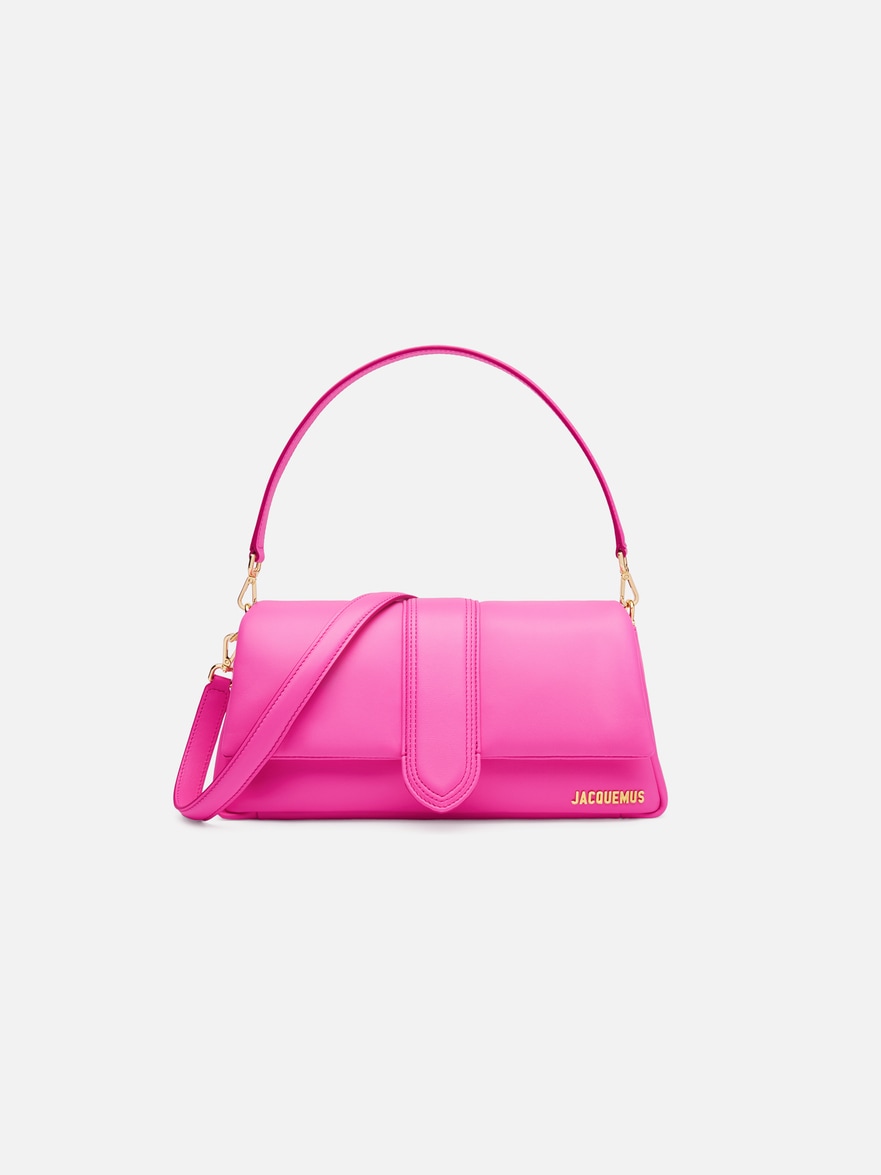
By 2015, Jacquemus had a following in Paris but little presence beyond it. The clothes were charming, very French, occasionally brilliant. The business was another matter. Then Gigi Hadid wore Le Chiquito — the micro handbag, barely large enough for a lipstick — and the house went global.
Hadid didn't discover Jacquemus. She was styled into it, the way models are styled into emerging brands when publicists and stylists decide the timing is right. But the partnership stuck. She walked his shows, wore the bags off-duty, and brought an American ease to a house that had, until then, felt resolutely Provençal.
What Hadid gave Jacquemus was scale. Not in the literal sense — though her 70 million Instagram followers didn't hurt — but in the way she wore the clothes. She treated them as wearable, not precious. The straw hats appeared on her head in Malibu, in New York, on a yacht in the Mediterranean. The tiny bags became a running joke, then a status symbol, then a bestseller. Le Chiquito now accounts for a significant portion of the house's revenue, though exact figures remain private.
Jacquemus responded by leaning into the partnership. His Spring 2020 show, staged in a lavender field outside Valensole, featured Hadid in a purple knit set, walking through the rows as if she'd always belonged there. The image circulated widely. The collection sold well. The house, which had been charming and small, became charming and commercially viable.
There's a risk in this. When a designer builds a house around one woman's image, and that woman is a global celebrity, the work can start to feel like fan service. But Jacquemus avoided the trap by keeping the collaboration specific. Hadid appears in his shows when the collection calls for her energy — confident, American, sun-soaked — and disappears when it doesn't. She's a tool, not a crutch.
Laetitia Casta — the return to France
If Hadid brought Jacquemus to the world, Laetitia Casta brought him back to France. She appeared in his Fall 2022 campaign, shot in the Camargue, wearing a black wool coat and little else. The images were stark, almost severe — a sharp turn from the pastel optimism that had defined the house for years.
Casta is a different kind of muse. She's older than Hadid by two decades, French by birth, and carries a kind of gravity that doesn't photograph well on Instagram but lands beautifully in print. She's also, crucially, a mother. Her presence in the campaign signalled a shift in the house's address. Jacquemus was no longer speaking only to the young woman on holiday. He was speaking to the woman who remembers holidays, who has lived long enough to know what she wants and what she doesn't.
The collaboration made sense for other reasons. Casta grew up in Normandy but spent years in the south of France. She understands the landscape Jacquemus mines for inspiration — not as a tourist, but as someone who's walked those fields, lived in those villages, worn those silhouettes. When she appears in his campaigns, she doesn't perform the clothes. She inhabits them.
This is what a mature muse looks like. Not a girl in a lavender field, but a woman in a wool coat, standing in the Camargue at dusk, looking at the camera as if she has somewhere else to be. The work becomes less about fantasy and more about lived experience. The palette darkens. The cuts sharpen. The house grows up.
What remains
Jacquemus is now a significant player in the French fashion economy. The business has expanded into menswear, homeware, and beauty. The runway shows — staged in wheat fields, on salt flats, in the middle of the Château de Versailles — generate millions of impressions. The bags sell. The hats sell. The vision, once so personal it felt almost private, now reaches a global audience.
But the house still returns to the same three women. Marie, in the silhouettes and the palette. Hadid, in the commercial confidence and the American ease. Casta, in the maturity and the refusal to perform youth.
One suspects this will continue. Jacquemus is not a designer who reinvents himself every season. He deepens. The lavender fields remain. The straw hats remain. The women change, but the conversation — between memory and present, between France and the world, between the personal and the commercial — continues.
Whether this approach will sustain the house for another decade is an open question. Fashion rewards novelty, and Jacquemus has been mining the same emotional territory for fifteen years. But there's something to be said for consistency of vision, especially in an industry that often mistakes change for progress.
For now, the work continues. The fittings, the fields, the women who walk through them. Simon Porte Jacquemus, still on the floor, still pinning sleeves, still building a house on the memory of a woman in a summer dress.