The fitting room at Maison Margiela's Parisian headquarters is white
The fitting room at Maison Margiela's Parisian headquarters is white. Not off-white, not cream — the sort of white that makes you check your shoes at the door. John Galliano stands in the centre, pinning muslin to a dress form with the speed of someone who learned to do this before he learned to drive. He is sixty-four. He has been creative director here since 2014. He still pins his own toiles.
This is not the trajectory anyone predicted fifteen years ago. Galliano's career imploded in 2011, spectacularly and publicly, after an antisemitic tirade in a Paris café. He was fired from Dior within days. The industry wrote him off. What followed was three years of silence, then an improbable return brokered by Anna Wintour and Renzo Rosso, the Italian industrialist who owns Maison Margiela. Rosso handed Galliano a house built on anonymity and deconstruction. Galliano, a man whose entire career had been about spectacle and his own mythology, had to learn to disappear.
He did. Sort of.
The Formation
Galliano was born in Gibraltar, raised in South London, trained at Central Saint Martins under the late Bobby Hillson. His 1984 graduate collection, Les Incroyables, referenced French Revolution dress and sold entirely to the London boutique Browns. This is the origin myth: the boy genius whose thesis collection goes straight to retail. What gets left out is that he worked out of a friend's studio for years afterward, hand-finishing pieces himself because he couldn't afford a sample room.
By the early nineties, Galliano had backing from Peder Bertelsen and a São Schlumberger, society figures who funded his Paris shows. The collections were theatrical, historically referential, technically astonishing. He cut bias like Vionnet but staged it like Diaghilev. In 1995, Bernard Arnault appointed him to Givenchy. A year later, Arnault moved him to Dior, the crown jewel, where Galliano would spend fifteen years turning out haute couture that looked like fever dreams set in the Belle Époque.
The work was extraordinary. It was also exhausting. Galliano has said, in interviews since, that he was performing a character of himself — the pirate-dandy in eyeliner and tricorn hats, the man who took his bow in full costume. The clothes were often more coherent than the person making them.
The Rupture
The 2011 incident is a matter of record. Galliano was drinking heavily. He said things that were indefensible. Dior severed ties immediately. The fashion press, which had spent a decade and a half treating him as untouchable, turned with equal speed. He entered rehab, then disappeared from public view.
What happened during those three years is less clear. Galliano has spoken, carefully, about therapy and sobriety. He has not offered a full accounting, and the industry has not demanded one. Rosso reached out in 2013 and offered him a role at Maison Margiela — not as creative director, initially, but as a consultant. It was a test. Galliano's first collection, for autumn/winter 2015, was shown in January 2015 in a derelict Métro station. The invitation was blank. There were no front-row celebrities. The clothes were almost monastic: deconstructed tailoring, exposed seams, garments that looked like they had been taken apart and reassembled by someone trying to understand how they worked.
It was the opposite of Dior. It was also, unmistakably, Galliano.
The Signature
Maison Margiela was founded in 1988 by Martin Margiela, a Belgian designer who refused interviews, never took a bow, and left the house in 2009. The brand's identity was built on anonymity and deconstruction: blank labels with four stitches in white thread, Tabi boots, garments that revealed their construction rather than concealing it. When Galliano arrived, the challenge was not to erase that identity but to inhabit it without erasing himself.
He has managed this by treating Margiela's vocabulary as a set of constraints. The Artisanal collections — Maison Margiela's equivalent of haute couture — have become Galliano's primary outlet. These are shown twice a year in Paris, often in unusual venues, and they are where he has rebuilt his reputation. The clothes reference the same historical periods he mined at Dior — Regency England, Weimar Berlin, postwar Paris — but they are constructed differently. Seams are left raw. Hems are unfinished. A ballgown might be made from a deconstructed trench coat, its original buttons still visible.
The effect is uncanny. These are beautiful clothes that admit they are constructions. They reference glamour without pretending to be effortless. Galliano has described the process as "memory and reincarnation," a phrase that sounds like marketing until you see a jacket that is simultaneously Edwardian riding coat and 1990s bomber, held together with visible basting stitches.
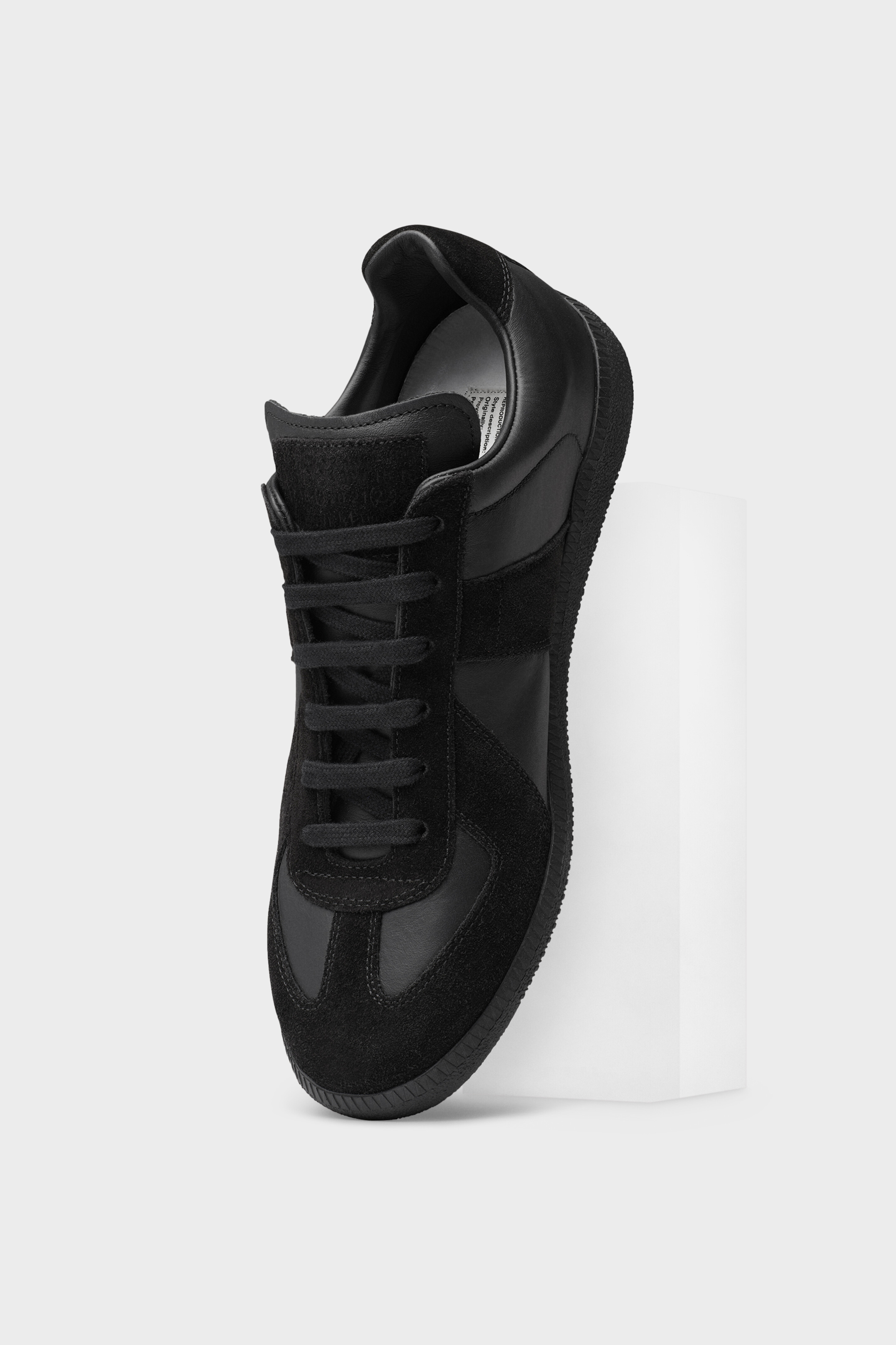
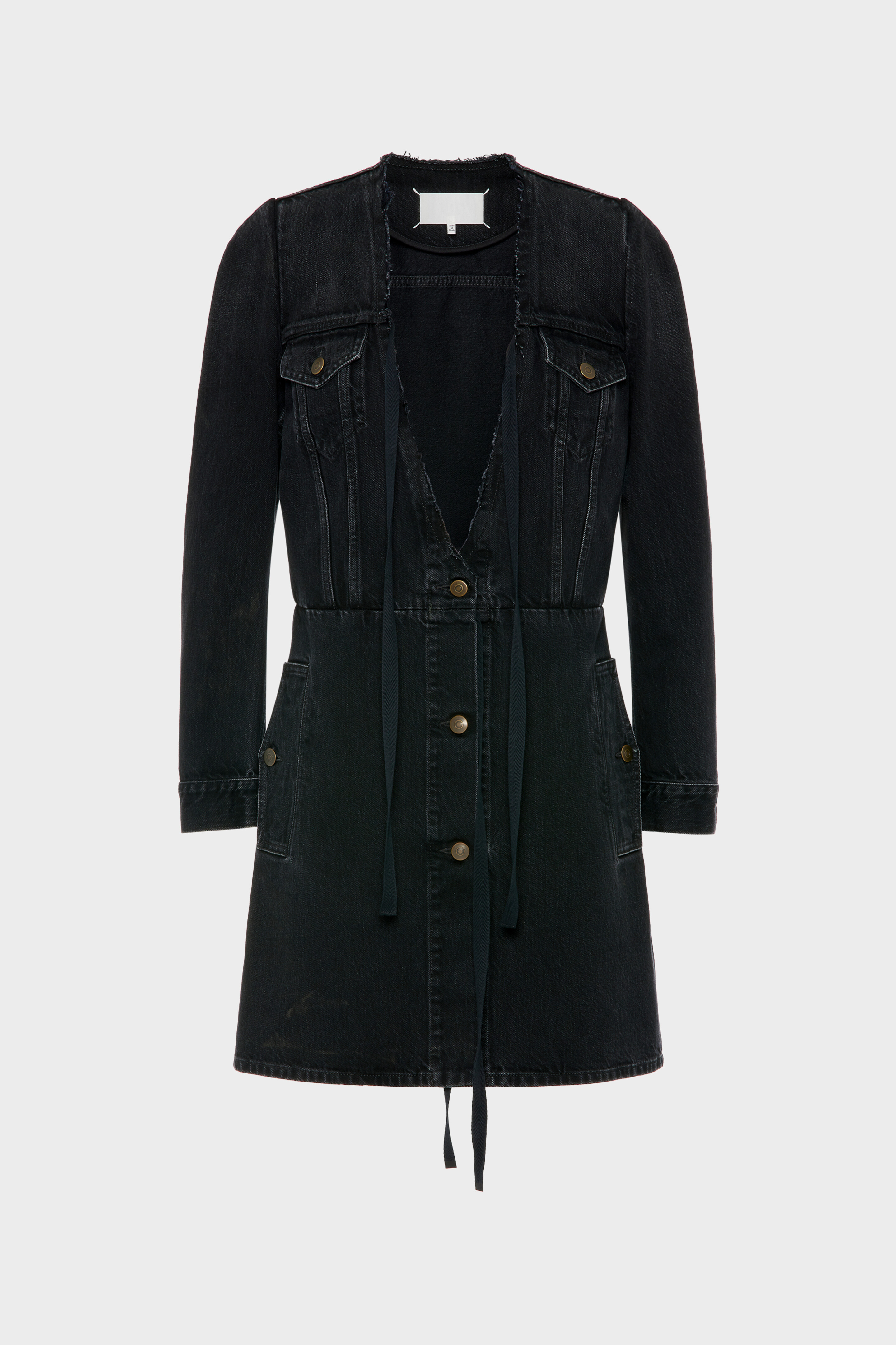
The ready-to-wear collections are quieter but no less rigorous. Galliano has leaned into Margiela's fascination with the everyday: oversized shirts, deconstructed denim, knitwear that looks like it has been unravelled and re-knit. The Tabi boot, Margiela's most recognisable design, has been rendered in dozens of materials under Galliano's tenure. He has not tried to move past it. He has made it stranger.
The Question
The question now is whether this arrangement can hold. Galliano is sixty-four. He has been at Maison Margiela for a decade, longer than he was at Dior. The work is some of the best of his career, but it is also deeply personal in a way that haute couture rarely is. The Artisanal collections feel like acts of penance and reinvention performed in public, season after season.
Rosso has given him unusual freedom. Maison Margiela is not a commercial juggernaut in the way Dior or Gucci are, which means Galliano is not under the same pressure to produce blockbuster accessories or viral moments. The house's revenue has grown under his tenure, but it remains a niche proposition. The Tabi boots sell. The Artisanal gowns do not, because they are not meant to.
What comes next is unclear. Galliano has not named a successor. He has not suggested he is leaving. The industry, which spent years debating whether he deserved a second chance, has largely moved on. The work speaks for itself now, which is perhaps the point. Margiela built a house on the idea that the designer's identity should not matter. Galliano has spent a decade proving that it can matter and not matter at the same time.
In the white fitting room, he steps back from the dress form and tilts his head. The muslin drapes in a way that suggests a finished garment without revealing what it will become. He adjusts one pin, then leaves it. The rest will come later.