The fitting room at ZUZWA's Paris atelier smells of steam and cotton
The fitting room at ZUZWA's Paris atelier smells of steam and cotton. A toile hangs on a dressmaker's dummy, pinned at the waist by Madame Chantal Moreau, who has been with the house since its second collection. She adjusts the dart, steps back, adjusts again. Across the table, pattern cutter Jean-Luc Petit marks a muslin sleeve with tailor's chalk, his annotations precise enough to read under poor light. Neither speaks. They have been doing this long enough that silence is a form of shorthand.
ZUZWA does not hide these names. The brand's garment tags list them—Moreau, Petit, seamstress Aïcha Benali, embroiderer Sylvie Roche—printed in the same typeface as the care instructions. It is not a gimmick. It is an accounting.
The hands that cut
Petit trained at the Chambre Syndicale in the early 1990s, back when pattern cutting was still taught on paper, not screens. He spent a decade at Dior before ZUZWA's founder, Pauline Maréchal, hired him in 2018. His job is to translate her sketches into something that can be worn. That means understanding how linen behaves differently from wool crepe, how a bias-cut skirt needs more ease through the hip than the drawing suggests, how a sleeve that looks clean on paper can torque the shoulder if the pitch is off by two degrees.
Maréchal has said in interviews that she considers Petit a co-author. He does not. In a rare profile in Libération in 2021, he described his role as "solving problems the designer doesn't know exist yet." The distinction matters. ZUZWA's signature silhouette—a high-waisted trouser with a curved waistband that sits just below the ribcage—exists because Petit reworked Maréchal's initial flat-front draft. The curve distributes tension. Without it, the trouser pulls.
Moreau's contribution is harder to quantify. She does not cut patterns or finish seams. She fits. ZUZWA's samples pass through her hands at least three times before they reach production: once in muslin, once in the actual cloth, once after the first prototype is sewn. She marks, pins, chalks, and returns the garment to the sewing floor with notes that read like recipes. "Take in 1.5cm at side seam, taper to nothing at hem." "Reduce ease across back yoke, keep front as is." Her corrections are small enough that a photograph would not catch them. On the body, they are the difference between a jacket that fits and one that works.
The sewing floor
Benali runs the sewing floor. She came to ZUZWA from a Sentier-based contractor that closed in 2019, part of the slow collapse of Paris's garment district. She had been sewing professionally for twenty-two years by then, mostly coats and tailored jackets, the kind of work that requires setting sleeves by hand and pad-stitching lapels in horsehair canvas. ZUZWA does not make tailored jackets. Benali adapted.
Her team is small—six full-time machinists, two finishers—and the work is split by skill, not garment type. One machinist handles all bound buttonholes. Another does only topstitching, which at ZUZWA means visible seams in contrasting thread, a detail that requires a steady hand and no room for error. The finishers attach linings, sew on buttons, press seams open with a clapper. It is repetitive in the way that playing scales is repetitive. You do it until your hands remember.
Benali's own contribution is structural. She decides how a garment is assembled, in what order, with which stitch. A ZUZWA shirt, for example, is sewn collar-first, not cuff-first, because Maréchal prefers the collar to dictate the neckline curve. That is a choice Benali makes in conversation with Petit's pattern, not in service to it. She has, on occasion, sent a piece back to him with a note explaining why his seam allowance will not work. He adjusts.
The surface
Roche embroiders. Not by machine—ZUZWA does not use machine embroidery—but by hand, with a tambour hook and silk thread. She works on a frame in a corner of the atelier that gets northern light, which is the only light that does not shift colour through the afternoon. Her contribution appears on perhaps one piece per collection, sometimes fewer. A cuff. A pocket. Once, an entire back yoke, which took her forty-three hours.
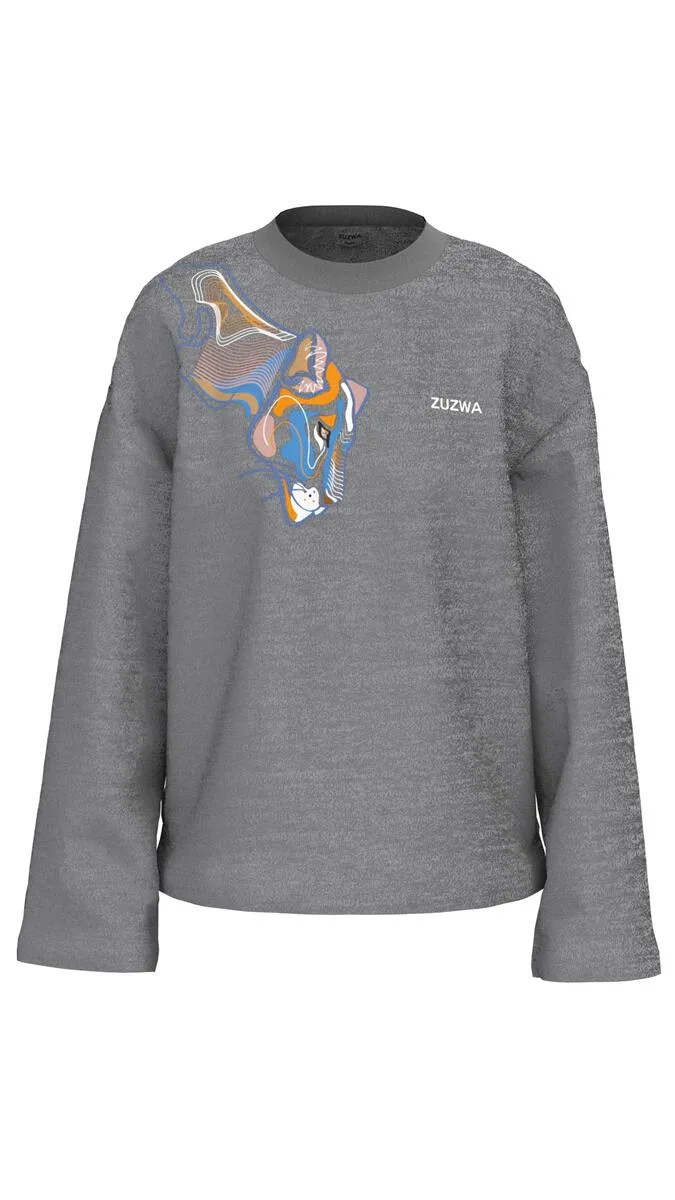
Maréchal's sketches indicate where embroidery should go, but not what it should look like. Roche works that out in thread, testing stitches on scrap cloth until she finds a density that holds the design without stiffening the fabric. The spring 2024 collection included a linen blazer with a vine motif along the lapel, rendered in chain stitch so fine it looked printed until you were within arm's reach. Roche's name appeared on the tag. The blazer sold out in two days.
She does not consider this fame. In the same Libération profile that quoted Petit, she said she was simply doing the job she had trained for. She studied at the École Lesage, which has been teaching embroidery in Paris since 1924. Her teachers had worked for Chanel, for Dior, for houses that no longer exist. The logic was always the same: make the stitch invisible unless the design requires otherwise. ZUZWA requires otherwise. Roche's stitches are meant to be seen.
What the credits mean
Other brands list their ateliers in press releases. ZUZWA lists its people. The distinction is legal as much as philosophical. French labour law requires contractors to be named in certain supply-chain disclosures, but ZUZWA's production is in-house. Moreau, Petit, Benali, and Roche are salaried employees, not freelancers. Their names appear because Maréchal believes a garment is a record of who made it.
This is not standard practice. Most fashion brands operate on the auteur model: the designer is credited, the makers are not. ZUZWA inverts that. Maréchal has said, in multiple interviews, that she does not sew. She cannot cut a pattern. She can sketch, drape, and direct, but the garment itself is made by people who know more than she does about construction. The credit reflects that.
There is a commercial logic here as well. ZUZWA's price point—trousers start at €340, jackets at €680—is justified in part by transparency. A customer who pays that much wants to know where the money goes. Naming the makers answers the question. It also raises the stakes. A jacket signed by Benali and Moreau is harder to dismiss as overpriced.
What comes next
ZUZWA is expanding. The brand will open a second atelier in Lyon in early 2025, staffed by local seamstresses and a pattern cutter Maréchal has been courting for two years. Petit will split his time between Paris and Lyon. Moreau will stay in Paris. Benali will train the new sewing team, which means three months of teaching people who already know how to sew to sew the way ZUZWA requires.
Roche is not part of the expansion. She works alone, and her output cannot scale. Maréchal has said she will not hire a second embroiderer. If a collection requires more embroidery than Roche can produce, the collection will have less embroidery. The logic is consistent: the hand that does the work signs the work. If the hand is not available, the work does not happen.
This is not a sustainable model in the way the industry uses the term. It is sustainable in the older sense: it can continue as long as the people who do it are willing to continue. Moreau is sixty-one. Petit is fifty-four. Roche is forty-seven. Benali is fifty. They are not young. ZUZWA's future depends on finding people who can do what they do, which is not the same as finding people who want to.
The atelier is still in Paris, still smells of steam and cotton. Moreau is still pinning toiles. Petit is still marking muslins. For now, the names on the tags are the names in the room.