The fitting room on Via Borgognona, sometime in the early seventies
The fitting room on Via Borgognona, sometime in the early seventies. Carla Fendi stands before a mirror, adjusting the drape of a fur coat on a model who is not, strictly speaking, a model. She is Anna Piaggi, then a junior editor, later a legend. The coat is sable, but worked in a way sable had not been worked before — sheared to the weight of cashmere, supple enough to knot at the waist. Piaggi moves. The fur moves with her. Carla nods. This, one suspects, is the moment Fendi stops being a furrier and becomes something else.
The house was founded in 1925 by Adele and Edoardo Fendi, but its identity — the thing that carries forward into the present — was shaped by three women across three distinct eras. Not designers in the atelier sense, but architects of vision. Each redefined what the maison could mean, and in doing so, what luxury itself might be.
Carla Fendi: the pragmatist
Carla, the third of five daughters, took the reins in 1965 alongside her sisters. But it was Carla who brought Karl Lagerfeld into the fold that same year, a decision that would prove as consequential as any single hire in twentieth-century fashion. Lagerfeld was twenty-nine, already restless, already hunting for a laboratory. Fendi gave him one.
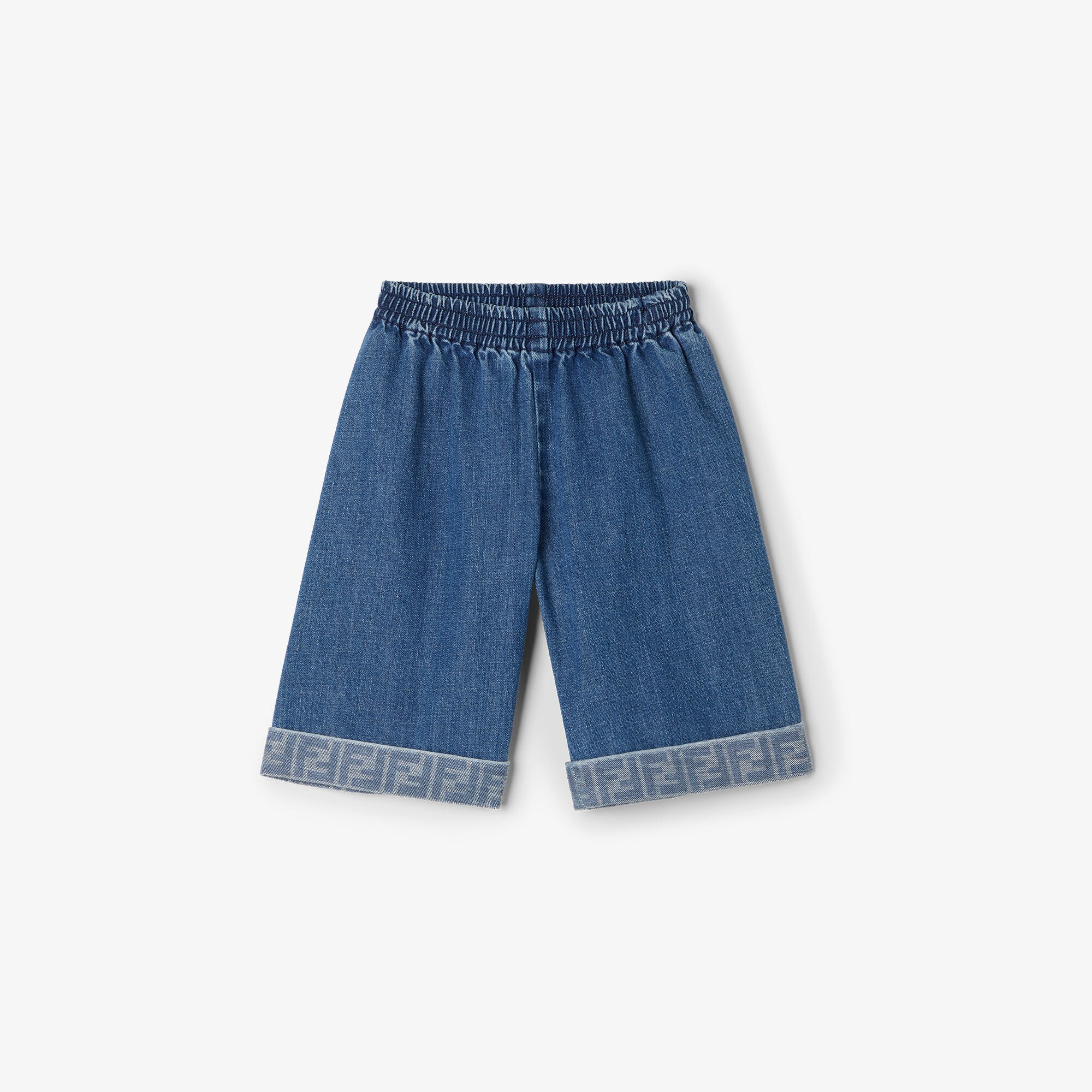
What Carla understood — and this is often lost in the romance of the Lagerfeld years — was that craft without innovation becomes heritage, and heritage without edge becomes taxidermy. She pushed Lagerfeld to dismantle fur's formality. The result: coats that weighed less than wool, pelts dyed in colours nature never intended, techniques borrowed from knitwear and applied to mink. The double-F logo, sketched by Lagerfeld in 1965, became shorthand for this new language. Fun Fur, they called it internally. The name was cheeky. The execution was not.
Carla's influence extended beyond product. She was the one who insisted on ready-to-wear in the early eighties, when the house was still synonymous with fur. She championed the Baguette in 1997, a bag so named because it tucked under the arm like a loaf of bread — practical, compact, entirely at odds with the top-handle formality of the era. The Baguette became Fendi's first global accessory hit, and it did so without pretending to be anything other than what it was: a small, cheerful, well-made bag.
She died in 2017. Lagerfeld, in an interview with WWD shortly after, called her "the most intelligent of the sisters." He did not elaborate. He didn't need to.
Silvia Venturini Fendi: the inheritor
Silvia is Carla's daughter, which is both an advantage and a curse. She joined Fendi in 1994, trained under Lagerfeld, and took over accessories and menswear in 1997. The Baguette was her first major project. She was thirty-two.
What distinguishes Silvia is her refusal to treat heritage as a static thing. The Peekaboo, introduced in 2008, is a case study. It is a doctor's bag, essentially — structured, top-handled, lined in contrasting leather so that when the bag opens, it reveals a second colour. The mechanism is simple. The effect is not. Fendi had been making bags for decades, but the Peekaboo was the first to feel like an argument: that functionality and whimsy are not opposites, that a bag can be serious and still surprise you.
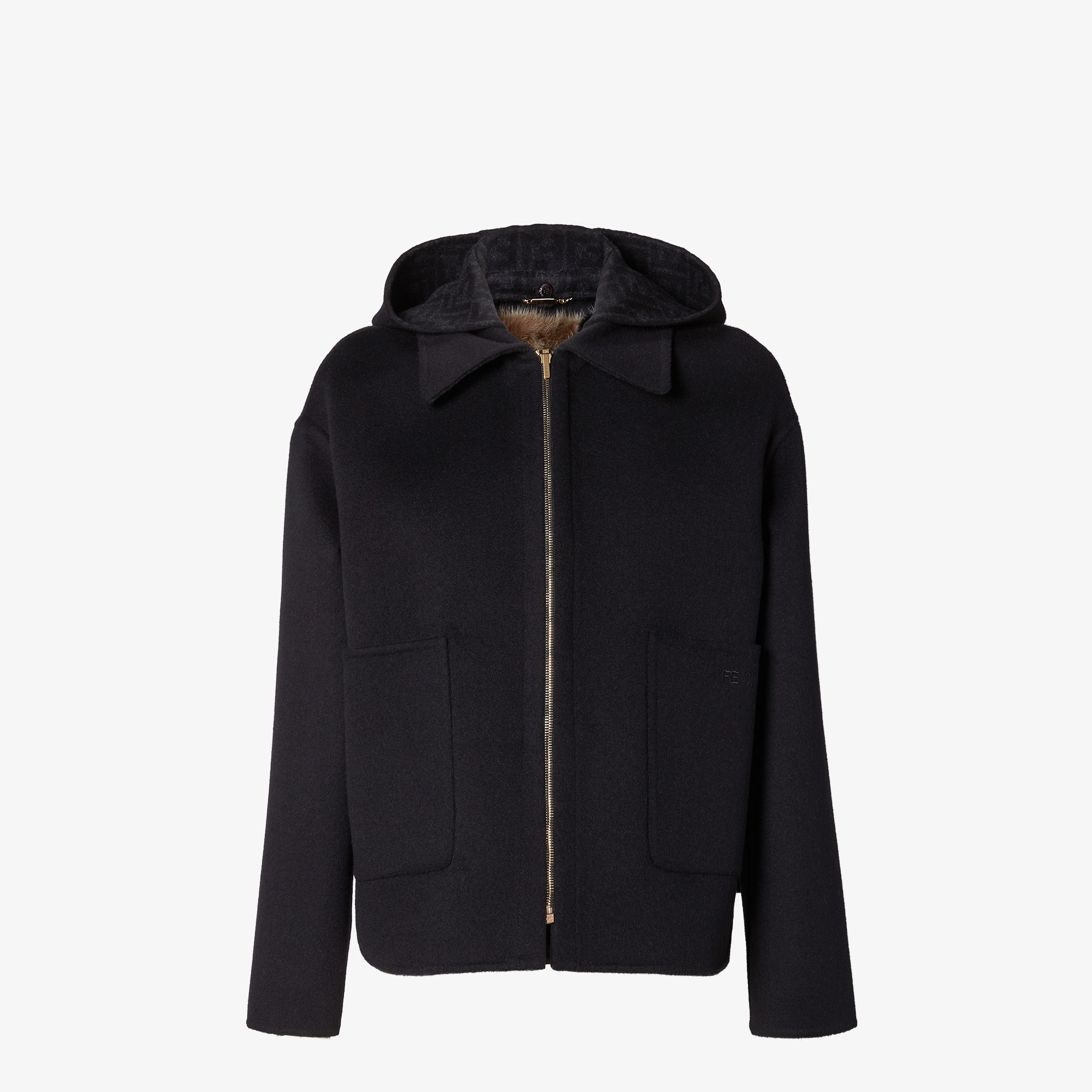
Silvia's menswear, launched as a full collection in the early 2000s, operates on similar principles. She treats tailoring as a given, not a goal. The interesting part, for her, is what happens after: shearling bombers cut with the precision of a blazer, leather trousers that move like wool, bags small enough to clip to a belt loop. There is a lightness to her work, a sense that luxury should not require solemnity.
She remains at Fendi, now overseeing accessories, menswear, and kidswear. Her title is artistic director of those categories, which sounds modest until you consider that accessories account for the majority of the house's revenue. Lagerfeld, before his death in 2019, told System magazine that Silvia "understood Fendi better than anyone, because she grew up inside it." The phrasing is telling. Not learned it. Grew up inside it.
Kim Jones: the outsider
Kim Jones arrived in 2020, the first artistic director of womenswear not connected to the Fendi family or to Lagerfeld's long tenure. His appointment was, in trade terms, a gamble. Jones had built his reputation at Louis Vuitton menswear and then Dior Men — houses with different codes, different clients, different rhythms. Fendi, by contrast, had been defined by continuity. Lagerfeld had been there for fifty-four years. Silvia for twenty-six.
Jones's first collection for Fendi, shown in September 2021, did not attempt to rewrite the house. It restated it. He opened with a series of coats — shearling, fur, leather — worked in the soft, rounded shapes that Lagerfeld had pioneered in the seventies. The palette was neutral: camel, cream, tobacco, black. The silhouette was easy, almost casual, but the facture was evident. You could see the hand-stitching on the shearling. You could see the way the fur had been sheared and re-sheared to achieve that particular weight.
What Jones brought, and what Fendi arguably needed, was a sense of the world beyond Rome. His background in menswear shows in the tailoring — sharper, more architectural than Lagerfeld's late work. His collaborations, with artists like Christiane Kubrick and Noel Fielding, introduced a surrealist edge that felt new for the house. The Baguette, under Jones, has been reworked in python, in sequins, in collaboration with Marc Jacobs and Tiffany & Co. Some of this feels opportunistic. Some of it works.
Jones is still finding his footing. His collections so far have been confident but not yet definitive. The question, as it was for Silvia in the nineties, is whether he can make Fendi feel necessary again — not as a repository of craft, but as a place where ideas happen.
What remains
Fendi is not a house defined by a single vision. It is, instead, a house defined by conversation — between Carla and Lagerfeld, between Silvia and her inheritance, between Jones and the archive he now stewards. Each of these women, in her own way, understood that luxury is not a fixed point. It is a negotiation between what was and what might be.
The Baguette is still in production. So is the Peekaboo. The double-F logo, sketched in 1965, still appears on buckles and linings and the interior labels of coats. Whether these things endure because they are good, or because they are marketed well, is a question the house does not need to answer. The work, as Carla might have said, speaks for itself.