The fitting room on Via Gesù smells faintly of steam and Shalimar
The fitting room on Via Gesù smells faintly of steam and Shalimar. Donatella Versace stands before a half-dressed mannequin, one hand adjusting the drape of a safety-pinned silk jersey, the other holding a cigarette she hasn't yet lit. The fabric clings, releases, clings again. She steps back. "Encore," she says — not to anyone in particular, but the atelier responds.
This is how decisions happen at Versace: tactile, immediate, and entirely hers.
The inheritance no one envied
Donatella did not train to lead. She trained, if one can call it that, at her brother's side. Gianni Versace founded the house in 1978; Donatella arrived in Milan shortly after, twenty-two years old, blonde, uninterested in the conventional apprenticeships that defined Italian fashion at the time. She had studied languages in Florence, not pattern-cutting. What she possessed instead was an instinct for provocation and a sibling shorthand that let her speak plainly when others deferred.
For nearly two decades, she worked as Gianni's sounding board and muse, helming the Versus diffusion line and art-directing campaigns. The press called her his shadow. In truth, she was his editor — the one who told him when a hemline read too safe, when a print needed more bite. The collaboration was elastic, uncodified, and by all accounts, combative in the best sense.
Then, in July 1997, Gianni was murdered on the steps of his Miami Beach villa. Donatella inherited the artistic direction of Versace at forty-two, grief-stricken and underprepared by any traditional measure. The industry watched, skeptical. The first collections she presented alone were uneven — too loud in some quarters, too cautious in others. Critics suggested the house might not survive her.
They were wrong, though it took years to prove it.
The recalibration
Donatella's early tenure was marked by a kind of doubling-down: more skin, more metal, more of the codes Gianni had established. The jungle-print Jungle Dress Jennifer Lopez wore to the 2000 Grammys became, for a time, the house's most famous garment — a piece of pure spectacle that also launched Google Image Search, according to the company's own engineers. One suspects Donatella understood that survival, in those years, meant volume.
But by the mid-2000s, the strategy had worn thin. Versace's revenues stagnated. The atelier remained exceptional — few houses could match its facility with bias-cut silk or chainmail draping — but the market had shifted toward minimalism, and Versace's maximalism felt, to some, like a relic. Donatella began to pull back. The silhouettes grew cleaner. The colour palette quieted. She hired new executives, restructured the business, and in 2004, opened the archive to a broader audience, staging exhibitions that recontextualised Gianni's work as art rather than costume.
The turning point came in 2018, when Versace was sold to Capri Holdings for over two billion dollars. Donatella retained creative control, but the sale forced a question she had been circling for years: what does Versace mean when it is no longer a family business?
The signature, redefined
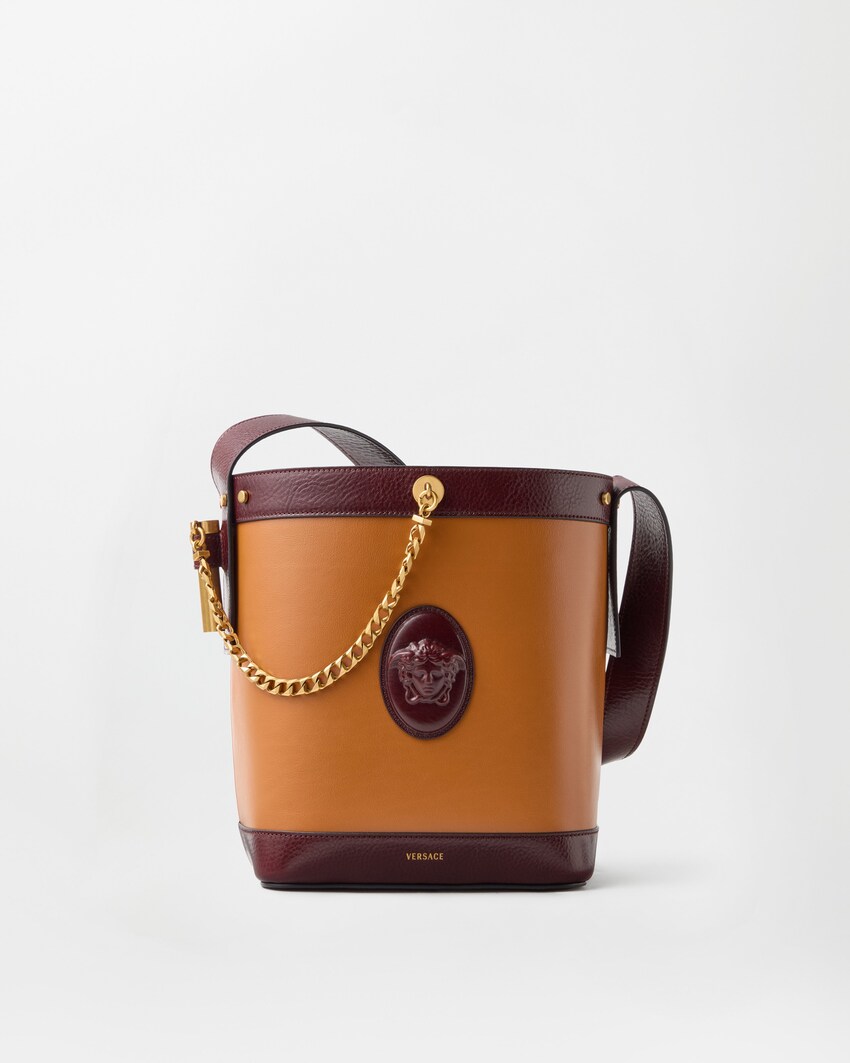
Her answer has been to lean into tension. The Versace of the past decade is neither nostalgic nor apologetic. Donatella mines the archive — the Medusa head, the Greek key, the safety pins — but reframes them through a lens that feels less about excess and more about power. The Spring 2022 collection, for instance, featured tailored blazers with exaggerated shoulders and micro-miniskirts in neon latex, a combination that read as confrontational rather than seductive. The models walked hard. The casting was diverse in a way that felt structural, not performative.
She has also embraced collaboration in a manner her brother rarely did. In 2018, she partnered with Michael Kors (then the creative director of his eponymous label and Capri's chief creative officer) on a capsule that merged Versace's codes with Kors's American pragmatism. The result was commercially successful, if not universally loved. More recently, she has worked with younger designers on limited runs — Salehe Bembury on footwear, Dua Lipa on a collection that sold out within hours — positioning Versace as a platform rather than a monument.
The atelier itself has not changed. The same saddle-stitched leather, the same hand-rolled hems. But the context around it has. Donatella speaks now about sustainability, about circularity, about the archive as a resource to be reused rather than simply referenced. Whether one finds this shift genuine or strategic is, perhaps, beside the point. The work is there.
What remains
In a 2021 interview with The Guardian, Donatella said she no longer designs for the front row. She designs, she claimed, for the person who sees a look on Instagram at two in the morning and feels something shift. It is a telling remark — one that acknowledges the collapse of traditional fashion gatekeeping while also asserting that desire, however it is mediated, still begins with an image.
Her own image has become part of the house's vocabulary. The platinum hair, the tan, the refusal to soften with age — these are not incidental. Donatella understands that she is, in some sense, the product. She appears in her own campaigns, not as a designer stepping aside for the clothes, but as a figure inseparable from them. It is a kind of branding that predates social media but thrives within it.
The risk, of course, is that Versace becomes legible only through her. The house has no clear successor. Donatella has spoken vaguely about mentoring younger talent within the atelier, but no name has emerged. One wonders whether she resists succession by design, or whether the model itself — a single creative director as the locus of identity — is simply harder to sustain than it once was.
The next chapter, or the same one
Versace's Spring 2025 collection, shown in September, opened with a black column dress, high-necked and sleeveless, that moved like oil. It was followed by forty-seven other looks, some sculptural, others nearly naked, all of them executed with the kind of facture that justifies the price. The reviews were mixed. Some praised the restraint; others found it uncharacteristically muted. Donatella, backstage, reportedly shrugged. "I make what I want," she told a journalist. The quote did not specify which publication.
What she wants, it seems, is to remain in motion. Not to repeat Gianni's work, but not to abandon it either. To hold the archive close while refusing to be buried by it. Whether that constitutes a signature or simply a survival strategy is difficult to say. Perhaps, at Versace, they amount to the same thing.
The fitting room on Via Gesù is quiet now. The pinned silk jersey has been removed, pressed, and sent to the sewing floor. Donatella lights the cigarette. Outside, Milan continues.