## The man who made silence louder
The man who made silence louder
Matthieu Blazy stands in the Bottega Veneta atelier in Montebello, northeast of Milan, holding a sleeve that has been cut, recut, and pinned three times in the last hour. The fabric is a bonded double-face wool, dense enough to hold a sculptural line but soft enough to collapse when the arm drops. He folds it once, watches it fall, folds it again. The third time, he nods and hands it back to the première. No one speaks. This is how most fittings go.
Blazy became creative director of Bottega Veneta in November 2021, inheriting a house that had spent three years under Daniel Lee's high-gloss reinvention and decades before that as the discreet choice of women who didn't need logos. His appointment surprised no one who had worked with him — he had been design director under Lee, and senior womenswear designer at Celine under Phoebe Philo before that — but it surprised the industry, which had expected a bigger name. What followed was not a reset but a recalibration. Blazy turned the volume down and the craft up. He made Bottega Veneta feel like itself again, only more so.
Training, or how to work in the room
Blazy is French, from Paris, and trained at La Cambre in Brussels, a school known for producing designers who understand construction before they understand press. He graduated in 2004 and spent the next seventeen years learning how to make clothes in rooms where the making mattered more than the message. Raf Simons hired him at Jil Sander in 2008. He moved to Maison Margiela in 2014, then to Celine in 2016, arriving just as Philo was entering her final, most pared-back phase.
This is the lineage that matters. Simons taught him rigour. Margiela taught him deconstruction as a form of respect for the garment. Philo taught him that luxury is not about adding, it is about knowing when to stop. By the time he joined Bottega Veneta in 2020 as Lee's deputy, Blazy had spent fifteen years in studios where the first question was always how is this made, not how will this photograph.
At Celine, he worked on the sculptural coats and the bonded jersey dresses that defined the last collections. Those pieces had no lining, no topstitching, no visible seams. They looked simple. They were not. That tension — between apparent ease and hidden complexity — is the through-line in everything Blazy has done since.
The first collection, or what quiet sounds like
Blazy's debut for Bottega Veneta came in February 2022, shown in Milan with no music, no set, and no front-row theatre. The collection opened with a black leather coat, cut like a trench but constructed like a blazer, worn over a ribbed knit dress that skimmed the body and stopped at the ankle. The leather was not the house's signature intrecciato weave. It was smooth, almost matte, with a weight that made it move like cloth. The coat fastened with a single leather-covered button at the waist. That was it.
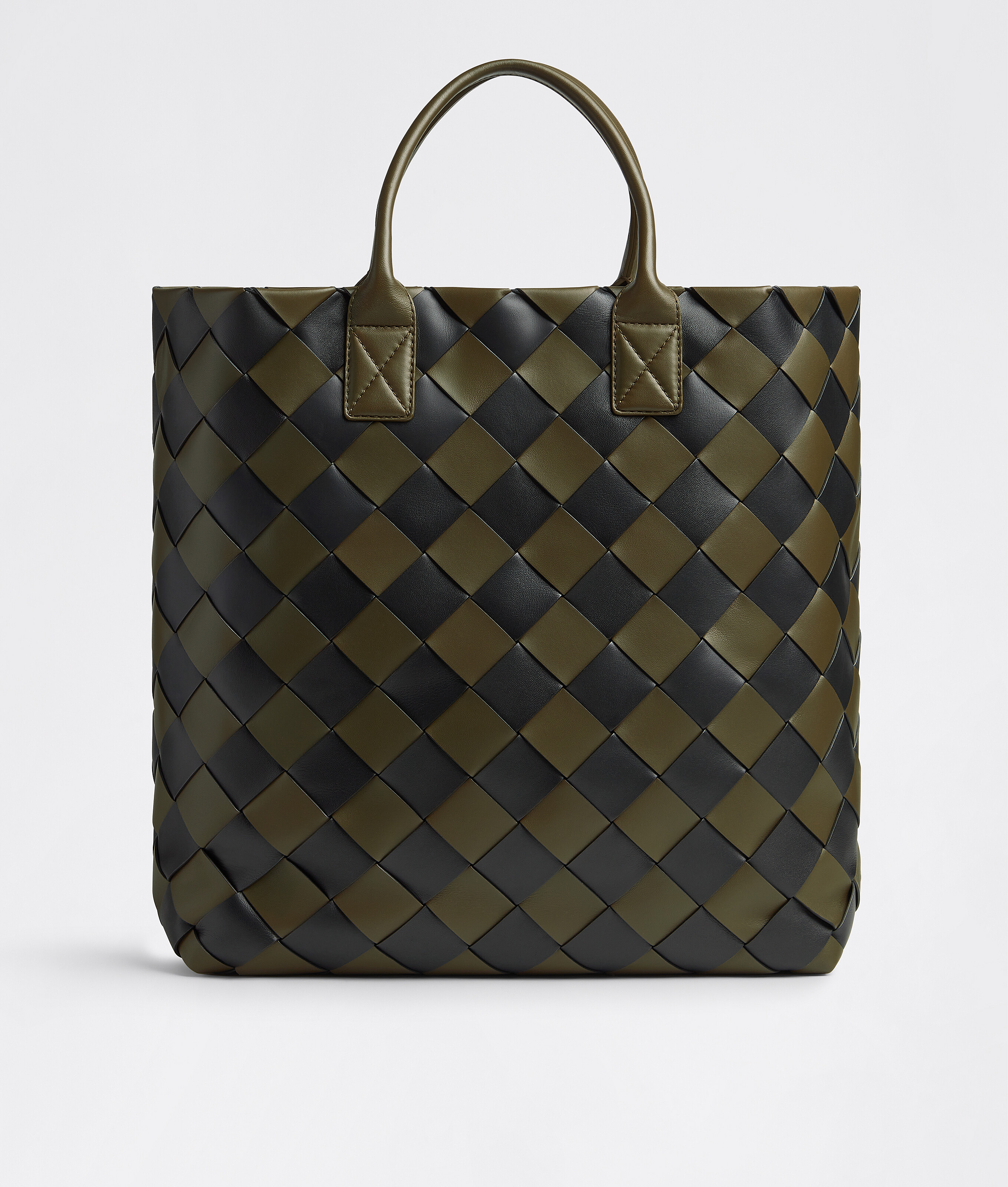
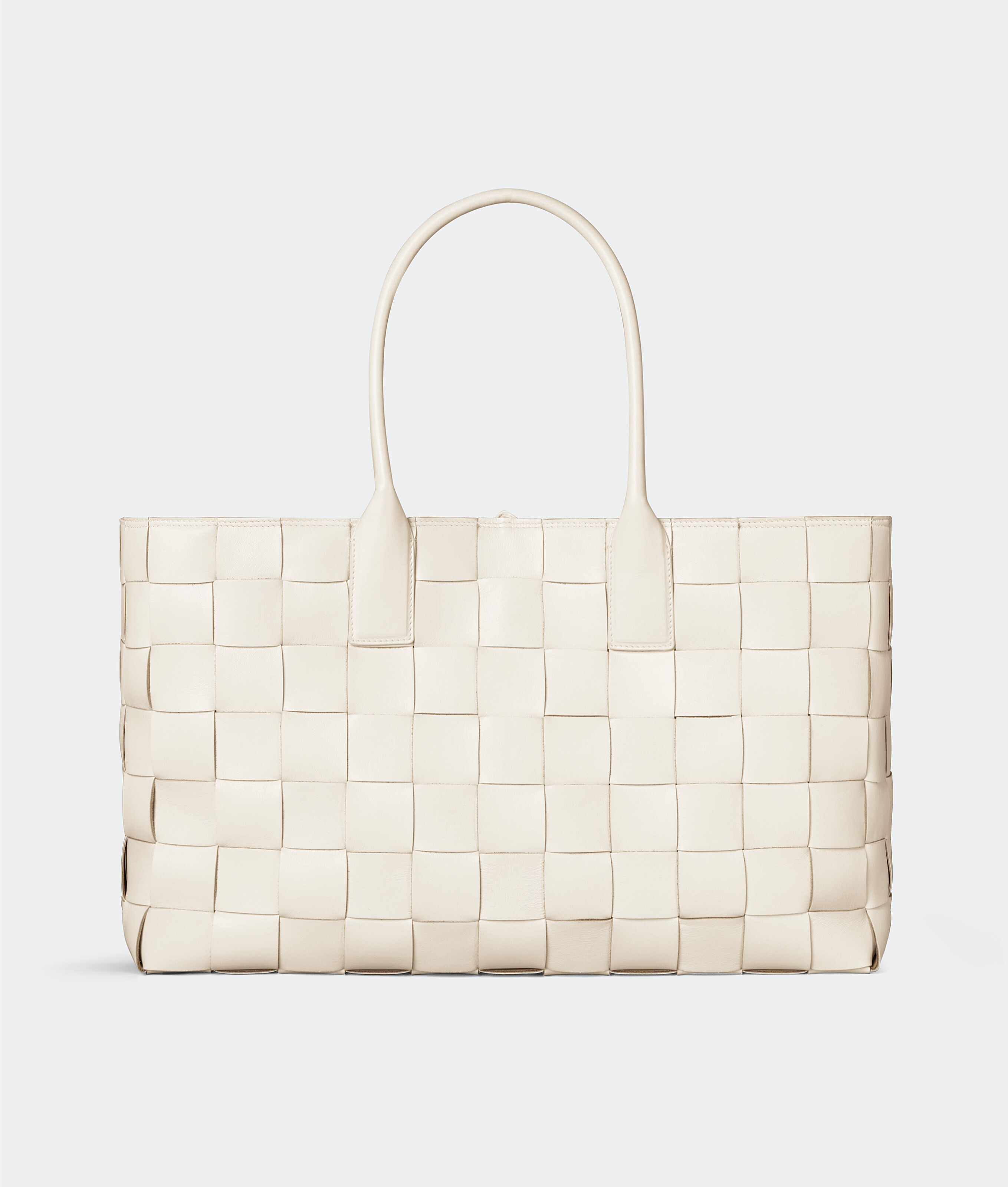
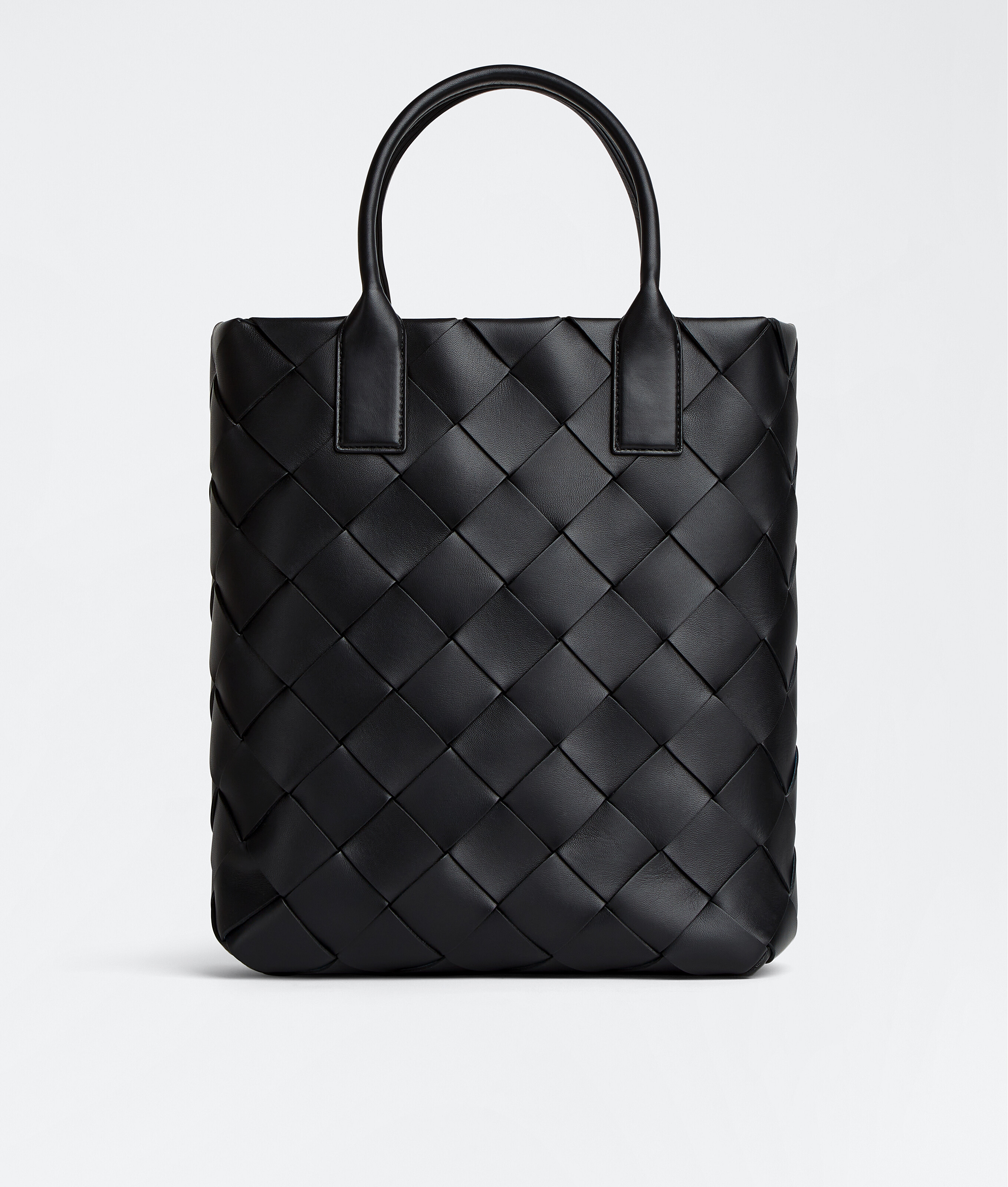
What followed was a series of variations on the same idea: clothes that looked like one thing and behaved like another. A shearling jacket with the construction of a shirt. A knit dress with the drape of silk. A leather skirt that fell like wool. The intrecciato appeared, but not where you expected it — woven into the sole of a sandal, worked into the handle of a bag so small it could barely hold a phone. The Sardine bag, one of Lee's bestsellers, was shown in a new size and a new leather, softer and less structured. The Jodie, the house's knotted hobo, was rendered in fringe.
The reviews were warm but cautious. This was not a revolution. It was a deepening. Blazy had taken Bottega Veneta's vocabulary — leather, weaving, an obsession with materials — and made it quieter, more intricate, more concerned with how a garment sits on the body than how it reads in a photograph. The industry, which had spent three years praising Lee's ability to make Bottega Veneta noisy, was now being asked to pay attention to something that required looking twice.
Signature, or what he keeps returning to
Three years in, certain gestures have become recognisable as Blazy's. The first is his use of leather as a textile, not a statement. He treats it like wool or linen, cutting it into soft trousers, unlined coats, dresses that fold and drape. The leather is often dyed to look like something else — suede that reads as flannel, nappa that mimics crepe. This is not trickery. It is a way of making you reconsider what leather can do.
The second is his interest in weight and balance. A Blazy collection often includes a coat that looks heavy but moves like jersey, or a knit that looks soft but holds its shape like tailoring. He works with bonded fabrics, double-face constructions, and felted wools that have been treated to behave in unexpected ways. The result is clothing that feels engineered but not stiff, considered but not overthought.
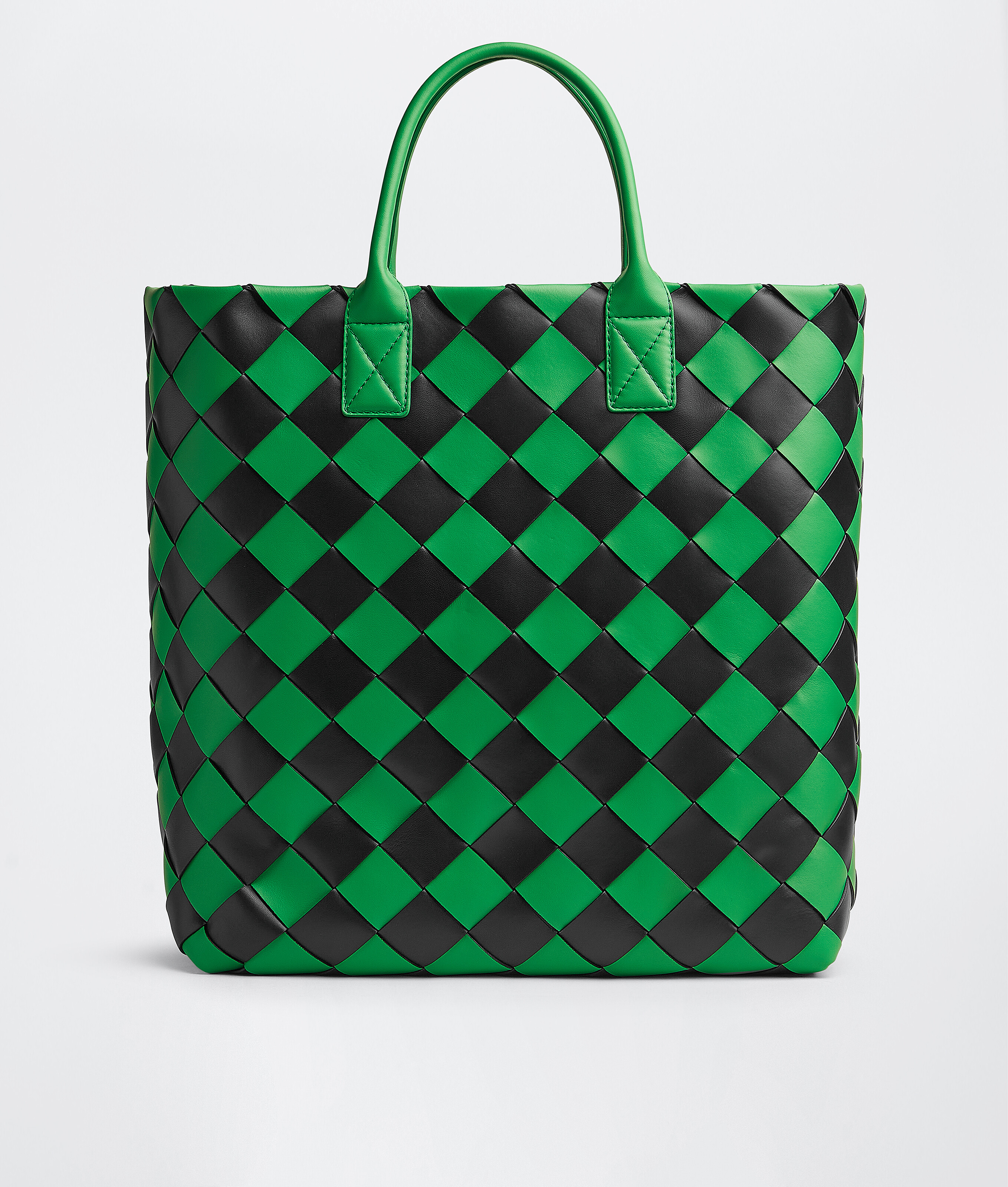
The third is his refusal to separate craft from concept. The intrecciato weave, which could easily become a logo, is instead a technique he applies to new materials and new forms. He has woven leather into denim, into shearling, into rubber. He has used it structurally, as the sole support for a bag or the closure for a coat. In his hands, the weave is not a signature. It is a method.
The house, or what Bottega Veneta is now
Under Blazy, Bottega Veneta has become the house for people who want to think about their clothes without announcing that they are thinking about their clothes. The bags are still the entry point — the Jodie, the Sardine, the Andiamo, a new top-handle introduced in 2023 — but the ready-to-wear has quietly become the main event. The leather trousers, the bonded coats, the knit dresses that look like nothing until you put them on: these are the pieces that define the house now.
The advertising has followed suit. Blazy works with photographers who shoot clothing as clothing, not as aspiration. The campaigns are still, almost austere, focused on the garment rather than the fantasy. There are no slogans, no manifesto, no attempt to tell you what Bottega Veneta means. The clothes do that.
Sales have been strong, particularly in leather goods, where Blazy's quieter approach has not dampened demand. The Andiamo became one of the year's bestselling bags within six months of its launch. The Jodie, reworked each season in new leathers and new sizes, continues to sell. Ready-to-wear has grown, particularly in outerwear and knitwear, where Blazy's technical skill is most visible.
What comes next, or what he is not saying
Blazy does not give many interviews. When he does, he speaks carefully, in sentences that circle back on themselves and rarely land on a thesis. He has said, in various publications, that he is interested in "the life of the garment after it leaves the studio" and that he thinks about "how clothes age, how they soften, how they become yours". He has also said that he does not think in terms of seasons or trends, which is either a luxury or a discipline, depending on how you look at it.
What is clear is that he is not interested in making Bottega Veneta louder. The house will not return to logos, to obvious branding, to the kind of maximalism that defined the late 2010s. Blazy is building something slower, more focused on materials and making than on moments. Whether that is enough to sustain a house in an industry that rewards noise is the question he is answering collection by collection.
For now, he is still in the atelier in Montebello, still folding sleeves, still asking the première to recut the shoulder one more time. The work is quiet. It is also very loud, if you know how to listen.