## The Quiet Revolutionary
The Quiet Revolutionary
Matthieu Blazy stands in a Milanese atelier, turning a leather bag inside out. The seams are exposed, the construction visible. He pauses, runs a thumb along the stitching, then flips it back. The bag looks entirely different — softer, almost boneless. "This is the one," he says, and the sample-maker nods. It is eleven in the morning on a Tuesday in February, and Bottega Veneta's creative director has just approved a shape that will not appear in stores for another eight months.
This is how Blazy works: slowly, quietly, with his hands. He is forty-one, French, and almost impossible to Google before 2021. His appointment to Bottega Veneta that year surprised the industry not because he was unknown — he had spent nearly two decades at Maison Margiela, Celine, and Calvin Klein — but because he had never been the name above the door. He was the deputy, the right hand, the one who made the clothes work. Now he is the one deciding what work means.
Training Ground
Blazy grew up in Paris and studied at La Cambre in Brussels, the Belgian school that has produced more fashion technicians than visionaries. He graduated in 2004 and went straight to Margiela, where he spent seven years learning how to construct a garment as if it were an argument. Margiela was already gone by then — the house was running on fumes and rigour — but the education was intact. Blazy learned to draft patterns, to source fabric, to question whether a sleeve needed to be set at all.
In 2014, Phoebe Philo hired him as head of ready-to-wear at Celine. It was the best job in fashion for someone who cared about clothes more than image. Philo's Celine was a study in reduction: no logo, no theatrics, no apology. Blazy spent two years there, overseeing the cut of trousers that cost €900 and looked like nothing until you put them on. When Raf Simons moved to Calvin Klein in 2016, he brought Blazy with him as design director. The Calvin Klein experiment lasted two years and cost a fortune. Blazy emerged with a reputation for making impossible ideas wearable.
The Bottega Pivot
Bottega Veneta in 2021 was a house in flux. Daniel Lee had spent three years turning it into a logo-free juggernaut — the Pouch, the Puddle boot, the Tire sandal — and then left abruptly. Kering needed someone who understood craft but could also move product. Blazy's first collection, for spring 2023, opened with a model in a white cotton shirt and a skirt made from frayed denim. The shirt was cut like a men's dress shirt, loose through the body, tight at the cuff. The skirt looked like it had been salvaged from a pair of jeans, because it had.
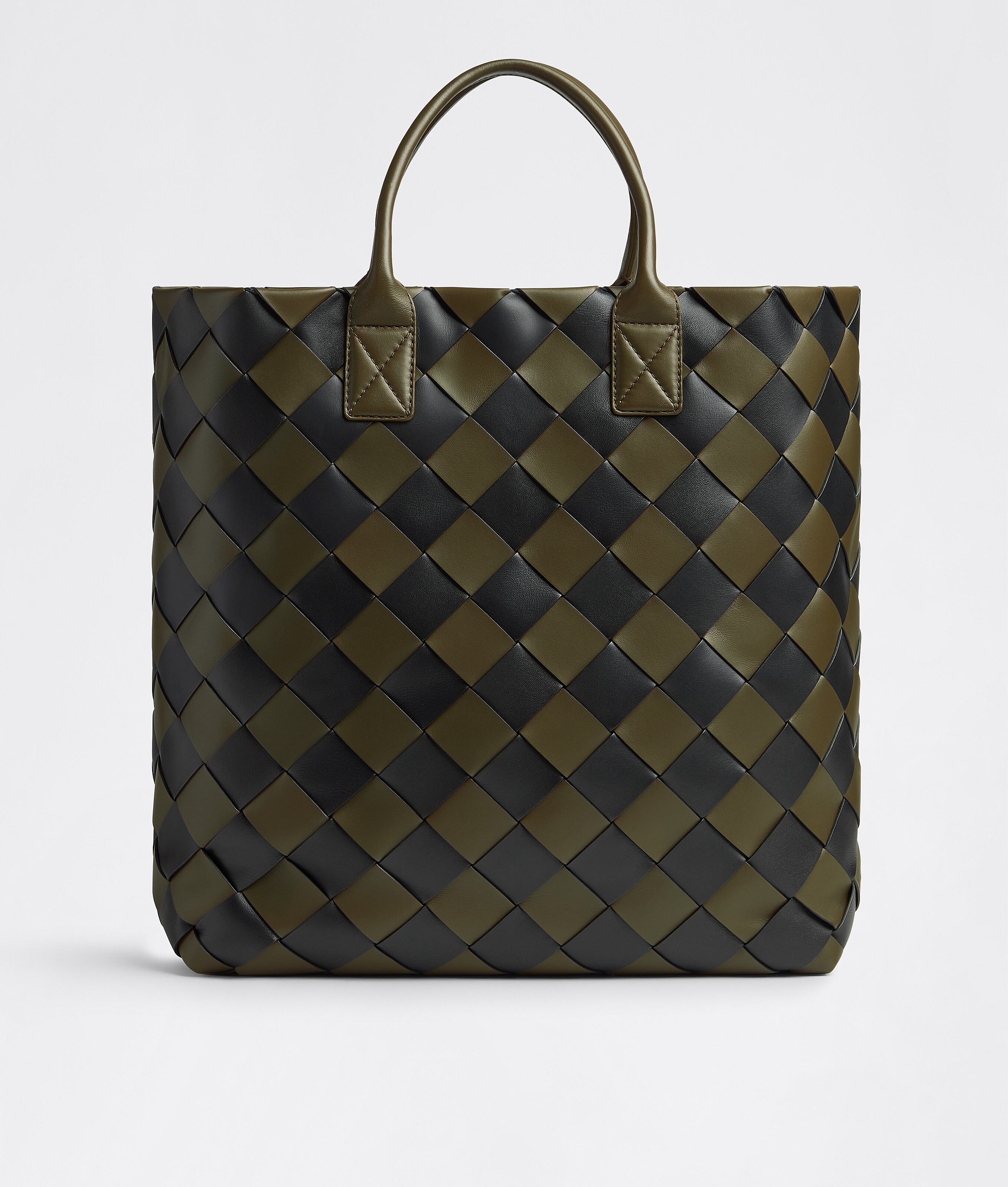
The collection was a manifesto in reverse. Where Lee had made Bottega Veneta loud, Blazy made it quiet again. He brought back intrecciato — the woven leather technique the house was founded on in 1966 — but applied it to unexpected shapes: a trench coat, a pair of jeans, a men's bomber. He showed leather so soft it moved like jersey, and jersey so structured it held a shape like leather. The press called it a return to roots. Blazy called it "just making things properly."
His signature emerged quickly. He likes clothes that reveal their construction, bags that can be worn multiple ways, shoes that look like they have been broken in. He is obsessed with weight — not the weight of the wearer, but the weight of the cloth. A jacket should have enough heft to settle on the shoulders without pulling. A skirt should have enough body to move when you walk, but not so much that it swings. These are tailoring principles, and Blazy applies them to everything, including knitwear.
The Intrecciato Equation
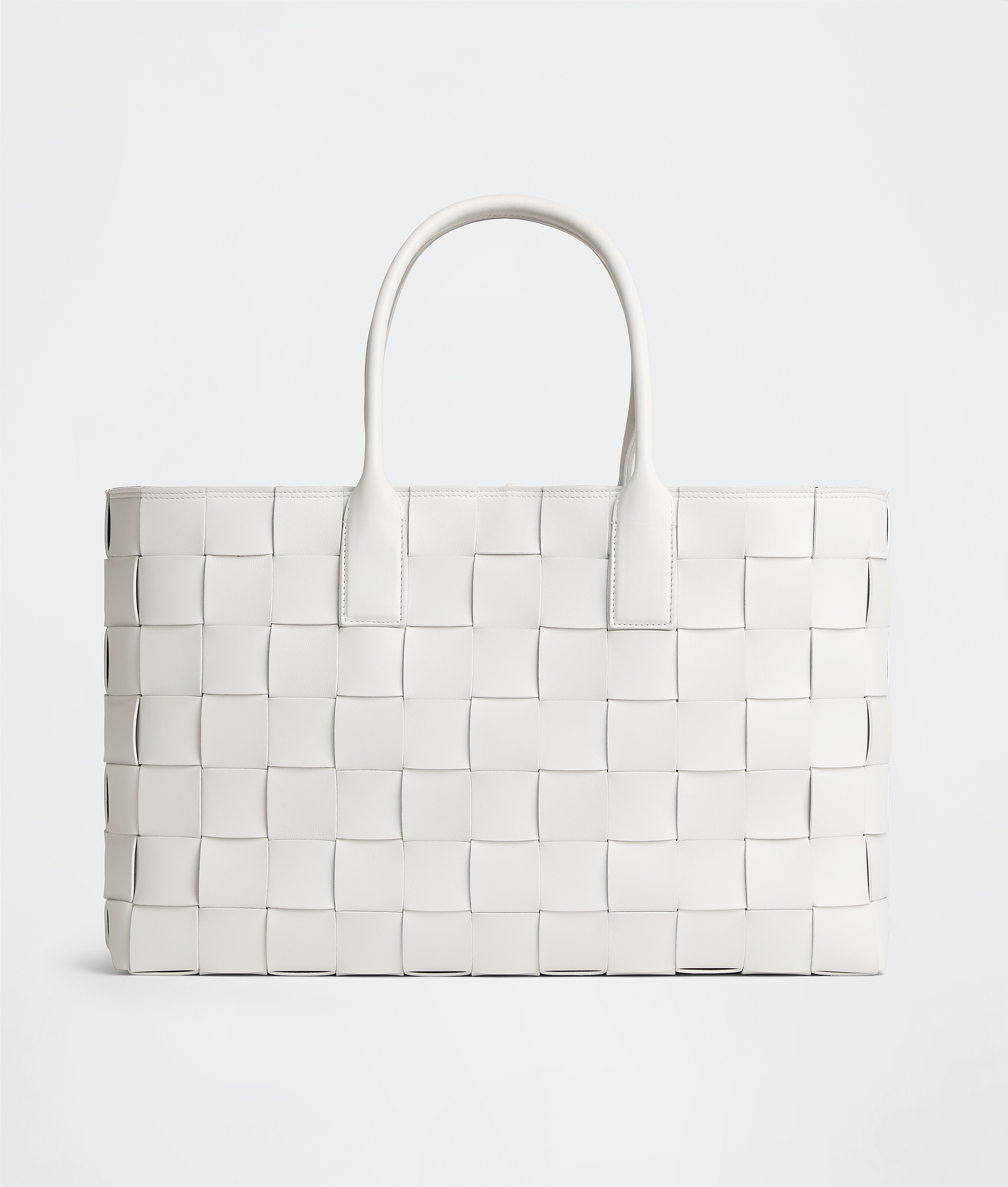
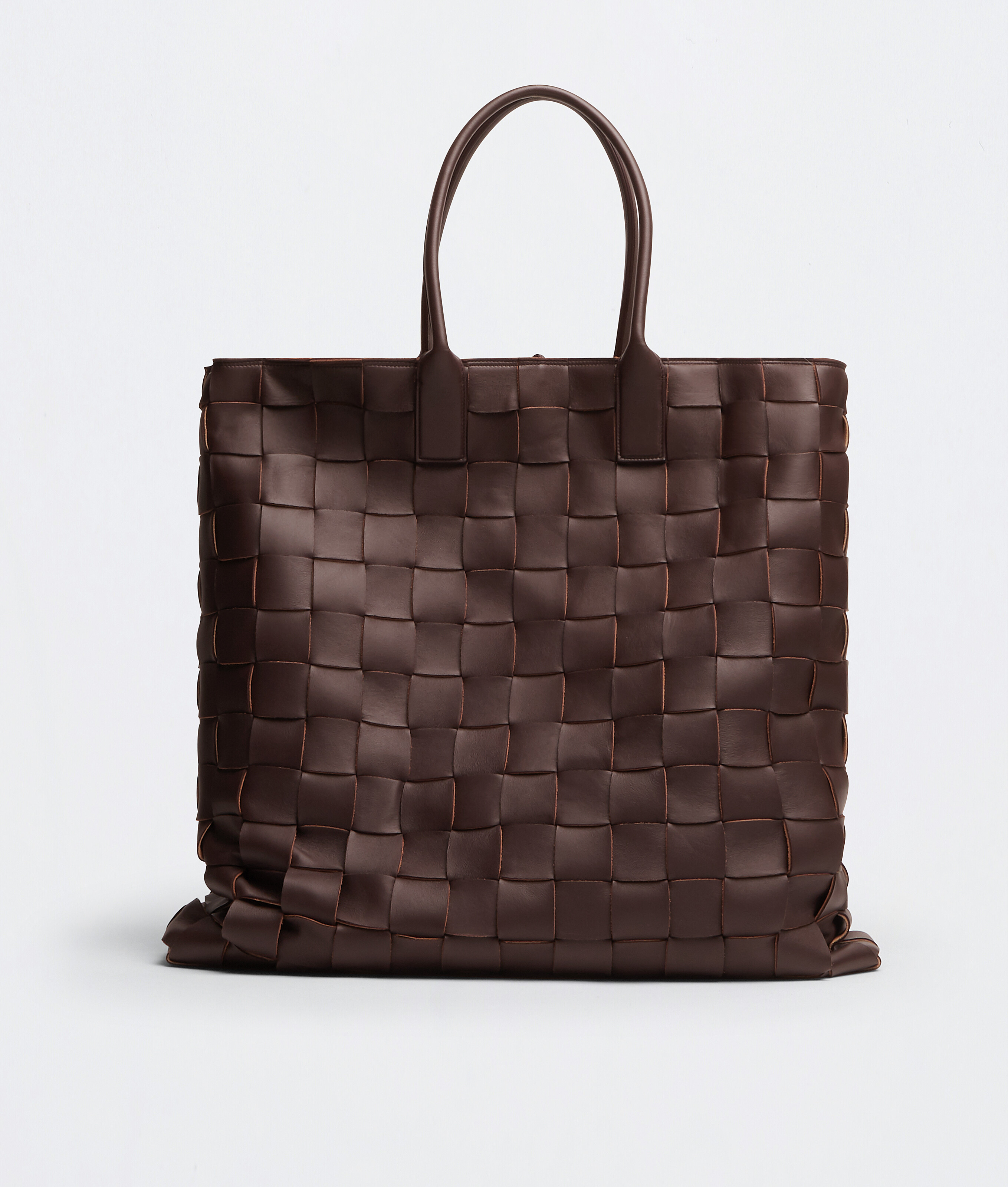
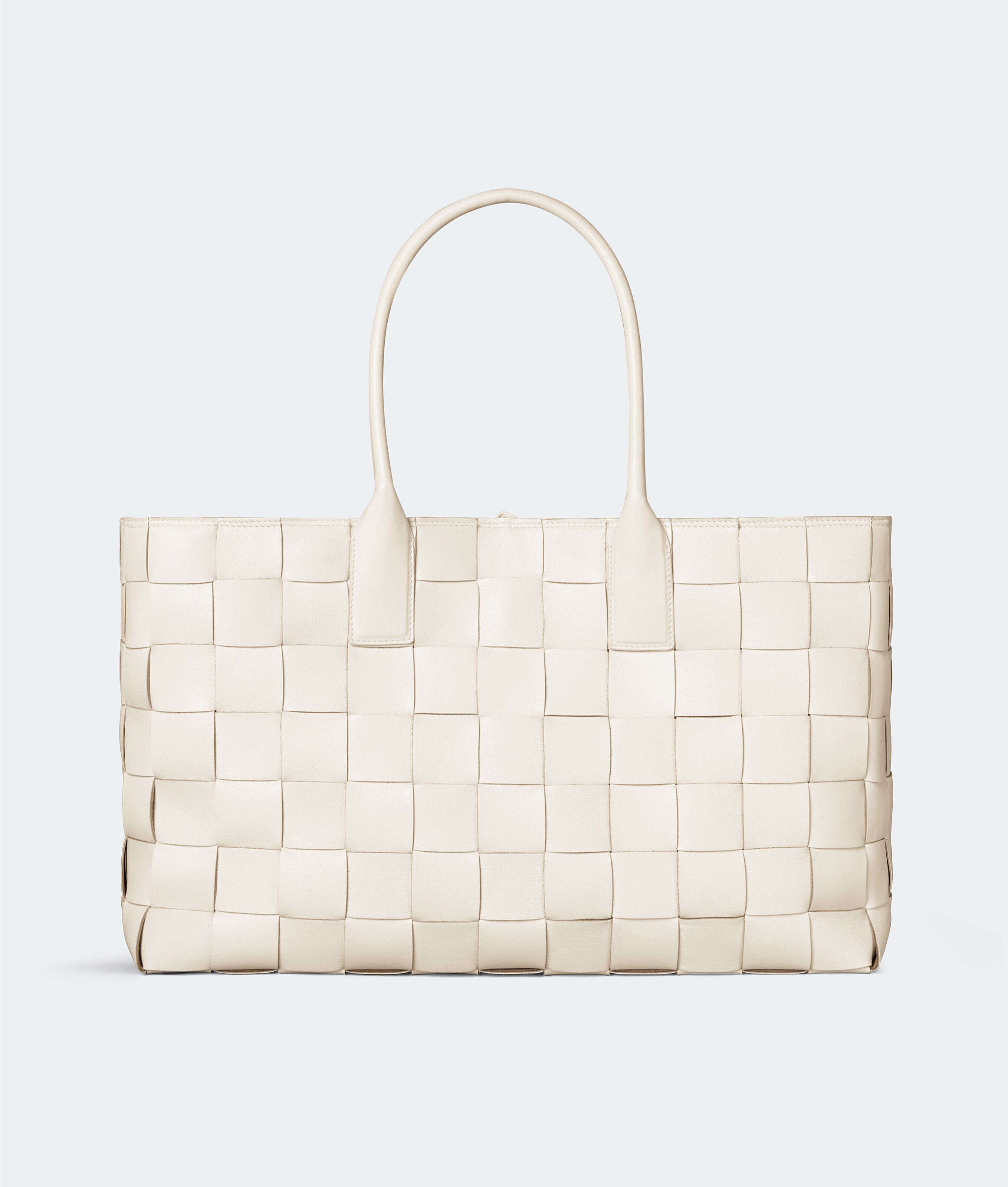
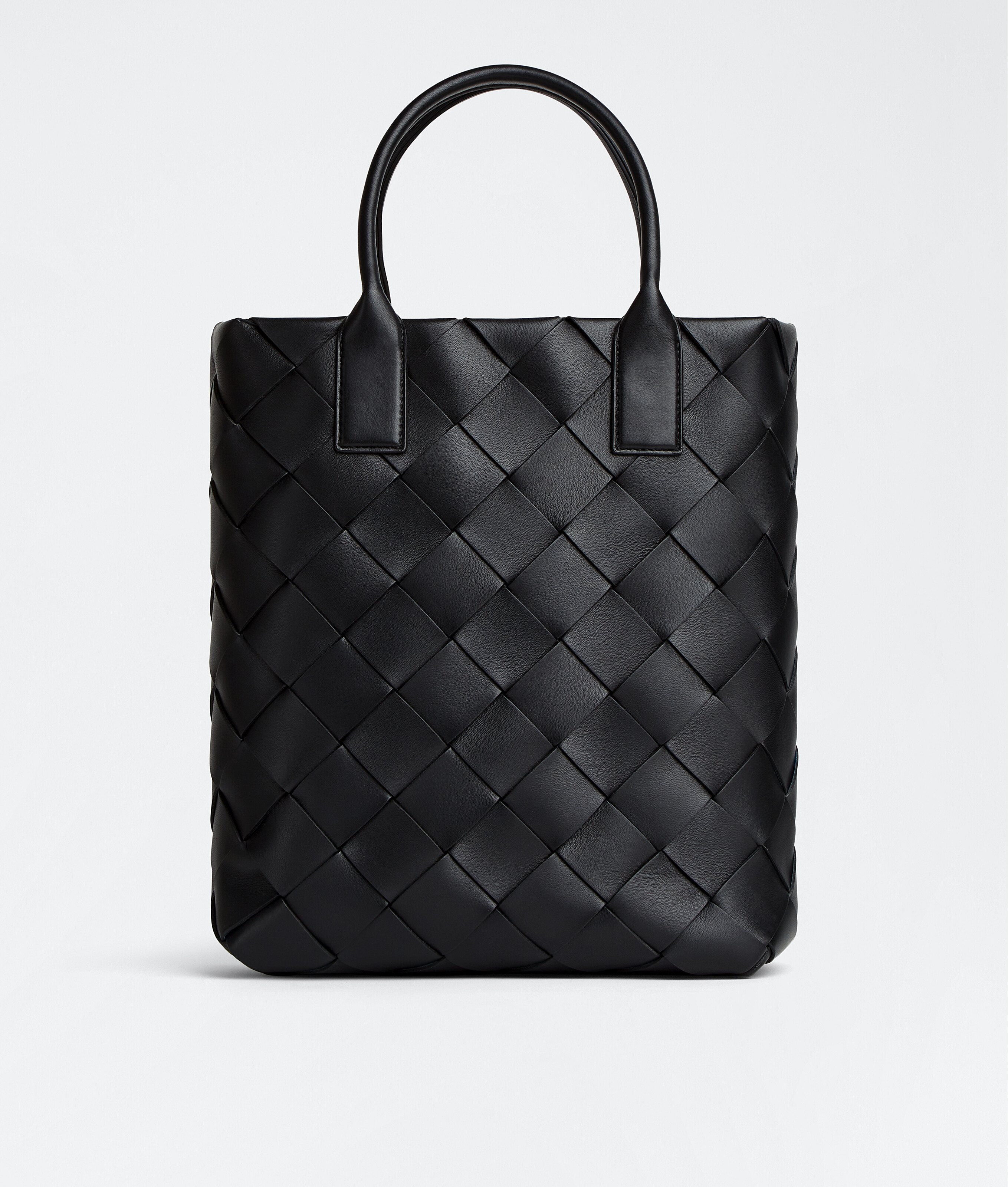
Bottega Veneta's intrecciato is not a pattern; it is a process. The leather is cut into strips, woven by hand, then backed with fabric to hold the structure. It takes time, and time costs money. Lee had used intrecciato sparingly, as an accent. Blazy uses it everywhere: on bags, obviously, but also on shoes, belts, jewellery, and — in his third collection — on a full-length evening coat that weighed nearly as much as the model wearing it.
The technique is now the house's calling card again, but Blazy has expanded the vocabulary. He has woven nappa with denim, intrecciato with canvas, and — most successfully — leather with leather in two different weights, so the finished piece has a grid of light and shadow. The effect is subtle until you see it in person, at which point it is the only thing you notice. This is Blazy's trick: he makes clothes that photograph quietly but demand attention in three dimensions.
His accessories have followed the same logic. The Andiamo bag, introduced in his second collection, is a soft, unstructured tote with no hardware and no logo. It comes in seven sizes and can be worn on the shoulder, across the body, or carried by hand. It sold out in three colourways within a month. The Gemelli sandal, a woven leather slide with a low stacked heel, became the summer shoe of 2023 without a single celebrity seeding. Blazy does not do celebrity seeding.
The Next Chapter
Blazy's fourth collection, shown in February 2024, opened with a model in a shearling coat that had been turned inside out, so the wool faced inward and the leather faced out. It was technically a mistake — shearling is supposed to protect you from the cold — but it looked extraordinary, like a sculpture you could wear. The collection that followed was full of these inversions: shirts worn backwards, trousers with the waistband on the outside, bags with the lining exposed. It was Margiela's influence, but softer, more wearable, less interested in making a point.
The industry is watching to see if Blazy can sustain this. Bottega Veneta is not a small house — it does roughly €1.8 billion in annual revenue — and Kering expects growth. Blazy has delivered so far, but his approach is fundamentally anti-commercial: he makes fewer styles, produces them in smaller quantities, and refuses to discount. He has said, in interviews, that he would rather make one perfect bag than ten good ones. This is admirable until the ten good ones are what pay for the atelier.
His next challenge is menswear, which he has largely ignored in favour of unisex pieces. Bottega Veneta's men's business is strong — the intrecciato briefcase, the Chelsea boot, the leather bomber — but it lacks a clear point of view. Blazy has hinted that he is working on a men's tailoring line, cut from the same soft leathers he uses for women's outerwear. If he can make a suit that moves like a shirt, he will have solved a problem the entire industry has been circling for a decade.
For now, he is in the atelier, turning things inside out. The bag he approved in February will arrive in stores in October, priced at €3,200, and it will sell. Not because it has a logo, but because it is the only bag that looks like that. Blazy has spent twenty years learning how to make clothes that do not need to announce themselves. At Bottega Veneta, he finally has the room to prove it works.