The shop on Via della Vigna Nuova opened in 1921 with a window full of saddlery and a back room full of debts
The shop on Via della Vigna Nuova opened in 1921 with a window full of saddlery and a back room full of debts. Guccio Gucci, recently returned from London where he had worked as a porter at the Savoy, understood two things: the English travelled with excellent luggage, and Florence still had craftsmen who could make it. He hired a small team of leather workers, most of them trained in the city's centuries-old tradition of bookbinding and harness-making, and set them to copying the steamer trunks and hatboxes he had admired in the Savoy's lobby. The business model was simple. The execution, less so.
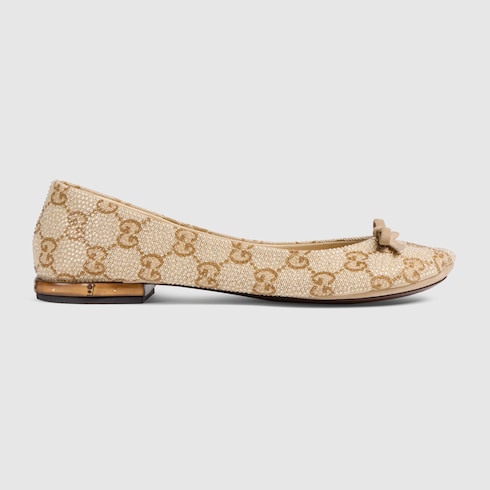
What Guccio lacked in capital he compensated for with timing. Post-war Italy was rebuilding, and a new class of industrialists wanted the trappings of old money without the wait. Gucci offered them something adjacent: bags and cases that looked like they had survived a grand tour, even if they had only survived the train from Milan. The house signature — a canvas woven with interlocking Gs, backed with leather trim — appeared in the early thirties, less as branding than as a way to stretch expensive hides further. Cotton was cheaper. The logo made it intentional.
By the time Guccio died in 1953, the business had passed to his sons: Aldo, Vasco, Ugo, and Rodolfo. Aldo, the eldest, had the instinct for theatre. He opened the first international outpost in New York in 1953, on East 58th Street, and understood immediately that Americans did not want Florentine restraint. They wanted spectacle. He gave them the horsebit loafer, the bamboo-handle bag, the flora scarf — each piece thick with reference, worn thin with repetition. Rodolfo, quieter and more exacting, managed the Milan atelier and kept an eye on quality, which by the sixties was slipping. The brothers expanded aggressively: Rome, Paris, London, Tokyo. Licensing deals followed. Gucci eyewear. Gucci fragrances. Gucci bath towels, eventually.
The house that Guccio built on craft became, under his sons, a house built on logo. There is no moral in that observation, only arithmetic. A bamboo handle requires a craftsman and six hours. A logo requires a screen printer and six seconds. Scale demands simplification. By the mid-seventies, Gucci was everywhere, which is another way of saying it had become nowhere in particular.
What the brothers left behind
The family's second act was litigation. Aldo and Rodolfo spent the late seventies and eighties in court, first with each other, then with Rodolfo's son Maurizio, who inherited his father's share in 1983 and set about wresting control from his uncle. Maurizio won, eventually, and took the company public in 1988. His tenure was brief and expensive. He poured money into flagship stores and advertising campaigns, convinced that Gucci could be restored to its postwar elegance through sheer spending. It could not. By 1993, the house was insolvent, and Maurizio sold his remaining stake to Investcorp, a Bahraini investment firm that had been buying up shares since the late eighties.
Maurizio was shot on the steps of his Milan office in 1995, a murder arranged by his ex-wife Patrizia Reggiani, who had been cut out of his will. The case became a tabloid fixture for two years. Gucci, meanwhile, was under new management.
Tom Ford arrived in 1994 as creative director, installed by Domenico De Sole, the Investcorp-appointed CEO who saw in Ford what Aldo Gucci had seen in the American market forty years earlier: someone who understood that luxury, at a certain threshold of visibility, becomes entertainment. Ford stripped the logo back, tightened the silhouettes, and shot the campaigns like pornography. The work was disciplined, and it worked. By 1999, when LVMH made a hostile run at the company, Gucci was profitable again. Pinault Printemps Redoute, now Kering, stepped in as a white knight. The Gucci family, by then, owned nothing.
What remains in the atelier
Walk into the Gucci ArtLab in Scandicci, just outside Florence, and the question of founders becomes semantic. The facility opened in 2018, a 37,000-square-metre complex where prototypes are developed and high-complication pieces are assembled. There are rooms dedicated to exotic skins, to metal hardware, to the kind of stitching that still cannot be done by machine. The artisans — Gucci calls them maestri — work in white coats at clean tables. Some of them trained under craftsmen who trained under Guccio's original hires, which makes them third-generation, though the company they work for has changed hands four times since.
The bamboo bag is still made here, one at a time, the handle steamed and bent over a form and left to cure for days. The horsebit loafer, too, though the bit itself is now cast in a facility in Prato and trucked in. The interlocking-G canvas is woven in a mill near Prato as well, on looms that are digital but set to the original 1930s pattern. Whether this constitutes continuity or performance is a question the house does not entertain in its literature.
What Gucci has retained, and what it has not, comes down to a single distinction: the house kept the techniques but not the people. The Gucci family's taste — Guccio's restraint, Aldo's showmanship, Rodolfo's exactitude — left with them. What replaced it was a rotating cast of designers tasked with interpreting a century of references, some of which contradict each other. Ford did jet-set louche. Frida Giannini did archival revivalism. Alessandro Michele, who held the role from 2015 to 2022, did magpie maximalism, piling on embroidery and clashing prints until the work looked less like fashion than like a fever dream set in a Florentine flea market. Sabato De Sarno, who took over in 2023, has dialled it back — cleaner lines, more leather, fewer appliqués — but the question he is answering is the same one every Gucci designer answers: what do you do with a house that has been everything?
The founder problem
There is a tendency, in fashion writing, to treat a founder as a kind of ghost, a spirit that lingers in the atelier and guides the house through its decades. Gucci offers no such comfort. Guccio Gucci was a competent businessman who recognised an opening in the market and hired people who knew how to sew. His sons turned that opening into an empire, then spent two decades trying to take it from each other. The murder, the trials, the tabloid headlines — these are the house's real inheritance, not some mythic vision of Florentine craft.
What persists is not the founder's hand but the founder's logic: make it well enough that people believe it is better than it is, then make enough of it that belief becomes ubiquitous. Guccio understood that in 1921. Aldo understood it in 1953. Ford understood it in 1994. De Sarno, one assumes, understands it now.
The atelier in Scandicci will continue. The maestri will continue. The bamboo will be steamed, the leather will be stitched, the looms will run. Whether any of that connects to a man who opened a shop on Via della Vigna Nuova a century ago is, at this point, a matter of marketing. The work itself does not require a founder. It requires a payroll.