The studio in Stockholm's Vasastan district smells faintly of acetone and coffee
The studio in Stockholm's Vasastan district smells faintly of acetone and coffee. Jonny Johansson stands before a rack of samples — twelve variations on a single blazer, each differing by no more than a centimetre at the shoulder or a half-shade in the grey. He pulls one forward, runs a thumb along the lapel, replaces it. Pulls the next. This is how most days begin, and have begun, for nearly three decades.
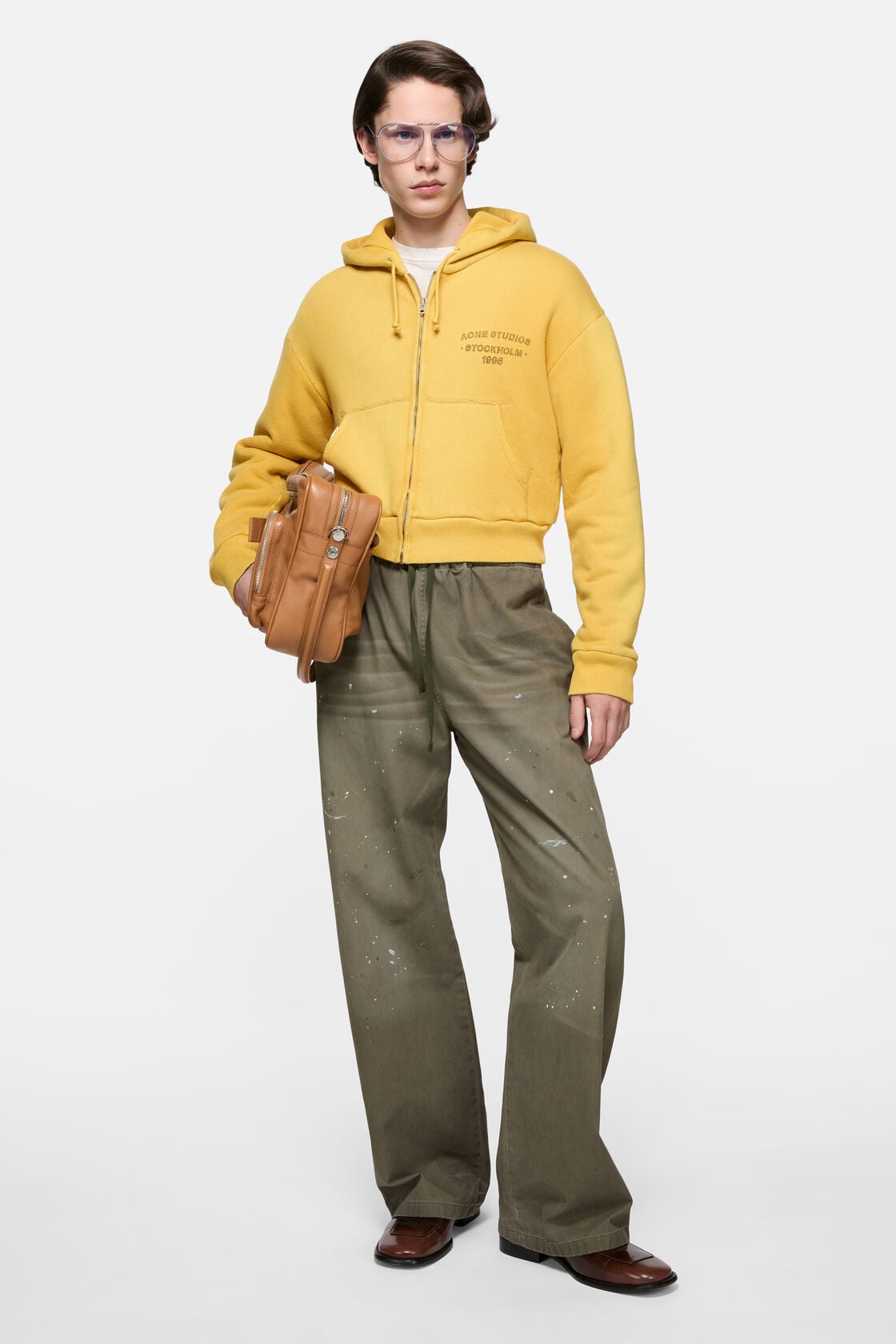
Johansson did not train as a designer. He studied economics at university, then shifted to what the Swedes call Företagsekonomi — business administration — before enrolling at Stockholm's Beckmans College of Design in the mid-nineties. By his own account, he arrived late to pattern-cutting and draping, and never entirely caught up. What he did bring was an instinct for proportion and a willingness to let garments remain unresolved. The early Acne Studios collections, launched in 1996 with a run of raw-denim jeans given away to friends, carried that quality — pieces that looked almost, but not quite, finished.
The name itself, Acne, began as an acronym: Ambition to Create Novel Expressions. It reads now like a relic of late-nineties optimism, the sort of mission statement one might find on a CD-ROM. Johansson has never disavowed it, but he doesn't lean on it either. The jeans, distributed in batches of a hundred pairs and screen-printed with the wearer's telephone number on the back pocket, were less a product launch than a social experiment. They moved through Stockholm's creative circles by word of mouth. By the time the first proper collection arrived in 1997, Acne had a constituency, if not yet a business model.
The Pivot
For the first decade, Acne operated as a collective — part design studio, part ad agency, part film production house. Johansson and his co-founders took on commercial work to fund the clothing line. They directed music videos. They designed websites. The fashion arm was, in effect, subsidised by everything else. This arrangement persisted until 2006, when the group formally split. Johansson retained the fashion business and the Acne Studios name. The rest became Acne Film and, later, Acne Digital, which folded in the early 2010s.
The timing mattered. By 2006, the market for what would later be called 'contemporary' fashion — positioned between high street and traditional luxury — had begun to expand. Acne Studios, with its lean silhouettes and muted palette, fit neatly into that bracket. Johansson showed in Paris for the first time in 2006. The collection featured oversized knitwear, cropped trousers, and a series of leather jackets cut with sleeves slightly too long. The proportions were off, but intentionally so. One critic described the effect as 'adolescent without being juvenile', which Johansson later cited as the most accurate assessment he'd received.
What followed was a period of rapid, if uneven, growth. Acne Studios opened stores in Paris, London, New York. It entered the Japanese market through a partnership with a local distributor. It launched eyewear, footwear, a denim archive line. Johansson remained the sole creative voice, a structure that allowed for coherence but also invited exhaustion. In interviews from that period, he often appeared wary, as though bracing for the moment the machinery would outpace him.
The Signature
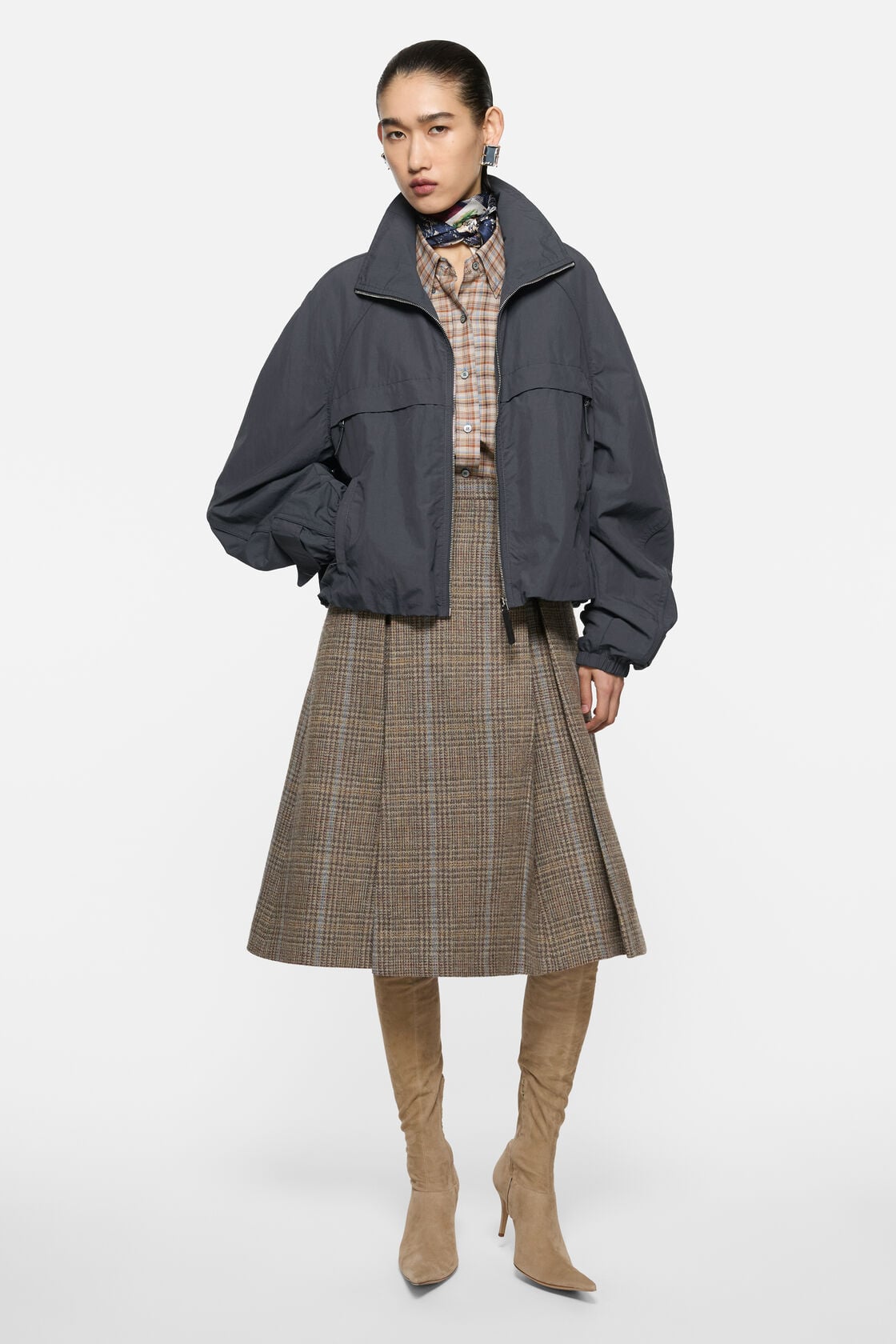
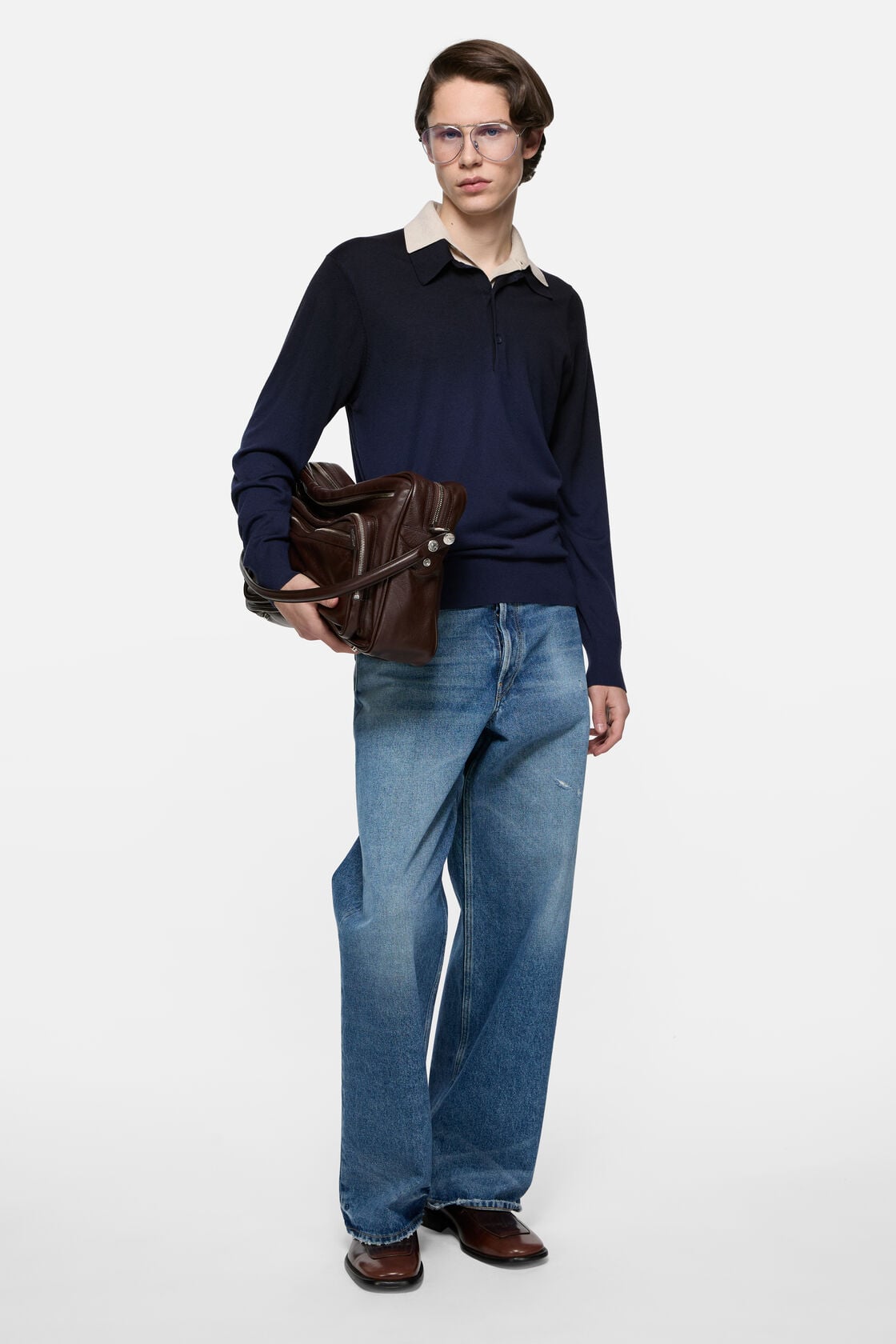
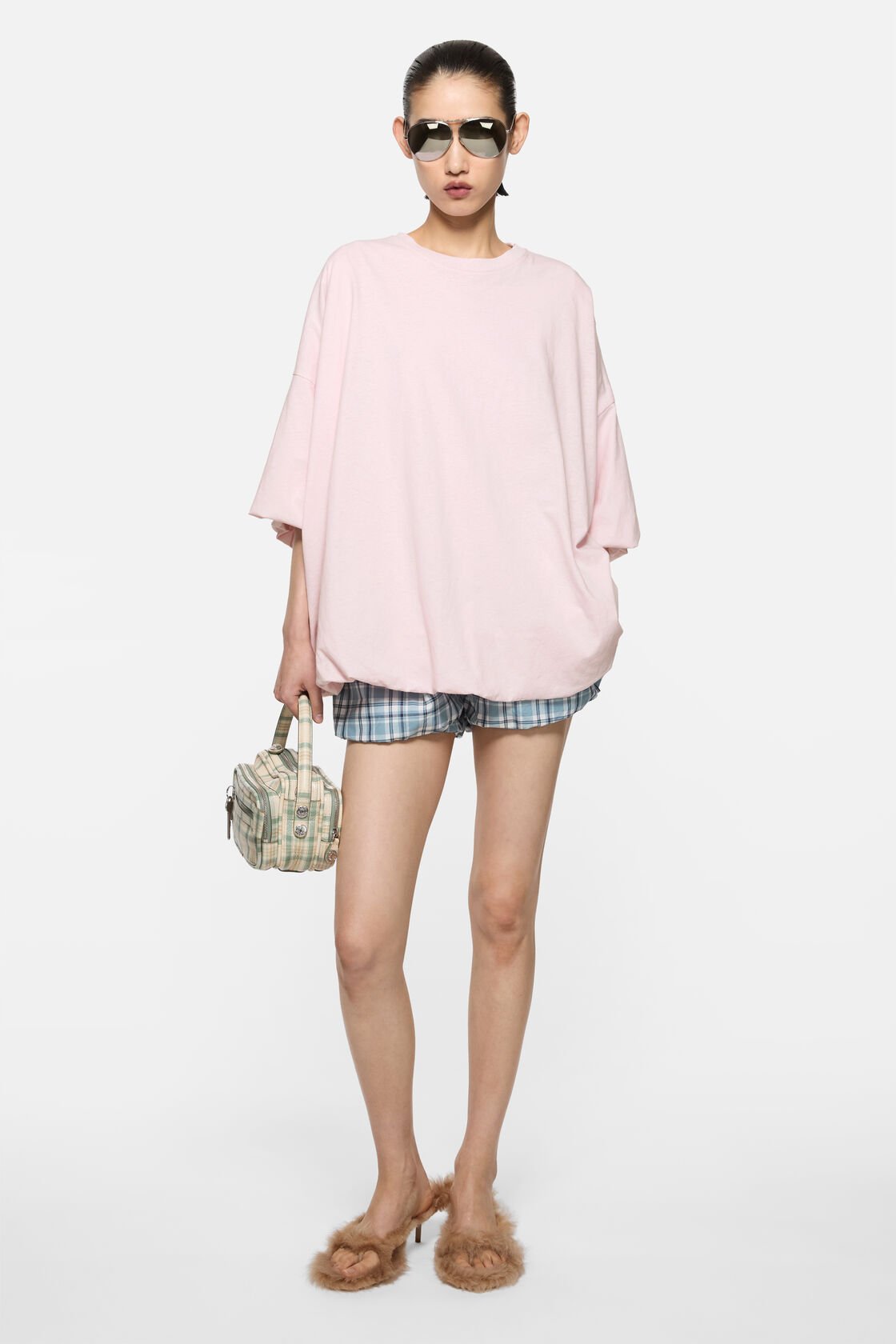
If Acne Studios has a recognisable signature, it lies not in a single garment but in a set of recurring gestures. Sleeves that extend past the wrist. Trousers that break at an unexpected point on the ankle. Colours that sit just left of where one expects — a pink that reads as grey in certain light, a blue that verges on medical scrub. Johansson has described his approach as 'cooking without a recipe', which sounds vague until one examines the garments themselves. They resist system. A blazer from one season will not necessarily relate to a blazer from the next, except in the way both refuse to behave as blazers typically do.
The house's most commercially successful piece remains the Canada scarf, introduced in 2010. Oversized, fringed, woven from a wool-blend that holds its shape without stiffness. It became, almost immediately, a signifier — worn by a particular subset of the art-and-media class in London, New York, Berlin. Johansson has expressed ambivalence about its ubiquity. In a 2016 conversation with System magazine, he noted that the scarf's success had allowed Acne Studios to take risks elsewhere, which he considered a fair trade. One suspects he would prefer to be known for the tailoring.
The tailoring, in fact, deserves its own consideration. Acne Studios produces suiting that looks, at first glance, unremarkable. The cuts are soft, the fabrics mid-weight, the colours drawn from a narrow band of the spectrum. But the fit is peculiar. Trousers sit higher than contemporary norms dictate, often with a pleated front and no belt loops. Jackets have a slight forward pitch to the shoulder, as though the wearer is leaning into a conversation. These are small adjustments, but they accumulate. The result is suiting that photographs well and wears oddly, which may be the point.
The Apparatus
In 2015, the investment firm Öresund AB acquired a stake in Acne Studios, valuing the company at approximately €100 million. Johansson retained creative control and a significant ownership share, but the infusion of capital brought structural changes. The company hired a chief executive, expanded its wholesale network, invested in digital infrastructure. Johansson, by most accounts, welcomed the shift. He had spent nearly two decades managing both design and operations; the chance to focus solely on the former was, he suggested in a Business of Fashion interview, long overdue.
The collections since 2015 have grown more consistent, though whether that represents maturation or caution is open to interpretation. The house now operates on a clear seasonal rhythm, with pre-collections and capsule releases filling the gaps. Collaborations have increased — with Fjällräven, with Mulberry, with a rotating cast of artists and photographers. These partnerships generate attention and revenue, but they also dilute the singularity that once defined Acne Studios. Johansson seems aware of this tension. In a rare public appearance at the Hyères Festival in 2019, he advised young designers to 'protect the part of the work that doesn't make sense to anyone else'. Whether he still manages that himself is unclear.
What Remains
Johansson turned fifty-three this year. He continues to design every Acne Studios collection, continues to attend fittings, continues to adjust shoulder seams by hand. The house employs a design team, but final decisions route through him. This model — singular vision, supported by infrastructure — has produced nearly thirty years of work that feels, if not unified, then at least authored. One can open an archive and recognise an Acne Studios garment from 2003 as easily as one from 2023, even if the two share no obvious formal qualities.
The question now is succession. Johansson has not named a deputy, has not publicly discussed an exit plan. Acne Studios remains, in structure and in spirit, an extension of his particular sensibility. Whether that sensibility can be codified, taught, or transferred is doubtful. More likely, the house will eventually face the choice most designer-led brands face: evolve into something else, or calcify into archive. For now, Johansson continues to pull blazers from the rack, one after another, searching for the version that almost works.