## The Weavers Who Didn't Want Their Names on the Bag
The Weavers Who Didn't Want Their Names on the Bag
Michele Taddei and Renzo Zengiaro opened a leather workshop in Vicenza in 1966. They called it Bottega Veneta — the Venetian atelier — and spent the next fifteen years refusing to put a logo on anything they made. This was not a branding strategy. It was craft snobbery, the kind that assumes good work announces itself without a brass plate.
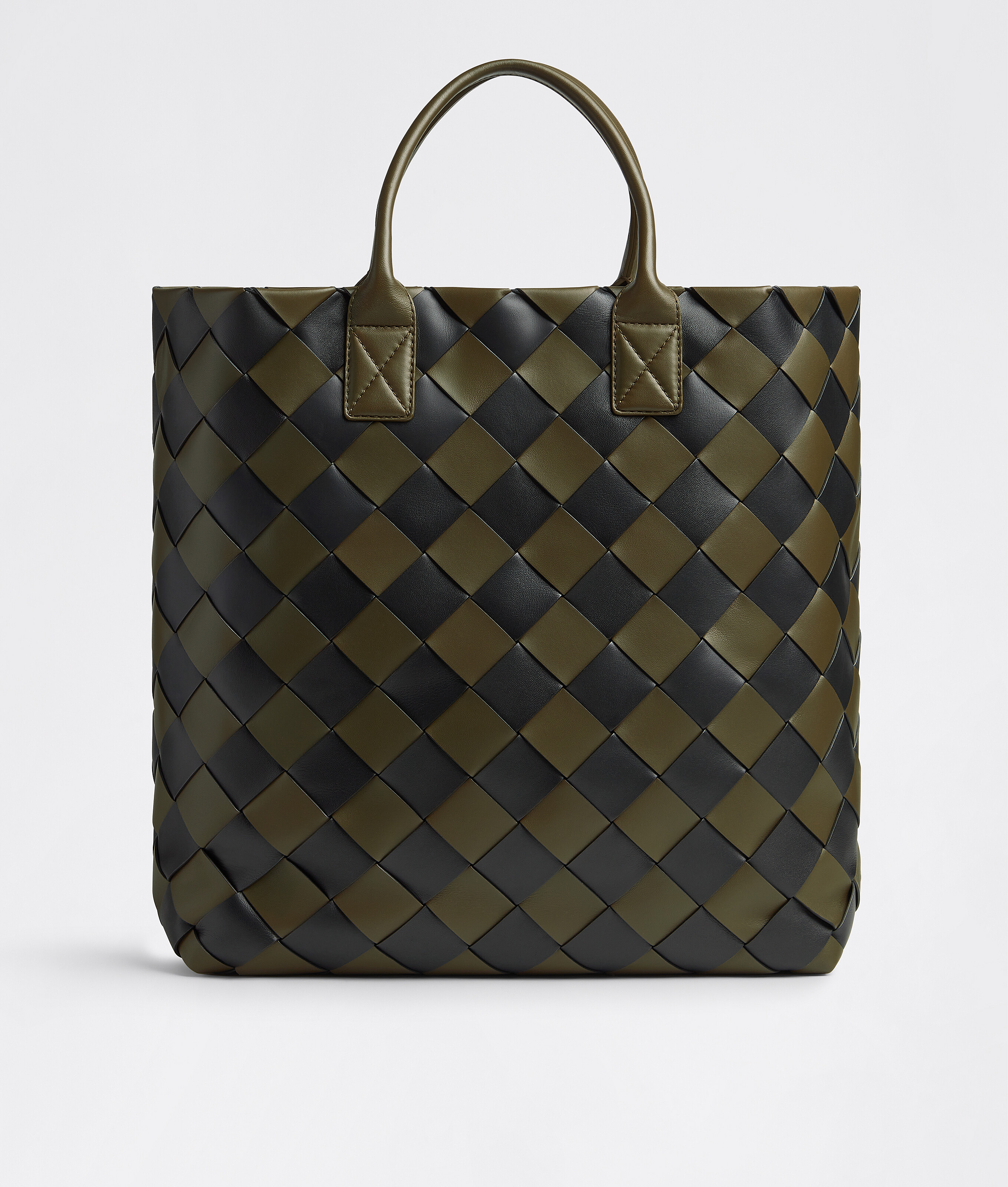
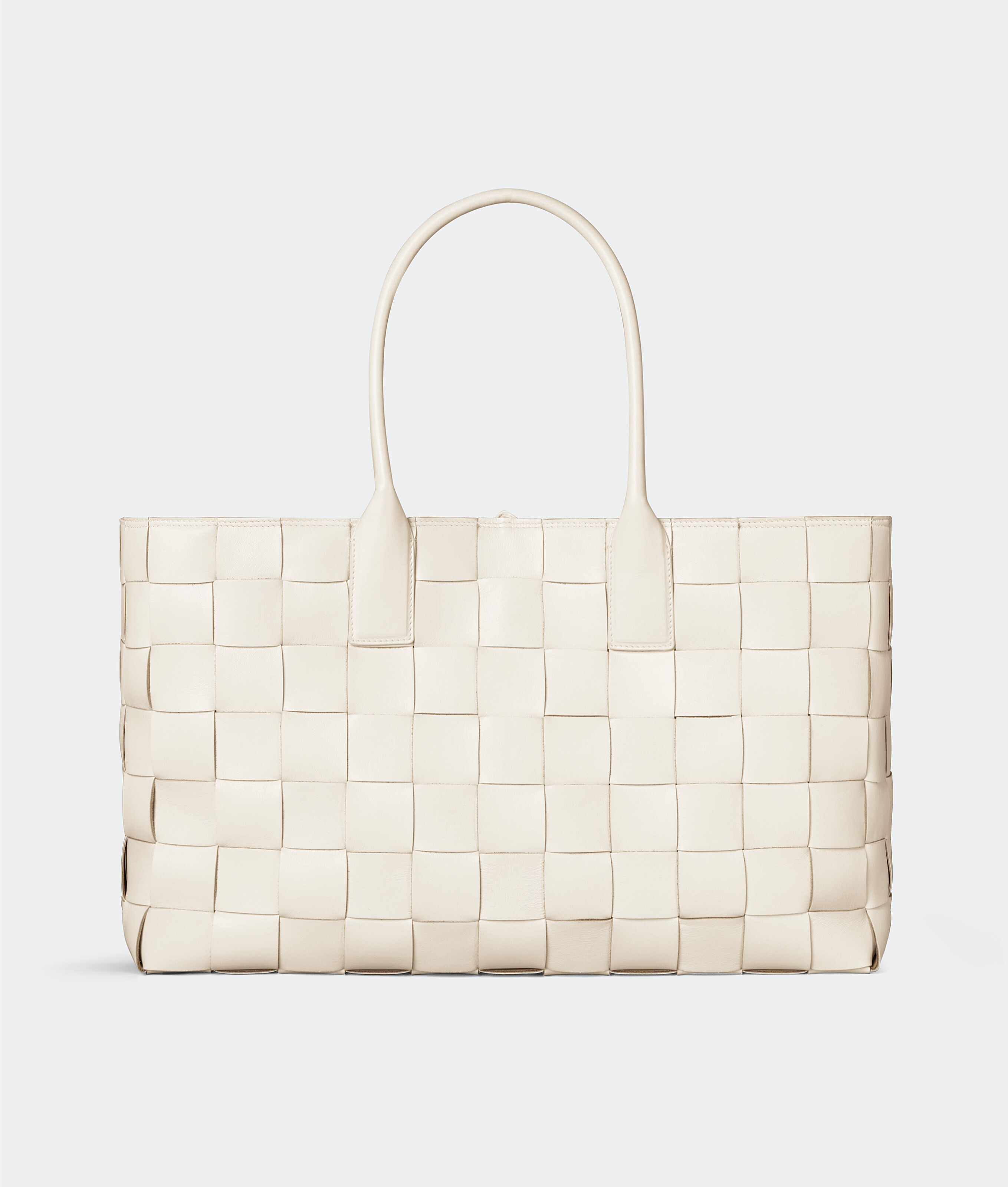
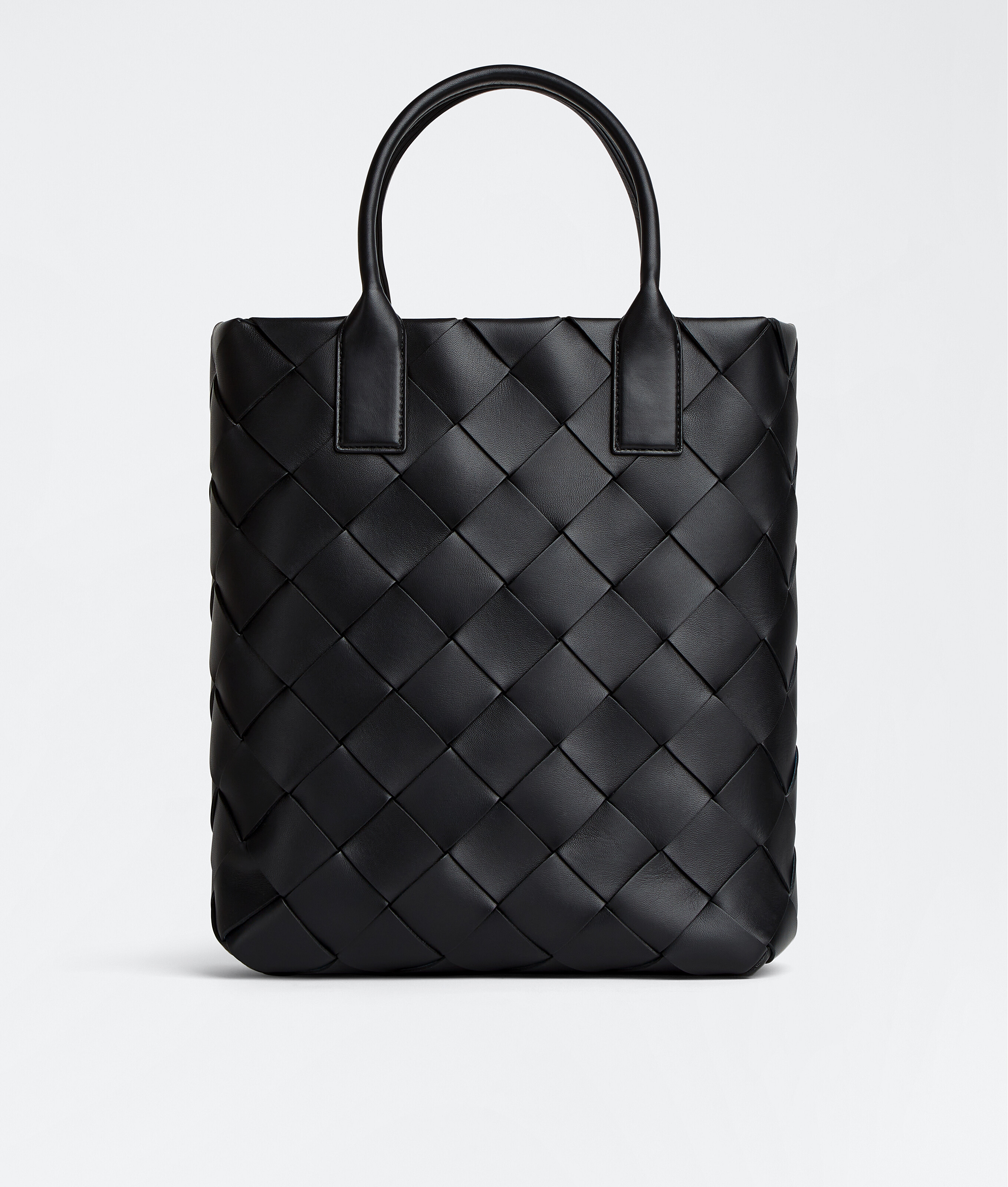
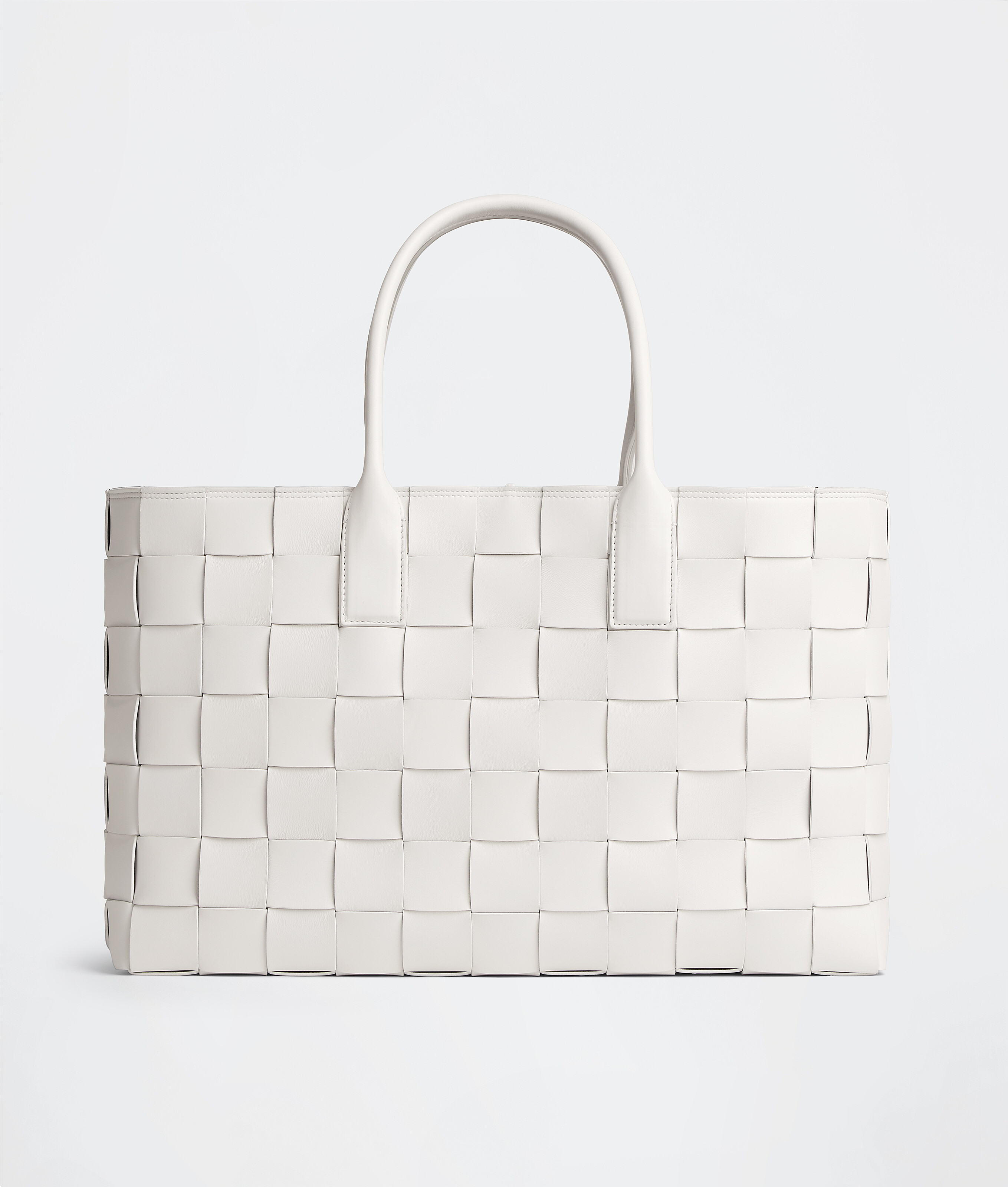
The intrecciato weave came early. Thin strips of calf or lamb, woven tight enough to hold structure but loose enough to drape. The technique had been around for centuries in the Veneto, used mostly for baskets and farm equipment. Taddei and Zengiaro saw it as a way to make leather both supple and durable without topstitching, which they considered inelegant. By 1972, the house was producing soft shoulder bags and clutches that moved like fabric but aged like leather. They sold them through a handful of European boutiques, mostly to women who didn't want monograms.
The founding partners never courted press. They employed local artisans, paid them well, and kept production in the Veneto. When American department stores came calling in the late seventies, Bottega Veneta expanded quietly. The intrecciato became a signature by repetition, not by announcement. You recognised it because you'd seen it before, not because someone told you to.
Taddei left the business in the early eighties. Zengiaro stayed on until the house was sold to an investment group in 2001, then to Gucci Group — now Kering — in 2001. By then, the founders' names had already faded from the narrative. What remained was the weave, the no-logo stance, and a reputation for quality that had calcified into something close to myth.
What Tomas Maier Inherited
When Tomas Maier arrived as creative director in 2001, Bottega Veneta was doing roughly €40 million in annual revenue. The intrecciato was still there, but so was a diffusion line, licensing deals, and a general sense that the house had drifted from whatever it once meant. Maier, a German-born designer who'd worked at Hermès and Sonia Rykiel, spent his first year killing product. He cancelled the diffusion line, pulled back from wholesale, and focused on a single question: what does this house actually do well?
The answer was leather. Not leather as a material category, but leather as a discipline. Maier reintroduced the intrecciato as the house signature, not by making it louder but by making it better. He commissioned new weaves — tighter, looser, in different widths — and applied them to bags that had weight in the hand. The Veneta hobo launched in 2005. The Cabat tote, which required eight hours of weaving per bag, followed in 2006. Both were expensive, both sold.
Maier also understood that Bottega Veneta's no-logo stance was not a rejection of branding but a different kind of branding. "When your own initials are enough," he told The New York Times in 2004, describing the house's quiet-luxury pitch. It worked because it flattered the customer. You didn't need to announce what you were carrying. You knew, and that was sufficient.
By 2018, Bottega Veneta was generating over €1 billion in revenue. Maier had built a house style that was coherent, profitable, and widely copied. Then he left, and the question became whether the house he'd built could survive without him.
What Daniel Lee Dismantled
Daniel Lee arrived in 2018 with a brief to make Bottega Veneta younger, louder, and more relevant to a generation that had grown up on Instagram. He was thirty-two, had worked under Phoebe Philo at Celine, and had no interest in preserving what Maier had done.
Lee's first collection for Spring 2019 introduced the Pouch, a clutch so soft it looked half-deflated. It was the opposite of structure, the opposite of the rigid Cabat. It also became the house's best-selling bag within six months. Lee followed it with square-toed boots, padded sandals, and ready-to-wear that leaned into volume and colour. He kept the intrecciato but treated it as one tool among many, not the defining feature.
The house's Instagram account disappeared in early 2021. Lee called it "a digital detox," though it looked more like a provocation. Bottega Veneta's revenue continued to climb. By the time Lee left in November 2021, he'd doubled the business and made the house a fixture in fashion week coverage. He'd also made it unrecognisable to anyone who remembered the Taddei-Zengiaro years.
What Matthieu Blazy Kept
Matthieu Blazy, who succeeded Lee, had been his right hand. He kept the Pouch, kept the square toe, kept the colour. But he also reintroduced a kind of rigour that Lee's work had sometimes lacked. Blazy's first solo collection, for Fall 2022, included leather jeans that looked like denim, denim that looked like leather, and bags made from scraps of previous seasons' production. The intrecciato appeared on shirting, on outerwear, on shoes. It was no longer a logo substitute. It was a technique, deployed where it made sense.
Blazy has also leaned into the house's Veneto roots. He shoots campaigns in Italian interiors, references regional craft traditions, and has spoken in interviews about the importance of the atelier. This is not a return to Maier's quiet luxury. It's an acknowledgment that Bottega Veneta's founding ethos — quality without announcement — still has currency, provided you don't mistake it for invisibility.
The house now does over €1.6 billion annually. It has boutiques in thirty countries, a thriving e-commerce business, and a customer base that spans three generations. What it doesn't have is a clear line back to Taddei and Zengiaro. The two men who started Bottega Veneta are footnotes in its history, their names mentioned in anniversary press releases and little else.
What Remains
The intrecciato remains. So does the Veneto production, though the house now operates at a scale the founders never imagined. The no-logo stance remains, though it's now a marketing position as much as a design principle. What's gone is the modesty, the sense that good work doesn't need to be loud. Bottega Veneta is loud now, by necessity. The fashion system doesn't reward discretion.
There's a version of this story where the house's evolution is a betrayal of its founding vision. There's another version where it's proof that craft can survive commerce, provided the craft is good enough. Both are true. Taddei and Zengiaro built a house that could outlast them because they built it on a technique, not a personality. The weave is still there. Everything else is negotiable.