## The White Lab Coat
The White Lab Coat
Martin Margiela never took a bow. From his first show in 1989 until his departure in 2009, the designer remained backstage while models walked out in garments that had been deconstructed, rebuilt, or left deliberately unfinished. The white lab coats worn by his atelier team became as recognisable as the four stitches that marked each hem — a house signature that replaced a logo the designer refused to put on anything visible.
This was not modesty. It was method. Margiela had trained at Antwerp's Royal Academy under Linda Loppa, graduated in 1980, and spent six years working for Jean Paul Gaultier before starting his own house with Jenny Meirens, a former public relations director who became his business partner. The two set up in a former children's school in Paris's 11th arrondissement. There were no marble floors. The windows were high and the rooms were cold, which suited the work. Margiela was not interested in luxury as it had been defined by the houses on Avenue Montaigne. He was interested in garments as objects, in their construction and their lifespan, in what happened to cloth after it had been worn and discarded.
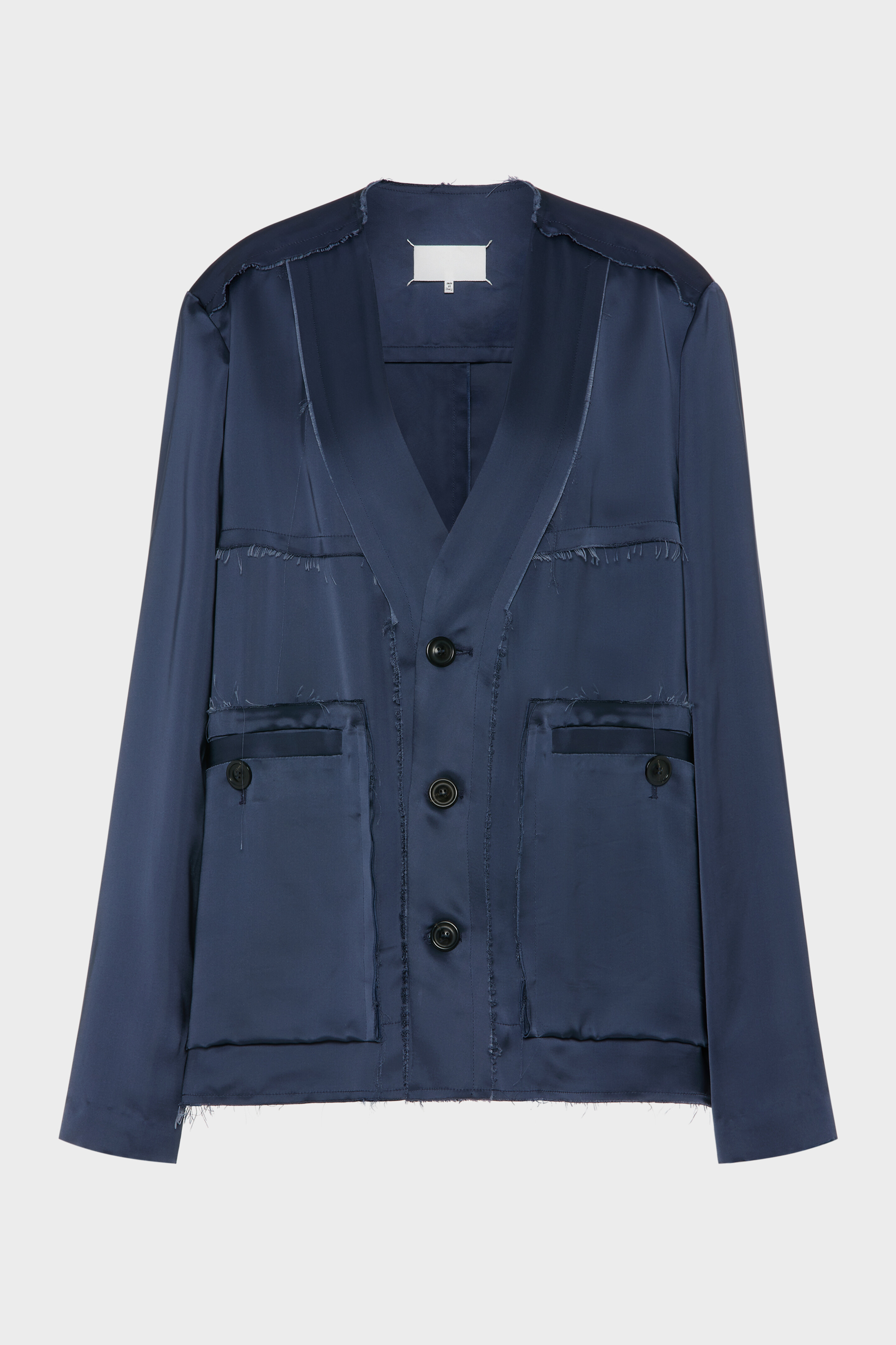
His first collection, shown in a disused playground in October 1989, featured coats made from military surplus, waistcoats constructed from vintage gloves, and trousers with exposed linings that read like anatomical diagrams. The invitation was a photocopy. The front row sat on packing crates. Reviews were mixed, but the message was clear: this was fashion that refused to seduce in the traditional sense. It asked you to look at how a sleeve was set, how a shoulder was padded, how a seam could be left raw and still hold its shape.
The Tabi Boot and the Blank Label
Margiela's first signature piece arrived in his second collection. The Tabi boot, inspired by the split-toe socks worn by Japanese labourers, had a cloven hoof silhouette that looked medieval and vaguely unsettling. It was also perfectly balanced. The heel was low, the leather was soft, and the fit was precise. It became the house's most recognisable product, reissued every season in different materials and heights, always with the same divided toe.
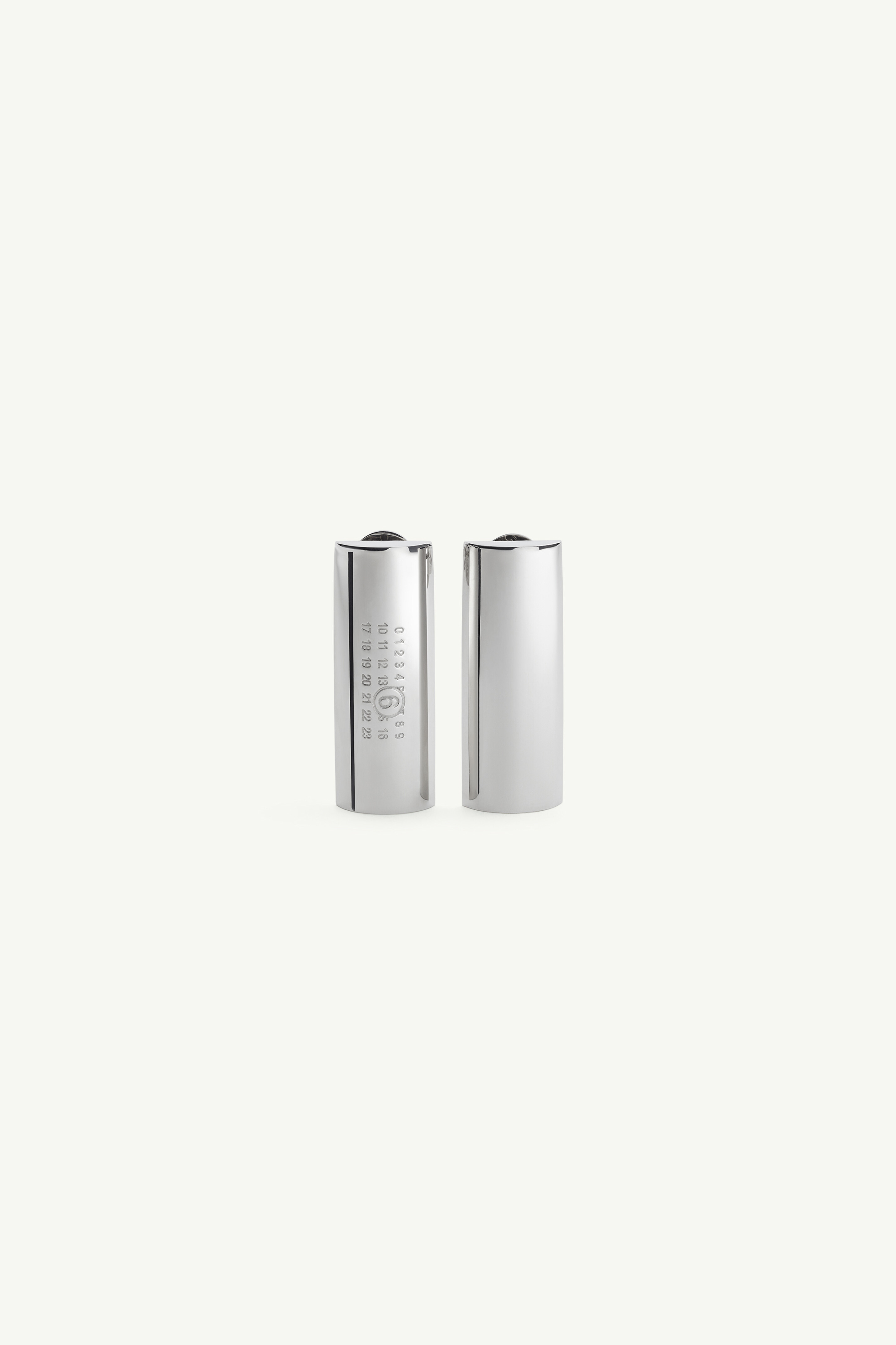
The second signature was absence. Margiela removed his name from the garments and replaced it with four white stitches on a blank cotton label, sewn into the back of every piece. Each line of clothing was assigned a number: 1 for womenswear, 10 for menswear, 6 for basics, 0 for artisanal one-offs. The system was clinical, almost archival, as if the clothes were specimens in a study rather than products in a market.
This approach extended to the studio. Margiela rarely gave interviews. When he did, he used 'we' instead of 'I', attributing every decision to the collective effort of the atelier. Press releases were unsigned. Photographs of the designer were forbidden. The effect was to shift attention entirely onto the garments, which were themselves often anonymous — reconstructed from vintage stock, overdyed to erase their original identity, or built from materials that had no place in a couture house. A waistcoat made from broken plates. A dress constructed from a wig. A jacket lined with the silk linings of other jackets, stitched together like a patchwork of discarded elegance.
The Hermès Years
In 1997, Margiela accepted a position that seemed antithetical to everything his house represented: creative director of womenswear at Hermès. The appointment surprised the industry. Hermès was a leather goods house built on equestrian heritage, meticulous craftsmanship, and a customer base that valued discretion over deconstruction. Margiela was known for garments that looked unfinished, for runway shows staged in empty Metro stations, for rejecting the commercial logic that sustained most fashion houses.
But the fit was better than it appeared. Hermès understood craft. Margiela understood how to make a sleeve. For six years, he delivered collections that respected the house codes — cashmere, silk twill, saddle stitching — while introducing his own vocabulary of proportion and construction. The silhouettes were clean, the tailoring was precise, and the clothes sold. He left in 2003, returning full attention to his own maison, which by then had expanded into menswear, fragrances, and a diffusion line called MM6.
The Departure
Margiela left his house in 2009. The announcement was brief, issued by the maison rather than the designer, and it confirmed what many had suspected: he had already been absent for some time. The atelier continued without him, operating under the same principles of anonymity and collective authorship. The white stitches remained. The Tabi boot remained. The question was whether the method could survive without the mind that had invented it.
For five years, the design team worked in his absence, producing collections that referenced the archive without adding much to it. Then, in 2014, Diesel's parent company appointed John Galliano as creative director. The choice was controversial. Galliano had been dismissed from Dior in 2011 following a public incident, and his rehabilitation at Margiela was seen by some as cynical, by others as inspired. What was undeniable was that Galliano understood spectacle, and Margiela had always been about withholding it.
What Remains
Galliano's Margiela is not Margiela's Margiela. The shows are theatrical, the garments are ornate, and the designer takes a bow. But the house codes remain legible. The Tabi boot still opens every show. The blank label still carries four white stitches. The atelier still wears white coats. Galliano has described his work as a dialogue with the archive, a way of continuing the conversation Margiela started without pretending to be him.
Whether this constitutes preservation or transformation depends on what you think a fashion house is. If it is the vision of a single designer, then Maison Margiela ended in 2009. If it is a set of principles that can be interpreted by others, then it continues, albeit in a form its founder might not recognise. The tension is productive. Galliano's collections are more commercially successful than Margiela's ever were, which means the house survives. But survival is not the same as fidelity.
The original maison was built on refusal. Refusal to be photographed, refusal to logo the garments, refusal to treat fashion as a cult of personality. What remains is the infrastructure of that refusal — the stitches, the boots, the numbered lines — but the refusal itself has softened. You can now buy a Margiela sweatshirt with the logo printed across the chest, which would have been unthinkable in 1995. You can attend a Margiela show and watch the creative director take a bow, which would have been impossible in 2005.
Martin Margiela has not commented publicly on any of this. He left fashion entirely and now works as a visual artist, exhibiting under his own name, which is its own kind of irony. The house he built on anonymity continues without him, louder and more visible than it ever was under his direction. Whether that represents betrayal or evolution is a question the garments cannot answer. They can only show you how the seams were finished, and whether the shoulder still holds its line.