Thomas Burberry opened his first shop in Basingstoke in 1856
Thomas Burberry opened his first shop in Basingstoke in 1856. He was twenty-one. The town, an hour southwest of London, was not a fashion capital. It was, however, close enough to the countryside that Burberry understood what his customers needed: cloth that could take weather seriously.
He apprenticed as a draper. By the time he set up on his own, he had spent enough hours handling fabric to know that most of what passed for waterproof clothing was either too stiff to move in or too heavy to wear for more than an hour. The solution, he decided, was not to coat the cloth but to change it at the fibre level.
In 1879, Burberry patented gabardine. The process was straightforward: tightly woven worsted or cotton, treated before weaving so that the fibres themselves repelled water. The result was a cloth that breathed, moved, and kept you dry without the weight or crackle of rubberised canvas. It was not revolutionary in concept — waterproofing had been attempted before — but Burberry's version worked, and it worked consistently.
The British military noticed. By the turn of the century, officers heading to the Boer War were ordering Burberry coats. The Tielocken, an early design, featured a single strap across the chest and a belt that could be tightened with one hand. When the First World War began, the design evolved into what would become the trench coat: a double-breasted gabardine overcoat with epaulettes, D-rings, a storm flap, and a belt. It was standard issue for officers. More than half a million were made.
Thomas Burberry did not invent the trench coat in isolation. The design borrowed from military precedent, and the name itself came from the trenches where it was worn. But Burberry refined it, patented the cloth, and built a business around it. By 1914, the company had stores in Paris, New York, and Buenos Aires. The check lining — camel, red, black, and white — appeared in 1924, initially as a removable liner. It became the house signature by accident, or at least by incremental adoption.
Burberry himself stepped back from day-to-day operations in the early 1900s. He died in 1926, by which point the company had long outgrown Basingstoke. His sons took over. The business continued, selling raincoats and gabardine suits to a clientele that valued function over flash. For most of the twentieth century, Burberry was what it had always been: a manufacturer of well-made, weather-resistant clothing with a reputation for durability.
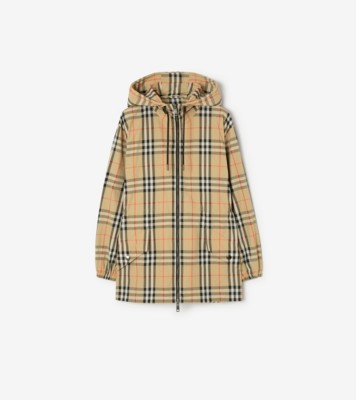
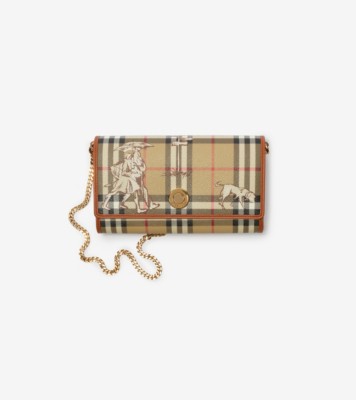
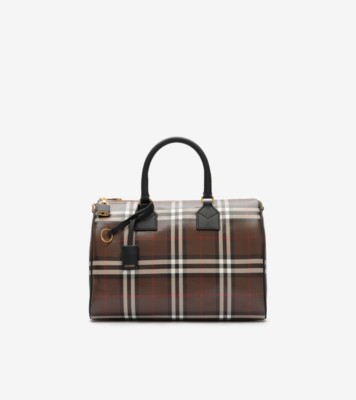
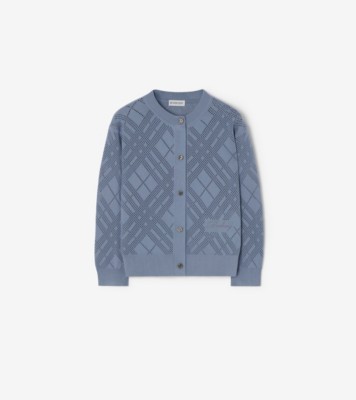
That changed in the late 1990s. The check, once a discreet lining, became an exterior print. It appeared on everything: bags, scarves, bikinis, baseball caps. The brand licensed its name widely. At one point, you could buy a Burberry-branded dog leash. The strategy worked commercially — revenue grew — but it eroded the house's positioning. By the early 2000s, the check had become shorthand for a particular kind of British aspiration, often worn by people who had no interest in gabardine or the history behind it.
The company has spent the past two decades trying to recalibrate. Christopher Bailey, who joined as design director in 2001 and later became chief creative officer, leaned into the archive. He reissued the trench in its original proportions, brought back the Prorsum label (Latin for 'forwards', Burberry's original motto), and staged shows that referenced the brand's military and exploration heritage. The check receded. The focus shifted back to outerwear.
Bailey left in 2018. Riccardo Tisci arrived the same year and pushed the house in a different direction: streetwear-inflected, logo-heavy, younger. The monogram, a TB interlock designed by Peter Saville, appeared on hoodies and nylon jackets. The trench remained, but it shared the runway with puffer coats and oversized anoraks. Tisci's Burberry was less about gabardine and more about cultural positioning.
Daniel Lee took over in 2022. His approach has been quieter. The shows are smaller. The clothes reference the house's utilitarian roots — field jackets, car coats, waxed cotton — but the silhouettes are cleaner, the palette more restrained. Lee worked at Bottega Veneta before Burberry, and the influence shows: an emphasis on material, construction, and proportion over overt branding. The check is still there, but it is no longer the lead story.
What remains of Thomas Burberry's original vision is harder to quantify. The gabardine is still made, though most of what Burberry sells now is cotton or nylon. The trench coat is still in the collection, still cut in roughly the same way it was in 1914, though the customer base has shifted. It is no longer standard issue for officers or explorers. It is, instead, a recognisable silhouette with enough history to justify its price.
Burberry is not a small house. It employs thousands of people, operates hundreds of stores, and generates over £2 billion in annual revenue. It is publicly traded. It answers to shareholders. The decisions it makes are not driven by a single founder's sense of what good cloth should do, but by quarterly earnings and market positioning. That is not a criticism. It is simply the reality of a brand that has survived for more than a century and a half.
The question is whether survival requires continuity or reinvention. Burberry has tried both. It has leaned into its archive and then moved away from it. It has courted streetwear audiences and then pulled back toward tailoring. It has made the check ubiquitous and then tried to make it rare again. None of these strategies are inherently wrong, but they do suggest a brand still trying to decide what it wants to be.
Thomas Burberry knew what he was making: coats that worked. The business he built was not about aspiration or cultural relevance. It was about solving a problem — how to stay dry without being weighed down — and doing it well enough that people kept coming back. That clarity is harder to maintain when a brand becomes a conglomerate, when it has to appeal to multiple markets and demographics, when it has to justify its existence beyond the utility of the product.
Burberry still makes good coats. The trench, in particular, is one of the few garments you can buy today that is functionally identical to what was being made a hundred years ago. The gabardine still breathes. The belt still works. The proportions still make sense. Whether that is enough to sustain a global brand in 2025 is a different question, and one that each successive creative director has had to answer.
For now, the house continues. Daniel Lee's Burberry is quieter than Tisci's, more focused than Bailey's later years, less overtly commercial than the check-saturated era of the early 2000s. It is still finding its footing. But the trench remains, and the gabardine remains, and somewhere in that continuity is the trace of a twenty-one-year-old draper in Basingstoke who thought he could make a better coat.