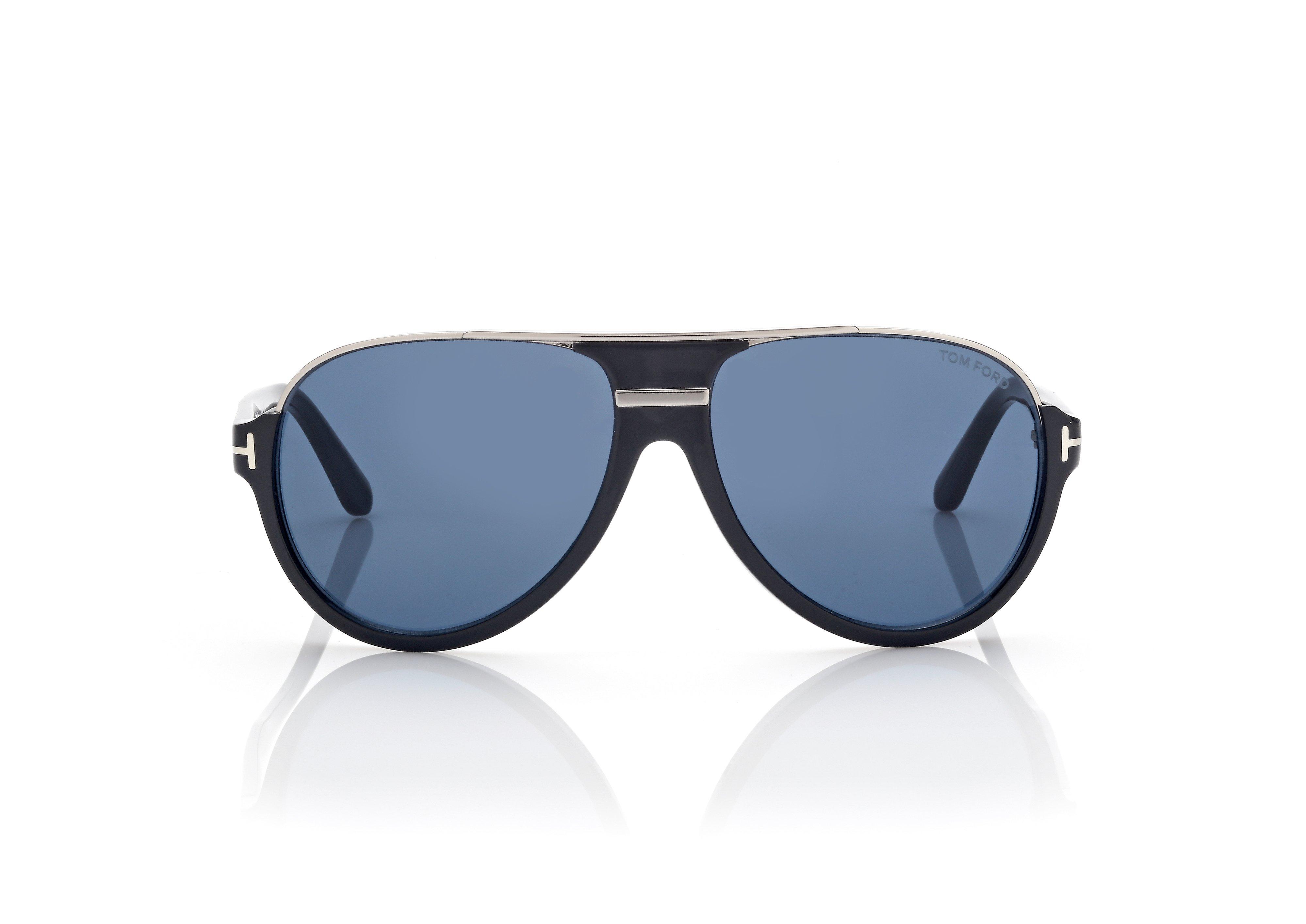
Tom Ford : les artisans qui font le travail
The fitting room at Tom Ford's Madison Avenue flagship is silent except for the sound of a tailor's chalk scraping against wool. The client stands still. The tailor — a man in his mid-fifties, trained in Naples, name withheld per house policy — adjusts the shoulder of a suit jacket by three millimetres. Ford himself is not in the room. He has not been for some time.
This is not an exposé. It is simply the way luxury operates at scale. One designs. Others execute. The question is whether the house acknowledges the gap, or pretends it does not exist.
Tom Ford, the brand, employs roughly four hundred people across ready-to-wear, beauty, and eyewear. Tom Ford, the man, stepped back from day-to-day design in 2023 following the Estée Lauder acquisition. What remains is a machine calibrated to his aesthetic — sharp lapels, plunging necklines, lacquered surfaces — and the artisans who maintain it.
The Milanese Atelier
A significant portion of Tom Ford's tailoring is produced in a Lombardy workshop that also services two other American labels. The facility employs sixty-three tailors, most of them trained at Instituto Carlo Secoli or through apprenticeships dating to the nineteen-eighties. They work from patterns developed in-house, refined over fifteen years to reflect Ford's preference for a high armhole and a suppressed waist.
The head cutter, who has been with the atelier since 2009, describes the house's approach as "American proportion, Italian hand." Shoulder pads are thinner than those used in traditional Neapolitan tailoring. Canvassing is full but lighter. The result is a jacket that photographs well — essential for a brand built on image — while maintaining enough structure to hold its line on the body.
Each suit jacket passes through eleven pairs of hands. Buttonholes are sewn by machine, not by hand, a concession to volume that Ford made early. The atelier produces roughly twelve thousand jackets a year for the mainline collection. That is not bespoke. It is not even made-to-measure. It is industrial tailoring executed with enough care that the seams lie flat.
The Leather Goods Question
Tom Ford handbags occupy a peculiar position. They are not Hermès. They do not pretend to be. What they offer instead is a specific vocabulary — gold-plated chain, quilted calfskin, a turn-lock embossed with the designer's initials — rendered in materials sourced primarily from tanneries in Arzignano and Tuscany.
The bags are assembled in a Veneto facility that also produces for Bottega Veneta and Loewe under contract. Labour is skilled but not exclusive. A medium-sized shoulder bag — the Jennifer, say, or the Natalia — requires approximately four hours of work from start to finish. That includes cutting, stitching, edge-painting, and hardware attachment. The facility runs two shifts. Output is high.
Does this diminish the product? Not necessarily. The leather is full-grain. The stitching is tight. The hardware, supplied by a Milanese foundry, is plated rather than solid, but it holds its finish. What one pays for, in the end, is not rarity but consistency. A Tom Ford bag purchased in 2015 looks nearly identical to one purchased last season. For some customers, that is precisely the point.
The Fragrance Division
Fragrance is where the artisan model becomes more legible. Tom Ford Beauty works with Givaudan and IFF, the two largest fragrance houses in the world. The perfumers are named in press materials — Olivier Gillotin for Ombré Leather, Rodrigo Flores-Roux for Noir de Noir — though their contributions are filtered through Ford's own direction and the brand's commercial imperatives.
Flores-Roux, in a 2018 interview with Fragrantica, described the process as collaborative but constrained. Ford knows what he wants. The perfumer's role is to translate that vision into a formula that can be produced at scale and sold at department-store counters. The Private Blend line, positioned as the more artisanal offering, uses higher concentrations of natural materials. Even so, the compositions are designed for repeatability. A bottle of Tobacco Vanille purchased in Tokyo should smell identical to one purchased in London.
The packaging, however, is where the hand becomes visible. Bottles are filled and labelled at a facility in Chartres. Caps are machined aluminium, anodised and hand-polished. Boxes are assembled in Normandy, with corners mitred and glued rather than folded. It is not haute parfumerie in the Guerlain sense, but it is several steps above the standard prestige offering.
The Ready-to-Wear Reality
Tom Ford's womenswear is produced across three facilities: one in Italy for tailoring and outerwear, one in Romania for dresses and separates, and one in China for knitwear. This is standard practice for a brand at this price point. What distinguishes the house is the degree of finish expected at each tier.
A bias-cut silk gown — the kind that appears on red carpets with some regularity — is cut in Italy and sewn in Romania by a team that has worked with the brand since its launch. The silk is supplied by Taroni, a Como mill that also services Dior and Chanel. The garment is constructed with French seams and hand-finished hems. It retails for approximately $4,500. A comparable piece from a French maison might cost twice that, but the labour input is not dramatically different.
The question, then, is what one is paying for. Part of it is material. Part of it is construction. A significant portion, however, is the name on the label and the cultural capital it carries. Ford understood this early. He built a brand on the premise that desire could be designed, not just discovered.
What Comes Next
With Ford's departure from active design, the house has appointed a series of creative leads for specific categories. Womenswear is overseen by a former Gucci designer whose name the brand has not widely publicised. Menswear continues under the direction of a team Ford assembled in 2017. The beauty division operates semi-autonomously, guided by market data as much as creative vision.
This is not unusual. Most designer brands outlive their founders by becoming systems. What makes Tom Ford interesting is how explicitly the brand was always a system, even when the man himself was present. The aesthetic was codified early — sex, polish, a certain cinematic glamour — and the artisans were hired to execute it with precision.
One can argue that this is cynical. One can also argue that it is honest. The fashion industry runs on the labour of people whose names we do not know. Tom Ford, at least, built a business model that did not require pretending otherwise. The tailor in the Madison Avenue fitting room adjusts the shoulder. The jacket is perfect, or near enough. The client will never know his name. That, too, is part of the design.