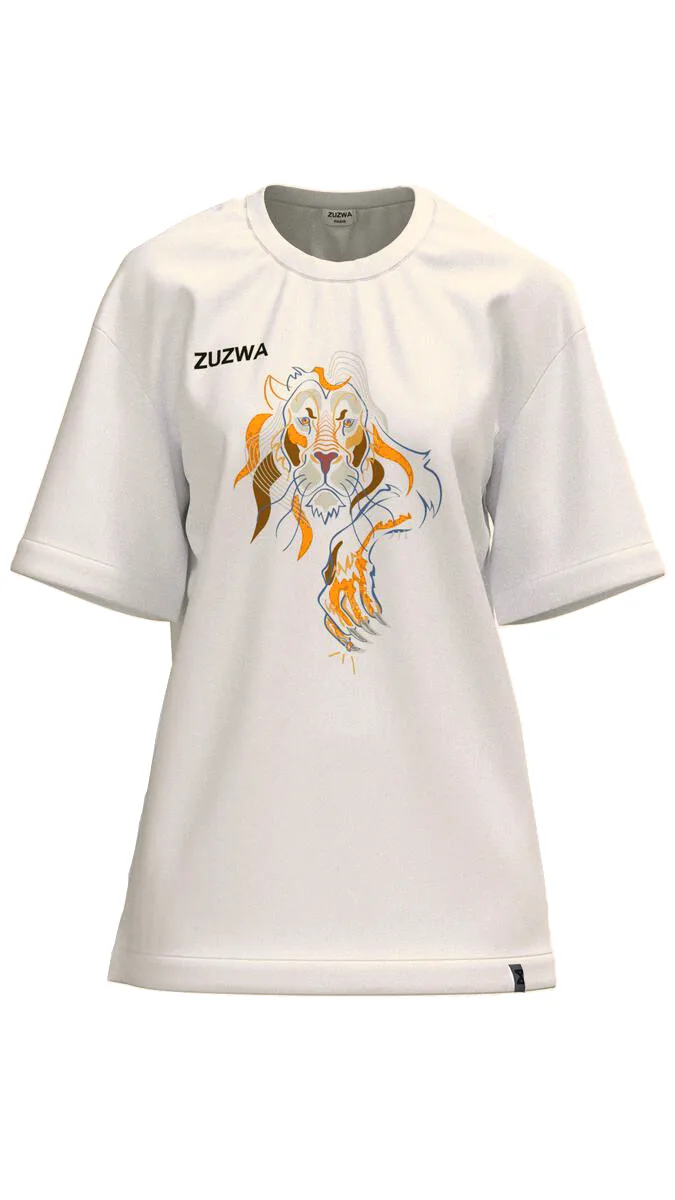
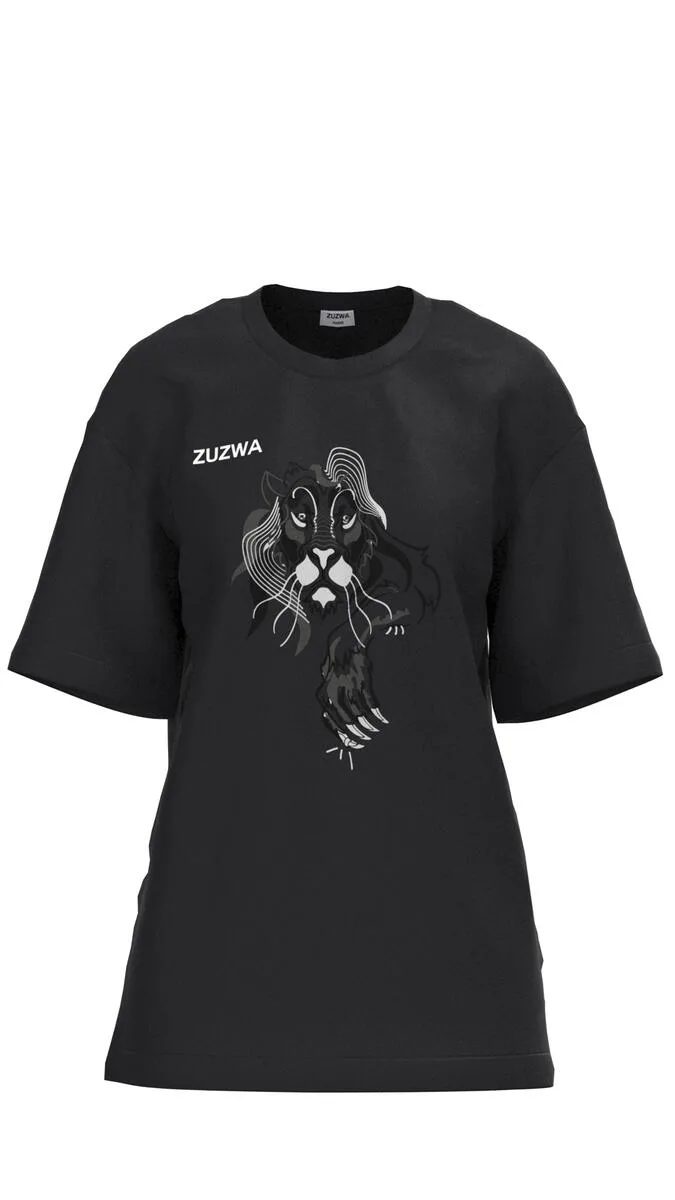
ZUZWA : les artisans qui font le travail
The atelier sits above a cobbled courtyard in Marrakech's Gueliz quarter, and on most mornings you can hear the treadle machines before you reach the stairs. Zuzanna Skalska works at a cutting table near the window, pinning a sleeve head into a jacket block while two seamstresses adjust the fall of a linen coat on a dress form behind her. There are no mood boards. The walls hold bolts of cloth—indigo-dyed cotton from Fez, heavyweight linen from Belgium, deadstock wool gabardine she bought in Paris three years ago and still hasn't touched. ZUZWA does not operate on the fashion calendar. It operates on the speed of hands.
Skalska trained at Central Saint Martins, graduated in 2014, and spent the next four years doing what most graduates do: freelance pattern-cutting, a stint at a Parisian atelier whose name she won't mention, six months assisting on a Dries Van Noten collection. She returned to Poland in 2018 with no plan except to stop making clothes for people who didn't wear them. ZUZWA launched the following spring with eleven pieces, all cut and finished by a single tailor in Kraków. The collection sold out in two weeks, not because it was marketed well—it wasn't—but because each garment carried the maker's initials on the inside pocket.
That detail remains. Every ZUZWA piece is signed by the person who sewed it.
The signature isn't the statement
Skalska is careful to distinguish between transparency and theatre. She does not romanticise craft. She pays her makers well, lists their names on the website, and refuses to call them artisans when 'tailor' or 'seamstress' will do. "I'm not interested in fetishising the process," she said in a 2022 interview with Vestoj. "I'm interested in making sure the people who do the work are visible when the work is sold."
The signature system emerged from frustration. During her years in Paris, Skalska watched fittings where the head of atelier would present a jacket to the designer, who would present it to the client, and no one would mention the woman who'd spent sixteen hours setting the sleeves. She found it obscene. When she started ZUZWA, she told her first tailor—Jerzy Kowalski, sixty-three, trained in the old state workshops—that his name would go inside every jacket he made. He thought she was joking. She wasn't.
Kowalski still works with ZUZWA. So does Marta Lewandowska, who handles all the topstitching, and Aïcha Benjelloun, the Marrakech-based seamstress who finishes the linen pieces. Their names appear on the product pages alongside fabric weights, origin, and care instructions. It is not a gimmick. It is a contract.
The jacket that moved the house
ZUZWA's breakout piece was the Kowalski jacket, a single-breasted wool blazer with a soft shoulder, notch lapel, and a skirt that sat just below the hip. It debuted in the autumn 2020 collection and has been in continuous production ever since, cut from the same block, finished by the same hands. The jacket weighs 11oz, uses a horsehair canvas, and takes Kowalski roughly twelve hours to complete. It costs €840. That price has not changed.
What makes the Kowalski work is its refusal to perform. The shoulder has no padding, no roping, no attempt to sculpt the body into something it isn't. The lapel rolls naturally from the second button. The pockets are functional, the lining is plain cotton twill, and the whole thing behaves like a jacket that has been worn for five years the moment you put it on. Skalska describes it as "the opposite of a statement piece," which undersells it. The Kowalski is a statement. It just doesn't shout.
The jacket also forced ZUZWA to reckon with scale. By the end of 2020, the waiting list had grown to four months. Skalska could have outsourced production, found a factory in Portugal or Poland, kept the design and swapped the maker. She didn't. Instead, she brought on two additional tailors—both trained by Kowalski—and capped production at sixty jackets per season. The waiting list is now six months. She has no plans to shorten it.
Naming is not branding
The decision to name each piece after its maker is often misread as marketing. It isn't. Skalska does not use the names to sell romance or heritage. She uses them because they are accurate. The Kowalski jacket is made by Kowalski. The Lewandowska trousers are topstitched by Lewandowska. The Benjelloun dress is finished by Benjelloun. If a maker leaves, the name changes. If a new maker joins, a new name enters the catalogue.
This approach has limits. ZUZWA cannot scale the way a conventional brand scales. It cannot produce thousands of units, cannot chase trends, cannot offer next-day delivery. What it can do is maintain a direct line between the person who cuts the cloth and the person who wears it. That line is the product.
Skalska is blunt about the trade-offs. "We will never be a big house," she told Business of Fashion in 2023. "We will never be in department stores. That's fine. I'm not interested in being everywhere. I'm interested in being accountable."
What comes next
ZUZWA is expanding, but not in the way expansion is usually understood. Skalska is not opening new ateliers or launching diffusion lines. She is adding makers. This year, the house brought on two tailors in Kraków and one in Marrakech, all trained in traditional construction. The catalogue has grown accordingly: a new trench coat, a wide-leg trouser, a shirt-jacket in heavyweight linen. Each piece carries a name. Each name represents a set of hands.
The house has also begun commissioning cloth. Skalska now works with a mill in Biella to produce a 12oz wool twill exclusive to ZUZWA, and she has started conversations with a linen weaver in Lithuania about developing a fabric that can hold a crease without stiffening. These are long projects. The twill took two years to finalise. The linen may take longer. Skalska is not in a hurry.
There is talk of a Paris showroom, though Skalska is sceptical. "I don't know what we'd do there," she said in a recent podcast interview. "Stand around and explain that we're slow? People either understand what we're doing or they don't. A showroom won't change that."
What might change it is time. ZUZWA has been in operation for five years, long enough to prove that naming the maker is not a novelty but a structure. The house is not built on a designer's vision. It is built on a tailor's signature. That signature is the only brand ZUZWA has ever needed.