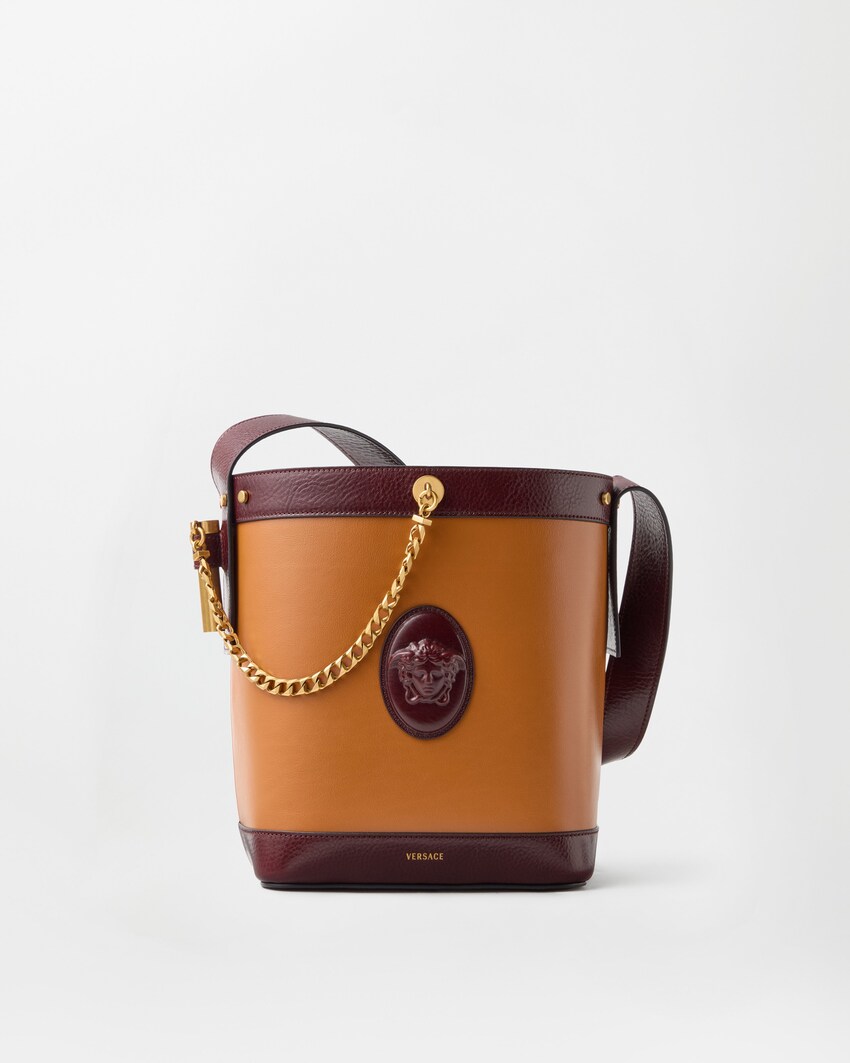
La silhouette Versace en 2026
Versace is building shoulders again — not the exaggerated linebacker pads of the Eighties, but something closer to a structured jacket with a soft interior. The line extends just past the natural shoulder, then drops clean. It's visible in the tailoring, yes, but also in the knitwear, the outerwear, even the evening pieces. This is architecture that doesn't shout.
The Spring 2026 collection made it explicit. Donatella Versace sent out blazers cut with a defined shoulder that tapered sharply through the waist, paired with mid-rise trousers in stretch wool. The silhouette read formal from ten feet away, but up close the fabrication was forgiving — a double-face wool that moved when the body moved. The shoulder stayed put. That's the work. A silk knit dress later in the show had the same construction: a set shoulder, then fluidity everywhere else. The contrast is the point.
This isn't new for Versace, but it is newly specific. The house spent the last three years leaning into a looser, more draped approach — think the unstructured blazers from Fall 2023, or the slip dressing that dominated Spring 2024. That work was about ease, about letting fabric pool and fall without much intervention. It worked. But by Resort 2026, shown in Los Angeles last November, the shoulder had returned. Not aggressively, but insistently. A black wool coat with a precise shoulder seam, worn over wide-leg trousers. A leather jacket with enough structure to hold its shape on a hanger, soft enough to wear all day. The message was clear before the runway even happened.
The Fall 2026 collection, shown in Milan three weeks ago, doubled down. Versace opened with suiting — always a tell. The jackets had a shoulder that extended maybe an inch and a half past the natural line, then a sleeve that tapered through the forearm. It's a silhouette that requires a good tailor and a clear eye. Pair it with the wrong trouser and it tips into costume. Pair it with a mid-rise straight-leg pant, which Versace did consistently, and it reads as considered, specific, intentional. The eveningwear carried the same logic. A black column gown in silk cady had a built-in shoulder, almost like a jacket incorporated into the dress itself. The effect was formal but not stiff — a body that could move through a room and command it without effort.
The construction matters here. Versace isn't using traditional padding. The atelier is working with layered canvas and horsehair, materials that hold shape without adding bulk. The result is a shoulder that photographs well but doesn't feel heavy when you're wearing it. It's a technical problem solved quietly, which is often how the best tailoring works. You don't see the infrastructure; you see the line.
This shift makes sense in context. The broader market has been moving toward structure for the last eighteen months. The Row showed sharp-shouldered coats for Fall 2025. Khaite has been building a tailoring vocabulary that prioritises clean lines and defined shapes. Even The Frankie Shop, which built its reputation on oversized blazers, has started cutting closer to the body. Versace is part of that conversation, but the house is doing it with its own vocabulary — more overt, more rooted in a specific Eighties reference, but tempered by the ease the brand has developed in the last few years.
The styling reinforces it. Versace isn't pairing these jackets with stilettos and mini skirts, which would push the silhouette into nostalgia. Instead: flat sandals, straight-leg denim, minimal jewellery. The shoulder does the work; everything else steps back. It's a smarter approach than leaning into full-blown power dressing, which would feel forced right now. This version is quieter, more adaptable. You can wear it to a meeting, to a dinner, to a wedding if you choose the right fabric.
What it asks of the wearer is confidence in fit. A structured shoulder doesn't forgive poor tailoring. It doesn't hide behind drape or volume. It sits where it sits, and if the proportions are off, everyone can see it. That's the trade. You get a silhouette that photographs cleanly, that holds its shape through a long day, that makes a statement without requiring embellishment. But you have to commit to the fitting process, to finding a tailor who understands how a sleeve should hang, how much ease you need through the chest.
For the next twelve months, dressing in this means accepting that structure is back, and it's not apologising for taking up space.