The shoulder at Fendi has moved north
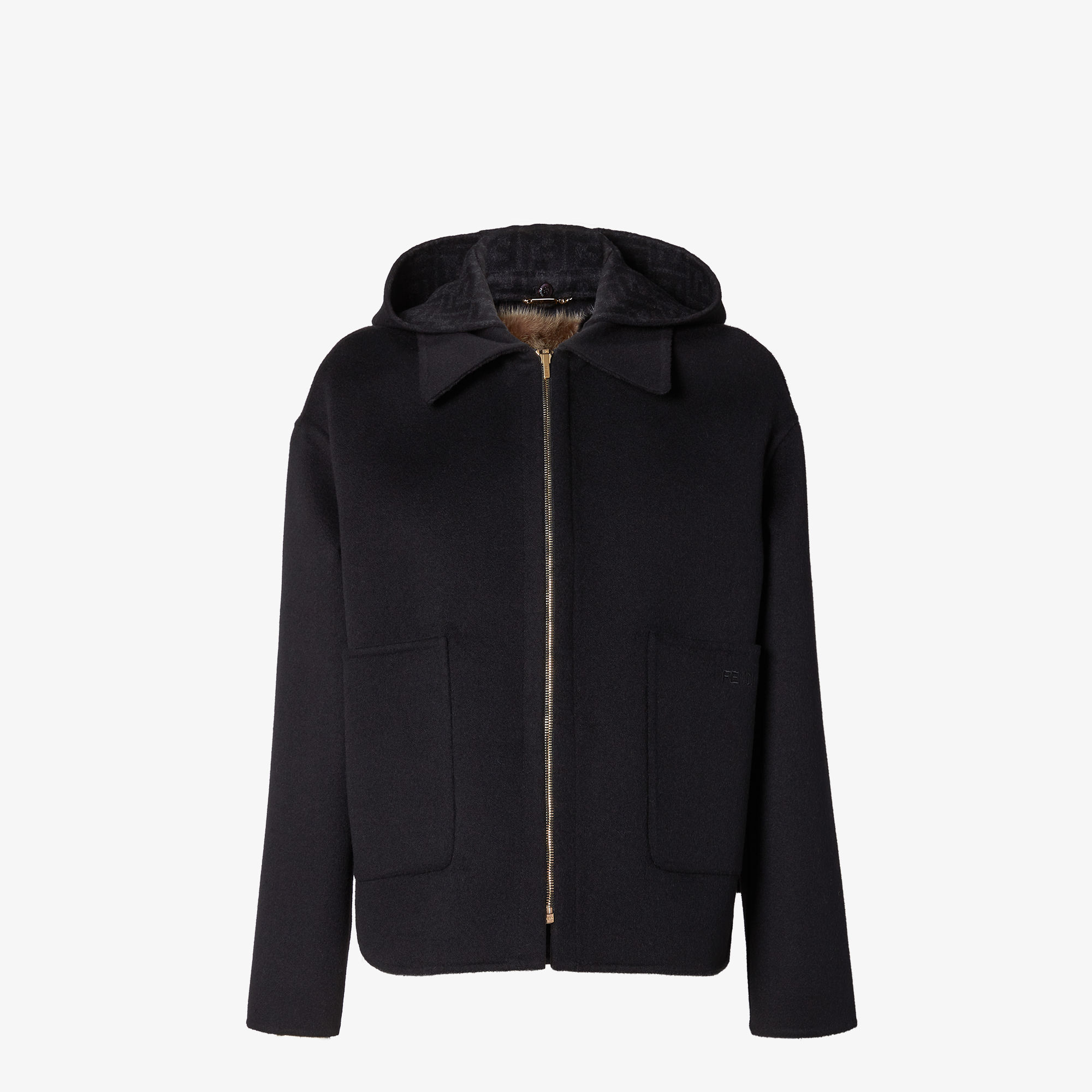
The shoulder at Fendi has moved north. Not dramatically — this is not the cantilevered armour of Mugler in 1988 — but deliberately. The seam sits a centimetre higher than it did two seasons ago. The sleeve head is set with more structure. The jacket no longer apologises for occupying space.
This is visible in three collections. Spring/Summer 2025 showed tailored blazers with a clean, extended shoulder line, paired with narrow trousers that sat just below the natural waist. The silhouette read vertical. Autumn/Winter 2025 reinforced it: coats in double-face cashmere with a pronounced shoulder, cut long through the body, worn over slim skirts that ended mid-calf. And the pre-collection for Spring 2026, shown in January, made the grammar explicit. Structured jackets in wool gabardine. Sleeves set high and tight. Lapels that roll with intention.
Kim Jones has been building toward this since he arrived at Fendi in 2020, but the shoulder is new. His early collections leaned into soft tailoring — unstructured blazers, easy trousers, the drape of Roman summer. That vocabulary is still present, but it now shares the runway with something more architectural. The shoulder provides the frame. Everything else falls from there.
Construction, Not Costume
The jacket that opened the Autumn/Winter 2025 show was cut from charcoal wool with a faint herringbone. The shoulder extended perhaps two centimetres past the natural line. Not enough to suggest period dress. Enough to change the way the torso reads. The sleeve was set with a pad — not foam, but layered canvas and horsehair, the kind of construction that holds its shape after a day of wear. The jacket closed with a single button at the waist. The effect was elongation without exaggeration.
This is not about volume. Fendi is not inflating the shoulder to make a statement about power dressing or eighties revivalism. The width is controlled. The structure is there to carry the weight of the cloth and to establish a clean line from neck to wrist. It is tailoring in the technical sense: shaping fabric around the body so that the garment does the work.
The same principle appears in the outerwear. A double-breasted coat from the same collection was cut in camel wool with a shoulder that sat square and high. The coat was long — past the knee — but the shoulder kept it from reading as a bathrobe. The sleeve was narrow. The cuff ended at the wrist bone. Proportions like these require precision. A centimetre too wide in the sleeve and the coat collapses into costume.
What Sits Beneath
The silhouette depends on what is worn underneath. Fendi has been showing narrow trousers for three seasons now. Not skinny — the leg is straight, not tapered — but trim enough that the volume stays in the jacket. The trousers sit just below the natural waist, which is higher than the low-slung cuts that dominated the last five years. The rise affects posture. It pulls the eye upward.
The same logic applies to skirts. The pre-collection for Spring 2026 included several midi skirts in lightweight wool, cut slim through the hip and falling straight to mid-calf. Paired with a structured jacket, the silhouette reads as a single gesture. The shoulder establishes the width. The skirt provides the vertical. The body becomes a column.
This is not new information. Dior built the Bar jacket on the same principle in 1947. What is different now is context. The past three years have been defined by ease: oversized shirting, dropped shoulders, wide-leg trousers pooling at the ankle. Fendi is moving away from that, but not toward restriction. The clothes are still cut with room to move. The shoulder is structured, but the body of the jacket is not tight. The trousers are narrow, but they are not constricting.
The Bag Follows
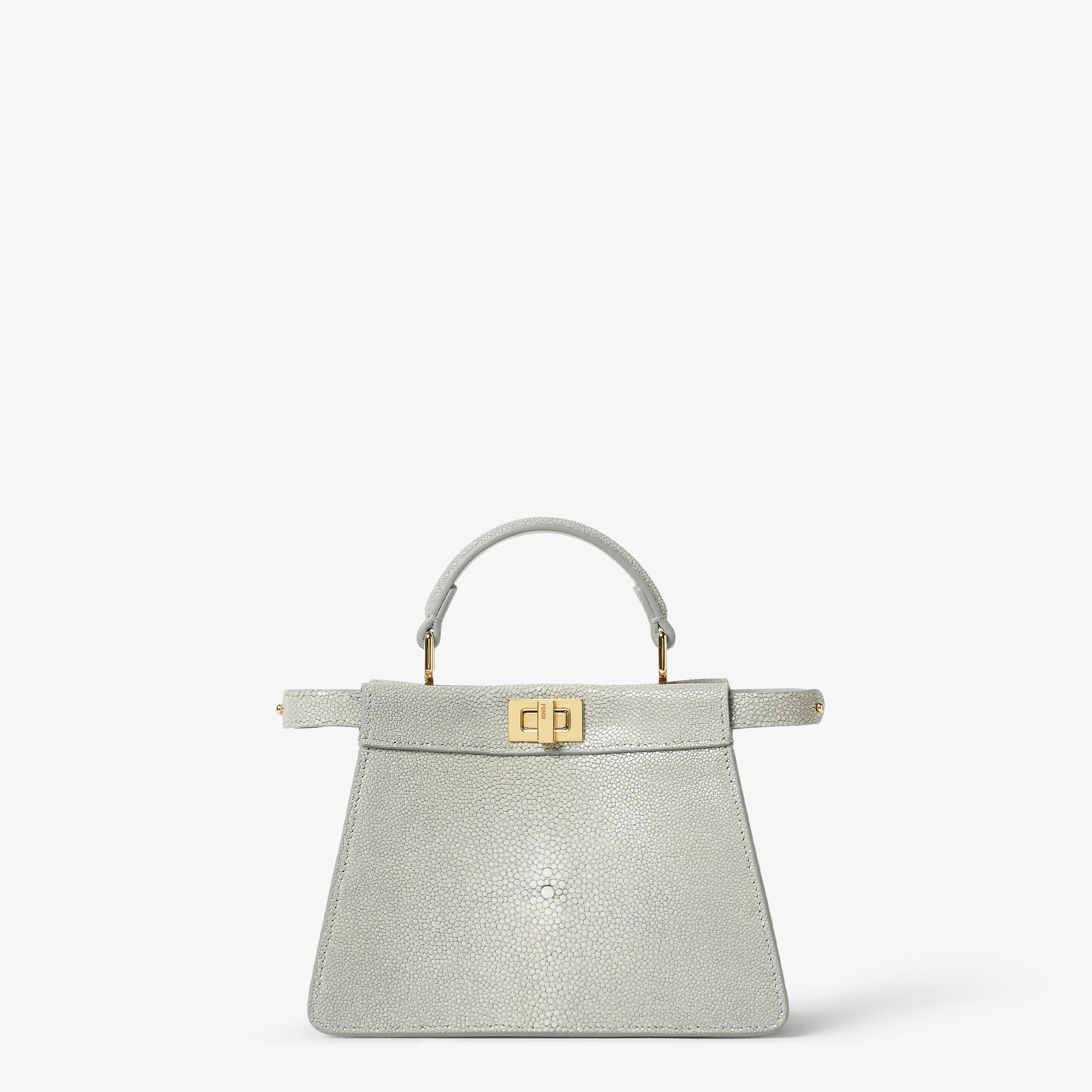
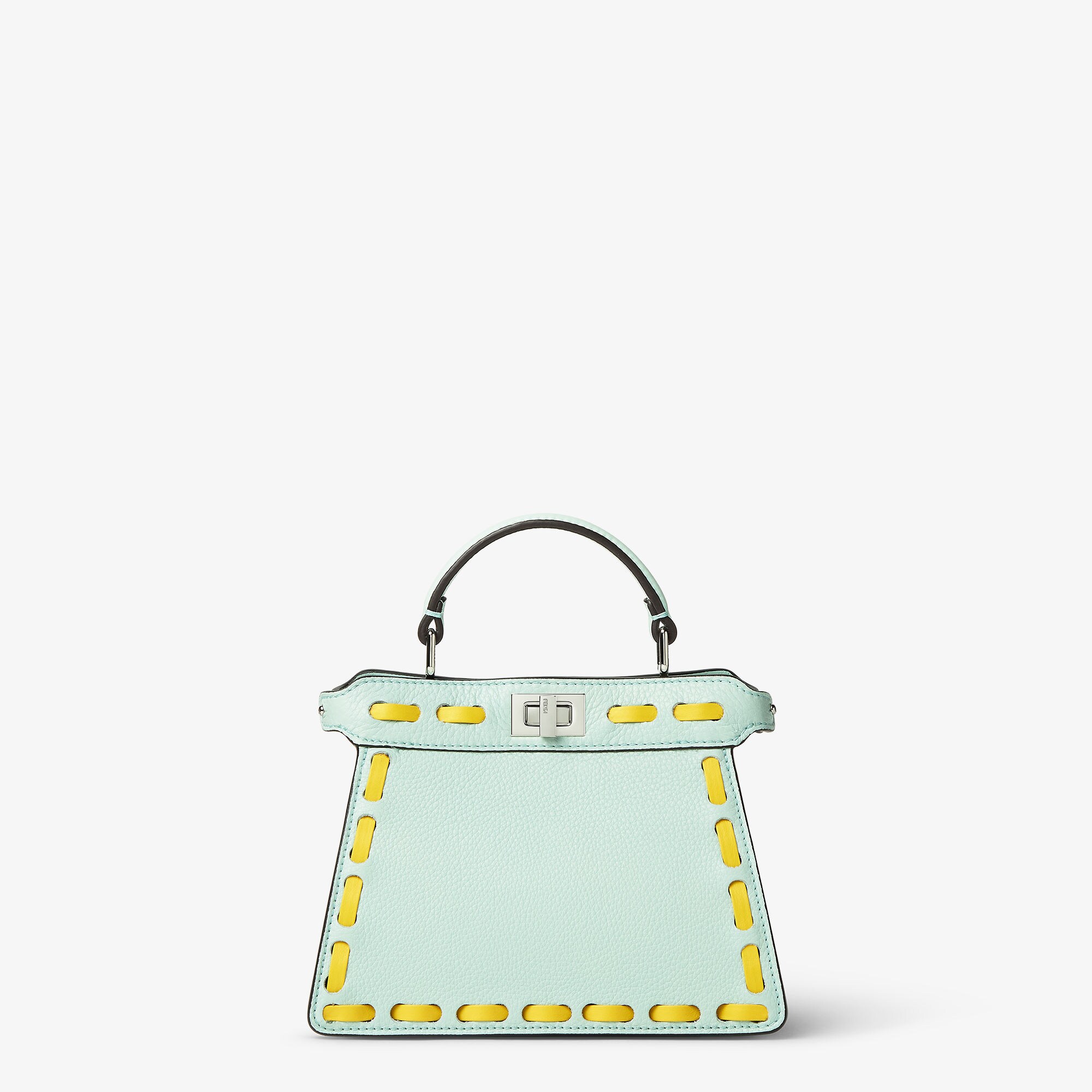
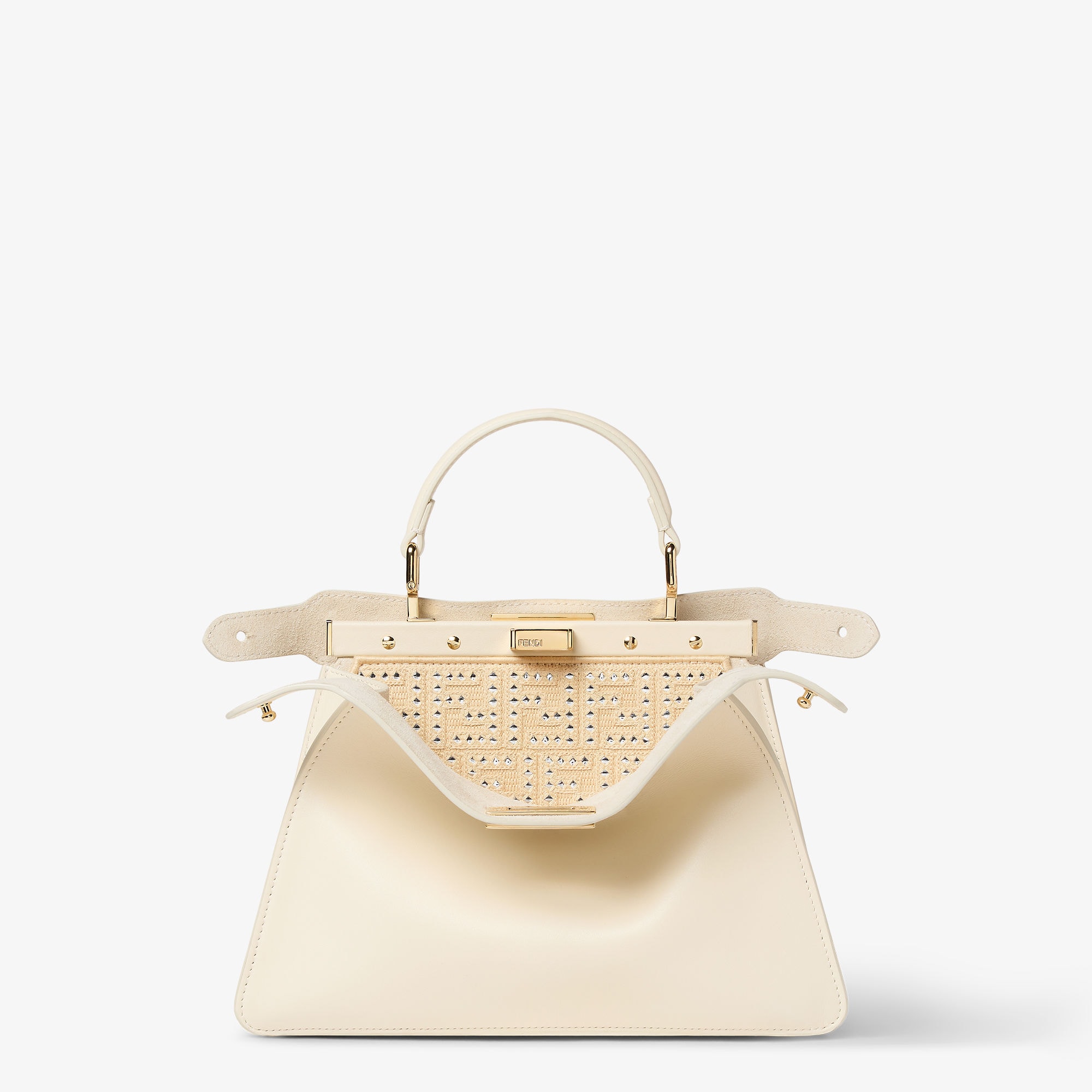
The Peekaboo has been adjusted. The newer versions, shown alongside the Autumn/Winter 2025 collection, are slightly smaller than the original. The handles are shorter. The bag sits higher under the arm, closer to the body. This is not an accident. A structured jacket with a defined shoulder does not work with a large, soft bag that swings at the hip. The proportions have to align.
The same applies to shoes. Fendi has been showing heels with a modest height — six to eight centimetres — and a narrow toe. The shoe does not compete with the jacket. It extends the line.
Dressing Into It
To wear this silhouette is to accept that clothes have architecture. The jacket will not mould to the body the way a knit does. It will hold its shape. The shoulder will stay where it was set. This requires a different relationship to garments — not as second skin, but as structure worn over the body.
For the next twelve months, dressing in this means choosing clarity over ease.