Alexander McQueen aujourd'hui : où en est la maison
The Knuckle Duster clutch sits in a vitrine at the Savage Beauty retrospective, brass rings fused to leather, a weapon dressed as an evening bag. It is a McQueen signature — the thing that looks like armour because it is armour. The piece dates from autumn 2010, his final collection before his death that February. Fifteen years later, the house that carries his name still sells versions of the Knuckle clutch. The question is what else remains.
L'héritage fondateur
Lee Alexander McQueen showed his graduate collection, Jack the Ripper Stalks His Victims, at Central Saint Martins in 1992. Isabella Blow bought the entire collection for £5,000. What followed was a career compressed into eighteen years: sixteen collections as creative director at Givenchy, thirty-six under his own name, collaborations with Björk and Lady Gaga, runway shows that involved live wolves, a model in a glass box with moths, and a hologram of Kate Moss materialising inside a pyramid. He worked in spectacle, but the garments themselves were constructed with a tailor's rigour. McQueen had trained on Savile Row at Anderson & Sheppard and Gieves & Hawkes. The cut came first. The theatre followed.
His signature was the bumster trouser, introduced in 1993 — a pant cut so low on the hips it exposed the cleft of the backside and redrew the proportions of the body. He returned to corsetry, to exaggerated shoulders, to fabrics that had been slashed, burned, or printed with his own blood. The shows were confrontational. Highland Rape in 1995 sent models down the runway in torn lace and exposed breasts, a commentary on English violence against Scotland that was widely misread as misogyny. He did not clarify. The work stood or it did not.
What made McQueen singular was not provocation but control. He could engineer a sleeve head, carve a jacket lapel, and construct a bodice that appeared to defy physics. The 1999 spray-paint dress — Shalom Harlow standing on a rotating platform while two industrial robots sprayed her white gown with black and yellow paint — was theatre, but the dress itself was a feat of pattern-making, designed to move and receive paint in a specific choreography. The garment was never incidental to the show. It was the show.
Après McQueen
Sarah Burton joined the house in 1996 as a design assistant. She became head of womenswear in 2000 and was named creative director in May 2010, three months after McQueen's death. Her first full collection, spring 2011, opened with white tailoring and closed with a gown embroidered with gold feathers. The reviews were respectful. The clothes were softer than McQueen's, more wearable, less interested in confrontation. Burton had worked beside him for fourteen years. She understood the archive. But she was not interested in replicating his voice.
Under Burton, Alexander McQueen became a house known for craft. The embroidery was executed in-house or in collaboration with the atelier of François Lesage. She brought in lace from Cluny, leather from the family-run tanneries McQueen had used, and developed a vocabulary around natural forms — feathers, shells, flowers rendered in thread and appliqué. Her tailoring was precise. The silhouette softened but never collapsed. She dressed Catherine, Princess of Wales, for her wedding in 2011, a gown that was watched by an estimated two billion people. The house became associated with a particular kind of elegance: dark, detailed, expensive, and safe.
Burton's tenure lasted thirteen years. She showed her final collection in March 2023 and left the house that October. The decision was described as mutual. Kering, which acquired Alexander McQueen in 2001, did not immediately name a successor.
Seán McGirr prend la relève
In October 2023, Kering announced that Seán McGirr would succeed Burton as creative director. McGirr had spent the previous four years at JW Anderson, where he worked as head of design for ready-to-wear. Before that, he was at Dries Van Noten and Burberry. He had no public profile. The appointment was a surprise not because McGirr lacked experience but because the house had given no indication it was looking outside its own studio.
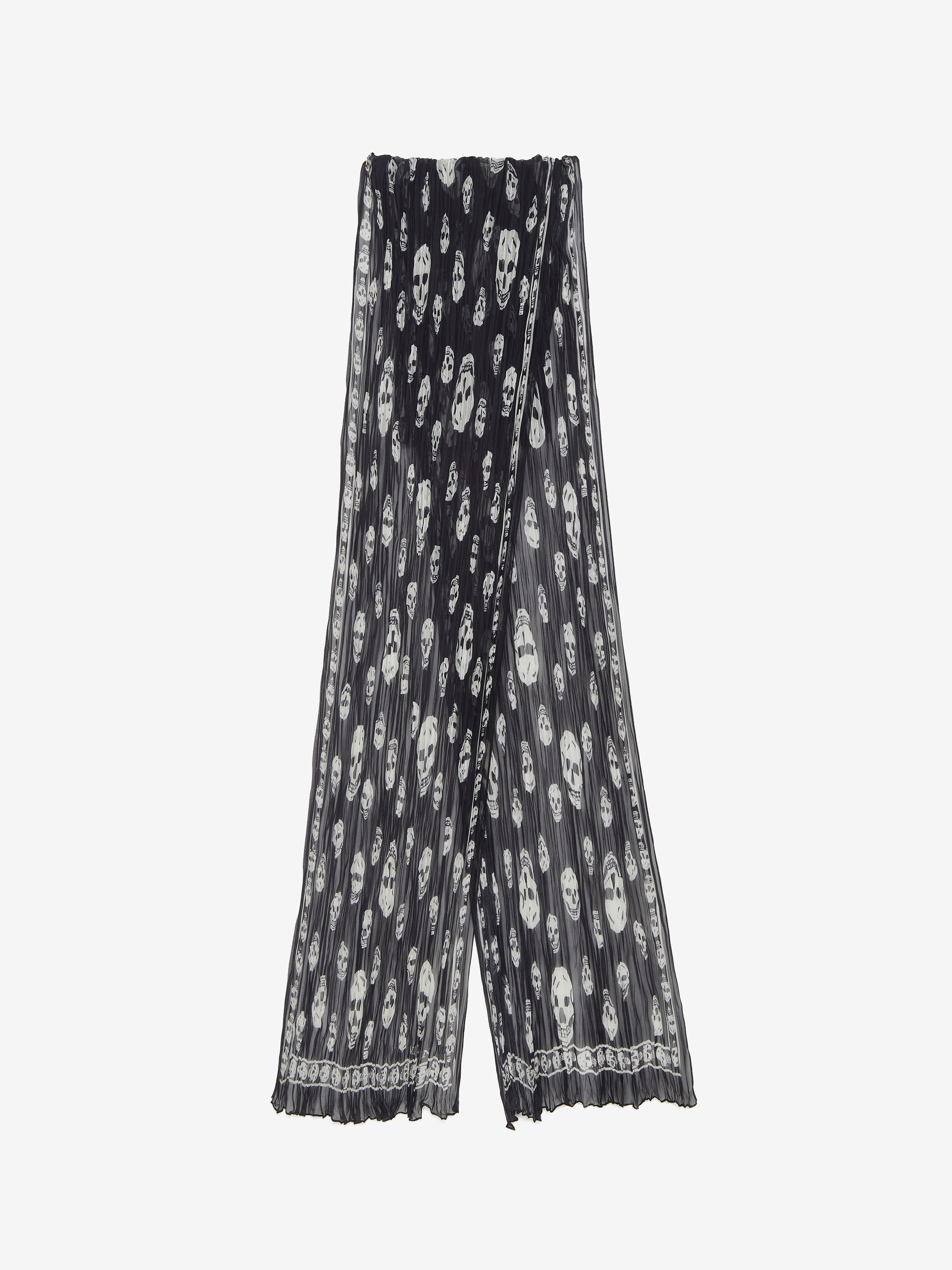
His debut collection for autumn 2024 showed in March at the École des Beaux-Arts in Paris. The set was minimal: white walls, harsh light. The clothes opened with oversized outerwear, moved through deconstructed tailoring, and closed with evening pieces in black and red. There were nods to the archive — low-slung trousers, sharp shoulders, a few pieces with the house's signature skull motif — but the collection felt more like a reset than a continuation. McGirr cited McQueen's The Hunger from 1996 as a reference, but the clothes themselves did not carry the weight of that show. They were wearable, commercial, and largely forgettable.
The reviews were mixed. Some praised McGirr for not attempting to mimic McQueen. Others noted that the collection lacked a clear point of view. Sales figures have not been disclosed, but Kering's earnings report for the first half of 2024 showed that Alexander McQueen's revenue declined by eight per cent compared to the previous year. The brand represents a small portion of Kering's total revenue — less than five per cent — but the decline is notable in a category that includes Bottega Veneta and Balenciaga, both of which have seen growth under new creative leadership.
McGirr's second collection, for spring 2025, leaned further into ease. The tailoring was looser. There were more knits, more jersey, more pieces that could be described as daywear. The show took place in a car park in London, a deliberate return to the city where McQueen built his name. The gesture felt more symbolic than substantive. The clothes were fine. They were not necessary.
Où en est la maison aujourd'hui
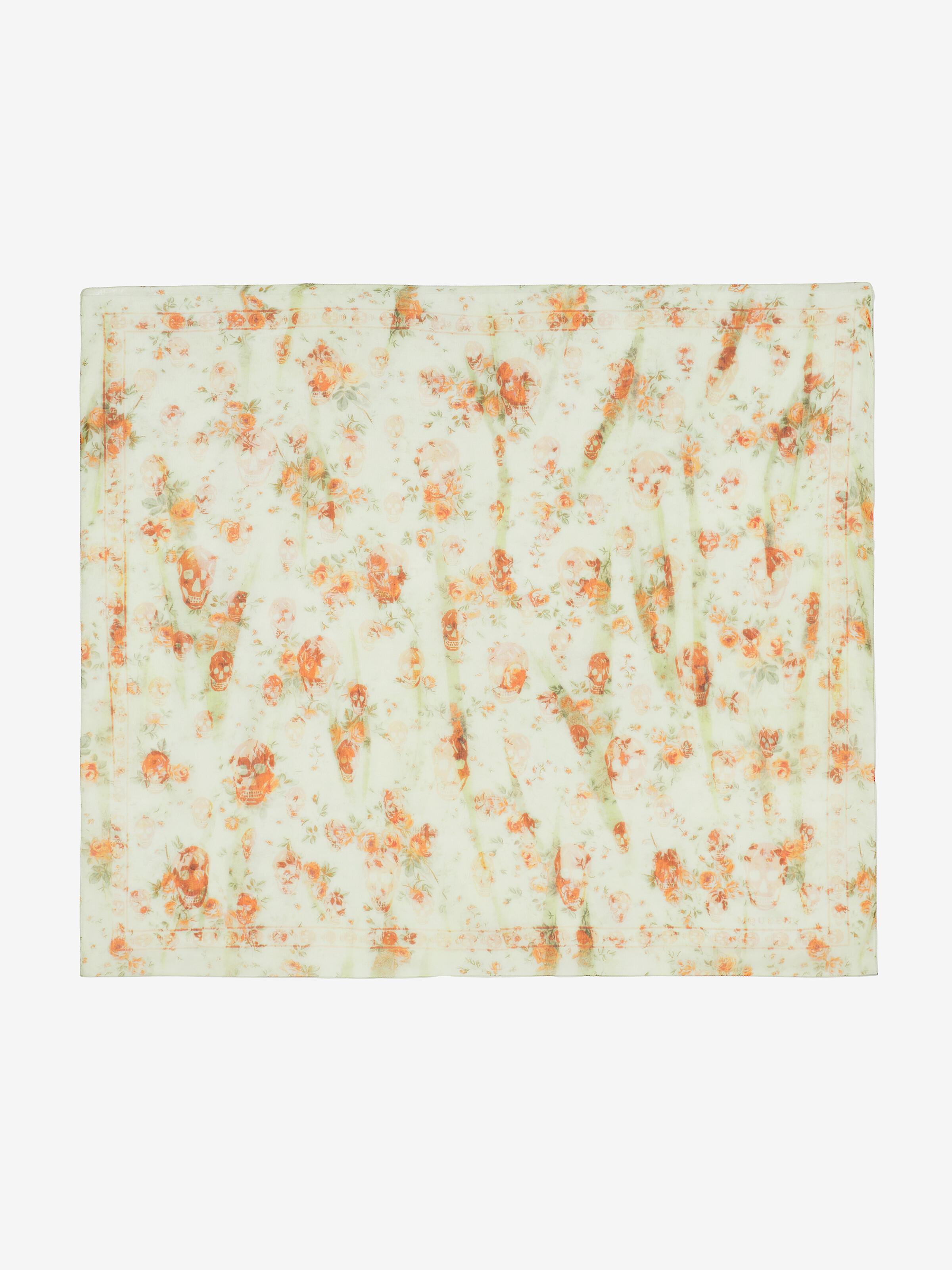
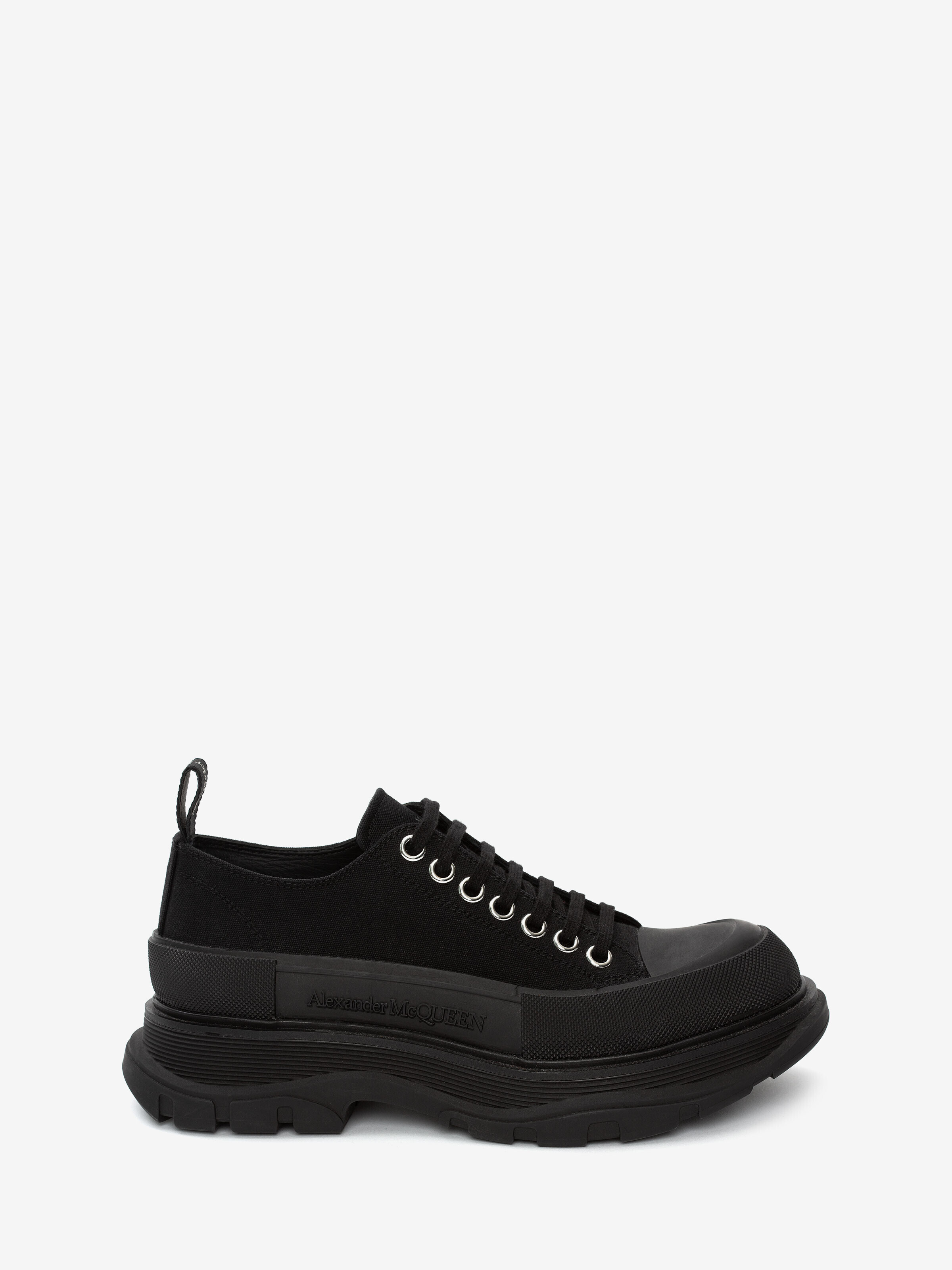
Alexander McQueen currently operates ninety-three stores worldwide. The accessories category — particularly the Knuckle clutch, the Skull bag, and the Oversized sneaker — accounts for the majority of revenue. Ready-to-wear remains a smaller segment, though the house continues to show twice a year in Paris and London. The brand's Instagram account has 14.7 million followers. Engagement is steady but not growing.
The challenge for McGirr is not that he lacks skill. It is that Alexander McQueen, as a commercial entity, no longer requires the kind of designer McQueen was. The house needs someone who can produce two collections a year, maintain relationships with wholesale partners, and deliver product that moves. Burton did this successfully for over a decade. McGirr is attempting to do the same. The question is whether the house still has a reason to exist beyond its archive.
Kering has not indicated any plans to replace McGirr or shift the brand's positioning. The company's strategy for Alexander McQueen appears to be stabilisation rather than reinvention. This is a reasonable approach for a heritage brand in a portfolio that includes larger, faster-growing labels. But it also means the house is no longer expected to provoke, to challenge, or to produce the kind of work that makes people stop.
Ce qui reste
There is a photograph from McQueen's spring 1999 show, No. 13. A model named Erin O'Connor walks the runway in a red coat with exaggerated shoulders and a nipped waist. Her hair is slicked back. Her expression is blank. Behind her, the set is minimal — just light and space. The coat is the only thing that matters. It is structured, aggressive, and completely resolved. You can see the seams. You can see the work.
That coat still appears in retrospectives, in museum exhibitions, in editorial references to McQueen's legacy. It is the kind of garment that does not require context because the context is built into the construction. The house that carries his name still makes coats. They are well-made. They sell. But they do not carry that weight. They are not trying to.