Burberry aujourd'hui : où en est la maison
The trench coat hanging in the Burberry flagship on Rue Saint-Honoré is not the same trench coat your mother bought in 1987. The cotton gabardine is lighter. The storm shield is narrower. The belt buckle has been redesigned twice in the last decade. But it is still called the Heritage, and it still costs more than most people spend on a month of rent.
This is the problem Burberry cannot solve.
Thomas Burberry et l'invention du gabardine
The house was founded in 1856 by Thomas Burberry, a draper's apprentice who opened his own shop in Basingstoke at twenty-one. He invented gabardine in 1879 — a tightly woven cotton that repelled water without the rubber coating that made Victorian rainwear stiff and airless. The fabric was patented. The British military ordered it for officers in the Boer War. By 1914, the trench coat was standard issue, and Burberry was no longer a provincial outfitter but a supplier to the War Office.
That coat — double-breasted, belted, with epaulettes and D-rings for attaching equipment — became the template. After the war, it moved into civilian life. Humphrey Bogart wore one in Casablanca. Audrey Hepburn wore one in Breakfast at Tiffany's. The trench was not fashion. It was infrastructure.
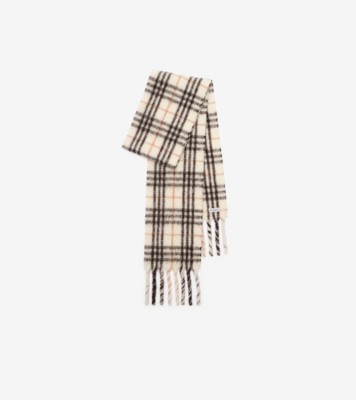
The check came later. Burberry used it as a lining in the 1920s, a discreet signal of provenance. It stayed hidden until the 1960s, when the house began printing it on umbrellas, scarves, and eventually everything else. By the 1990s, the check was no longer a detail. It was the product.
L'ère de la surexposition
What happened to Burberry between 1997 and 2006 is well documented. The check was licensed to manufacturers across Europe and Asia. It appeared on baseball caps, bikinis, dog collars, pram liners. The brand became ubiquitous and then it became a joke. In Britain, the pattern was associated with a specific kind of counterfeit luxury — visible, loud, performed. The house lost control of its own image.
Angela Ahrendts arrived as CEO in 2006. Christopher Bailey, already chief creative officer, was elevated. Together they began the work of pulling Burberry back from the edge. They limited licensing. They closed factories. They rebuilt the archive and started referring to it in every collection. Bailey sent trench coats down the runway in thirty variations — cropped, pleated, patent, shearling-lined. The message was clear: we make this, and we have always made this.
The strategy worked. Revenue doubled between 2006 and 2014. The check receded. The trench returned to its position as the house's centre of gravity. Burberry became, again, a house you could take seriously.
But the trench is also a ceiling.
Daniel Lee et le repositionnement
Daniel Lee was appointed in 2022. He came from Bottega Veneta, where he had spent three years turning the house into the quietest loud success in fashion. His first Burberry collection appeared in February 2023. The trench was there, but it was not the point. Lee opened with outwear in duchesse satin and leather so fine it moved like cloth. He showed dresses with rose appliqués the size of dinner plates. He put the check inside a puffer coat, visible only when the wind lifted the hem.
The collection was technically accomplished. It was also cautious. Lee was clearly trying to move Burberry upmarket — toward Bottega's price band, toward a customer who buys one coat and wears it for ten years. But he was doing it without alienating the customer who comes to Burberry because she knows exactly what Burberry is.
This is a narrow path.
The reviews were mixed. Some critics praised the restraint. Others noted that the collection looked like a very expensive version of what Burberry already made. The question was not whether Lee could design. The question was whether Burberry could be something other than Burberry.
The second collection, shown in September 2023, was sharper. Lee leaned into British iconography — not the trench, but the duffle, the anorak, the quilted jacket. He referenced the kind of technical outerwear worn by fishermen and farmers, then remade it in cashmere and silk faille. The check appeared in new arrangements: vertical, fragmented, printed on leather. It felt less like a logo and more like a pattern that had been taken apart and reassembled.
The market responded carefully. Sales in the first half of 2024 were flat. Burberry's share price has not recovered to its pre-pandemic level. The house is caught between two positions: too expensive to be accessible, not exclusive enough to be genuinely elite. LVMH owns Dior and Celine. Kering owns Gucci and Bottega. Burberry is independent, which means it is also alone.
La question de l'identité
The difficulty is not creative. Lee is a capable designer. The difficulty is structural. Burberry has spent twenty years trying to define itself as a luxury house while still depending on entry-level products — the check scarf, the small leather goods, the nylon backpack — that sell in volume. Those products pay for the runway. But they also anchor the brand in a middle position that is increasingly hard to defend.
Other houses have solved this by moving decisively in one direction. Hermès makes almost nothing below a certain price point. Zegna has separated its luxury line from its accessible tailoring. Burberry has not chosen. It wants to be both, and the result is a house that is legible but not urgent.
The trench remains. It is still the best thing Burberry makes. The construction is exact. The cloth is dense and smooth. The cut is clean enough to wear over a suit or a sweater without looking stiff. But it is also the thing that keeps Burberry from becoming something else.
Lee's task is to make you want a Burberry coat that is not a trench. Or to make you want the trench again, but for different reasons. This is harder than it sounds.
Aujourd'hui
Walk into the London flagship on Regent Street and you will see the archive on the ground floor: gabardine swatches, military commissions, photographs of polar expeditions. One floor up, the current collection hangs in a room with no visible branding. The coats are beautiful. They are also surrounded by thirty other beautiful coats in thirty other stores within a two-kilometre radius.
Burberry is not in crisis. It is profitable. It has a clear heritage and a competent design team. But it is also not growing, and in luxury, standing still is a problem. The house needs to convince a new customer that it makes something worth paying for, and it needs to do that without alienating the customer who already believes.
Lee has time. His contract runs through 2027. But time in fashion is shorter than it used to be. Two more collections, maybe three, and the board will want to see a shift in revenue. The trench will still be there. The question is what else will be hanging next to it.