Gucci aujourd'hui : où en est la maison
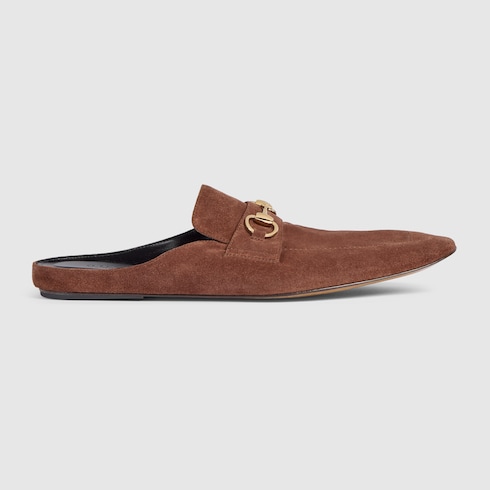
The loafer sits in a vitrine on Via Montenapoleone, cordovan leather buffed to a low shine, the horsebit gleaming under halogen. It is, in a sense, the same loafer Aldo Gucci designed in 1953. Same silhouette. Same hardware. Same last, more or less. And yet the context around it has shifted so many times in seventy years that one could write a short history of luxury commerce by tracking this single object through its iterations — from equestrian signifier to Wall Street uniform to Phoebe Philo mood board to, now, whatever it is we call the present moment.
Which brings us to the question: où en est Gucci?
Fondations
Guccio Gucci opened his first shop in Florence in 1921, selling luggage and saddle goods to a local clientele that valued craft over flash. The house built its reputation on leather work — not revolutionary in design, but meticulous in execution. By mid-century, under the direction of Guccio's sons, Gucci had developed the visual grammar we still recognise: the interlocking double-G, the green-red-green webbing lifted from saddle girths, the bamboo-handled bag born of wartime material shortages. These were not fashion statements in the sense we use the term now. They were identifiers. Markers of a certain taste, a certain milieu.
The house expanded through the 1960s and '70s, licensing aggressively. Too aggressively, as it turned out. By the early 1990s, Gucci had become synonymous with logo-heavy accessories sold in duty-free corridors and department store concessions — recognisable, yes, but no longer desirable in the way that moves product at the top end of the market. The family had fractured. The brand was diffuse. Dawn Mello, brought in from Bergdorf Goodman, began the work of pulling focus, but it was Tom Ford, hired in 1994 and promoted to creative director within two years, who turned the house into something else entirely.
L'ère Ford — et après
Ford's Gucci was not about heritage. Or rather, it was about heritage only insofar as heritage could be made sexy. He took the house codes — the horsebit, the flora print, the monogram — and ran them through a lens of Helmut Newton-adjacent provocation. Velvet tuxedos. Hip-slung trousers. Shirts open to the navel. The 1995 campaign, shot by Mario Testino, featured a model in a white halter and those trousers, pubic bone on full display. It was calculated. It worked. By the time Ford left in 2004, Gucci's revenue had grown from $230 million to nearly $3 billion.
What followed was a decade and a half of competent stewardship under Frida Giannini, who leaned into a more polished, less overtly sexual aesthetic. Sales remained strong, but the cultural conversation moved elsewhere. Gucci was no longer the house people argued about. It was the house people bought.
Then came Alessandro Michele.
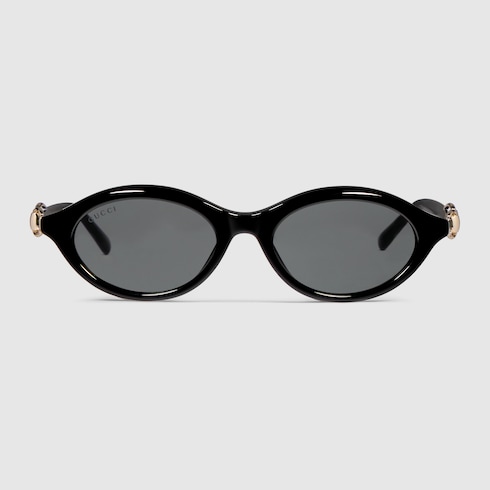
Michele's appointment in January 2015 was, by all accounts, a surprise. He had spent twelve years in the design studio, largely invisible. His first collection, shown that February with less than a week's notice, featured pussy-bow blouses, oversized glasses, fur-lined loafers, and a kind of magpie eclecticism that read, to some observers, as costume. To others, it felt like permission. Michele's Gucci was arch, referential, unabashedly decorative. He mined the archive, yes, but also Victorian portraiture, 1970s album covers, his own grandmother's wardrobe. The house became, for a certain customer, a place to play.
Revenue doubled under Michele. The Dionysus bag, the Marmont, the Ace sneaker — these became fixtures of the mid-2010s luxury landscape. But by 2021, growth had slowed. The pandemic played a role, certainly, but there was also a sense that the Michele formula had reached saturation. The prints, the embellishments, the knowing winks — what had felt fresh in 2015 felt, to some, like a tic. In November 2022, Kering announced Michele's departure.
Sabato De Sarno : le virage
Sabato De Sarno arrived from Valentino, where he had spent seventeen years, the last few as design director of women's ready-to-wear. His first collection for Gucci, shown in September 2023, was a deliberate reset. Gone were the clashing patterns and ornamental excess. In their place: clean tailoring, soft suiting, muted tones punctuated by a particular shade of red — Rosso Ancora, as the house now calls it. The silhouettes leaned into ease. Trousers sat high and loose. Blazers were unstructured. The handbags, while recognisable as Gucci, felt quieter. Less declarative.
The critical response was mixed. Some praised the restraint, the return to a kind of Milanese polish. Others found it safe. Bland, even. The clothes were well-made, no question, but they did not provoke. They did not generate the kind of heat that Michele's work had, for better or worse.
Financially, the picture is more complicated. Gucci's sales declined 20% in the first quarter of 2024, part of a broader downturn at Kering. Some of that is attributable to the transition itself — the house is, in effect, rebuilding its customer base. Some is macroeconomic. The Chinese market, long a pillar of luxury growth, has softened. And some, one suspects, is a question of identity. Gucci under Michele had a clear point of view, even if that point of view was divisive. Gucci under De Sarno is still finding its footing.
Le moment présent
Walk into a Gucci store today and the space itself tells the story. The interiors, redesigned under De Sarno's direction, are warmer, less theatrical. Terrazzo floors. Walnut panelling. The clothes hang with room to breathe. It feels considered. It does not feel urgent.
Which may be the point. De Sarno has spoken, in interviews, about wanting to create a wardrobe rather than a spectacle. He cites the 1990s — not Ford's 1990s, but the quieter, pre-logo-mania moment — as a reference. He talks about quality, about pieces that last. This is a reasonable position. It is also, in the current market, a gamble. Gucci's competitors are not standing still. Bottega Veneta, under Matthieu Blazy, has claimed the mantle of quiet craft. Loewe, under Jonathan Anderson, offers intellectual playfulness without sacrificing desirability. Prada remains Prada. The question is not whether De Sarno's Gucci is good — it is — but whether it is distinct enough to matter.
The house still has structural advantages. The archive is deep. The atelier is skilled. The distribution network is vast. And there are signs, small but real, that the work is landing. The Rosso Ancora campaign, shot by Nan Goldin, generated genuine interest. The Jackie 1961, reissued in softer leathers, sold well. The loafers — always the loafers — continue to move.
But Gucci's position in the market is no longer guaranteed. The house spent the last decade as a cultural force, a generator of memes and moments and, yes, revenue. Now it is something else: a house in transition, searching for a register that feels both true to its history and relevant to a customer base that has been taught, over the last ten years, to expect more than competence.
Épilogue
There is a photograph, taken in 1979, of a Gucci store on Rodeo Drive. The window display is spare. A single handbag on a plinth. No signage beyond the name. The bag is beautiful, but it is not trying to seduce you. It is simply there, confident in its own facture. One imagines De Sarno has seen this photograph. One imagines he thinks about it.
Whether that confidence can be rebuilt — whether Gucci can become, once again, the house people want rather than the house people remember wanting — remains to be seen. The loafer in the vitrine on Via Montenapoleone gleams under its light. Same last. Same hardware. Different world.