Gucci : histoire d'une maison
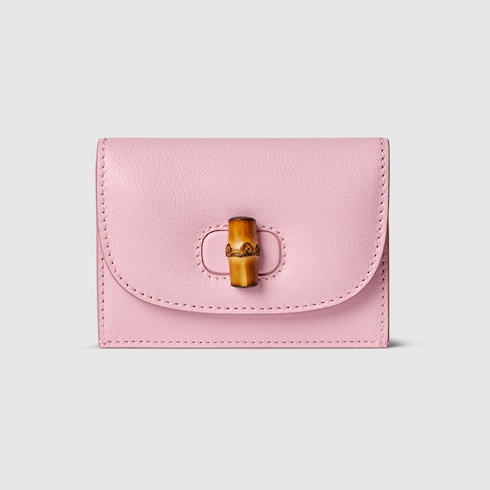
The bamboo handle curves in a way metal never could — warm to the touch, faintly irregular, each node a record of growth. Gucci introduced the bamboo-handled bag in 1947, when leather was still rationed and ingenuity mattered more than marketing budget. The material came from Japan; the technique, from Florentine saddle-making. What resulted was neither Japanese nor Florentine but something else: a postwar object that refused to apologise for its origins.
That reflex — to make necessity elegant, to turn constraint into signature — runs through the house's first four decades. It also, one suspects, explains why Gucci has survived nearly a century of family feuds, leveraged buyouts, and creative pivots that would have flattened a less resilient brand.
Guccio and the Geometry of Luggage
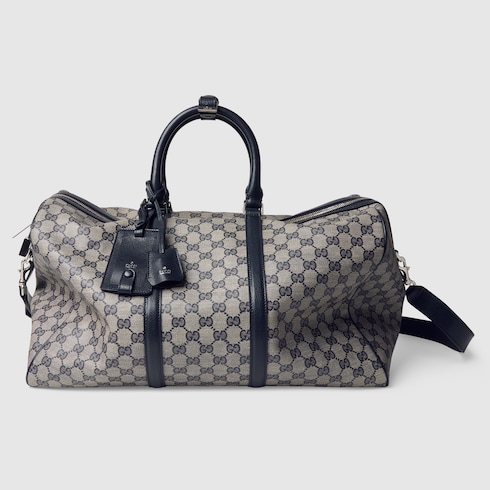
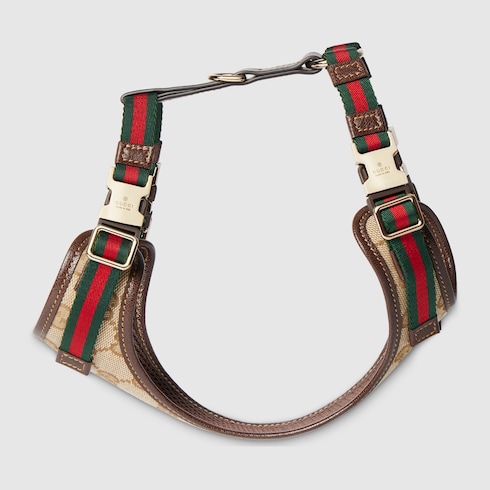
Guccio Gucci opened his first bottega in Florence in 1921, selling English-style leather goods to a clientele that wanted the patina of travel without the bother of actually going anywhere. He'd worked at the Savoy in London and understood that luxury, at its most potent, is a form of theatre. The double-G monogram arrived in the 1930s, overlapping initials that suggested heraldry without claiming any. The green-red-green webbing — lifted from saddle girths — came slightly later, a stripe that read as both sporty and aristocratic depending on the light.
By the 1950s, Gucci had become the rare Italian house with traction beyond Italy. The horsebit loafer, introduced in 1953, landed at a moment when American men were beginning to dress down but not yet ready to abandon all signifiers of class. A metal snaffle across the vamp: just enough ornament to justify the price, not so much that one looked like one was trying. Grace Kelly carried a flora-print scarf. The bamboo bag appeared in magazine editorials, always on the arm of someone whose name you were meant to recognise.
What Gucci understood, and what many houses still fumble, is that an accessory doesn't need a story if the craft is legible. The stitching on a 1960s Gucci suitcase runs at seven stitches per inch, hand-saddle-stitched with linen thread that outlasts the leather. You didn't need to know that to want the case, but you felt it when you picked it up.
The Unravelling and the Buyout
The 1980s were not kind. Guccio's heirs spent the decade litigating one another, diluting the trademark into a licence for everything from toilet paper to playing cards. By 1993, when Maurizio Gucci — grandson of the founder — sold his stake to Investcorp, the house was producing 22,000 SKUs and haemorrhaging credibility. Tom Ford arrived the following year, first as ready-to-wear designer, then as creative director under Domenico De Sole's operational command.
Ford's Gucci is now so widely imitated it's easy to forget how destabilising it felt at the time. The Spring 1996 collection — velvet hip-huggers, satin shirts unbuttoned past any reasonable latitude, a colour palette of rust and teal and oxblood — looked nothing like the beige logofied sludge the house had been producing. It also looked nothing like the minimalism then dominating Milan and Paris. Ford wasn't interested in either restraint or heritage; he wanted to make clothes that registered as sex first, fashion second.
The gamble worked. By 1999, Gucci Group was worth $4.3 billion. The bamboo bag returned, now rendered in patent leather and carried by a different kind of woman — one who'd never heard of Grace Kelly but understood the grammar of a waiting list. Ford left in 2004, taking most of the heat with him, but the template remained: Gucci would be the house that courted scandal, or at least the appearance of it, and let the accessories do the talking.
Michele and the Maximalist Turn
When Alessandro Michele took over in 2015, the industry was still caught in a Phoebe Philo-era hush, all camel coats and architectural handbags. Michele's first collection for Gucci — shown with less than a week's notice — featured pussy-bow blouses, fur-lined loafers, and eyeglasses so oversized they looked like they'd been borrowed from a retired librarian in Palermo. The models wore everything at once. It should have been chaos. Instead, it felt like permission.
Michele's Gucci was archival without being nostalgic, louche without being careless. He pulled from the house's 1970s catalogues — the horsebit, the double-G, the webbing stripe — but surrounded them with embroidered snakes, Lurex knits, and a colour sense that suggested a flea market in Marrakech. The Dionysus bag, introduced in 2015, became the era's defining accessory: a structured shoulder bag with a tiger-head clasp, named after the Greek god of wine and ecstasy. Subtle it was not. But it moved.
For seven years, Michele's Gucci was the industry's revenue engine, peaking at over €10 billion in 2021. The formula — more is more, irony is optional, everything is a reference if you squint — was widely copied and, by 2022, widely exhausted. Kering replaced Michele with Sabato De Sarno in November of that year, a shift that felt less like a creative rupture and more like a brand taking a breath.
The Quiet After
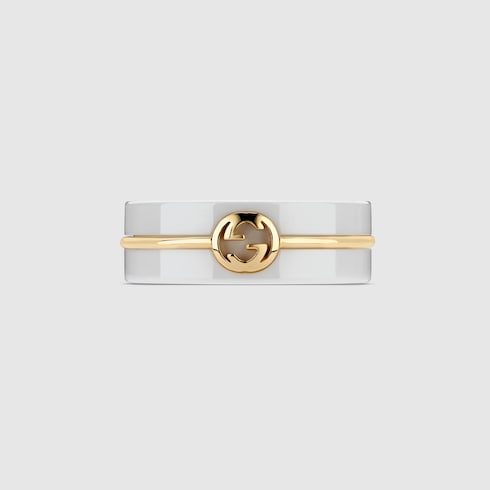
De Sarno's first collection, shown in September 2023, proposed something Gucci hadn't attempted in decades: simplicity. The palette was soft — blush, grey, ivory. The silhouettes were clean. A trench coat was just a trench coat, well-cut and expensive but not asking you to decode it. The Ancora bag, his signature launch, featured a redrawn double-G in gold hardware, the letters now interlocking at a sharper angle. It sold respectably. It did not cause a frenzy.
Whether this marks a reset or a retreat is still unclear. Gucci's challenge has always been the same: how to remain both accessible and aspirational, both rooted in Florentine craft and open to whoever can afford the entry fee. Michele solved it by turning the house into a mirror — you saw in his collections whatever you wanted to see. De Sarno's approach is narrower, more controlled. The question is whether control, in 2025, is what anyone wants from Gucci.
There's a photograph from 1968, recently resurfaced in the house's archives, of a Gucci craftsman at his bench in Florence. He's stitching a handle onto a bamboo-frame bag, the leather stretched taut across his lap. His hands are blurred — the shutter caught him mid-stitch — but the bag is sharp. You can see the grain of the leather, the seam where two panels meet. He isn't looking at the camera. He's looking at the work, which is the only place, really, that a house like this can afford to look.