## La malle et le mors
La malle et le mors
There is, in the Gucci archives, a leather trunk from 1938. Pigskin exterior, brass corners, a lining of striped canvas that echoes the awning of a Florentine shop. The lock plate bears no logo, only a serial number and the word Firenze, stamped small. One suspects that if Guccio Gucci had foreseen what his name would become — a globally recognised mark, a byword for both aspiration and controversy — he might have stamped it larger. Or perhaps not. The craftsmen of that generation tended to let the work speak.
The trunk survives. So does the house, though in a form its founder would struggle to recognise. What lies between those two points is not a straight line but a series of pivots, each one dictated by circumstance, ego, or the occasional stroke of creative clarity. To trace Gucci's path is to watch a family workshop become a fashion empire, then nearly collapse under its own contradictions, then reinvent itself again. Three eras, roughly speaking. The saddle shop. The logomania years. And whatever we are calling this current moment, which has yet to settle into a name.
Firenze, 1921–1953
Guccio Gucci opened his first bottega on Via della Vigna Nuova in 1921, selling leather goods to the Florentine gentry and the occasional foreign visitor. The story often told is that he had worked as a porter at the Savoy in London, observed the luggage of the wealthy, and returned to Florence determined to make his own. Whether that is strictly true or merely useful mythology is beside the point. What matters is that he understood two things: craft and clientele. The house built its early reputation on equestrian-inspired pieces — bridle leather, saddle stitching, the horsebit motif that would later become inescapable. These were not metaphors. Gucci's customers owned horses.
By the time Guccio died in 1953, the business had expanded to Rome and Milan. His sons — Aldo, Vasco, Ugo, Rodolfo — took over, and Aldo in particular had ambitions that exceeded the family trade. He opened the first international boutique in New York in 1953, on East 58th Street, and began courting a different kind of customer. Not the minor nobility of Tuscany but the film stars and industrialists of the postwar boom. Grace Kelly carried a Gucci bamboo-handle bag. So did Audrey Hepburn. The house was no longer selling to people who rode horses. It was selling to people who wanted to look like they did.
The horsebit loafer arrived in 1953, the same year as the New York opening. Leather uppers, a gold-toned snaffle across the vamp, no laces. It became, arguably, the first designer shoe to function as a logo in itself. You didn't need to see the name. The hardware announced it. This was the template Gucci would follow for the next three decades: take an element from the atelier — a clasp, a strap detail, a canvas weave — and amplify it into a signature. Sometimes this worked. Sometimes it led to excess.
Logomania, déclin, et le chaos familial
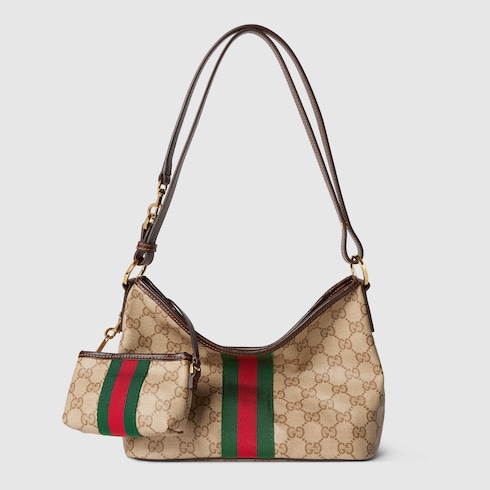
By the 1970s, Gucci had become a phenomenon, and not always in ways that flattered the product. The interlocking GG monogram, introduced in the 1960s, appeared on everything from handbags to slippers to, eventually, toilet paper sold in the Dubai duty-free. Licensing agreements proliferated. Quality control did not. The house that had once prided itself on Florentine facture was now affixing its name to items it had never touched. Aldo Gucci, by then the dominant force in the family, seemed less interested in craft than in ubiquity. The strategy worked, commercially. Gucci became one of the most recognised brands on earth. It also became a punchline.
Behind the scenes, the family was tearing itself apart. Rodolfo's son, Maurizio, wrested control of the company in the 1980s, ousting Aldo in a series of legal manoeuvres that played out in the Italian press like a soap opera. Maurizio had vision but little business sense. He hired Dawn Mello, formerly of Bergdorf Goodman, to restore the brand's credibility, and she in turn brought in a young Texan named Tom Ford as design director. Then, in 1995, Maurizio was shot dead on the steps of his Milan office by a hitman hired, it later emerged, by his ex-wife Patrizia Reggiani. The case dominated headlines for years. Gucci, by then, had been sold to Investcorp, a Bahraini investment firm. The family was out. The house, remarkably, was about to have its second act.
Tom Ford, Frida Giannini, et l'ère du velours
Tom Ford took over as creative director in 1994, the year before Maurizio's murder. What he did to Gucci is well documented: velvet hipsters, satin shirts unbuttoned to the navel, ad campaigns that bordered on the pornographic. The work was slick, unapologetic, and enormously successful. Ford understood that Gucci's logomania years had been both a curse and a gift. The brand was overexposed, yes, but it was also lodged in the cultural memory. He didn't try to erase that. He made it sexy.
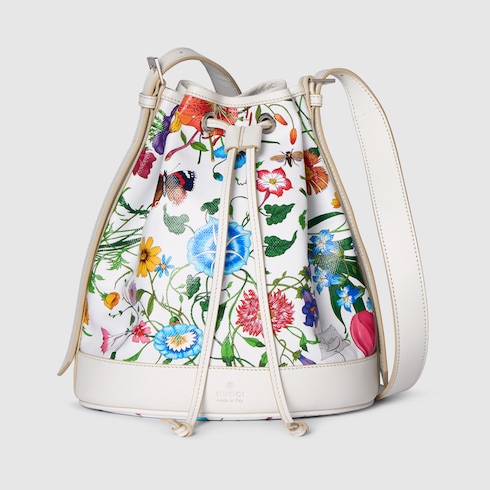
By the time Ford left in 2004, Gucci was generating billions in revenue and had become the anchor of what was now called the Gucci Group, later Kering. His successors — first Frida Giannini, then Alessandro Michele — each took the house in a different direction. Giannini leaned into a polished, equestrian-inflected aesthetic that felt, at times, like a retreat. Michele, appointed in 2015, did the opposite. He opened the archives, mixed eras and references with a collector's fervor, and turned Gucci into a kind of maximalist playground. Embroidered bees, Lurex knits, fur-lined loafers, clashing prints. It was divisive. It was also wildly profitable. Michele's Gucci became the house that millennials and Gen Z wanted to be seen in, which is another way of saying it became, once again, a cultural position.
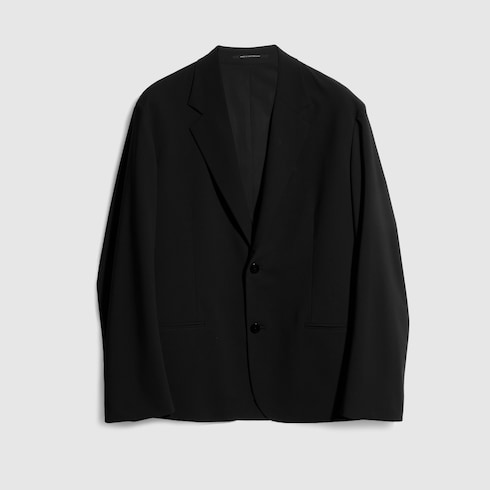
Michele departed in 2022. Sabato De Sarno, his replacement, has so far offered a quieter vision: clean lines, tactile fabrics, a return to something like restraint. Whether this will hold, or whether Gucci will lurch in yet another direction, remains to be seen. The house has never been particularly good at consistency. It has, however, been very good at survival.
Ce qui reste
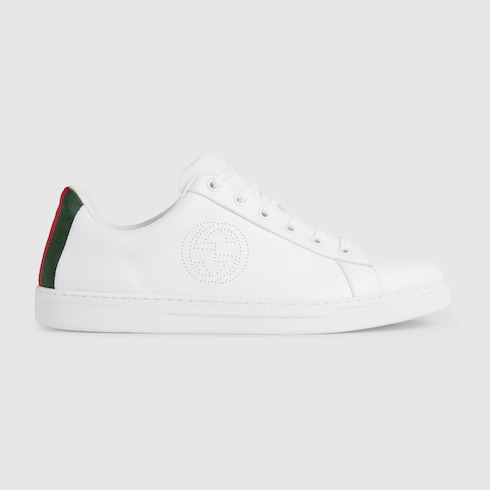
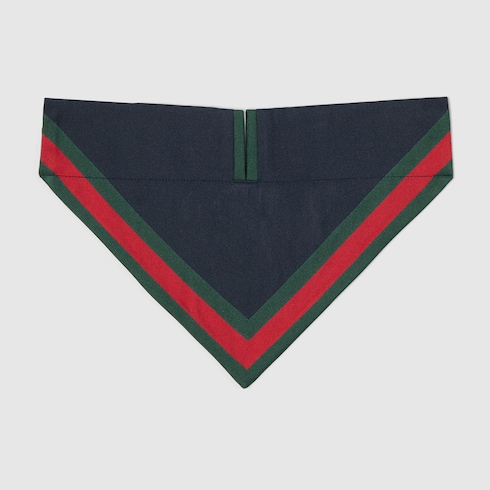
In the end, Gucci is less a singular vision than a series of them, stitched together by circumstance and the occasional act of creative will. The pigskin trunk from 1938 sits in the archive, a relic of a time when the house made things for people who needed them. The GG monogram endures, now applied to sneakers that retail for €890 and sell out within hours. The horsebit, the bamboo handle, the red-green-red stripe — these motifs recur not because they are timeless, a word one should use sparingly, but because they are legible. They say Gucci without requiring further explanation.
There is a photograph, not widely circulated, of Guccio Gucci in his Florentine workshop sometime in the 1940s. He is seated at a workbench, hands on a piece of leather, expression neutral. Behind him, rolls of canvas and a single lamp. No logos visible. Just a man, his tools, and the thing he is making. It is tempting to read that image as a rebuke to everything the house became — the feuds, the murders, the logo-laden excess. But perhaps that's too simple. Gucci survived because it was willing to change, sometimes for the worse, often for the better, and always with an eye on who was buying. The craft remains, when one looks for it. So does the noise. Whether you can have one without the other is a question the house has never quite answered.