Les codes de Fendi qu'on a oubliés
The atelier sample sits on the table between us: a strip of nappa no wider than a belt, doubled back on itself and stitched at intervals so precise you'd need a loupe to catch variation. It isn't for anything in particular — no bag prototype, no trim destined for next season. It's what they call an essai de main, a hand trial, the sort of thing an artisan makes when learning or re-learning a stitch. The woman holding it mentions, almost as aside, that this double-needle technique was standard at Fendi in the Seventies. Standard, meaning every saddle on every flap closure received it. Standard, meaning invisible to anyone not running a thumb along the seam.
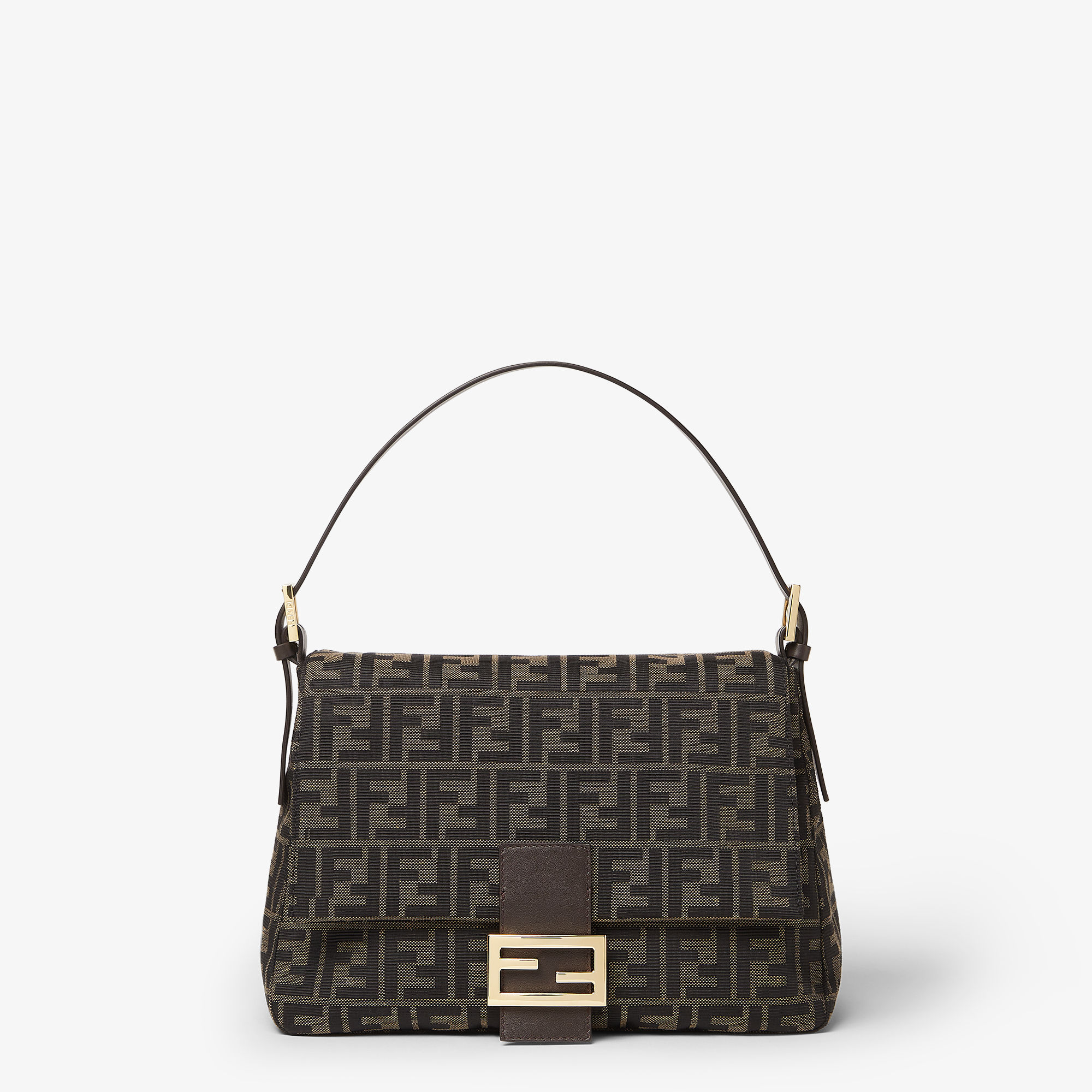
That's the problem, or the opportunity, depending on where you stand. Fendi has become synonymous with a handful of signs — the double-F, the Baguette's slim profile, the Peekaboo's frame-and-flap geometry — while a longer, quieter vocabulary has receded from view. Not lost, exactly. Archived. Waiting for someone to remember that a house this old has more to say than what fits on a logo buckle.
Fur, leather, and the via del Corso
Start in 1925. Adele and Edoardo Fendi open a leather and fur workshop on via del Plebiscito, then move to via del Corso. Rome, not Milan or Florence. The distinction matters. Rome isn't a manufacturing city; it's a city of artisans serving a local clientele — clergy, aristocracy, the sort of people who commission rather than shop. Fendi begins as a bottega, not a maison. Handbags, yes, but also fur coats reworked from older pelts, leather gloves cut to measure, small repairs done on-site.
The five Fendi daughters — Paola, Anna, Franca, Carla, Alda — enter the business in the Forties and Fifties. By the time Karl Lagerfeld arrives in 1965, invited by the family to reimagine their fur line, the workshop has expanded but the ethos hasn't. Furs are still constructed like couture: each pelt selected, each seam placed to let the hair fall as it would on the animal. Lagerfeld's contribution, often misunderstood, wasn't to make fur fashionable — it already was — but to make it light. He intarsia'd mink with grosgrain, pieced sable into geometric panels, treated chinchilla so it moved like jersey. The technique was called fourrure légère, and it required a degree of precision that only a house with thirty years of fur-handling could manage.
That precision extended to leather. Fendi's bags from the Sixties and Seventies share a characteristic: they're soft. Not slouchy in the contemporary sense, but constructed without interior armature, shaped instead by the weight and hand of the leather itself. A frame might be sewn in, but it's flexible — steel wrapped in kid, not rigid metal. The result is a bag that adapts to what you carry, that develops a shape over time rather than insisting on one from the start.
The codes no one names
There's a photograph from 1978, not widely reproduced, showing a Fendi attaché case opened flat. The interior is lined in suede, not fabric. The pockets — three of them, each a different depth — are bound in leather so fine it reads as ribbon. The stitching is done in a contrast thread, rust against taupe, which serves no structural purpose. It's there because someone decided it should be.
This is what I mean by a code. Not a logo, not a signature shape, but a decision about how a thing should be made, repeated until it becomes reflex. Fendi has several, though you'd have to handle a lot of bags to notice them.
One: the treatment of edges. Fendi rarely leaves a raw edge, even on interior seams. Edges are either turned and topstitched or bound with a sliver of matching leather. The effect is subtle — you wouldn't see it in a photograph — but it changes how a bag feels when you open it. There's no scratch of canvas backing, no sense of construction left half-finished.
Two: the use of double-face leather. This is skin tanned and finished on both sides, so either surface can serve as exterior. It's more expensive and more difficult to work with — any mark shows — but it allows for a kind of reversibility. Early Fendi bags often featured pockets or flaps where the lining was simply the reverse of the shell. No separate material, no seam where the two meet. Just a fold.
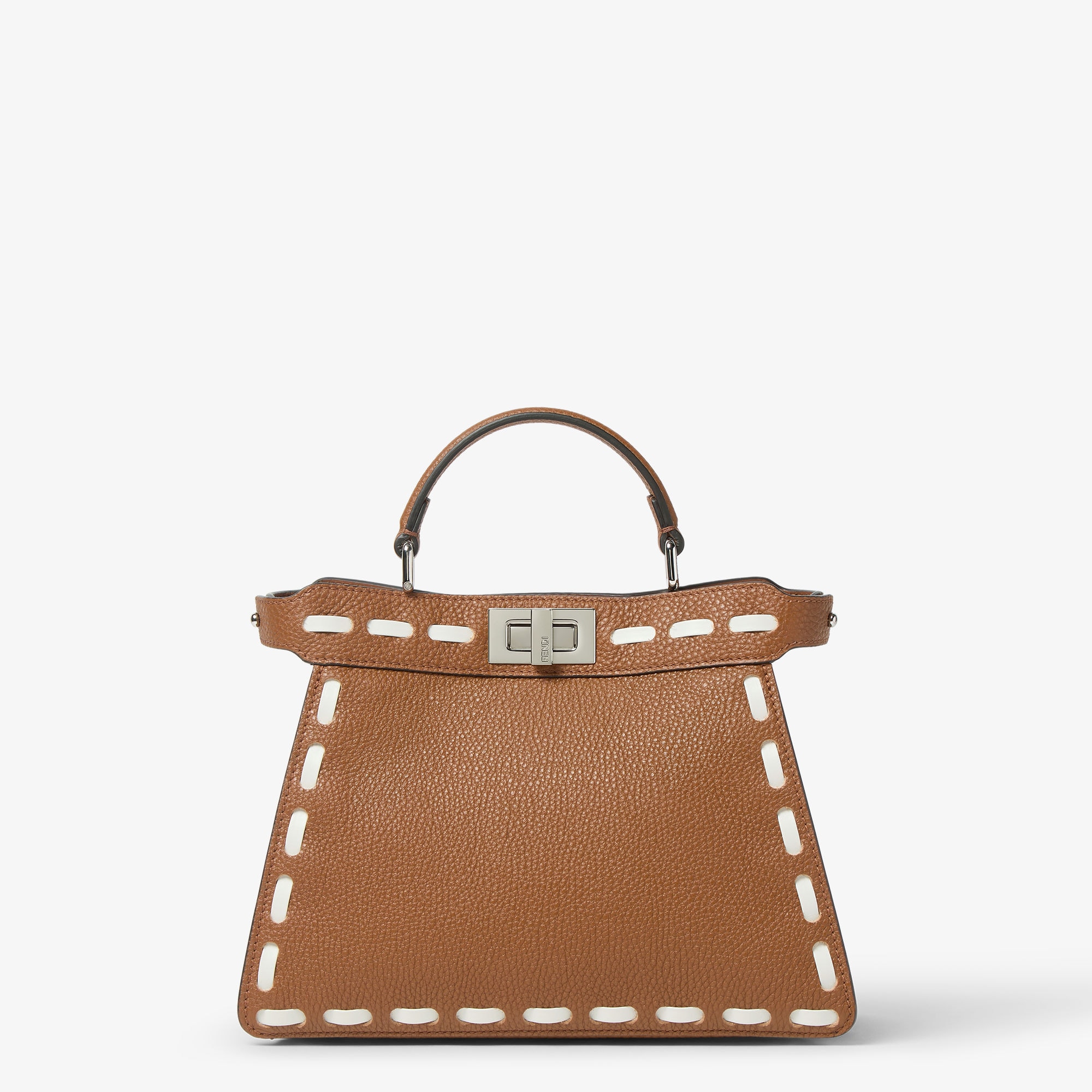
Three: metal hardware that's lighter than it looks. Fendi has long favoured zamak, a zinc alloy, over brass. It's softer, easier to cast into complex shapes, and it doesn't tarnish the same way. The turn-locks on a Seventies Fendi bag have a matte, almost waxy finish, distinct from the high polish you'd find on Hermès or the brushed steel of Céline under Philo. It's a small choice, but it establishes a tactile identity. You know a Fendi clasp by how it closes — quick, light, with a faint click rather than a snap.
None of this is advertised. Fendi's campaigns, particularly in the Nineties and early 2000s, leaned hard into the double-F, the Baguette's celebrity endorsements, the idea of the bag as status object. The work underneath — the double-face leather, the bound seams, the zamak — remained trade knowledge. You learned it by handling the product, or you didn't learn it at all.
What Silvia Venturini Fendi holds
Silvia Venturini Fendi, daughter of Anna, has been with the house since 1994. She's now in charge of accessories and menswear, and she's one of the few people alive who can walk into the archive and identify a bag by its interior construction. I've watched her do it — turn a piece inside-out, run a finger along a seam, and say, "1982, Paola's team," with the certainty of someone reading a signature.
Her work tends toward restraint. The Peekaboo, introduced in 2008, is often cited as her signature, and it is — but it's worth noting what it isn't. It isn't loud. The bag's defining feature is a frame that bisects the interior, creating two compartments that can only be accessed by opening the bag fully. It's a structural idea, not a decorative one. The frame itself is leather-wrapped, continuing that Fendi habit of leaving no hard edge exposed.
More recently, she's revisited some of the house's quieter shapes. The Fendigraphy, launched in 2019, takes its name from the embossed logo treatment but its form from a 1970s camera bag — boxy, front-flapped, closed with a single leather strap and a metal clasp. The strap is adjustable via a series of grommets, a detail lifted directly from the archive. It's the sort of bag that reads as new until you see it next to its predecessor, at which point it reads as continuation.
That distinction — between revival and continuation — is where Fendi's current position gets interesting. The house isn't mining its past for nostalgia. It's using the past as a technical library, a set of solutions that can be reapplied when the current vocabulary runs thin. The double-face leather returns. The bound seams return. The zamak, the hand-trials, the suede linings — all of it still in use, still specified, still made the same way by artisans who learned from artisans who learned from the Fendi sisters.
A sample, unfinished
Back to the essai de main on the table. The woman holding it is in her sixties, trained in the atelier in the Eighties under one of Carla's proteges. She's explaining the double-needle technique — how you pierce the leather once, pass two threads through the same hole from opposite sides, pull them taut so they lock against each other rather than relying on a knot. It's slower than a machine stitch, and it's stronger. If one thread breaks, the other holds.
She folds the sample in half, creases it with her thumb, unfolds it. The leather remembers the bend but doesn't crack. "We don't use this on every bag anymore," she says. "Only when it's asked for. Or when someone remembers to ask."
The question, then, isn't whether Fendi has forgotten its codes. The question is whether the rest of us have — and whether, in forgetting, we've mistaken the loudest sign for the whole language.