Maison Margiela pour celles qui débutent
There is a white cotton shirt in the Maison Margiela archive with four stitches at each shoulder seam, deliberately exposed. The threads are thick, the colour raw. They announce themselves. They also announce the garment's construction—this is how the sleeve meets the body, this is where the work was done. That shirt, from the house's first collection in 1989, is still the clearest distillation of what Martin Margiela proposed: fashion that shows its hand.
If you are starting with Margiela now, thirty-five years later, you are entering a house that has spent decades making the invisible visible. Linings turned outward. Seams left raw. Proportions that acknowledge the body exists in three dimensions, not two. It is not minimalism—minimalism erases. Margiela reveals.
The founding principle
Martin Margiela opened his maison in Paris in 1988, showing his first collection the following spring. He had apprenticed under Jean Paul Gaultier, learned pattern-cutting at Antwerp's Royal Academy, and arrived with a vocabulary that dispensed with most of fashion's received grammar. No logos. No visible branding. No interviews. The house communicated through the clothes and, occasionally, through faxes signed by the collective 'Maison Martin Margiela'.
The early collections were built on deconstruction—not as a metaphor but as a literal practice. Margiela took vintage garments, pulled them apart, and reassembled them into something new. A military sock became a sweater sleeve. A glove became a bodice. The Tabi boot, split at the toe like a Japanese work shoe, appeared in 1989 and has not left the collection since. It remains the house's most recognisable silhouette, now available in leather, suede, patent, and an improbable range of heel heights.
Margiela himself left in 2009. The house continued under other hands until 2014, when John Galliano arrived as creative director. That transition matters if you are buying into the house now, because what you find in store reflects two distinct sensibilities: the archival codes Margiela established, and Galliano's more theatrical, often more ornate interpretation of them.
What defines a Margiela garment
Certain elements recur. The white label, stitched on with those same four visible threads, carries no name—only a number from 0 to 23, indicating the line. (Womenswear is 1, menswear 10, jewellery and accessories 11, and so on. Line 6, the house's anonymous basics, was discontinued but occasionally resurfaces.) The fabric tag, sewn into the lining or waistband, is blank. You are meant to write your own name there.
Proportions tend toward the oversized, though not uniformly. Margiela's tailoring often features extended shoulders and a dropped armhole, which allows the jacket to move with you rather than hold you in place. Sleeves run long. Trousers sit low on the hip, then break generously at the ankle. These are not mistakes. They are decisions about how cloth relates to the body in motion.
The Replica line, introduced in the mid-1990s, reproduces garments from other eras and contexts: a 1950s jazz club T-shirt, a 1970s German army trainer, a 1980s painter's smock. Each piece carries a label describing the original—where it was found, what it was used for—and the house's reproduction is exact, down to the weight of the cotton or the shape of the sole. It is one of the more accessible entry points, both conceptually and financially. A Replica T-shirt will cost you around €150. A Replica sneaker, typically between €350 and €450.
The Galliano era and what it changed
John Galliano's arrival shifted the house's centre of gravity. Where Margiela worked through absence and restraint, Galliano works through presence and accumulation. His collections for the maison are dense, referential, often spectacular. The Artisanal line—haute couture in all but name—has produced garments that look like they have been pulled from a dozen different centuries and stitched together by someone who does not believe in editing.
This is not a betrayal of the house codes. Galliano has retained the Tabi, the exposed seams, the blank labels. But he has added embroidery, draping, and a kind of romantic decay that was never part of Margiela's original language. The ready-to-wear collections now include corsetry, trompe-l'œil prints, and garments that appear to be disintegrating but are, in fact, painstakingly constructed to look that way.
For someone beginning with the house, this means you are choosing between two Margielas. The first is spare, cerebral, built on reduction. The second is layered, emotional, built on excess. Both are available. The Tabi boot exists in a plain black leather version that Margiela himself might have approved, and in a crystal-encrusted stiletto version that is pure Galliano. Neither is wrong. They are simply different answers to the same question: what does it mean to make a Margiela garment now?
Where to begin, and what to expect
If you are buying your first piece, the Tabi is the obvious starting point. It is the house's signature, it has been in continuous production since 1989, and it will mark you as someone who knows. The flat ankle boot in black leather runs around €750. The heeled version, depending on height and finish, between €850 and €1,200. They are not comfortable in the way a sneaker is comfortable. The split toe takes adjustment. But they are built to last, and they announce themselves in a way few other shoes do.
The Replica sneakers are a gentler entry. The GAT (German Army Trainer) is the best known, a low-top in white leather with suede panels and a gum sole. It costs around €400 and works with almost everything. The Replica T-shirts and sweatshirts, priced between €150 and €350, are well-made basics with a narrative attached. You are buying a garment that has been copied from something real, something used, something that existed before fashion decided it mattered.
For ready-to-wear, the oversized poplin shirt is a house staple. It appears every season in various iterations—sometimes with exaggerated cuffs, sometimes with a deconstructed collar, always with that particular Margiela volume. Expect to pay between €450 and €650. The tailoring is more of an investment. A deconstructed blazer will start around €1,200 and can easily reach €2,000 depending on fabric and construction. Trousers run between €500 and €800.
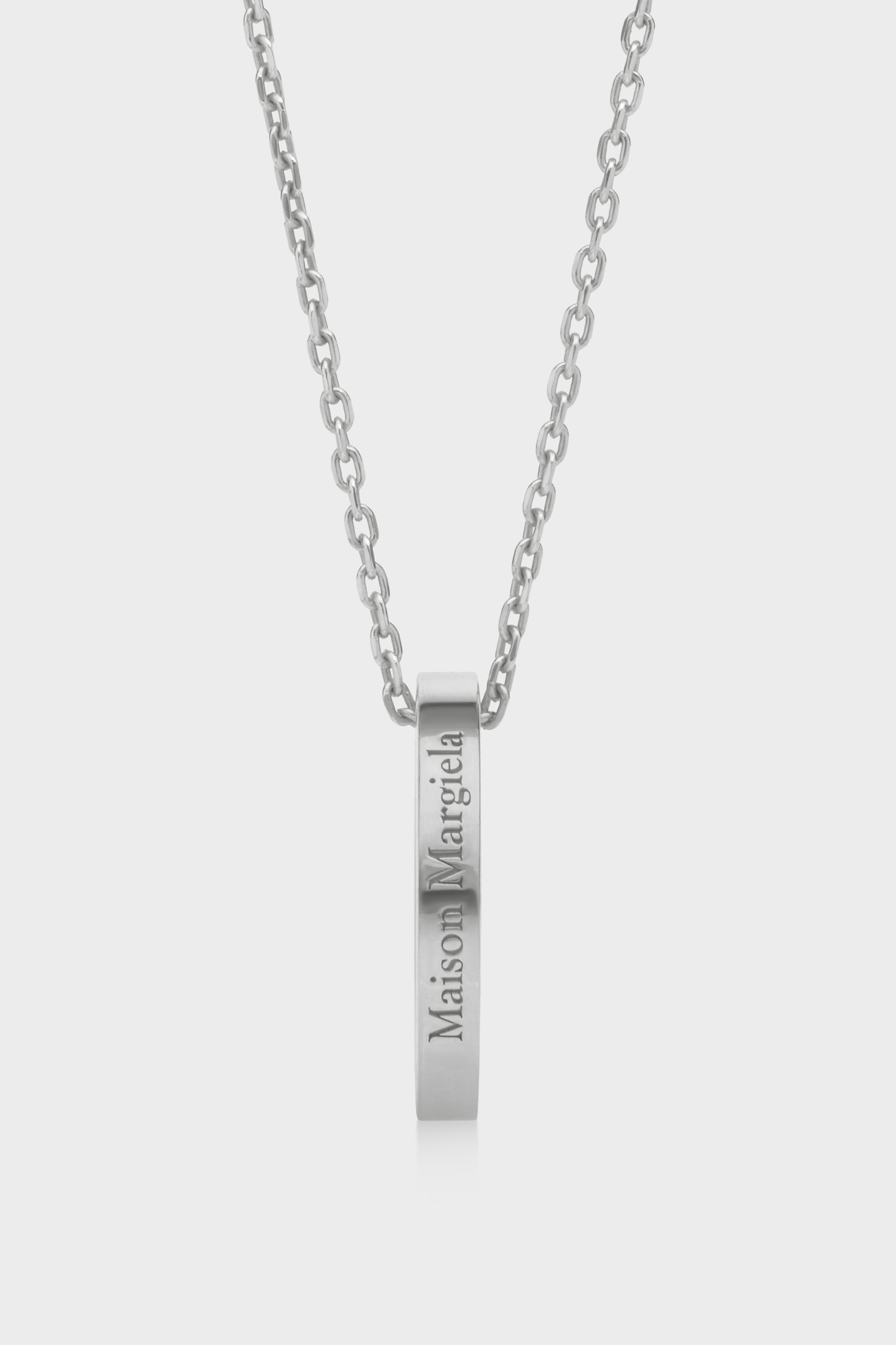
The jewellery line offers a lower entry point. The four-stitch ring, which mimics the white label stitching in silver or gold-tone metal, costs around €250. It is one of the house's few overtly branded pieces, though the branding is still coded—you have to know what the four stitches mean.
What you are actually buying into
Maison Margiela does not sell ease. It sells a particular kind of self-consciousness, a way of wearing clothes that acknowledges you are wearing clothes. The exposed seams, the blank labels, the exaggerated proportions—all of it asks you to think about construction, about process, about the distance between the body and the garment. This is not fashion that disappears into your life. It is fashion that asks to be noticed, then asks you to explain why it should be.
That can feel like a lot if you are used to clothes that simply work. A Margiela piece often requires context, either visual or verbal. The Tabi makes sense in an outfit that already leans conceptual. The oversized tailoring works if the rest of your wardrobe can support that volume. The Replica line is easier—those pieces function as basics, even if their origin story is anything but basic.
What you are paying for, beyond the garment itself, is a position. Margiela has always been the house for people who think about fashion as a language, not just a surface. It is intellectual without being cold, and under Galliano it has become emotional without losing its rigour. That combination is rare. It is also expensive.
A final image
There is a photograph from Margiela's Spring 1996 collection. The models wore garments made entirely from salvaged materials—old curtains, worn-out knitwear, things that had already lived a life before the house touched them. One dress was constructed from broken plates, held together with wire and fabric. It could not be worn for more than a few minutes. It was not meant to be.
That dress is not for sale. But it explains everything the house has done since. Margiela has always been interested in what happens when you take something used, something discarded, and give it a second life. Sometimes that is literal, as with the Replica line. Sometimes it is conceptual, as with the deconstructed tailoring. Sometimes, under Galliano, it is purely emotional—a garment that looks like it has survived something, even if it was born yesterday.
If you are starting with Margiela now, you are starting with a house that believes clothes have stories. Your job is to decide which story you want to carry.