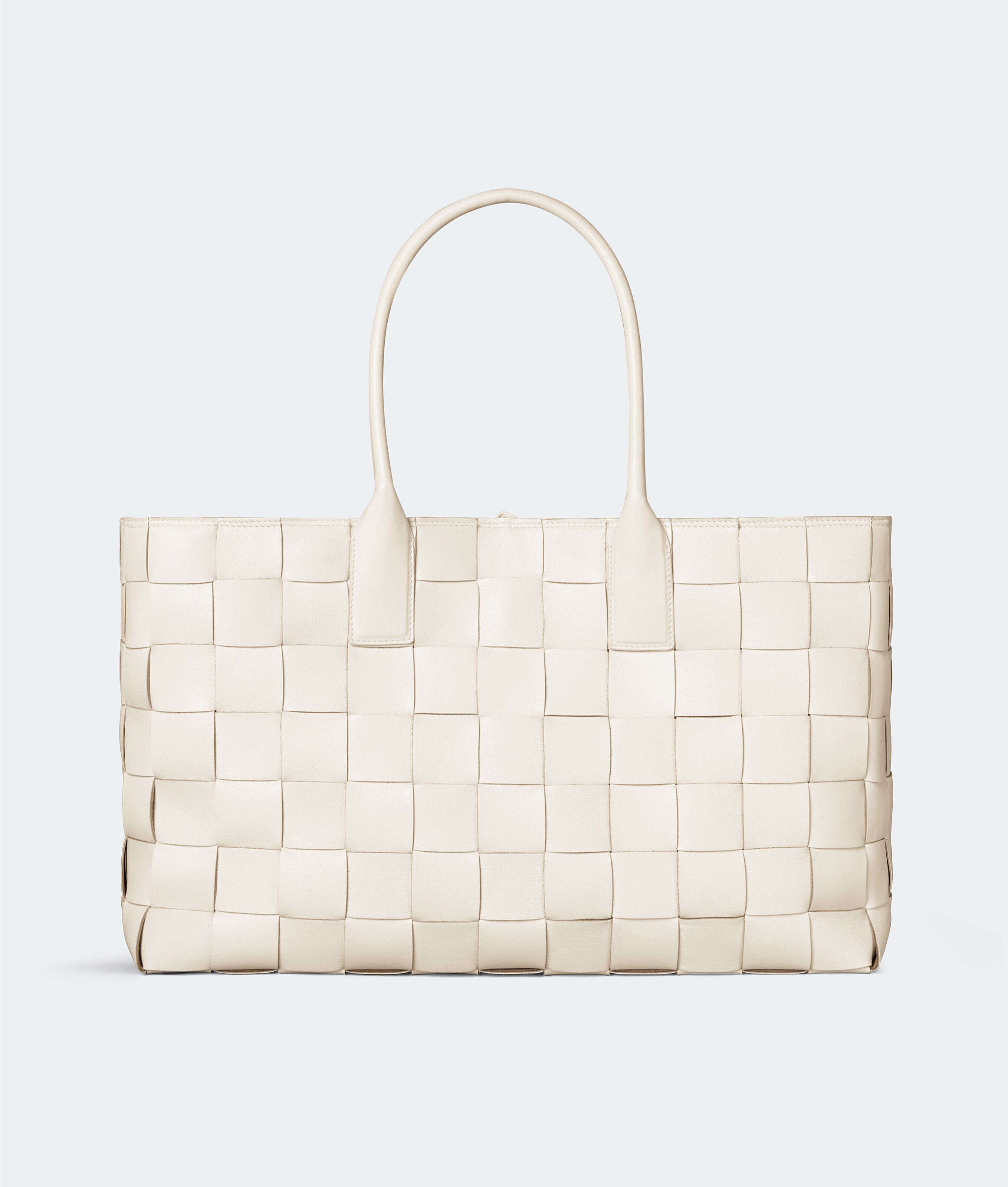
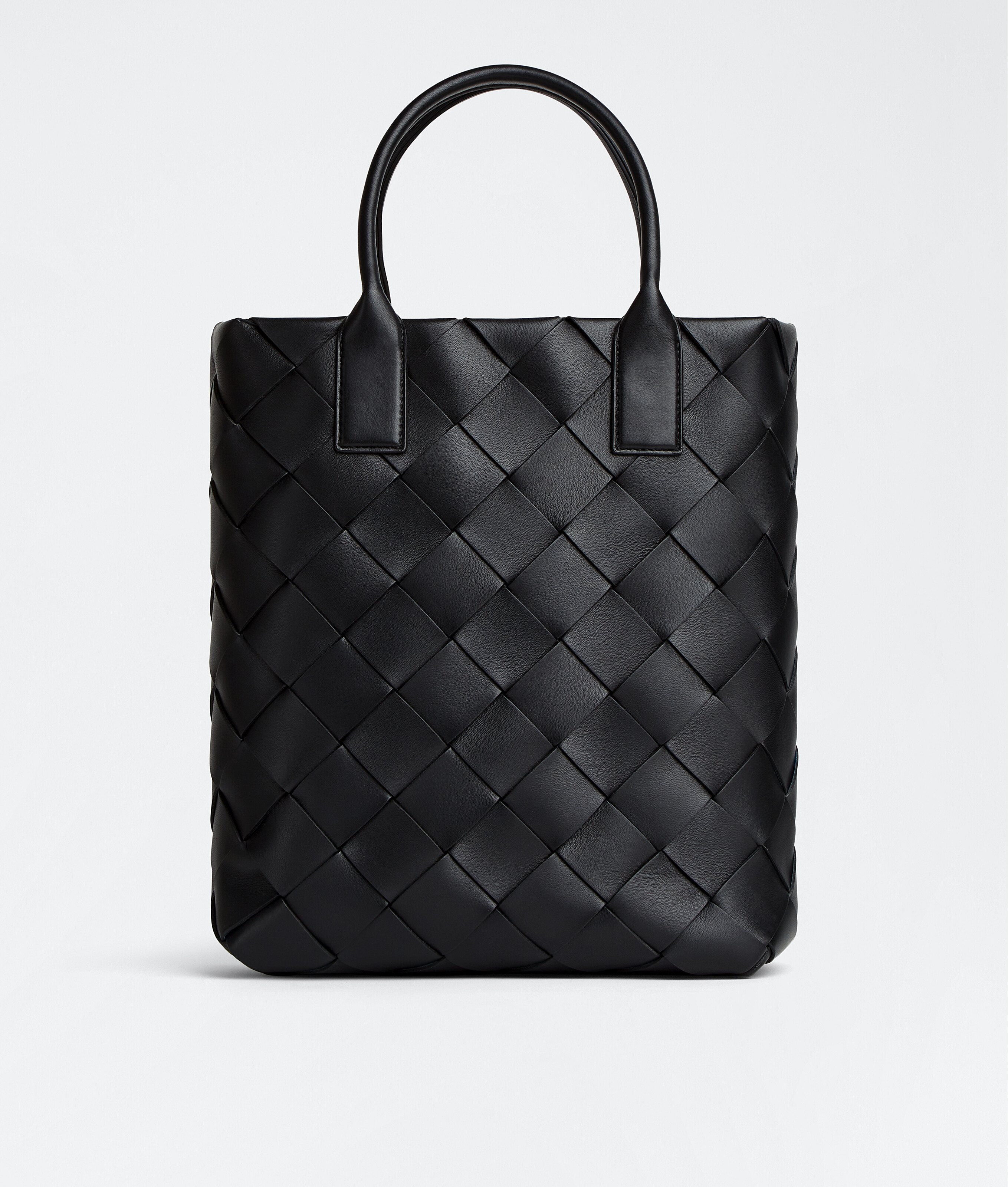
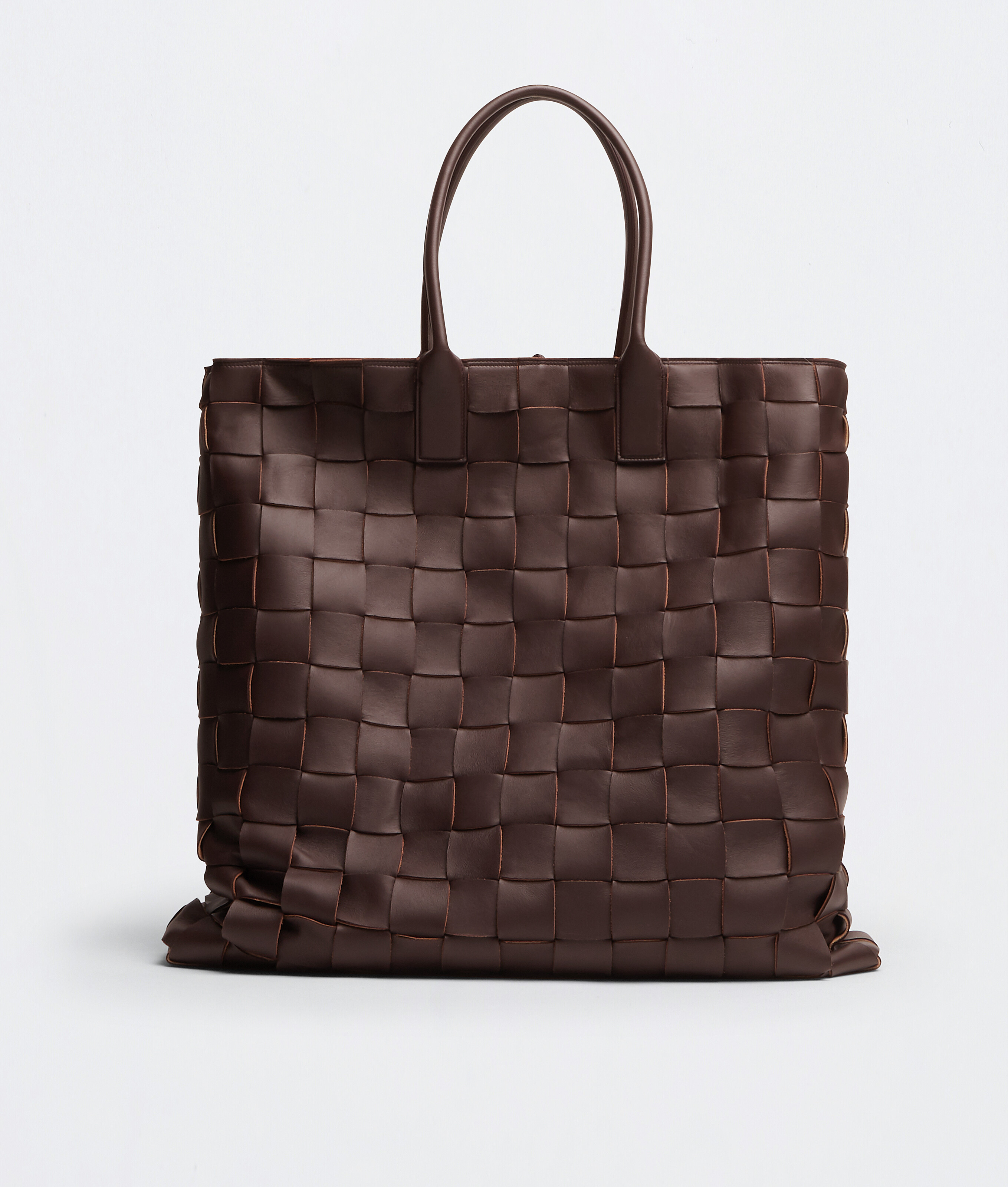
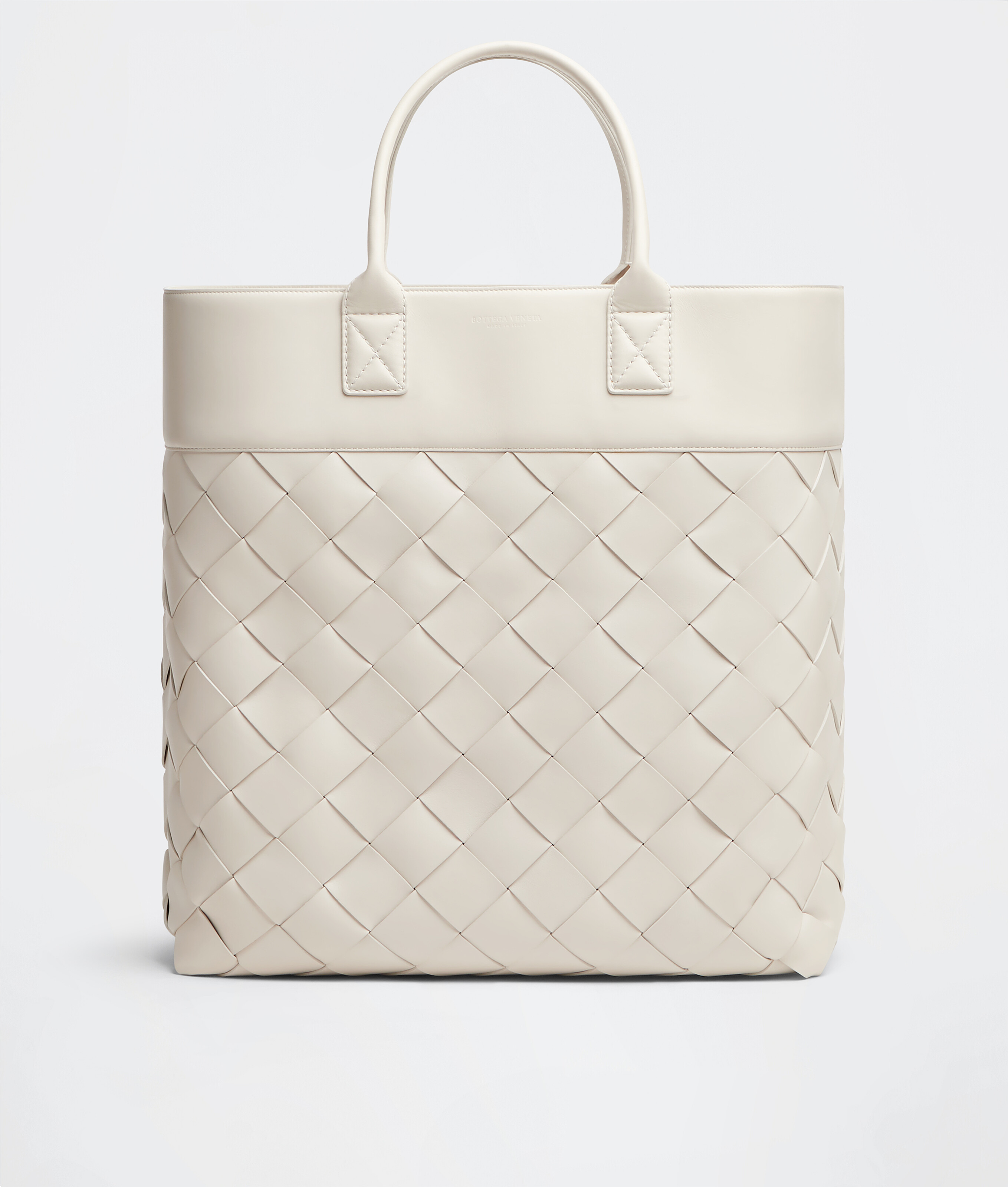
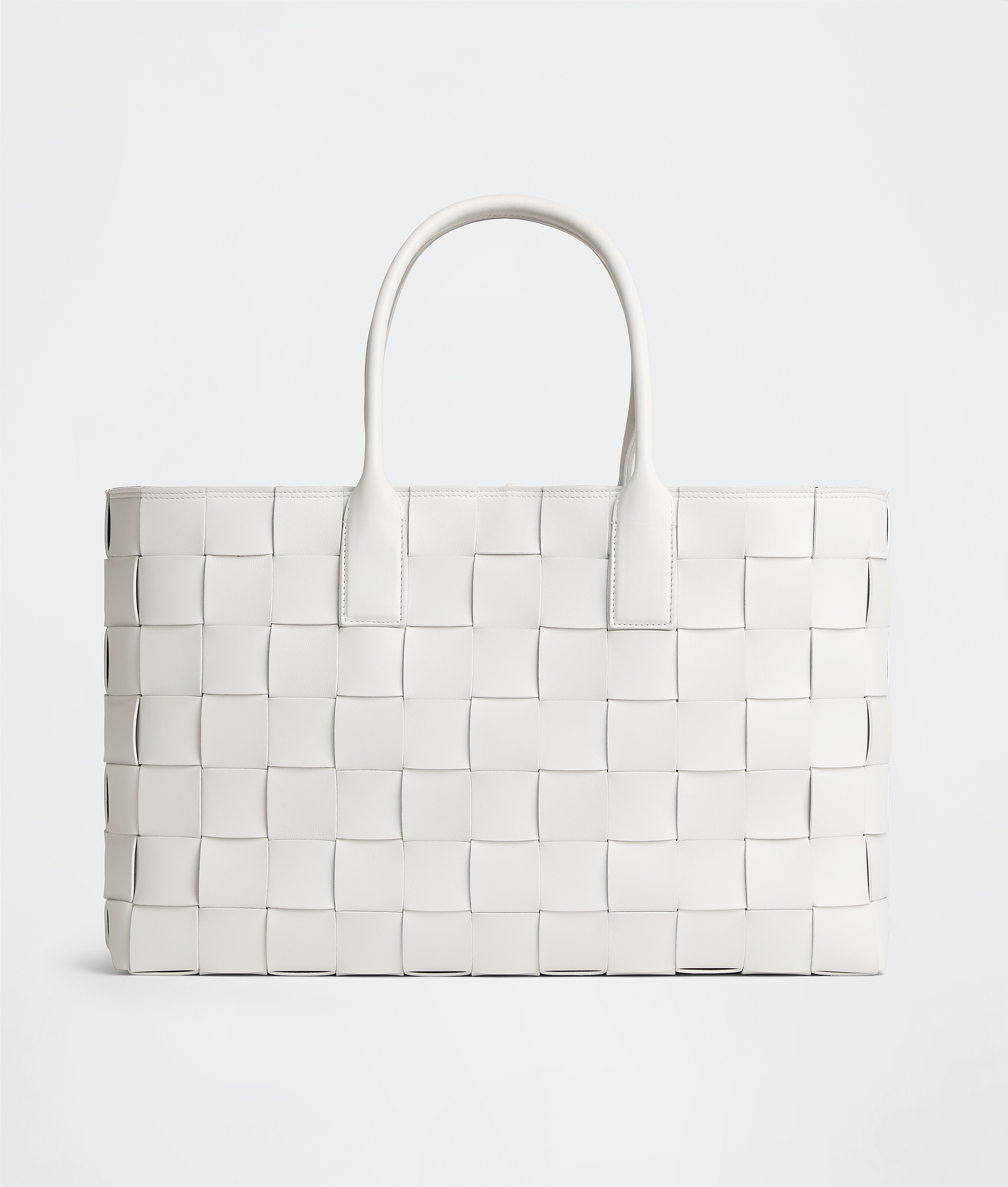
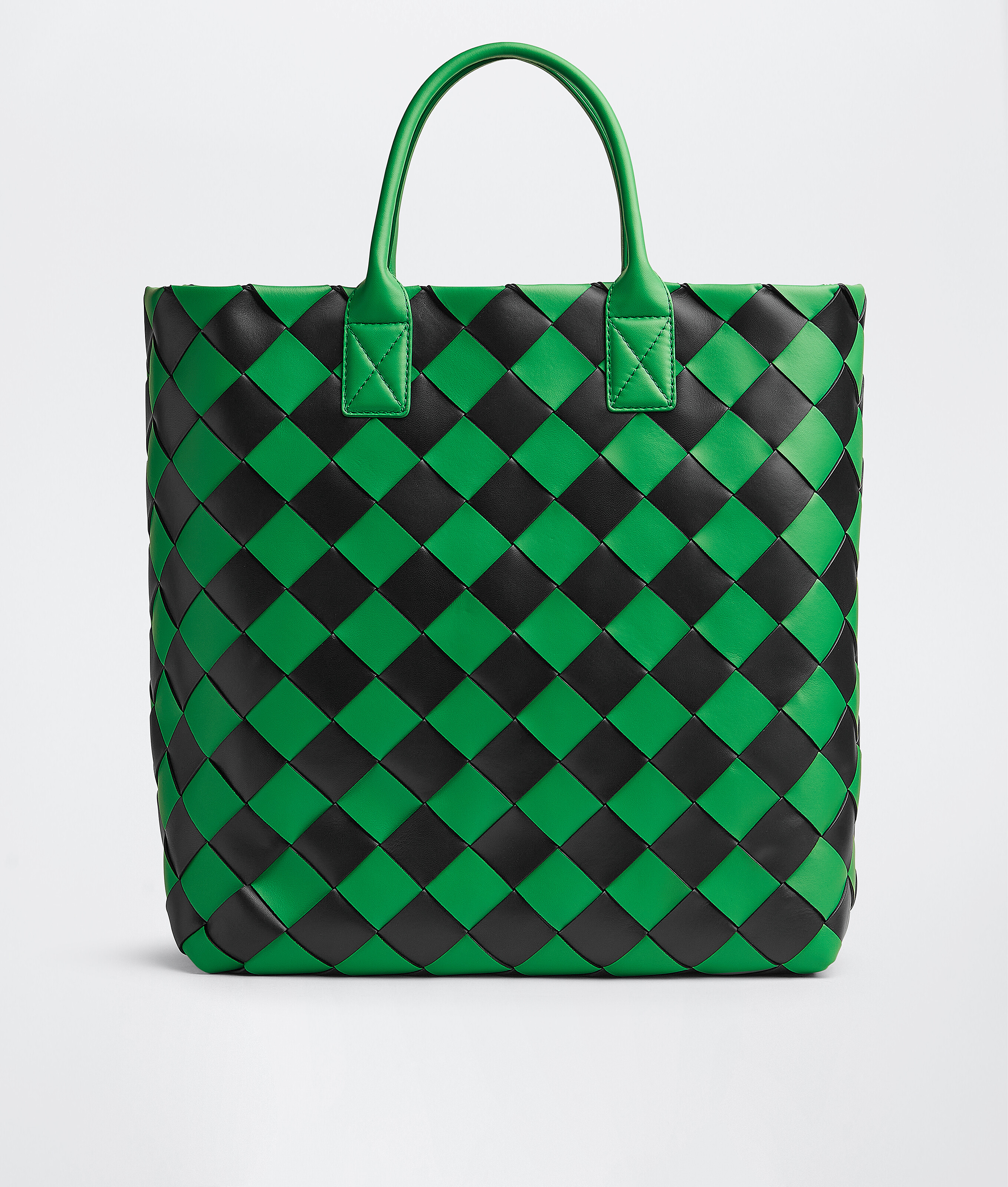
The Arco bag sits on a showroom table in Milan like a horseshoe someone forgot to nail above the door
The Arco bag sits on a showroom table in Milan like a horseshoe someone forgot to nail above the door. No hardware. No logo. Just intrecciato woven calfskin curved into a half-moon and a top handle you could carry groceries with, if the groceries cost what the bag does. It's the kind of object that makes you forget what decade you're in, which is exactly the point.
Bottega Veneta has spent the past five years trying to remember what it was before it became famous for being quiet. The house, founded in Vicenza in 1966 by Michele Taddei and Renzo Zengiaro, built its reputation on Venetian leather craft—intrecciato weaving, in particular, a technique that turns strips of hide into something closer to fabric. No monograms. No metal plaques. The work was the signature. By the early 2000s, that restraint had calcified into something closer to invisibility.
Then Tomas Maier arrived in 2001 and spent fifteen years turning discretion into a philosophy. His Bottega was the house you name-dropped by not name-dropping it. "When your own initials are enough," the tagline went, which worked beautifully until everyone else started whispering too. By the time Maier left in 2018, quiet luxury had become an aesthetic category, and Bottega risked becoming its reference image rather than a living brand.
The Blazy era and the return to craft
Matthieu Blazy took over as creative director in November 2021, after Daniel Lee's three-year sprint through maximalist leather and Instagram-friendly hardware. Lee had made Bottega loud again—Puddle boots, Pouch clutches, chain-link everything—and the house's revenues nearly doubled under his watch. But the Lee vocabulary, effective as it was, felt like borrowed language. Bottega was speaking in someone else's accent.
Blazy, who'd spent years at Maier's side before stints at Celine and Balenciaga, didn't reverse course so much as deepen it. His first collection for autumn/winter 2022 opened with leather worked to look like denim, denim cut to move like jersey, jersey that draped like silk. A trompe-l'oeil exercise, yes, but one rooted in atelier process rather than digital rendering. The intrecciio reappeared, not as house signature but as structural principle—woven leather coats, basket-weave knits, bags that looked soft until you touched them and realised they'd hold their shape through a decade of use.
The Arco, which Blazy introduced that first season, became the house's new calling card. Not because it screamed louder than Lee's Pouch, but because it didn't need to. The shape is simple—a curved tote with a flat base and a single handle—but the construction is not. Each bag requires 10 hours of handwork and uses intrecciato strips wide enough to show the weave without announcing it. It photographs well, which matters. It also works as a daily bag, which matters more.
Blazy's Bottega is less interested in statement pieces than in clothing that earns its place through utility. His autumn/winter 2023 show featured leather trousers with the hand of wool flannel, shearling coats cut like trench coats, knits dense enough to hold a silhouette without stiffness. The palette ran to camel, chocolate, charcoal, cream—colours that photograph as neutral but read as specific in person. This is not minimalism. It's specificity at low volume.
Where the house stands now
Bottega Veneta's sales have steadied rather than surged under Blazy, which Kering, the parent company, has framed as intentional recalibration. The house pulled back from wholesale, closed underperforming stores, and leaned into direct retail and its own e-commerce platform. No logo-driven entry-price accessories. No diffusion line. The Arco starts at €3,100. The Intrecciato tote runs €4,500. If you want in, you pay the toll.
That strategy works when the product justifies it, and Blazy's does. His autumn/winter 2024 collection, shown in February, centred on outerwear—shearling bombers with knit cuffs, leather trench coats with enough weight to move like cloth, parkas cut from woven strips of hide. These are not investment pieces in the aspirational sense. They are expensive because they take time to make and will outlast the trends that bracket them.
The house has also become quieter about its own noise. No Instagram campaigns. No influencer seeding. Bottega deleted its social accounts in 2021, a move that felt gimmicky at the time but has aged into coherence. The brand communicates through editorial placements, word of mouth, and the occasional campaign image—usually a single product shot on a solid background, no model, no story. It's the visual equivalent of Blazy's design approach: say less, mean more.
That restraint has limits. Bottega's revenues, while stable, haven't returned to the highs of Lee's tenure, and Kering has faced pressure across its portfolio. Gucci's slowdown has pulled focus and resources. Bottega, meanwhile, operates in a narrower lane than it did five years ago. It is no longer the house of the Puddle boot or the Pouch clutch—objects that moved through culture faster than they moved through stores. It is, instead, the house of the Arco and the intrecciato coat, objects that require explanation and reward patience.
Whether that's enough depends on what you think a luxury house should do. If the aim is to generate product categories that others will copy, Bottega has stepped back. If the aim is to make clothing and accessories that justify their cost through craft and longevity, Blazy has delivered. The tension is that the market rewards the former more reliably than the latter, and Bottega is now testing how much room exists for a house that refuses to shout.
The intrecciato as through-line
Walk into the Bottega Veneta store on Sloane Street in London and you'll see the intrecciato everywhere—on bags, of course, but also on chair seats, cabinet fronts, and the leather panels that line the walls. It's not branding. It's vocabulary. The weave, which the house has used since its founding, is both technique and ideology: a way of working material that makes the process visible without making it decorative.
Blazy has extended that logic beyond leather. His autumn/winter 2024 collection included knitwear with an intrecciato structure, the yarns crossing and locking in a way that mimicked the leather weave. A trompe-l'oeil trick, maybe, but also a way of saying that the house's methods aren't bound to a single material. The principle travels.
That continuity matters more now than it did under Lee, whose Bottega felt like a series of product hits rather than a sustained argument. Blazy's work, by contrast, reads as cumulative. Each season builds on the last, refining cuts, adjusting proportions, expanding the intrecciato vocabulary without diluting it. The result is a house that feels less concerned with what's next than with what lasts.
It's also a house that's harder to summarise in a single image. The Arco is recognisable, but it doesn't dominate the way the Pouch did. The intrecciato coat is beautiful, but it doesn't photograph as cleanly as a Puddle boot. Blazy's Bottega rewards attention rather than commanding it, which is either a strength or a commercial liability depending on the quarter.
What remains
There's a photograph from Blazy's spring/summer 2024 show: a model in a leather trench coat, woven so tightly it looks like gabardine, walking past a backdrop of raw plaster. No jewellery. No bag. Just the coat and the way it moves. That image, more than any single product, captures where Bottega Veneta is now—committed to craft, indifferent to noise, and willing to let the work speak first.
Whether that's enough to carry a luxury house through a market that rewards volume and visibility over patience and detail is the question Kering is asking. Blazy, for his part, seems uninterested in answering it. He's too busy weaving.